




Meiji Period Lacquer Stand
These pieces of meiji period lacquer stand craftsmanship bring Japanese design into a room through rich surfaces and sturdy timber.
Meiji Period Lacquer Stand
A meiji period lacquer stand brings together traditional Japanese woodworking and decorative lacquer finishes from the nineteenth and early twentieth centuries. Buyers seeking these items typically encounter plant stands, cabinets on stands, and small tables.
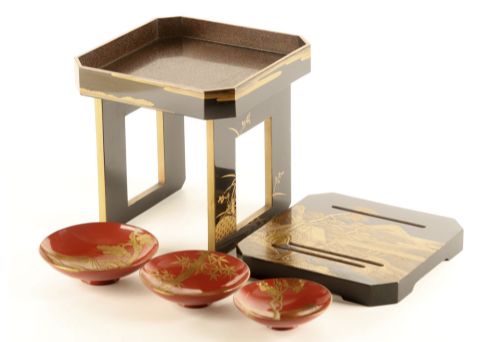
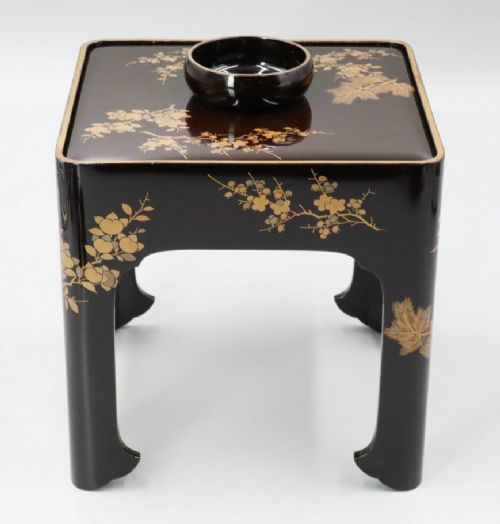
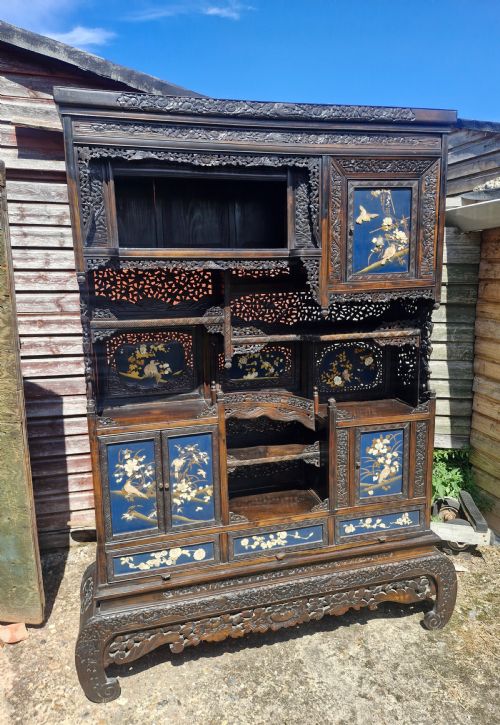
The selections available here span the Meiji, Taisho, and Victorian periods, reflecting the late nineteenth and early twentieth centuries. Formats range from large shodana cabinets on stands to smaller sake tables and jardiniere displays.
Origins trace directly to Japanese craftsmanship, with some pieces showing the influence of the British Aesthetic Movement through Victorian trade. These forms serve practical display purposes while operating as sculptural objects within an interior.
Materials and construction methods
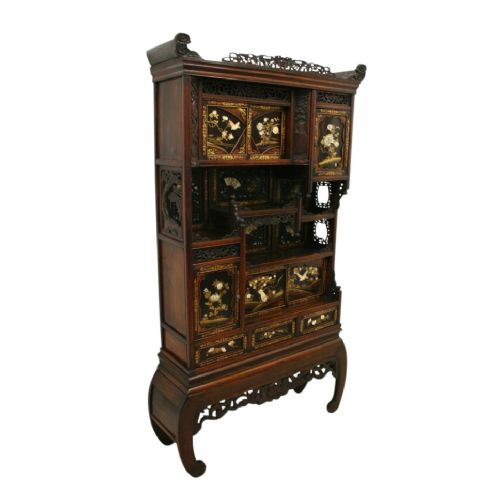
Makers utilised wood, hardwood, and elm as structural foundations for these items, applying lacquer over the timber surfaces. Gold leaf, mother of pearl, and bone inlay enhance the dark lacquer backgrounds with detailed pictorial scenes.
Porcelain elements appear alongside painted decoration, particularly on associated vessels like vases and sake cups. The application of lacquer over black paint creates a smooth, durable finish that protects the underlying wooden structure.
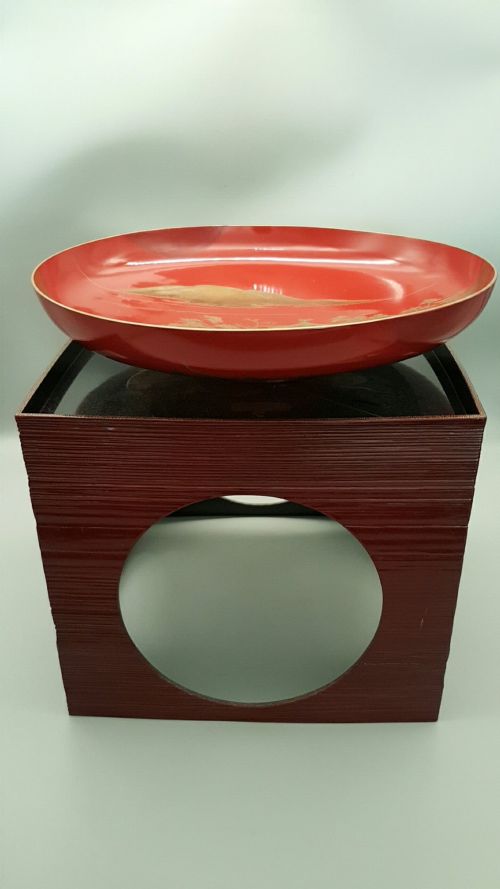
Some tables double as tiny drinking stations, complete with matching cups for sake.
Distinctions in craftsmanship
Quality rests in the precision of the lacquer application and the stability of the underlying hardwood or elm frame. Superior examples display intricate bone inlay and mother of pearl work that remains secure within the surface.
The depth of the decorative scheme distinguishes finer stands from simpler utilitarian tables. Integration between the display platform and its supporting structure marks the standard of the maker's joinery.
The Meiji Period Lacquer Stand Glossary
- Lacquer
- A durable resin finish applied to wooden objects. It forms a hard, glossy surface that resists moisture and wear.
- Shodana
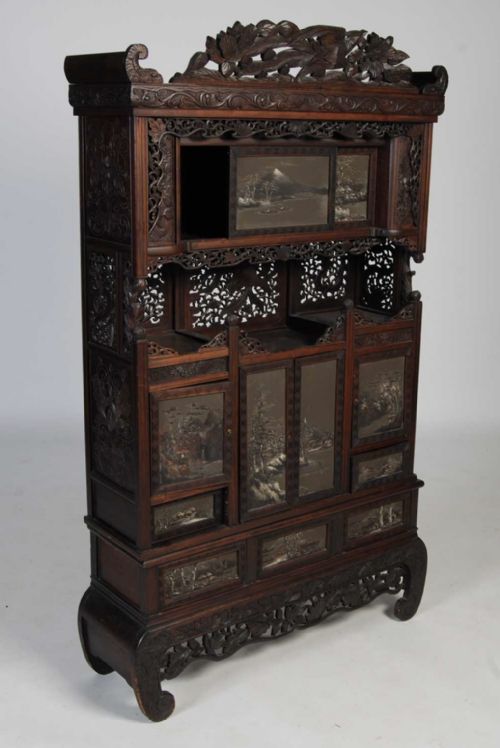
- A traditional Japanese cabinet or shelving unit. These pieces often sit upon elevated stands for display purposes.
- Chabudai
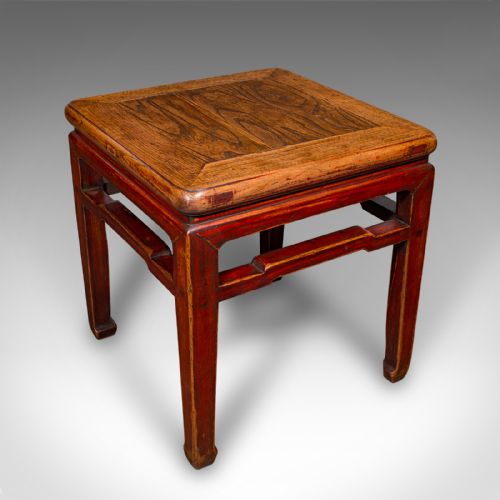
- A short Japanese table traditionally used while kneeling on tatami mats. They appear in elm and other sturdy hardwoods.
- Jardiniere
- A decorative pot or stand designed to hold plants. Victorian examples often incorporate Japanese design motifs.
- Shibayama
- A style of intricate inlay using materials like bone and mother of pearl. It creates raised, textured pictures on lacquer surfaces.
Meiji Period Lacquer Stand: Frequently Asked Questions
What is a shodana cabinet?
A shodana is a traditional Japanese cabinet featuring multiple shelves and compartments for display. They often sit on stands to elevate the storage space.
These pieces showcase fine woodwork and decorative lacquer panels suited for interiors.
How are these stands used today?
These items function well as plant pedestals, small side tables, or display surfaces for ceramics. Their compact proportions fit modern living spaces easily.
They provide a stable platform while adding a distinct decorative element to a room.
What distinguishes Meiji period pieces?
The Meiji period spans from eighteen sixty-eight to nineteen twelve, marking a time of openness in Japanese craftsmanship. Work from this era often combines traditional techniques with styles that appealed to Western collectors.
Cabinetry and stands from this era utilise elaborate lacquer and inlay work.
How do I care for lacquer furniture?
Lacquer surfaces require gentle cleaning with a soft, dry cloth to avoid scratching the finish. Keep these items away from direct sunlight and excessive moisture to protect the timber.
Proper placement preserves the integrity of the gold leaf and inlaid details.