



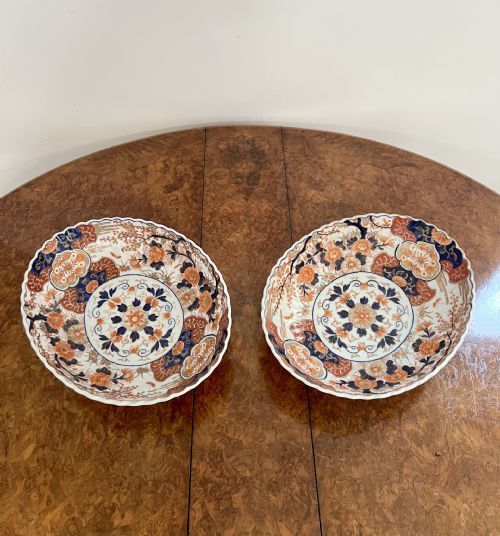


Japanese Decorative Display Bowl
These Japanese decorative display bowls bring centuries of skilled firing and hand painting into domestic spaces.
Japanese Decorative Display Bowl
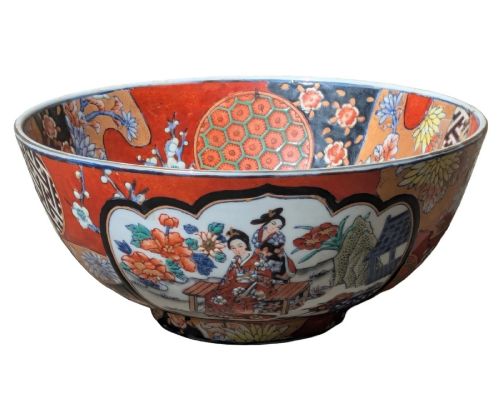
When you search for a Japanese decorative display bowl, you encounter vessels created for display rather than everyday use. The examples appearing here span periods from the Edo and Meiji eras through to the early twentieth century.
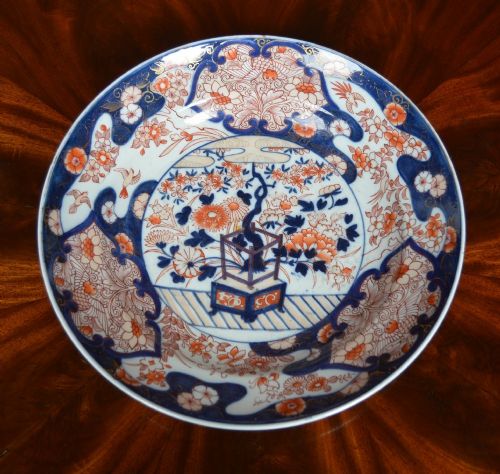
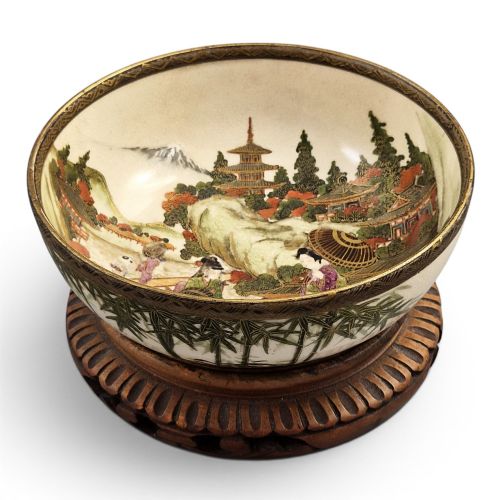
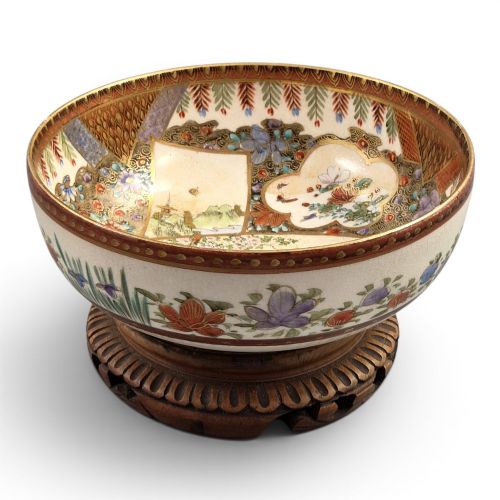
You are most likely to meet Imari porcelain bowls featuring distinctive blue and iron red decoration alongside gilt highlights. The selection also encompasses cloisonne enamel chargers, Kutani earthenware, and Satsuma pottery.
The forms range from shallow bowls and scalloped dishes to substantial chargers and tripod vessels. These objects reflect both traditional domestic Japanese tastes and export markets of the nineteenth and twentieth centuries.
Assessing Quality
Quality rests upon the precision of the hand painting and the clarity of the glaze work. Finer bowls display disciplined brushwork in complex panels without blurring or pooling of pigments.
Signature marks by known artists or workshops elevate an individual piece above standard commercial export ware. The weight of the porcelain and the crispness of moulded elements such as scalloped rims also indicate superior production.
Enamel surfaces show refinement through the evenness of the vitreous filling and the tight alignment of the wirework partitions. Condition remains paramount, with undisturbed gilding and intact glazes preserving the visual impact.
Japanese Decorative Display Bowl Retail Price Guide 2026
Typical asking prices for japanese decorative display bowl among the pieces listed under this phrase on Sellingantiques today, from the lower quarter to the upper quarter. They describe what is for sale here now, not the wider market.
Listings feature items spanning the Edo period, Meiji period, and Victorian era through to nineteen thirty.
Kozan·Shozo
The Japanese Decorative Display Bowl Glossary
- Imari
- A style of Japanese porcelain featuring a palette dominated by underglaze blue, iron red, and gilt. It originated in the town of Arita and became immensely popular for export.
- Satsuma
- A type of earthenware with a crackle glaze, typically decorated with polychrome enamels and gilding. Pieces often depict figurative scenes set within elaborate floral borders.
- Cloisonne
- A decorative technique where metal wire is soldered to a metal body to create compartments that are filled with enamel. The piece is then fired and polished smooth.
- Charger
- A large decorative plate intended for display on a wall or sideboard rather than dining use. These items frequently showcase complex pictorial designs.
- Arita
- The Japanese town central to the production of porcelain from the Edo period onwards. Kilns in this region produced much of the Imari ware seen today.
Japanese Decorative Display Bowl: Frequently Asked Questions
How do I display an antique bowl?
Display these bowls on sturdy wooden stands or within cabinets to protect the edges from knocks. Large chargers often utilise specialist wall mounting brackets designed for heavy ceramic plates.
Keep pieces away from direct sunlight to preserve the vibrancy of the iron red and gold leaf decorations. Dust them gently with a dry, soft cloth rather than using liquid cleaners.
What is the difference between Imari and Satsuma?
Imari ware is a hard porcelain characterised by a crisp white body, underglaze blue, iron red, and gilding. It has a resonant ring when tapped and a smooth glazed finish.
Satsuma is an earthenware body covered in an ivory glaze featuring a fine network of crackles. The decoration uses opaque enamel paints that sit slightly raised on the surface.
Were these bowls made for export?
Many Japanese decorative display bowls from the nineteenth century onwards were produced specifically for Western export markets. International exhibitions during the Meiji period stimulated massive demand for these elaborate decorative wares.
Earlier examples from the Edo period often served domestic patrons or specific trade networks within Asia before European trade routes expanded.
How do I identify a Meiji period piece?
Meiji period items typically date between eighteen sixty-eight and nineteen twelve, reflecting an era of heightened artistic production and export. Look for intricate detail, skilled hand painting, and occasionally artist signatures.
The adoption of Western stylistic influences alongside traditional Japanese motifs often points towards this dynamic period of manufacture.