



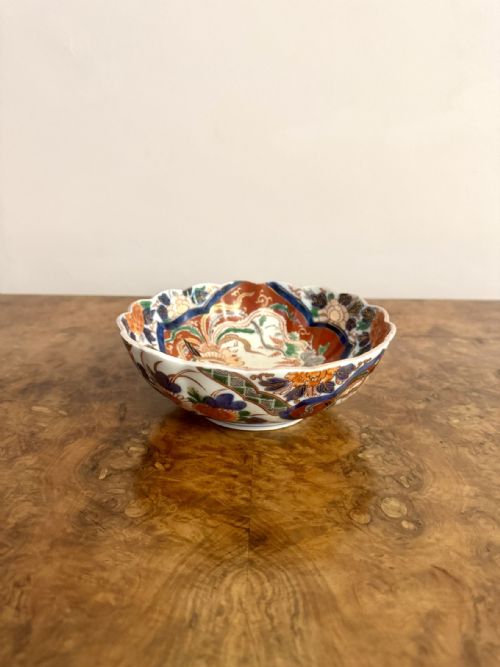


Meiji Period Arita Bowl
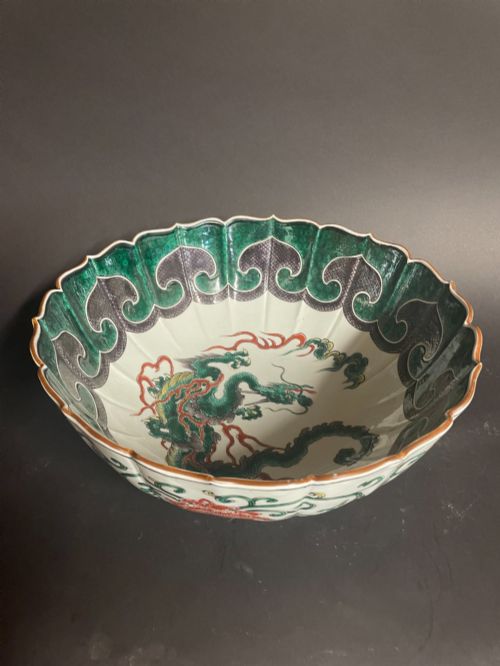
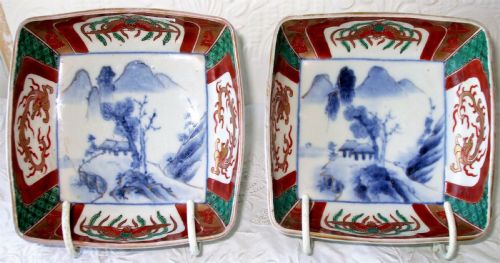
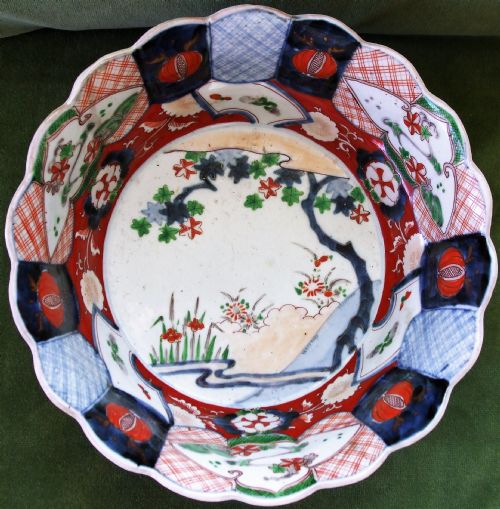
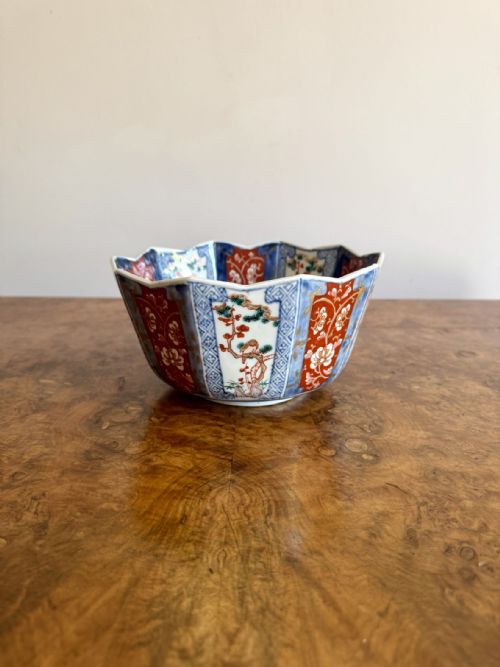
A meiji period arita bowl brings intense cobalt blue and iron red porcelain into a room, made for both export and display.
Meiji Period Arita Bowl
When you search for a meiji period arita bowl, you encounter porcelain vessels originating from the historic kilns of Hizen province. These pieces mostly date across the late nineteenth century and into the early twentieth century, reflecting a period of intense artistic production for both domestic use and export.
The examples most commonly found on this page display the distinctive Japanese Imari palette, combining deep cobalt pigment underglaze with vibrant enamel colours and gold leaf overglaze. Forms range from deep decorative bowls and shallow dishes to scalloped edge plates and large centrepieces.
While many pieces align firmly with the Meiji period, older examples stretch back to the Edo period, and occasional items bridge the transition between dynasties. The common thread is the refined ceramic body and hand-painted decoration that characterises the Arita tradition.
Materials and methods
Potters in Arita formed these vessels from local ceramic clay and fine white porcelain, shaping them on a wheel or pressing them into moulds to create regular rounds, hexagons, and scalloped edges. Artisans then applied cobalt blue pigment directly to the raw clay body before an initial high-temperature firing.
Following the primary glaze firing, decorators added enamel colours and gold leaf by hand, returning the porcelain to a lower-temperature kiln to fuse the surface pigments. This multi-stage process results in the complex layered patterns characteristic of Japanese Imari work.
Meiji Period Arita Bowl Retail Price Guide 2026
Typical asking prices for meiji period arita bowl among the pieces listed under this phrase on Sellingantiques today, from the lower quarter to the upper quarter. They describe what is for sale here now, not the wider market.
Object forms recorded across the inventory include shallow bowls, scalloped edge plates, hexagonal vessels, and large decorative centrepieces.
Factors of quality
Quality in these ceramics rests primarily on the crispness of the hand-painted brushwork and the precision of the cobalt blue underglaze. Superior pieces exhibit clean lines and well-defined motifs rather than hurried or blurred pigment application.
The richness and stability of the secondary enamel palette and gold leaf detailing also separate standard production from finer examples. Heavier porcelain bodies with balanced proportions and carefully finished foot rims indicate greater care taken by the potter.
The Meiji Period Arita Bowl Glossary
- Arita
- The Japanese town in Hizen province that served as the primary centre for porcelain production in Japan. Kilns here supplied domestic markets and European export trade for centuries.
- Imari
- A style of Japanese porcelain decorated in underglaze blue, iron red, and gold, named after the port from which the wares were shipped. This aesthetic dominated late nineteenth-century export production.
- Meiji Period
- The era in Japanese history spanning from 1868 to 1912, characterised by the opening of trade with Western nations and a surge in decorative arts production. Pieces from this era often combine traditional techniques with new export designs.
- Celadon Glaze
- A translucent green ceramic glaze originating in East Asia, produced by iron oxide in a reduction kiln. It creates a subtle jade-like surface on the porcelain body.
- Cobalt Pigment
- The deep blue mineral colour applied under the glaze before firing, capable of withstanding extreme kiln temperatures without fading. It forms the structural foundation of traditional blue and white designs.
Meiji Period Arita Bowl: Frequently Asked Questions
What is an Arita bowl?
An Arita bowl is a ceramic vessel produced in the Hizen province of Japan using local porcelain stone. These pieces range from functional tableware to decorative display items.
The town of Arita formed the historic heart of Japanese porcelain manufacturing, supplying both local households and international markets with durable, highly decorated wares.
How do I identify a Meiji period piece?
Meiji period pieces date between 1868 and 1912, often showing a blend of traditional Japanese motifs and influences from Western export demands. Look at the painting style and the character of the porcelain body.
Many items from this era feature rich Imari palettes with heavy gold leaf accents, reflecting the period's commercial focus on international decorative arts.
How were these bowls used originally?
These bowls served both practical dining functions and purely decorative roles within Japanese homes and Western drawing rooms. Larger vessels often acted as centrepieces or display chargers.
Export pieces were frequently purchased by Victorian collectors to showcase on mantelpieces or cabinets, highlighting exotic craftsmanship.
Can I use these antique bowls for food?
While these are historical porcelain objects, many remain physically robust enough for careful daily use. However, wear over time can affect surface enamels and gold leaf details.
Hand washing in warm water without harsh detergents helps preserve the delicate overglaze enamels and metallic leaf found on Imari decorations.