
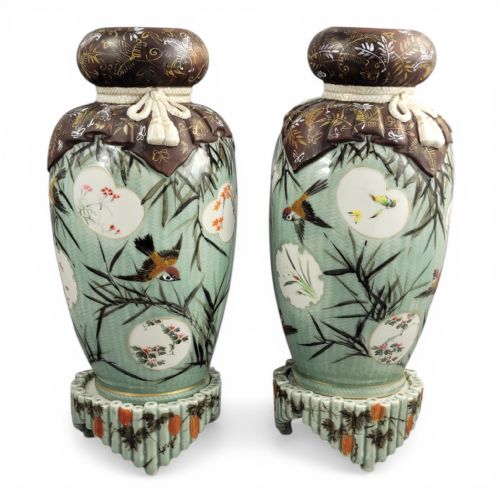


Japanese Ceramic Floor Urn
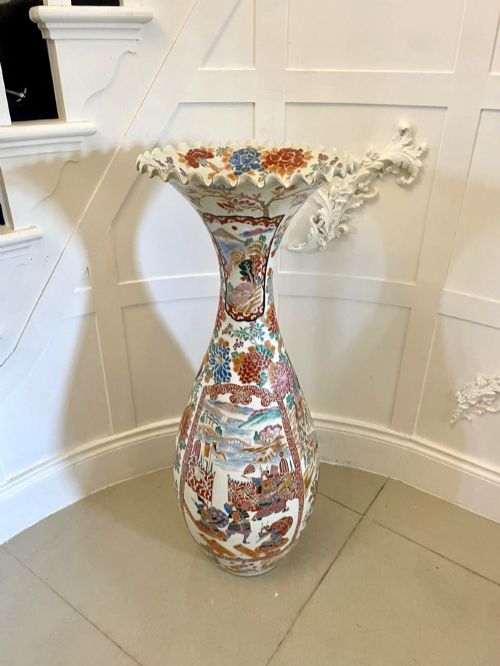
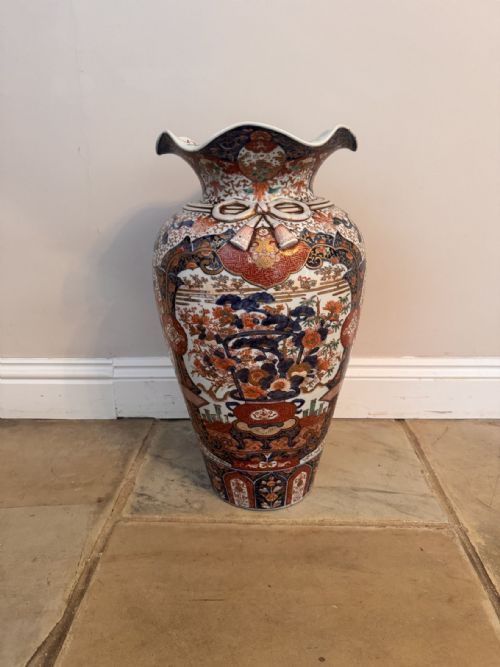
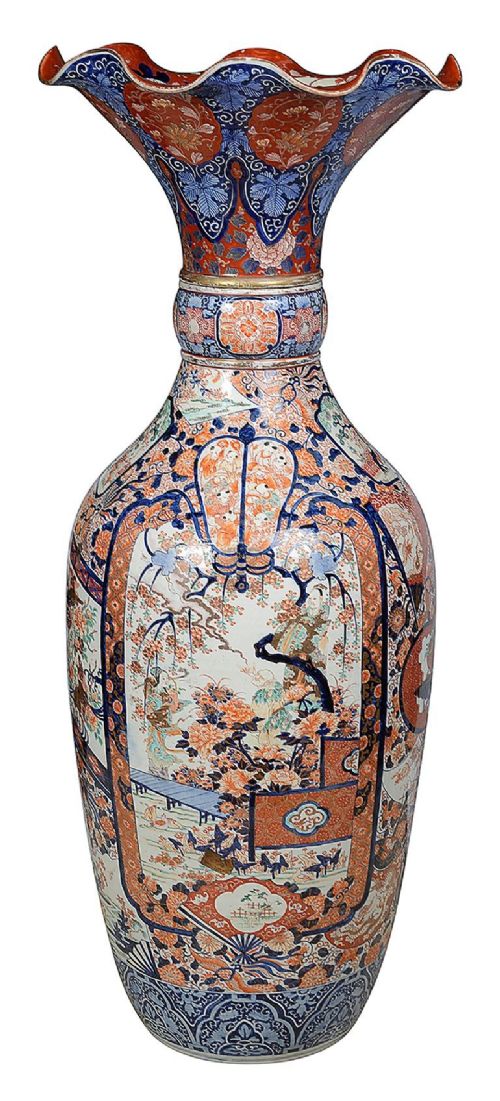
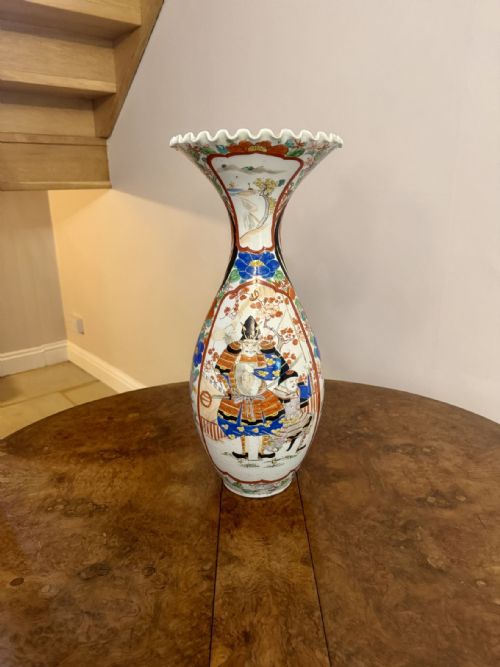
A japanese ceramic floor urn brings scale and rich colour into a room, usually arriving as a grand Imari or Satsuma piece from the Meiji era.
Japanese Ceramic Floor Urn
When you search for a japanese ceramic floor urn, you encounter large vessels designed to stand directly on the ground, often reaching impressive heights. These pieces predominantly date from the nineteenth century and the early decades of the twentieth century, aligning with the Meiji period.
The selections available centre on traditional forms such as floor vases, lidded vessels, and spill vases. Many are presented as matched pairs, offering symmetry for architectural placement in a hall or reception room.
Materials and Construction
Makers utilised porcelain and earthenware as the foundational bodies for these large vessels, shaping them into bulbous, flared, or cylindrical floor-standing forms. Artisans then applied detailed enamel, glaze, and occasionally gold leaf or gilt to build up intricate surface patterns.
Some examples incorporate mixed media elements, pairing the ceramic body with wood, lacquer panels, or lacquer applied over black paint to add textural contrast to the decorated surface.
Current listings feature pieces spanning the nineteenth century through to the 1920s, utilising porcelain, earthenware, enamel, and lacquer.
Distinctions in Quality
The calibre of a vessel rests upon the ambition of its scale and the precision of its painted palette. Pieces bearing named makers or originating from notable potteries display superior control in their enamel work and gilding.
Proportion and structural integrity dictate the standing presence of these tall items. Finer examples maintain crisp geometric or pictorial panels without distortion across their expansive ceramic bodies.
Kato Sanhei·Kinkozan
The Japanese Ceramic Floor Urn Glossary
- Imari
- A traditional Japanese export style characterised by a distinct palette of underglaze blue, iron red, and gilt. It dominated trade wares during the nineteenth century.
- Satsuma
- An earthenware type featuring a crackled ivory glaze decorated with polychrome enamels and raised gold. These pieces often depict figurative or floral scenes.
- Meiji Period
- The historical era spanning from 1868 to 1912, marking a major period of Japanese craft production for international export. Much of the large-scale pottery surviving today originates from this time.
- Kutani
- A style of Japanese porcelain known for bold, expressive colour palettes, particularly strong greens, reds, and yellows. Kutani floor vases often feature flared necks and detailed panel decoration.
- Lacquer
- A durable plant-based varnish applied to surfaces, occasionally integrated into Japanese ceramic pieces as contrasting panels. It provides a deep, lustrous black or coloured finish.
Japanese Ceramic Floor Urn: Frequently Asked Questions
Where should I place a floor urn?
These large vessels suit open hallways, grand reception rooms, or corners requiring substantial decorative weight. Pairs work well flanking a fireplace or framing a doorway.
Ensure the location offers enough clearance to protect the ceramic body from foot traffic and accidental knocks.
How do I distinguish Satsuma from Imari?
Satsuma ware uses a cream-coloured earthenware body with a fine crackle glaze and dense enamelling. Imari pieces utilise a porcelain body decorated in blue, red, and gold.
Satsuma often feels warmer in tone due to the ivory glaze, while Imari relies on the contrast between crisp white porcelain and rich cobalt blue.
Are these vessels water-tight?
Many nineteenth-century floor vases and urns function primarily as decorative architectural elements rather than functional flower holders. Their sheer scale and internal construction mean they are best displayed dry.
Using them for fresh water arrangements can risk moisture damage to historical glazes and internal earthen bodies.
How do I date a Meiji period piece?
Dating relies on stylistic markers, potting techniques, and any associated workshop signatures. The Meiji period spans from 1868 to 1912, encompassing varied aesthetic phases from traditional blue and white to elaborate export styles.
Examine the base for kiln marks or artist signatures which often provide clues to the specific decade of production.