


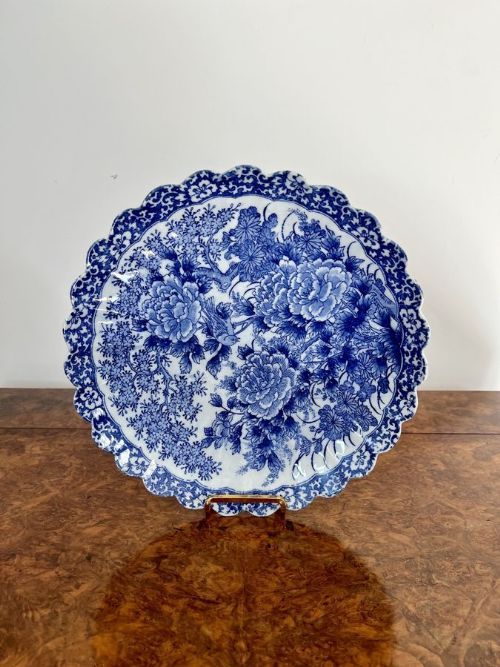


Japanese Blue White Ceramics
Japanese blue white ceramics bring together centuries of porcelain tradition, cobalt pigment, and decorative painting across plates, chargers, and vases.
Japanese Blue White Ceramics
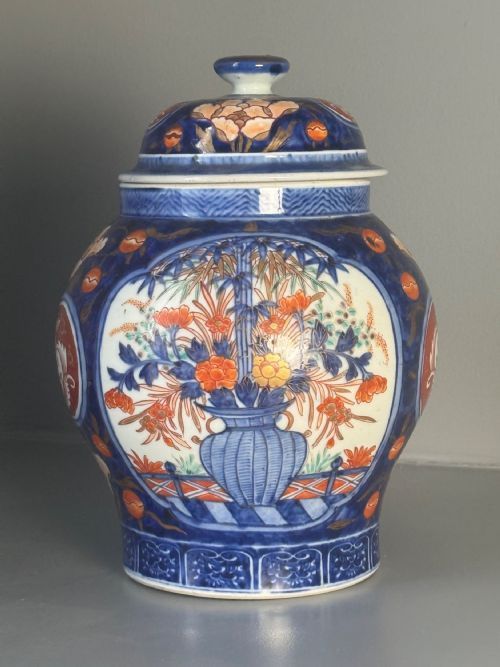
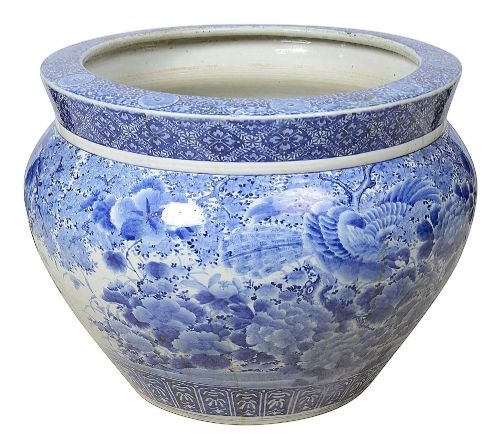
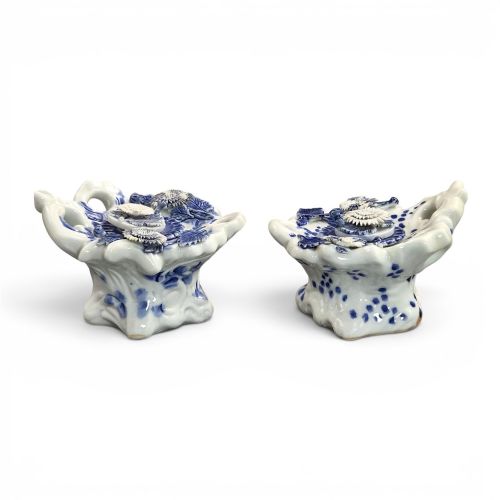
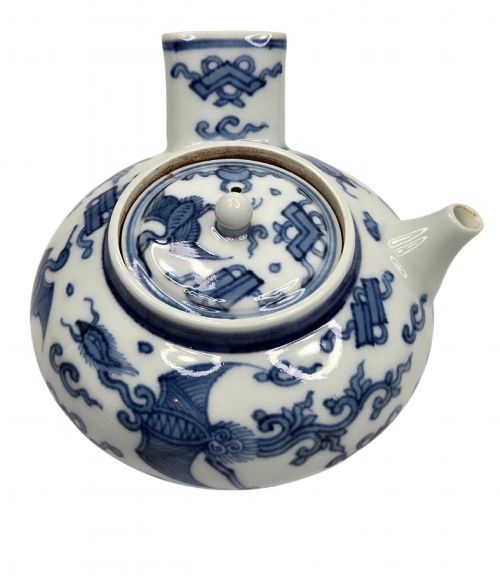
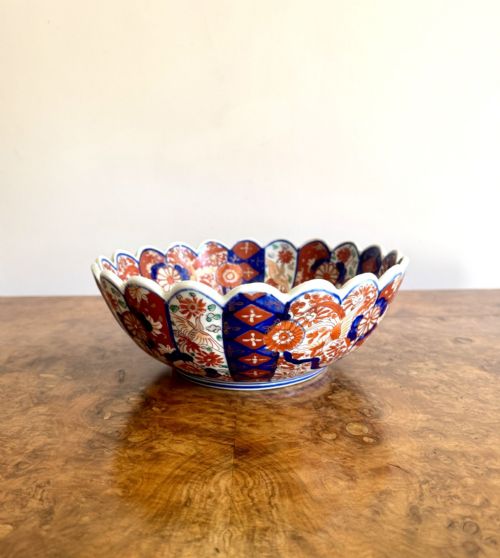
Japanese blue white ceramics comprise porcelain vessels, plates, bowls, and chargers created across the Edo and Meiji periods. Buyers exploring Japanese blue white ceramics encounter forms ranging from large Arita jardinieres and Imari chargers to delicate Hirado inkwells and Sometsuke teapots.
The objects span centuries of production, with examples recorded from the seventeenth, eighteenth, and nineteenth centuries. The majority of pieces met on this page date from the nineteenth century, including Meiji period works featuring hand-painted motifs and lacquer panels.
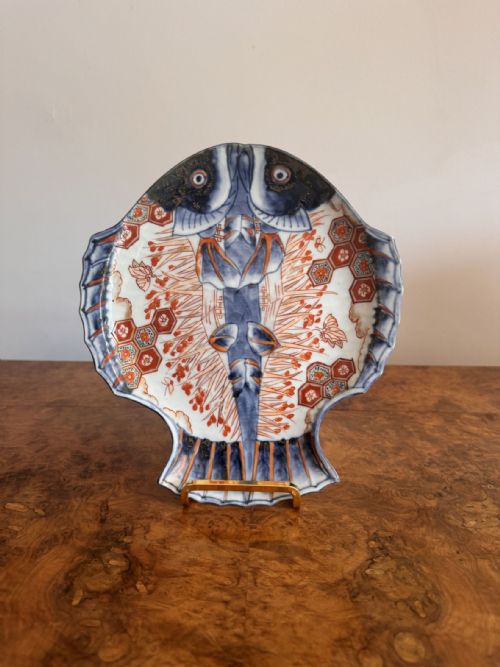
Functional and decorative pieces dominate the selection, encompassing bottle vases, wine cups, scalloped edge dishes, and sculptural figures such as guardian lion dogs. These items reflect traditional Japanese craftsmanship executed in porcelain and ceramic.
How they were made
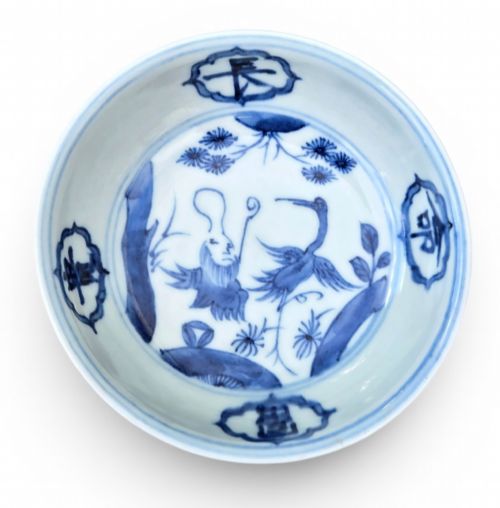
These pieces rely on porcelain clay bodies decorated with cobalt pigment applied under the glaze. Artisans utilised cobalt underglaze techniques to achieve deep blue designs on white ceramic surfaces.
Selected works incorporate additional details such as enamel, gold leaf, and lacquer panels applied over or alongside the primary ceramic body. Hand painting provides the intricate floral, animal, and figurative decoration seen across plates and vases.
Listings feature porcelain pieces spanning from the seventeenth century to the Meiji period, executed in Arita, Hirado, and Imari styles.
What varies in quality
The refinement of the painted brushwork distinguishes superior examples, where cobalt pigment creates crisp, detailed motifs like cranes, koi carp, and chrysanthemums. Greater control in the underglaze application yields cleaner lines and more balanced compositions across chargers and bowls.
Form and sculptural ambition separate standard production from exceptional pieces, seen in reticulated carving, moulded animal figures, and unusual shapes like fish or fan forms. The handling of the porcelain body, from thin-walled vessels to massive jardinieres, dictates the sophistication of the finished object.
Makuzu Kozan
The Japanese Blue White Ceramics Glossary
- Imari
- A style of Japanese porcelain decorated in underglaze blue, iron red, and gold. It originated in Arita and became widely exported during the Edo period.
- Arita
- The Japanese town and primary production centre for porcelain manufacture. Arita wares include both blue and white pieces and polychrome Imari designs.
- Meiji Period
- The era of Japanese history lasting from 1868 to 1912. Pieces from this period frequently display highly detailed hand-painted decoration.
- Sometsuke
- Japanese term for blue and white porcelain decorated with cobalt pigment under the glaze. The technique yields deep blue designs against a white ceramic ground.
- Hirado
- A type of fine Japanese porcelain produced in the Nagasaki region. Hirado wares often feature delicate modelling, reticulated elements, and crisp white bodies.
- Mukozuke
- A small dish or deep saucer used in traditional Japanese dining and tea ceremonies. These vessels often take distinctive geometric or naturalistic forms.
Japanese Blue White Ceramics: Frequently Asked Questions
What are japanese blue white ceramics?
These pieces are porcelain and ceramic objects produced in Japan using cobalt pigment for underglaze decoration. They include utilitarian and decorative forms ranging from large chargers to small wine cups.
The tradition spans multiple centuries, incorporating techniques from Arita and Hirado kilns. Collectors encounter both everyday vessels and highly ornate exhibition pieces.
How were these ceramics used?
Many pieces served practical functions in daily life, dining, and tea preparation, such as bowls, dishes, inkwells, and teapots. Larger items like chargers and jardinieres functioned as interior display pieces.
Export demand also shaped their use, with European and domestic buyers utilising decorative plates and vases to adorn grand interiors.
How do you date these pieces?
Dating relies on stylistic markers, potting techniques, and historical periods such as the Edo and Meiji eras. Form evolution and changes in cobalt pigment application help distinguish seventeenth-century vessels from nineteenth-century examples.
Maker marks, kiln origins, and decorative motifs provide further evidence for establishing the approximate age of a ceramic object.
How should you care for them?
Porcelain and ceramic objects require gentle handling and stable indoor environments away from direct sunlight and sudden temperature shifts. Dusting with a soft, dry cloth preserves the glaze and any supplementary gold leaf or enamel details.
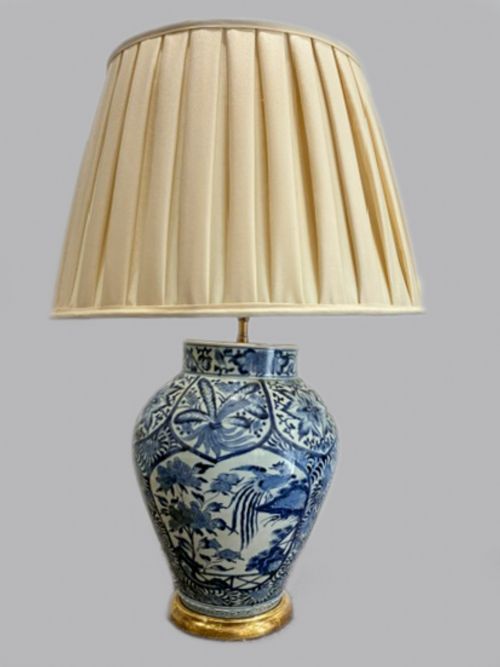
Vessels converted to lamps or used for display should be placed securely on level surfaces to prevent accidental impact.