
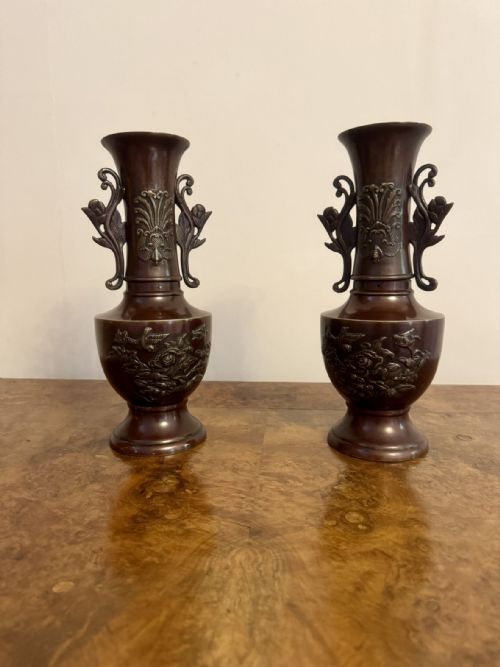


Japanese Bird Relief Vase
A Japanese bird relief vase brings the metallic depth and sculptural detail of the Meiji period directly into a room.
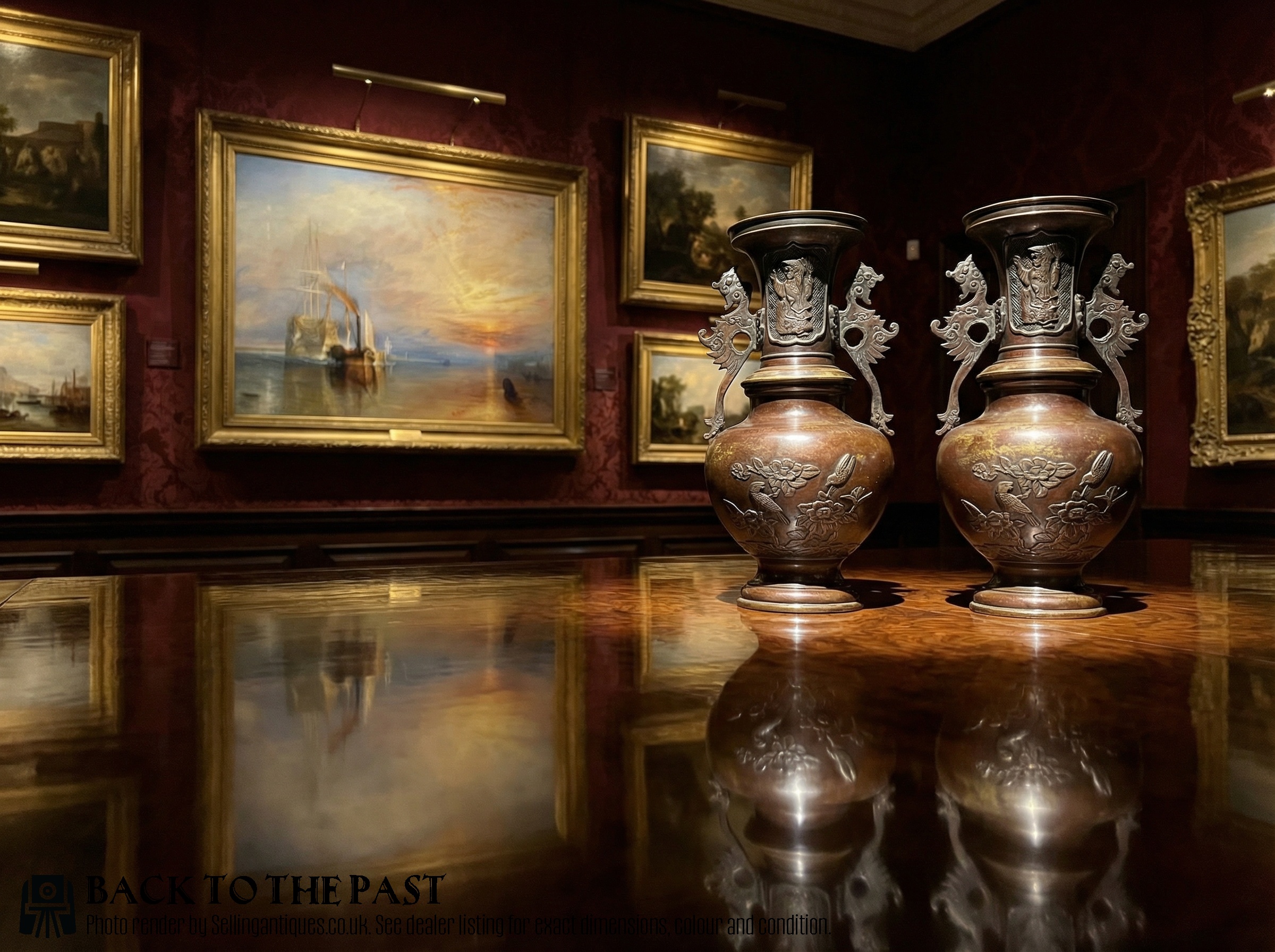
Japanese Bird Relief Vase
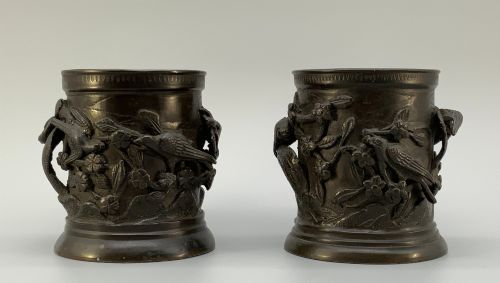
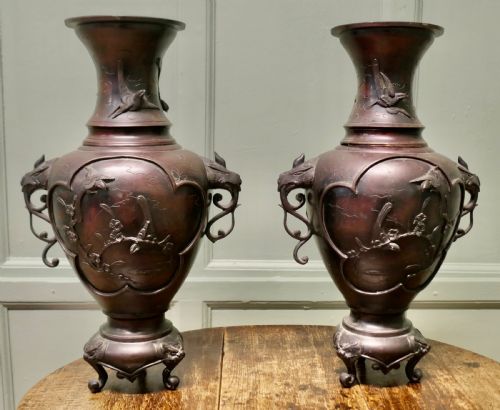
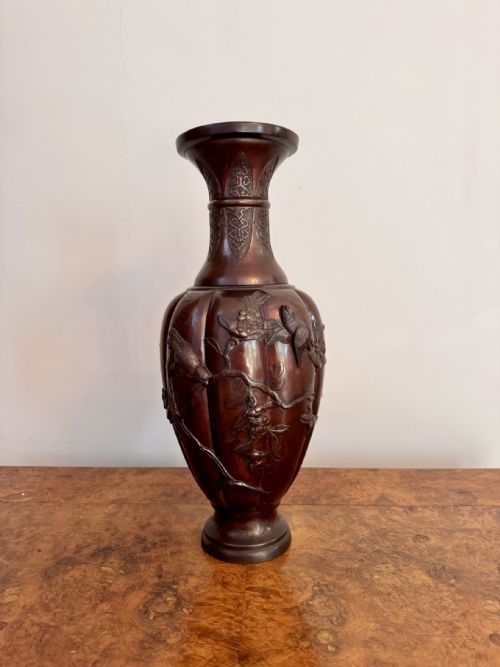
A japanese bird relief vase typically presents dark patinated bronze worked with raised bird and blossom motifs, often arriving in matched pairs suited for symmetrical placement.
The forms span straightforward baluster urns and decorative stem vessels alongside larger presentation pieces and occasional jardinières.
Most examples date from the nineteenth century into the early twentieth century, aligning with the Meiji era and late Victorian periods.
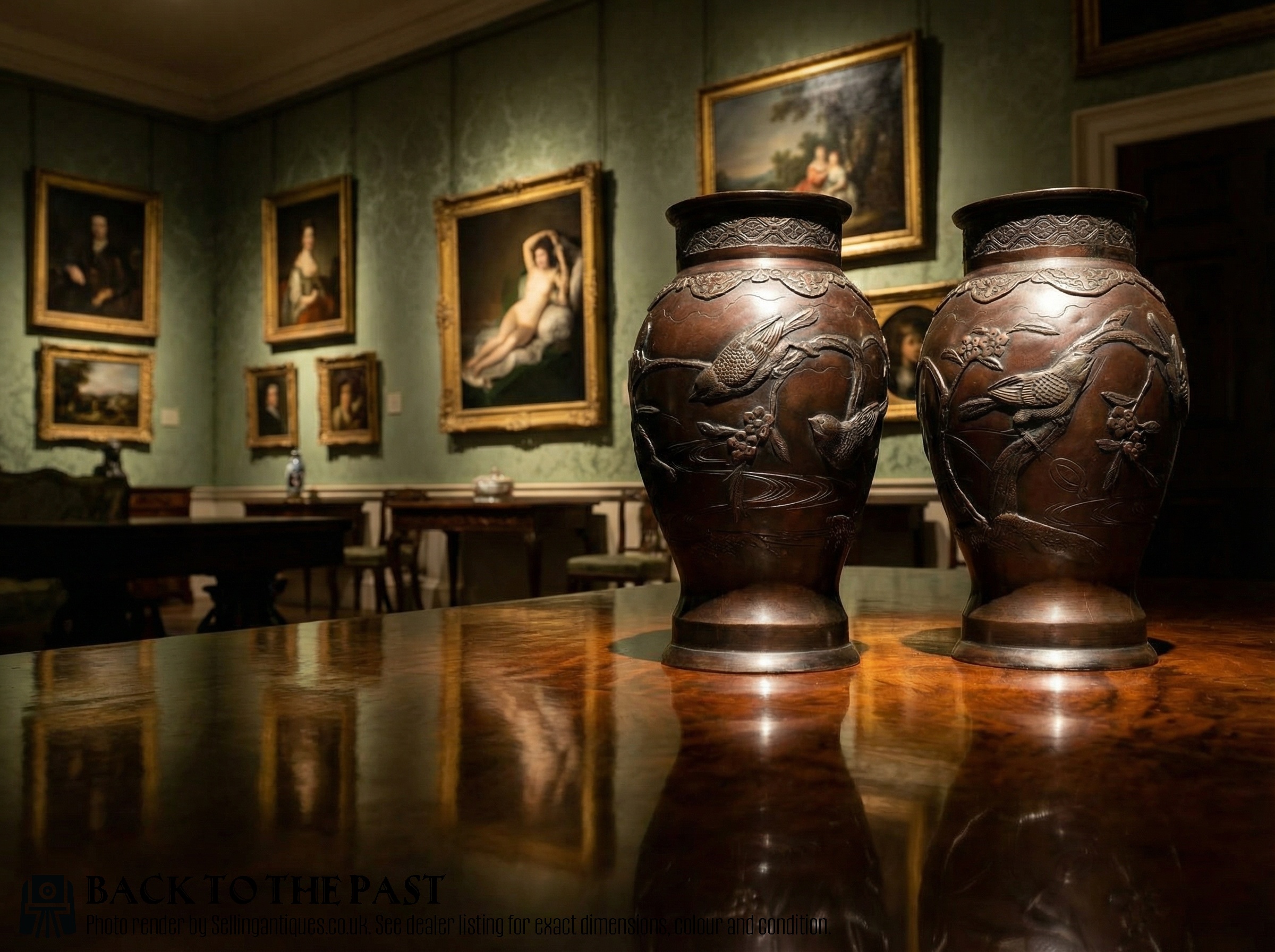
Materials and construction
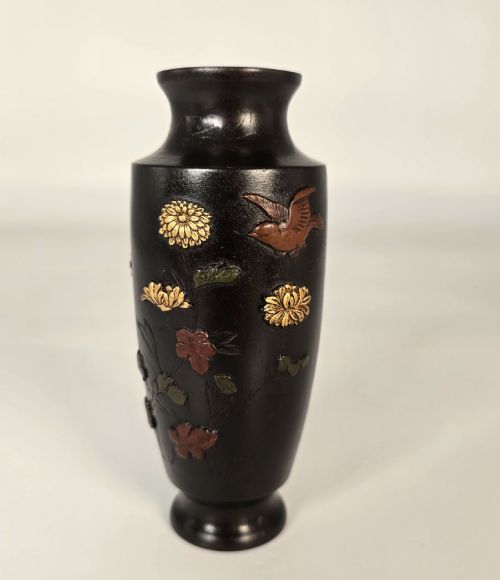
Makers cast these vessels primarily from bronze or patinated bronze, sometimes incorporating mixed metals, copper, silver, and gold inlay or gilt metal details.
The surface decoration relies on raised relief techniques to render birds, blossom, and floral elements with tactile dimension against the dark metallic body.
Some vessels required multiple metals just to convince a single bronze bird to stand out against the blossom.
Differentiating the work
Superior examples show exceptional crispness in the raised metal relief, where fine feather details and botanical forms emerge with sharp definition from the bronze ground.
The overall scale and the presence of twin handles or mixed metal accents elevate certain pieces, distinguishing standard decorative vessels from monumental presentation items.
The Japanese Bird Relief Vase Glossary
- Patinated Bronze
- A bronze surface treated with chemicals or heat to produce a rich, darkened, or aged tone. This dark finish provides contrast for silver and gold inlay.
- Mixed Metal
- The technique of combining different metallic alloys such as copper, silver, and bronze on a single piece. Artisans use this method to create multi-coloured decorative effects.
- Baluster Urn
- A vase form characterised by a bulbous lower body tapering to a narrow neck and flared rim. These urns frequently serve as the base for raised bird and floral motifs.
Japanese Bird Relief Vase: Frequently Asked Questions
How do I display a pair of bronze vases?
Matched pairs look best when placed symmetrically on heavy furniture such as sideboards or mantlepieces, where their dark patinated surfaces can catch the light.
Allow enough surrounding space for the raised relief and bird motifs to remain visible from multiple angles in the room.
What periods do these bronze vases come from?
The available pieces predominantly date from the nineteenth century and the Meiji period, stretching from the eighteen-eighties into the early nineteen-hundreds.
Victorian era cross-referencing often appears in these listings due to the period of import into Western collections.
Are these vases purely decorative?
These vessels were created primarily as ornamental items, functioning as decorative vases, urns, posy pots, or larger jardinières rather than utility vessels.
Their solid bronze construction and intricate mixed metal details make them sculptural centerpieces in their own right.
How do I care for patinated bronze?
Dust the surface gently with a dry, soft cloth to protect the dark patination and any delicate gold or silver inlay.
Avoid using liquid metal polishes or harsh chemical cleaners that might strip away the original finish and raised relief details.