



Bronze Bird Urns
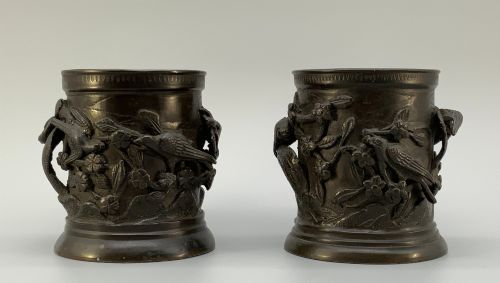
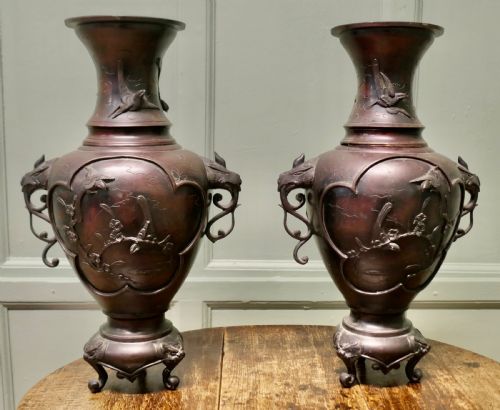
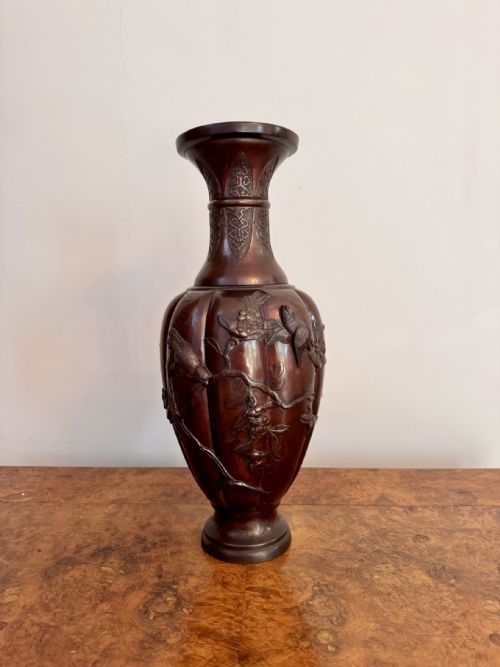
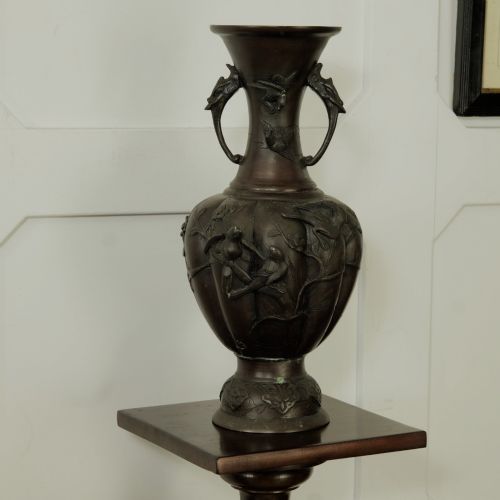
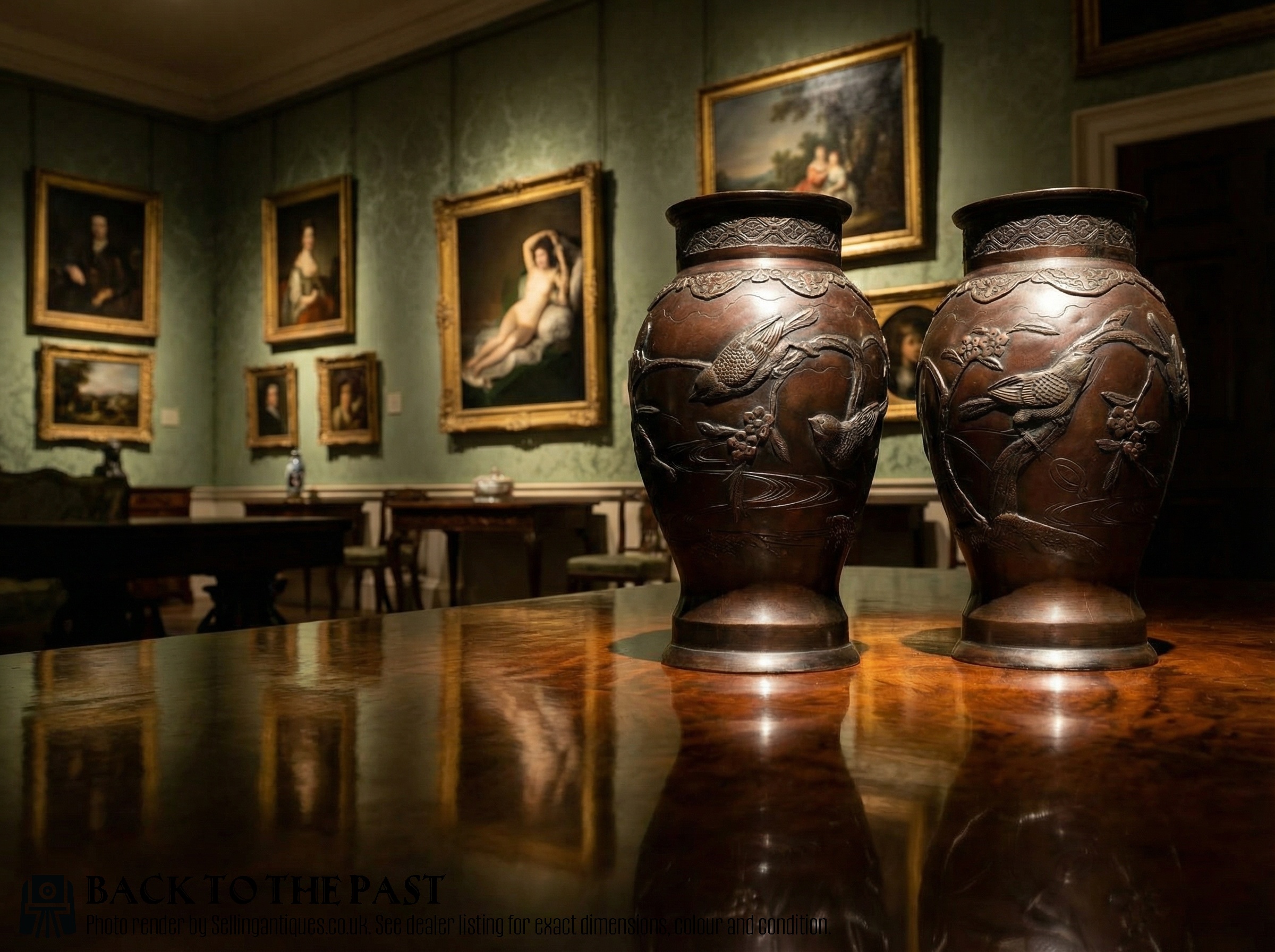
Bronze bird urns bring together cast metal vessels and naturalistic wildlife motifs, predominantly appearing here as 19th-century Japanese Meiji period vases and jardinieres.
Bronze Bird Urns
When searching for bronze bird urns, collectors encounter heavy metal vessels primarily originating from late 19th-century Japan during the Meiji period, alongside Chinese altar pieces and Victorian European interpretations. These objects take the form of baluster vases, stem vases, lidded urns, and large jardinieres intended for display.
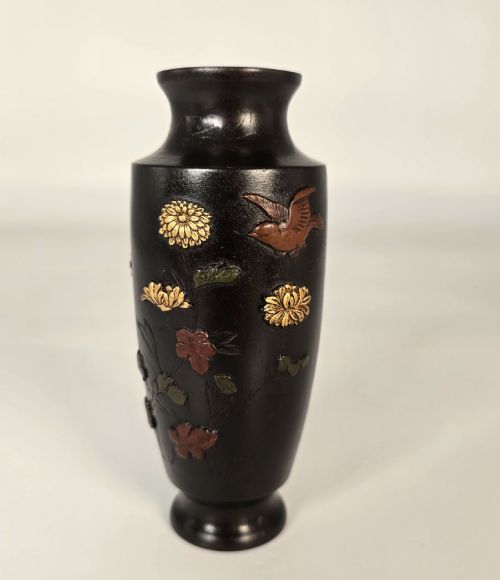
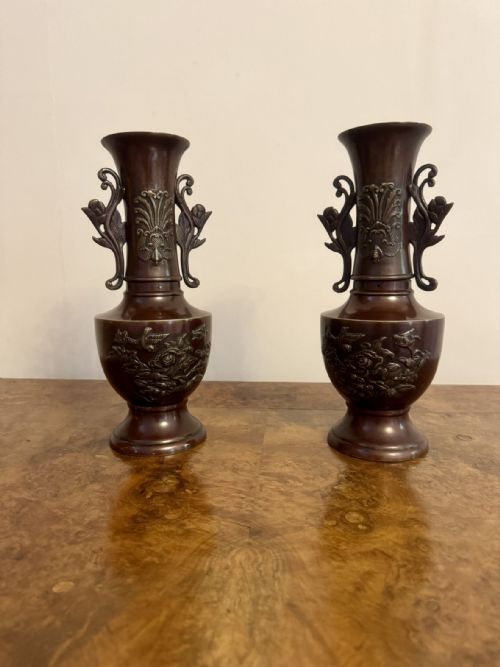
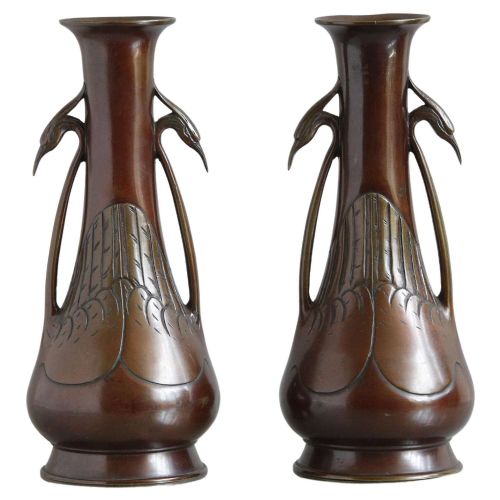
The most common examples on this page are Japanese bronze vases featuring raised detail decoration of birds, blossom, and egret handles. Dating frequently spans from the 1880s to the Edwardian era, encompassing both standard decorative items and presentation pieces.
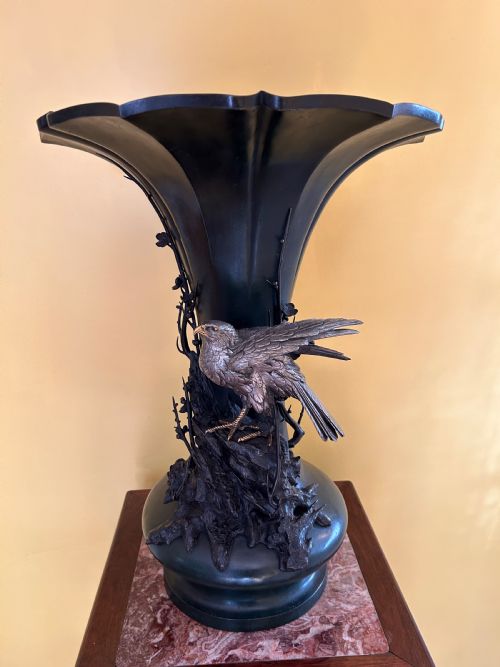
Vessels range from modest fifteen-centimetre posy vases to substantial multi-kilogram jardinieres and altar vases. Chinese examples in the selection tend towards large bowls and bronze vases dating around the 1850s to 1890s.
How bronze bird urns were made
Makers utilised bronze, patinated bronze, and brass as the foundational metals, frequently applying mixed metal elements, gold inlay, or enamel to highlight specific details. Casting methods allowed for the creation of heavy, solid vessels with integrated handles shaped as birds or foliage.
Surface decoration relies heavily on raised detail work where birds and floral motifs stand in relief against the dark metal ground. Some variations incorporate cloisonne techniques with coloured enamel cells fused to the metallic body.
Materials recorded across the inventory include standard bronze, patinated bronze, brass, enamel, and mixed metal compositions.
What varies in quality
Quality separates through the crispness of the casting and the depth of the raised metalwork depicting birds and blossom. Superior examples exhibit deliberate hand-finishing on the plumage and handles rather than flat, uniform surface stamping.
The choice of materials also dictates standing, with mixed metal additions, gold inlay, and complex patination elevating a piece above standard cast production. Weight and scale further distinguish utilitarian vessels from presentation-grade ornamental urns.
The Bronze Bird Urns Glossary
- Meiji Period
- The era in Japanese history spanning from 1868 to 1912, characterised by an opening to Western markets and exceptional metalwork production. Most Japanese bronze vases on this page date from this timeframe.
- Jardiniere
- A large ornamental pot or planter designed to hold growing plants or flowers. These heavy bronze pieces often feature bird and floral relief decoration.
- Patinated Bronze
- Metal treated with chemicals or heat to alter its surface colour and tone. This process creates the rich, dark finishes seen on 19th-century urns.
- Cloisonne
- An ancient technique where enamel paste is applied within wire compartments soldered to a metal base. Pieces utilising this method show colourful floral and avian patterns.
- Baluster Urn
- A vase or vessel characterised by a rounded body that tapers toward the base and neck. This classical silhouette forms the foundation for many Japanese decorative vases.
Bronze Bird Urns: Frequently Asked Questions
How do I identify a Meiji period bronze vase?
Meiji period bronze vases generally date between 1868 and 1912, reflecting the distinct craftsmanship of that era in Japan. They often feature naturalistic motifs such as birds, blossom, and raised metal detailing.
Examination of the surface reveals the typical dark patination or mixed metal inlay associated with this period of Japanese metalworking. Many pieces also carry date markers or workshop signatures on the underside.
What is the difference between an urn and a jardiniere?
Urns typically function as closed or lidded decorative vessels with a defined neck and pedestal, designed primarily for ornamental display. Jardinieres serve as wider, open planters meant for housing live plants or floral arrangements.
In this selection, both forms utilise heavy bronze construction and feature avian or botanical relief work. The choice between them depends on whether you prefer a tall vertical vase form or a low, wide container.
Are these bronze vessels Japanese or Chinese?
The vast majority of bronze vessels in this collection originate from Japan, specifically associated with the Meiji era and late 19th-century production. These typically display egret handles, raised bird motifs, and intricate patination.
Chinese examples also appear in the listings, usually represented by heavier altar vases and large bronze bowls dating from the mid-to-late 19th century. Reviewing the listed period and style details helps distinguish the regional workshops.
How should I clean antique bronze urns?
Antique bronze should be maintained gently to preserve its original patinated surface and any gold inlay. Dusting with a soft, dry cloth is usually sufficient for regular upkeep.
Avoid using harsh metal polishes or chemical cleaners, as these can strip away the historical patination that defines the piece. Professional advice should be sought if deeper cleaning is required.