



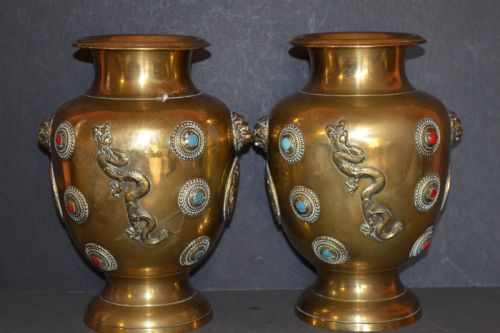


Inlaid Bronze Urns
Inlaid bronze urns bring striking mixed-metal detail to a room, offering distinct Japanese and French craftsmanship from the nineteenth and early twentieth centuries.
Inlaid Bronze Urns
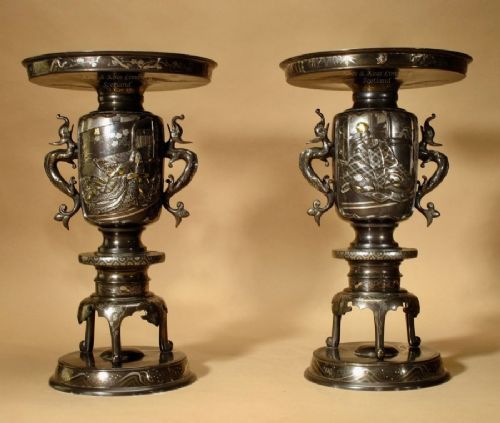
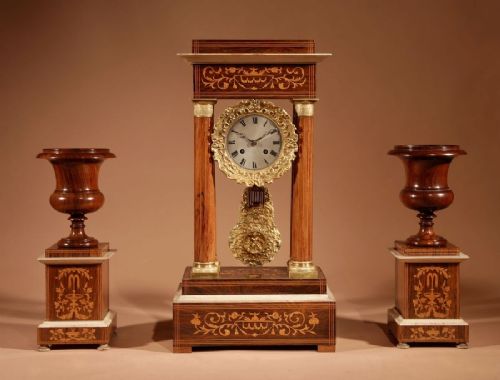
When you search for inlaid bronze urns, you encounter decorative vessels and mantel clocks spanning the nineteenth and early twentieth centuries. These pieces originate predominantly from Japanese Meiji workshops, alongside French Louis Philippe portico clock garnitures and Tibetan or Nepalese pieces.
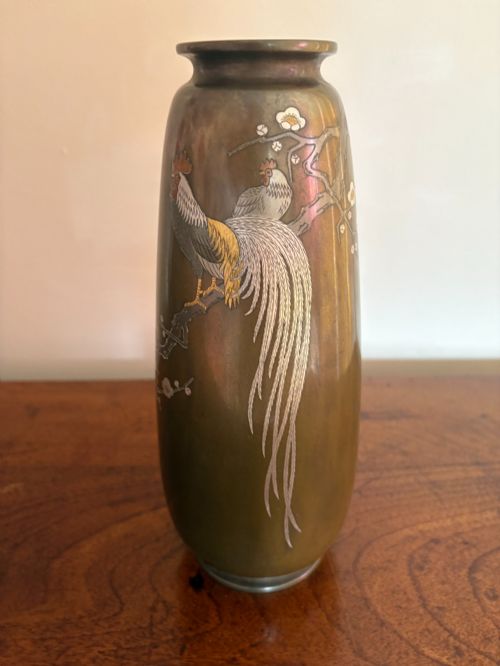
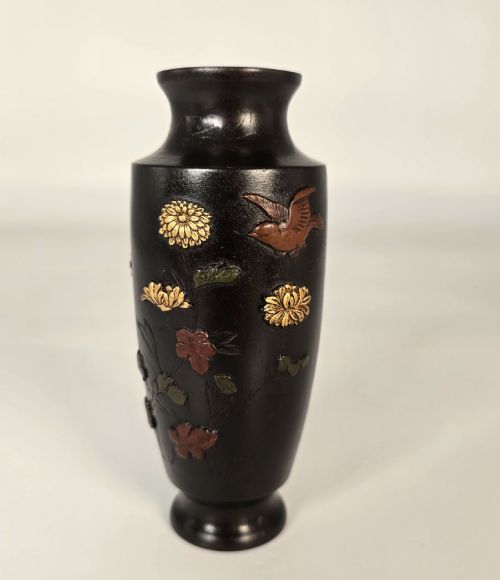
The most common items on this page are Japanese bronze and mixed-metal vases from the Meiji period, featuring intricate surface decoration and varying heights. Alongside them, French clock garnitures and Himalayan vases complete the selection of cast metalwork.
How they were made
These items are cast in bronze, brass, or copper, often enhanced with silver and gold inlay or mixed-metal elements. Artisans worked the metal surfaces to create contrasting textures and detailed pictorial or geometric ornamentation.
Some Japanese examples incorporate mixed metals directly into the bronze body, whilst French garnitures pair cast bronze with other materials such as rosewood to form architectural clock cases.
Inlaid Bronze Urns Retail Price Guide 2026
Typical asking prices for inlaid bronze urns among the pieces listed under this phrase on Sellingantiques today, from the lower quarter to the upper quarter. They describe what is for sale here now, not the wider market.
What varies in quality
Quality rests in the precision and complexity of the metalwork, distinguishing standard cast vessels from those bearing meticulous multi-metal inlay. The crispness of the casting and the integration of gold, silver, and copper elements define the upper tier of these pieces.
Scale and proportion also mark the difference, as heavier paired vases and grander portico clock garnitures demand greater foundry skill than smaller, simpler cabinet pieces.
KANASAWA·GENRYUSAI SEIYA
The Inlaid Bronze Urns Glossary
- Meiji Period
- The era in Japanese history lasting from 1868 to 1912, noted for a surge in sophisticated metalwork and decorative arts exported to the West. This period produced the majority of the mixed-metal vases seen here.
- Portico Clock Garniture
- A French clock set featuring an architectural case supported by pillars, frequently accompanied by matching side ornaments. The Louis Philippe examples date from the mid-nineteenth century.
- Mixed Metal
- A technique involving the combination of different metallic alloys, such as bronze, copper, silver, and gold, to create varied surface colours and tones. Japanese makers utilised this method extensively.
- Inlay
- A decorative technique where materials of contrasting colours or types are inserted into depressions sunk into the base metal. Gold and silver inlay work creates fine linear details upon bronze surfaces.
Inlaid Bronze Urns: Frequently Asked Questions
What periods do these pieces date from?
The selection spans the nineteenth and early twentieth centuries, encompassing mid-nineteenth-century French pieces and Japanese Meiji works stretching up to 1920.
Most items cluster around the Meiji period and the later decades of the nineteenth century, reflecting the primary eras of production for these metal goods.
Are these items strictly Japanese?
No, whilst Japanese Meiji vases make up the majority of the metalwork, the selection also includes French clock garnitures and Tibetan or Nepalese pieces.
Each origin brings distinct cultural styles and casting techniques, from Himalayan bronze vessels to Louis Philippe portico clocks.
How do mixed metal vases differ from plain bronze?
Mixed metal vases incorporate additional metals like silver, gold, and copper into the design to add contrasting colour and texture to the surface.
Plain bronze relies solely on the patination and casting detail of the single alloy, whereas mixed metal examples display intricate multi-hued ornamentation.
How do I style a portico clock garniture?
A portico clock garniture works best as a balanced centrepiece on a mantelpiece or a large sideboard, utilising the matching side pieces to frame the main clock.
The architectural columns and substantial weight of these French sets require a sturdy surface with adequate depth to support the complete garniture.