
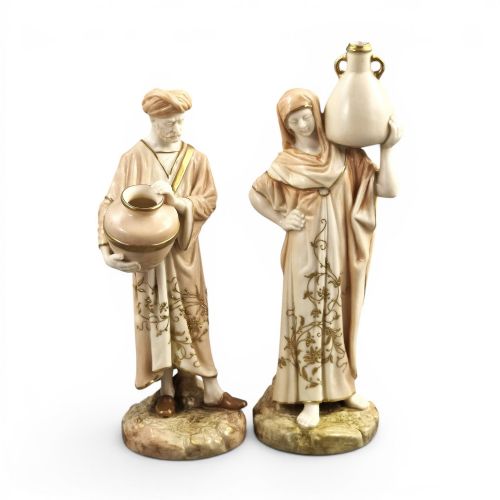
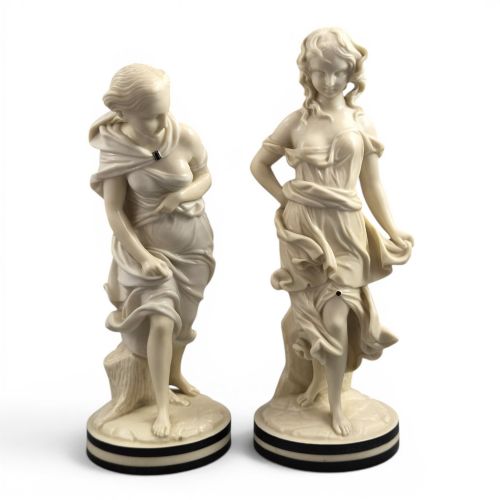


James Hadley Worcester
James Hadley Worcester ceramics capture Victorian sculptural ambition through finely modelled figures and decorative wares carrying distinctive orientalist and classical subjects.
James Hadley Worcester
James Hadley Worcester pieces represent a major chapter in British ceramic art, focusing predominantly on highly detailed figural works and decorative vessels. When searching for james hadley worcester, collectors encounter sculptural forms depicting human figures, water carriers, musicians, and allegorical subjects.
The objects span varied domestic and ornamental shapes, ranging from cabinet figurines and sweetmeat dishes to large candelabra, jardinieres, and pot pourri urns. Most examples date from the Victorian period through to the Edwardian era, reflecting the distinct aesthetic movements of the late nineteenth century.
Figurines often depict named characters or cultural archetypes, such as Egyptian musicians, classical maidens, and figures representing countries of the world. These pieces display a sophisticated approach to ceramic sculpture that bridges decorative utility and high art.
Materials and production
Makers utilised fine porcelain and Parian ware to achieve the crisp surface detail required for complex figural modelling. Parian ware provided a matte, marble-like finish that suited classical subjects, while fine white porcelain supported intricate glazing and painting.
Decoration relied heavily on the blush ivory glaze, an innovation that gave wares a soft, warm cream background for polychrome enamel painting. Artisans applied gold leaf, gilding, and metallic accents to highlight garment edges, architectural details, and patterned borders.
Specialised techniques such as patent metallic finishes and shot-enamel effects added depth and iridescent quality to costume details on exhibition pieces. Firing required precise temperature control to preserve the delicate relief work and prevent distortion in large candelabra and centerpieces.
Several figurines capture specific nineteenth-century personalities and traders, preserving characters like coppersmiths and trinket makers in permanent ceramic form.
Assessing quality
Painted decoration distinguishes standard production from exhibition-standard works, where skilled artists executed intricate patterns and nuanced flesh tones. Rich application of gold leaf and careful placement of enamels elevate the visual impact of figures and candelabra.
Scale and complexity also govern desirability, with large multi-figure groups, candelabra, and documented named models commanding greater attention than smaller, unpretentious figures.
James Hadley·Royal Worcester
The James Hadley Worcester Glossary
- Blush ivory glaze
- A soft, creamy-peach ceramic ground developed by the factory to provide a warm underlayer for hand-painted floral and figural decoration. This finish is characteristic of late Victorian aesthetic wares.
- Parian ware
- A fine-grained, unglazed porcelain resembling white marble, named after Parian marble from the Greek island of Paros. It was utilised extensively for Victorian portrait busts and classical statuary.
- Pot pourri urn
- A decorative vessel pierced with ventilation holes in the lid to diffuse scented dried plant material into a room. These items often featured elaborate figural supports or painted panels.
- Sweetmeat dish
- A small, open decorative dish designed to hold confectionery, sweetmeats, or small sweet treats during formal dining. In this medium, they frequently incorporated modelled child or rustic figures supporting the bowl.
- Patent metallic
- A specialised surface treatment producing a lustrous, bronze-like or metallic sheen on ceramic bodies. It appeared on specific late nineteenth-century ornamental wares to mimic metalwork.
James Hadley Worcester: Frequently Asked Questions
What subjects did James Hadley design?
James Hadley designed a wide array of figural subjects, including classical maidens, eastern water carriers, musicians, and regional character studies. These drew inspiration from contemporary interest in travel, antiquity, and genre scenes.
Many figures formed cohesive pairs or series, such as the countries of the world or wind-themed maidens, reflecting Victorian taste for narrative and allegorical ornament.
How do I identify Hadley pieces?
Identification relies on recognising the sculptural style, typical soft blush ivory surfaces, and specific model numbers associated with the modeller's output. Many items bear factory stamps alongside personal marks or signatures.
Figurines often feature impressed numbers or registration marks corresponding to production years in the late nineteenth century.
Where were these pieces displayed?
Owners originally placed these decorative objects on mantelpieces, drawing-room side tables, and central display cabinets within Victorian and Edwardian homes. Large candelabra and centrepieces served as formal table decorations during dining.
Their intricate detail and narrative subjects made them ideal focal points for conversation in polite society.
How should I care for antique porcelain?
Care requires dusting gently with a soft, dry brush to prevent accumulation in crevices and around delicate gilt work. Avoid using water or chemical cleaners on painted enamel and blush ivory surfaces, as these can disturb historic finishes.
Keep pieces away from direct sunlight and areas prone to extreme temperature fluctuations to preserve the ceramic body and gilding.