
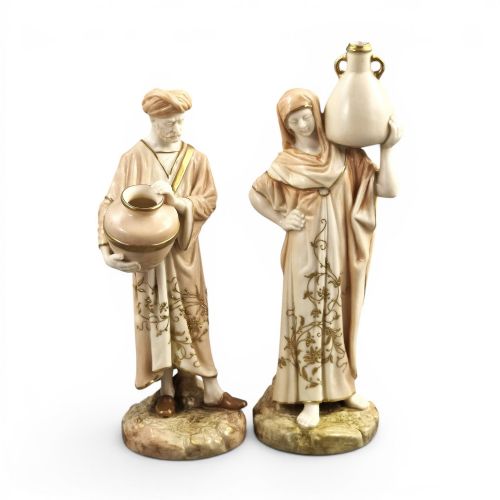


Water Carrier Porcelain Figures
These water carrier porcelain figures bring nineteenth-century Orientalist and classical design into the room through detailed ceramic modelling.
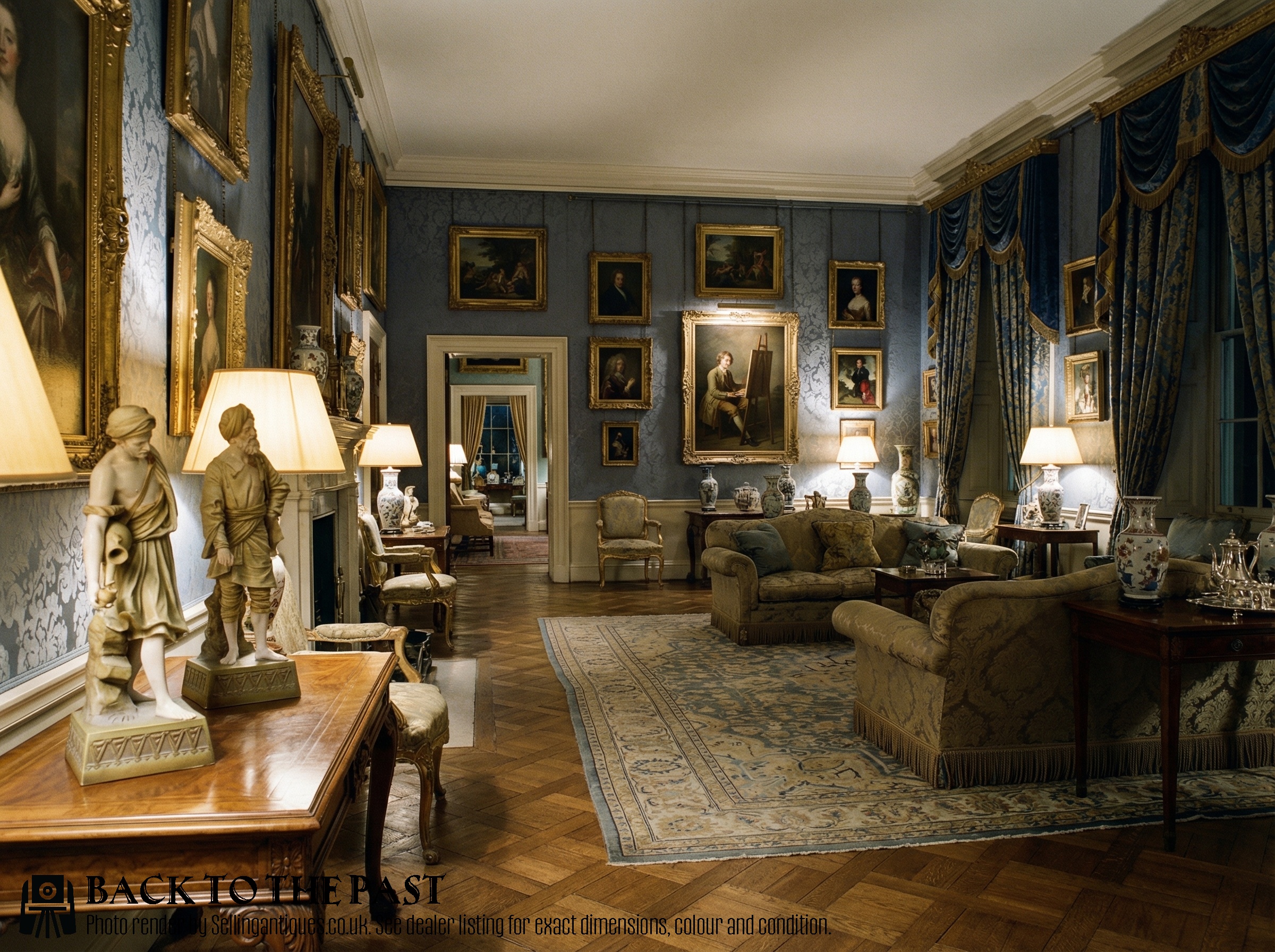
Water Carrier Porcelain Figures
Water carrier porcelain figures capture figurative subjects from the nineteenth century, including Orientalist and Grecian themes, represented by women holding jugs or wicker baskets. These decorative figurines frequently appear as pairs or individual pieces modelled in naturalistic poses.
The selections span the Victorian, Edwardian, and turn-of-the-century periods, showing influences from Turn-Teplitz and Art Nouveau styles. Such pieces reflect late nineteenth-century and early twentieth-century manufacturing approaches from European potteries.
How they were made
Makers utilised porcelain, ceramic, and biscuit porcelain or bisque to shape these figures, applying varied tactile finishes to the surfaces. Enamel, gilt, gold leaf, and gilding accent specific details like garments and vessel rims.
Moulding techniques allowed workshops to produce intricate folds in drapery and realistic textures in accessories such as wicker baskets. Skilled hand-painting finished the pieces, defining facial expressions and patterns across the ceramic body.
Materials recorded on this page include enamel, gilt, and gold leaf applied to standard porcelain and biscuit ceramic bodies.
What varies in quality
Scale and complexity also influence the character of each piece, with large pairs and prototype or museum-provenance works showing more ambitious modelling. The crispness of the porcelain or bisque body preserves the original contours intended by the designer.
Royal Worcester·James Hadley·Royal Dux
The Water Carrier Porcelain Figures Glossary
- Biscuit porcelain
- Unglazed porcelain fired once to create a matte, porous surface resembling marble. This finish highlights delicate modelling in figurative ceramics.
- Gilding
- The application of a thin layer of gold or gold leaf to ceramic surfaces. It highlights decorative motifs and trim on nineteenth-century figures.
- Orientalism
- An artistic style drawing inspiration from the cultures of the Near and Middle East. It frequently informed the subject matter of Victorian decorative art.
- Turn-Teplitz
- A geographical centre for ceramic production in Bohemia associated with fin-de-siècle figures. Works from this region often combine naturalistic forms with Art Nouveau styling.
- Figurine
- A small three-dimensional sculptural representation of a human or animal form. These objects serve decorative purposes in domestic interiors.
Water Carrier Porcelain Figures: Frequently Asked Questions
What periods do these figures come from?
These ceramic works date primarily from the nineteenth century through the early twentieth century, spanning Victorian, Edwardian, and turn-of-the-century eras. The recorded examples show production dates concentrated around the 1880s, 1890s, and early 1900s.
Specific pieces reflect stylistic shifts from Victorian Orientalism towards Art Nouveau sensibilities. Makers of this period frequently drew on classical and Near Eastern themes for their figurative subjects.
What materials were used to make them?
Makers utilised porcelain, ceramic, biscuit porcelain, and bisque as the primary body materials for these figures. These ceramic bases provided a stable canvas for detailed sculptural modelling.
Surface enrichment included enamel, gilt, and gold leaf. These metallic and coloured accents pick out details on garments, vessels, and bases.
How were water carrier figures used originally?
These decorative figurines functioned as ornamental display pieces within nineteenth-century domestic interiors. Their elaborate subjects reflected contemporary tastes for exoticism and classical antiquity.
Pairs were often placed on mantelpieces, pedestals, or side tables as symmetrical decorative ornaments. Their detailed hand-painting and modelling invited close inspection by visitors.
How can I tell different styles apart?
Victorian Orientalist examples typically feature subjects in regional dress carrying water jugs or baskets, finished with rich enamel and gilt. Pieces from the turn-of-the-century period often incorporate softer contours and styling associated with Turn-Teplitz and Art Nouveau.
Examining the glaze and finish also helps distinguish glazed porcelain from matte biscuit porcelain or bisque. Maker marks and modelled forms provide further clues to the specific design period.