



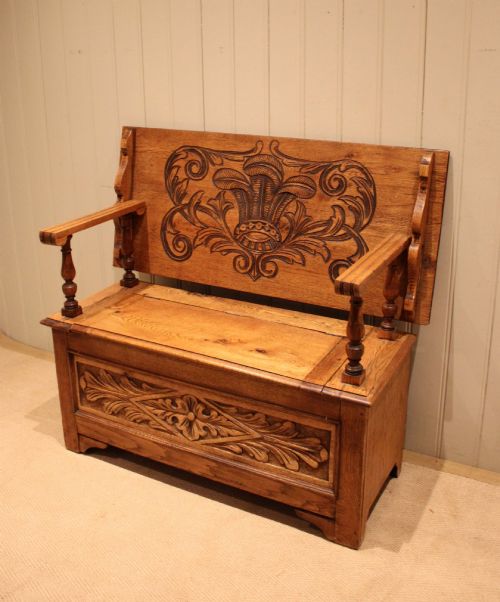


Jacobean Style Oak Bench
A jacobean style oak bench brings solid timber architecture and traditional carved panelling into a hallway or living space.

Jacobean Style Oak Bench
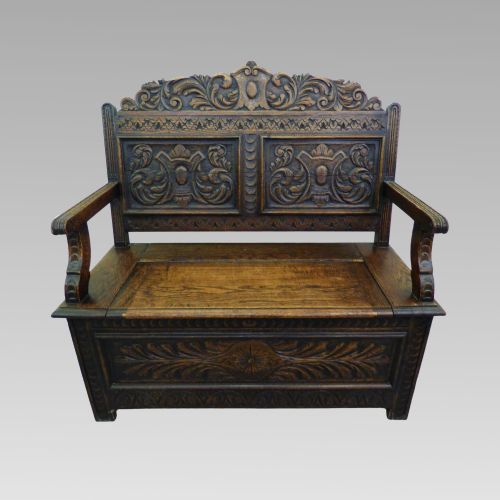
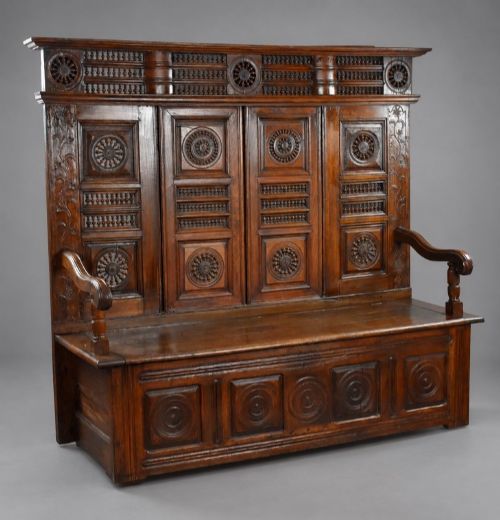
A jacobean style oak bench encompasses heavy seating furniture inspired by seventeenth-century proportions and joinery. Pieces range from high-backed settle forms designed to block draughts in an entrance hall to convertible monks benches that double as tables.
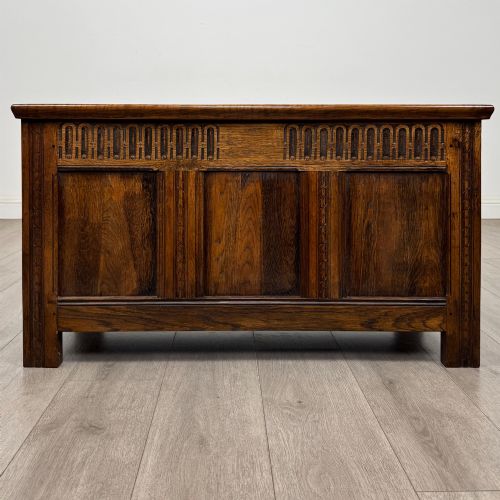
The versions most frequently met on this page date from the Victorian, Edwardian, and early twentieth-century revival periods. These later interpretations appropriate the deep carving, panelled backs, and dark or golden finishes of the original seventeenth-century tradition.
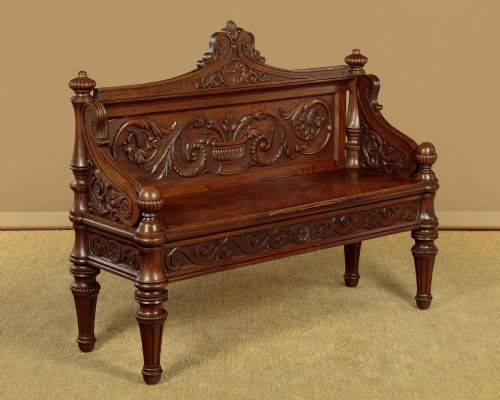
Makers working across the nineteenth and twentieth centuries produced various formats, including hall benches, box settles with storage beneath the seat, and simpler forms incorporating cane or fabric elements.

What varies in quality
The calibre of a jacobean style oak bench rests upon the weight of the timber and the depth of the hand carving. Pieces featuring crisp, sharply defined relief work on thick solid oak panels sit higher in the range than those with shallower, mechanical surface decoration.
Proportion and structural integrity also dictate distinction, particularly in convertible monks benches or large box settles. Examples that maintain balanced dimensions and retain their original finish demonstrate superior craftsmanship.
Jacobean Style Oak Bench Retail Price Guide 2026
Typical asking prices for jacobean style oak bench among the pieces listed under this phrase on Sellingantiques today, from the lower quarter to the upper quarter. They describe what is for sale here now, not the wider market.
Miniature apprentice pieces and diminutive footstools occasionally appear alongside full-sized hall settles and massive monks benches.
The Jacobean Style Oak Bench Glossary
- Settle
- A wooden bench with a high back, solid wooden arms, and often a box base for storage. It was historically placed near the hearth to keep out cold draughts.
- Monks bench
- A convertible piece of furniture featuring a hinged back that folds down over the arms to form a table top. It combines seating with a functional surface.
- Jacobean revival
- A nineteenth and twentieth-century design movement that reinterpreted the heavy, rectilinear furniture styles and rich carving of the early seventeenth century. It utilised modern workshop practices while imitating historical aesthetics.
- Box settle
- A form of bench incorporating a compartment with a hinged seat lid for storing household goods. The enclosed base prevented cold air from flowing underneath the sitter.
- Limed oak
- A wood treatment that creates a whitish, frosted appearance within the grain of the timber. This finish lightened the overall tone of dark oak furniture.
Jacobean Style Oak Bench: Frequently Asked Questions
What is a monks bench?
A monks bench is a dual-purpose furniture form featuring a hinged backrest that tilts forward to rest on the armrests, creating a flat table surface. When upright, it functions as a traditional hall seat with enclosed storage beneath the cushion.
This clever space-saving design appeared frequently during the revival periods of the late nineteenth and early twentieth centuries, drawing on seventeenth-century vernacular forms.
How do I date a revival bench?
Dating a revival piece relies on examining the timber preparation, tool marks, and hardware construction. Pieces from the Victorian, Edwardian, and 1920s eras often display machine-sawn elements hidden beneath hand-carved surfaces.
Comparing the colour and patina of the oak with seventeenth-century originals helps establish whether a piece belongs to the primary era or subsequent revival movements.
Where should I place a settle?
Settles suit entrance halls, boot rooms, or large living spaces where their high panelled backs can anchor a room. Their solid construction makes them practical for everyday seating while providing a distinct architectural presence.
Box settles offer the added benefit of concealed storage inside the base, making them useful for keeping blankets or hall accessories out of sight.
Are these benches solid oak?
The majority of these pieces utilise solid oak or heavy oak framing, though secondary timbers occasionally appear in concealed structural areas. Workshops during the revival periods prioritized substantial timber to replicate the weight of earlier centuries.
Finishes range from stripped golden oak to dark patinated surfaces and limed treatments, depending on the specific revival era in which the piece was constructed.