

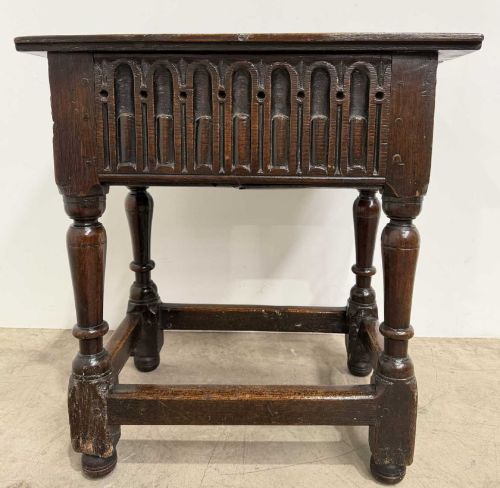
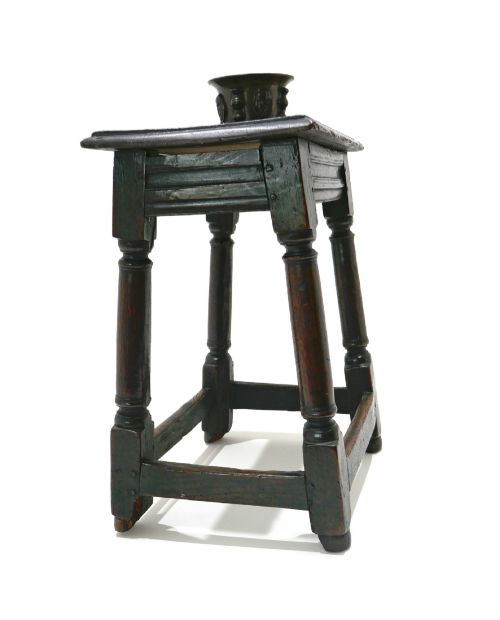

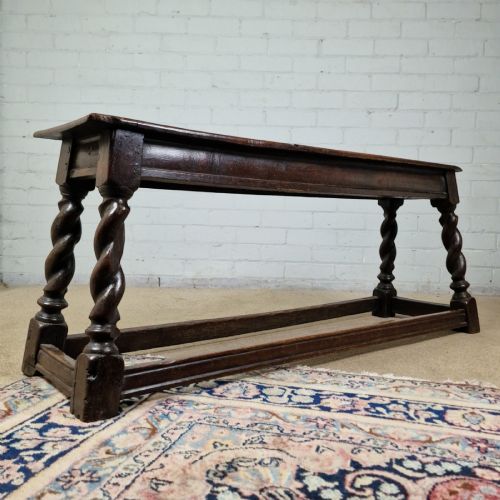
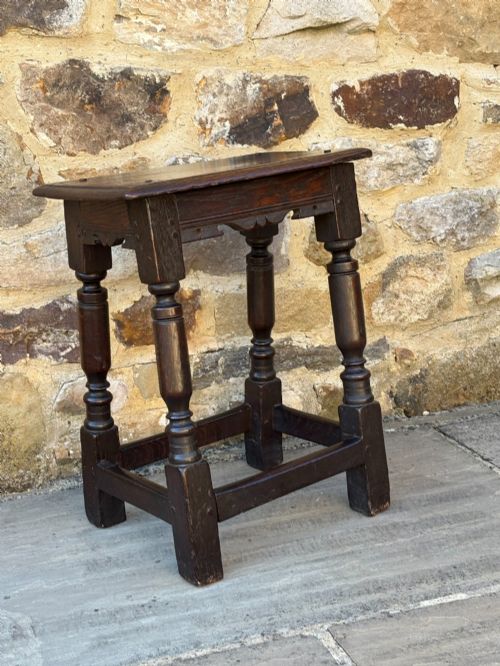



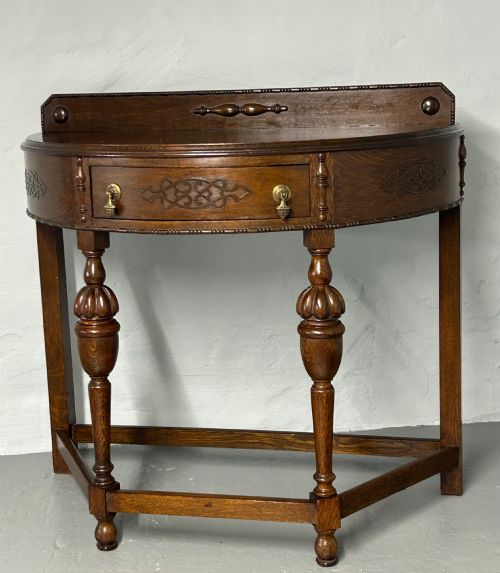

Jacobean Oak Stool
When you handle a jacobean oak stool, you hold heavy timber worked by hands centuries ago, built to last through generations of daily use.
Jacobean Oak Stool
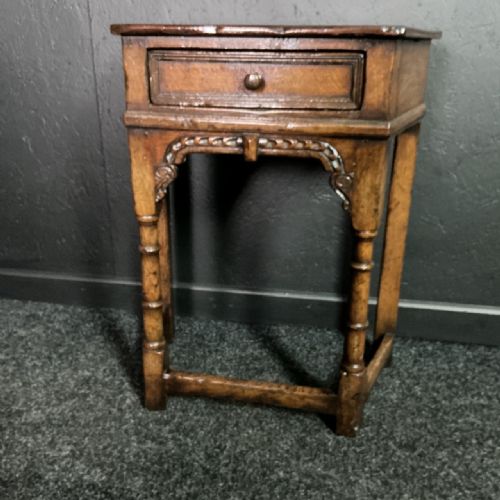
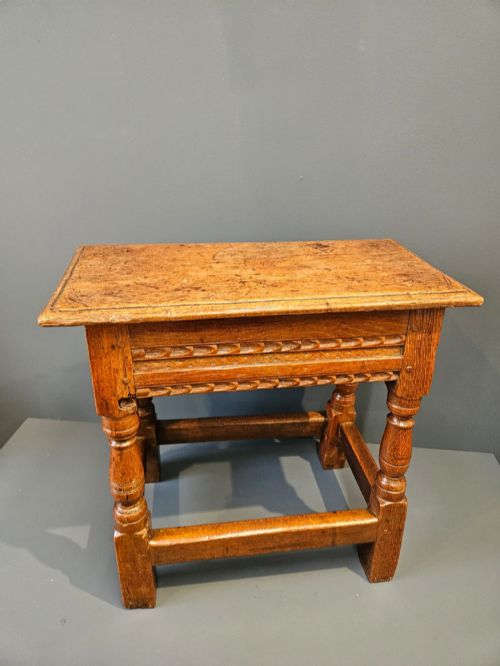
A jacobean oak stool brings solid timber construction into domestic spaces, appearing most often as a sturdy joint stool or box stool. These forms served practical household needs, from seating at trestle tables to storing small valuables within enclosed box seats.
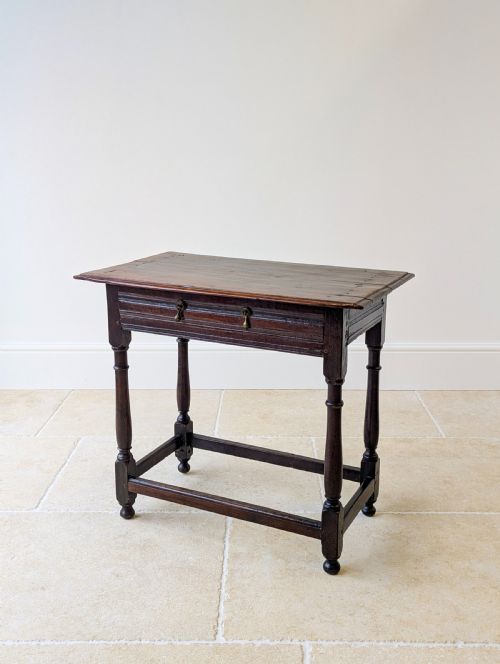
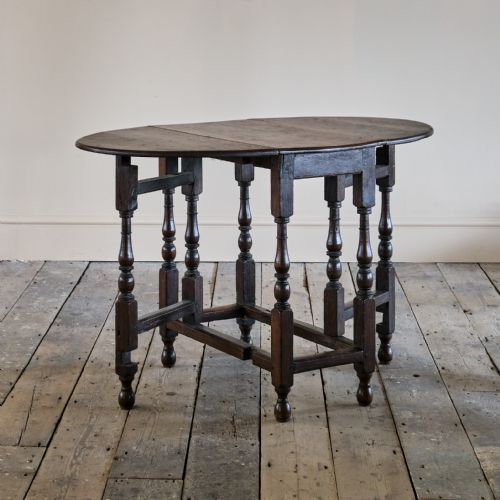
The pieces on this page span genuine seventeenth-century examples alongside later nineteenth and twentieth-century revival interpretations. Buyers encounter forms ranging from low footstools to high back stools, reflecting changing domestic habits across multiple centuries.
Construction relies heavily on pegged mortise and tenon joints rather than metal nails or screws. This traditional joinery gives the timber its distinct skeleton, keeping the seat stable through decades of movement.
How they were made
Makers relied on native English oak, sawing and splitting the heavy timber before shaping it with drawknives and chisels. This dense material provides the structural integrity that allows seventeenth-century frames to survive intact today.
Joinery was secured using wooden pegs driven through tight mortise and tenon connections, letting the wood expand and contract with humidity without losing strength. Surface decoration involved chip carving, punch work, and simple mouldings applied directly to the solid rails and stretchers.
Jacobean Oak Stool Retail Price Guide 2026
Typical asking prices for jacobean oak stool among the pieces listed under this phrase on Sellingantiques today, from the lower quarter to the upper quarter. They describe what is for sale here now, not the wider market.
Listings feature solid oak combined with occasional elements of elm, brass, iron, cane, and tapestry upholstery across the centuries.
What varies in quality
Quality rests in the proportion of the timber and the crispness of the original hand-cut joints. Pieces retaining their original top boards and untouched surface patination command deeper appreciation from collectors than those rebuilt with replacement members.
Revival pieces from later centuries vary according to the fidelity of their construction and the weight of the oak selected. Heavier timber and hand-finished turning distinguish superior workshop interpretations from lighter commercial output.
The Jacobean Oak Stool Glossary
- Joint stool
- A sturdy wooden seat constructed with pegged mortise and tenon joints rather than turned legs alone. These items were common in seventeenth-century households for dining and domestic tasks.
- Box stool
- A seat featuring a hollow compartment beneath the lid, sometimes utilised for storage or as a close stool. The lid lifts to reveal a concealed interior space.
- Jacobean revival
- A nineteenth or twentieth-century design movement copying the heavy turned legs, dark patinated oak, and carved strapwork of the early seventeenth century. Makers applied these historical motifs to contemporary household furnishings.
- Stretchers
- The horizontal wooden rails connecting the lower legs of a stool for added rigidity. They often served as footrests to keep feet clear of damp rushes or cold stone floors.
- Patina
- The deep, lustrous surface sheen developed on oak over centuries through handling, waxing, and exposure to light. It serves as a visual indicator of age and history.
Jacobean Oak Stool: Frequently Asked Questions
How do I use a joint stool today?
These sturdy seats fit easily beside a modern sofa as a small side table for books or drinks. Their flat tops also suit use as plant stands or low bedside tables in smaller bedrooms.
Because the timber is robust, they tolerate everyday placement in high-traffic hallways without sustaining damage. Simply keep them away from direct heat sources to protect the ancient wood.
How can I tell a seventeenth-century stool from a revival piece?
Examine the timber closely for tool marks, hand-cut peg holes, and the natural wear patterns accumulated over centuries. Seventeenth-century examples display irregular adze marks and shrinkage cracks that modern machinery cannot easily replicate.
Revival pieces made during the Victorian or Edwardian eras often show uniform machine-turned legs and tighter, more regular symmetry. The colour of the oak and the style of the wear will also point toward a later workshop origin.
What is a box stool used for?
A box stool combines a seating surface with an enclosed storage compartment beneath the hinged lid. Historically, households used them to keep small valuables, linens, or writing materials secure and close at hand.
In modern rooms, they provide discreet storage for remote controls or charging cables while maintaining a traditional aesthetic. The lift-top design makes them versatile additions to entrance halls.
How should I clean antique oak furniture?
Dust the timber regularly with a soft, dry cloth to prevent grit from settling into the carved details and grain. Avoid modern liquid polishes or silicone sprays, which can build up a cloudy residue over time.
Apply a traditional beeswax sparingly once or twice a year to nourish the dry wood and maintain its natural sheen. Buff the surface gently with a clean cloth after application to bring out the depth of the grain.