


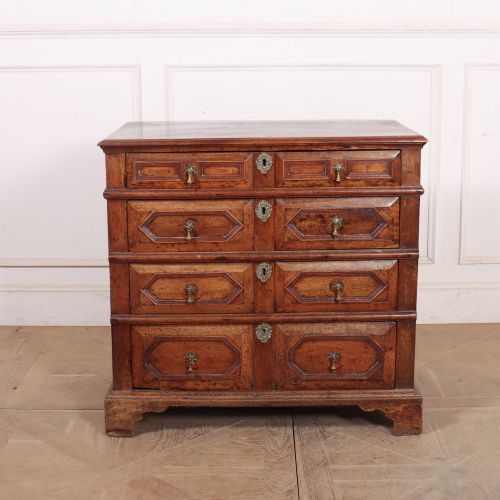

Jacobean Oak Commode
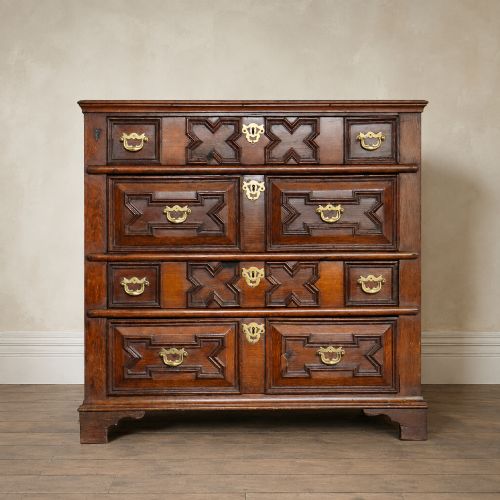
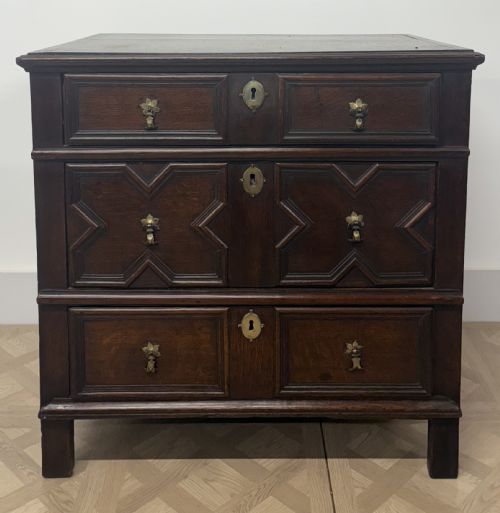
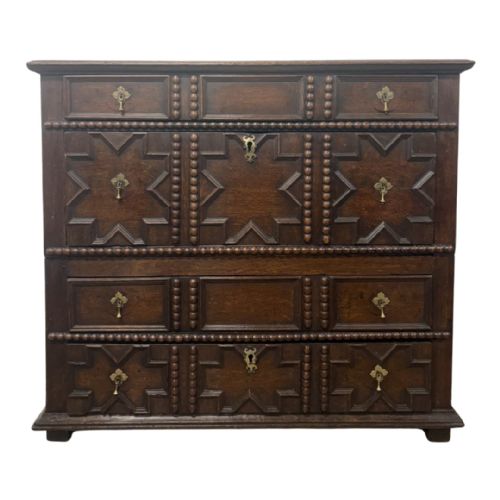
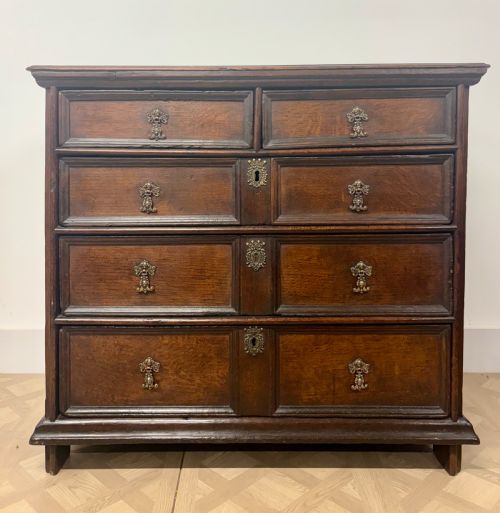
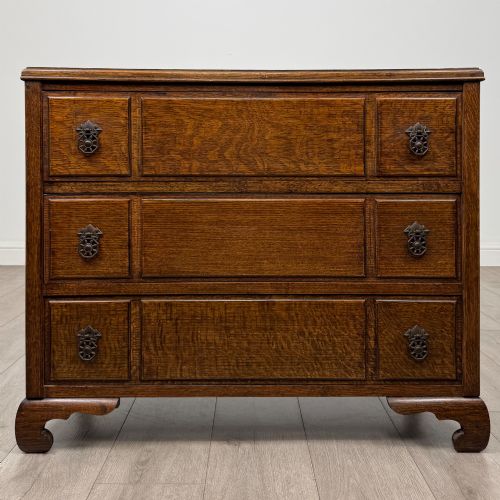
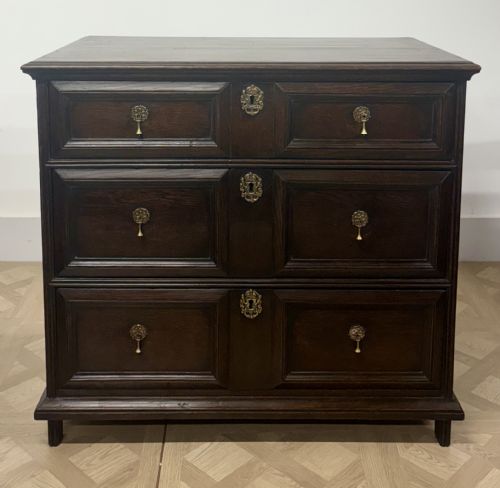
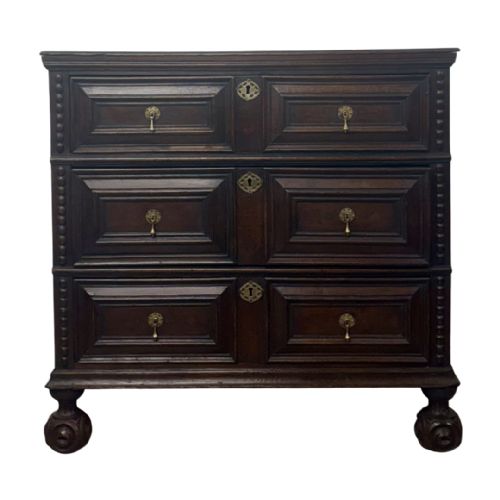
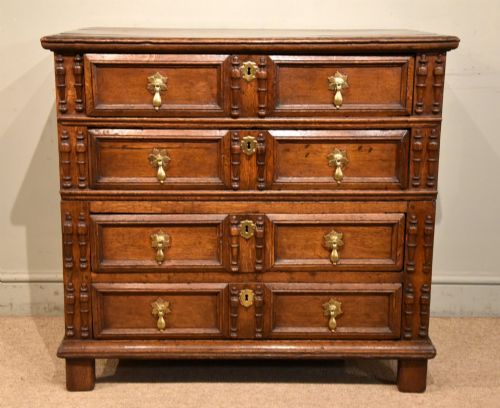
A jacobean oak commode brings heavy timber and precise geometric moulding into a room, offering sturdy storage rooted in seventeenth-century domestic life.
Jacobean Oak Commode
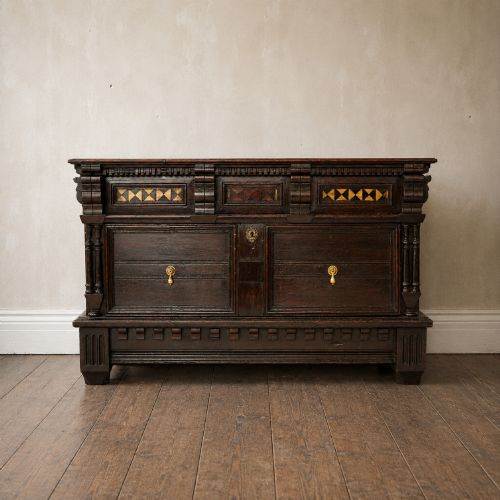
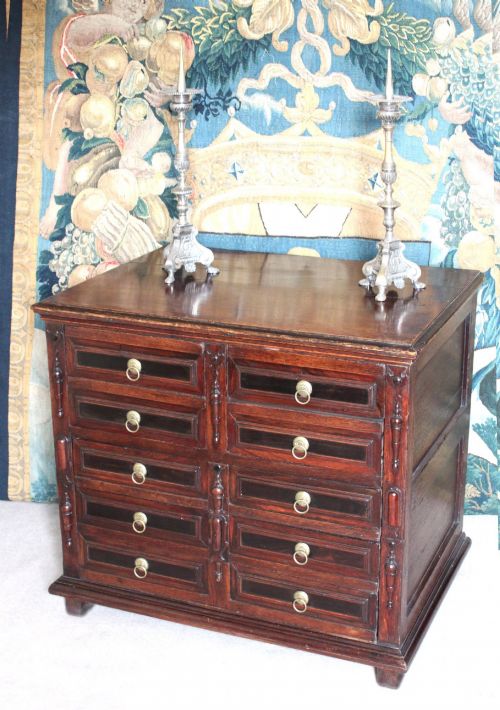
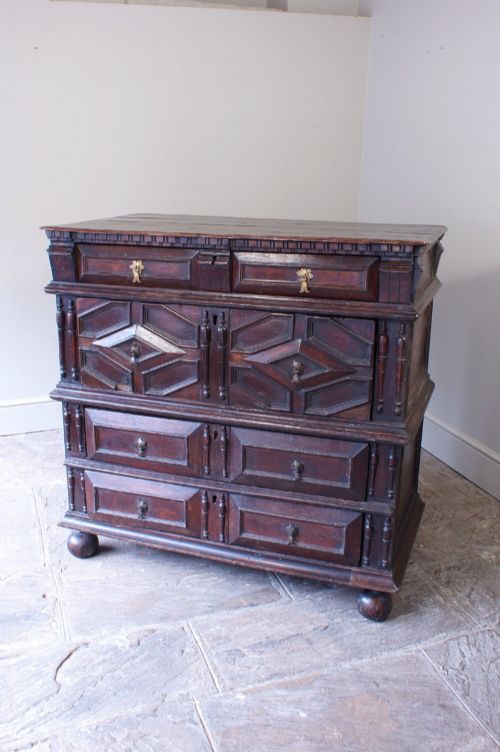
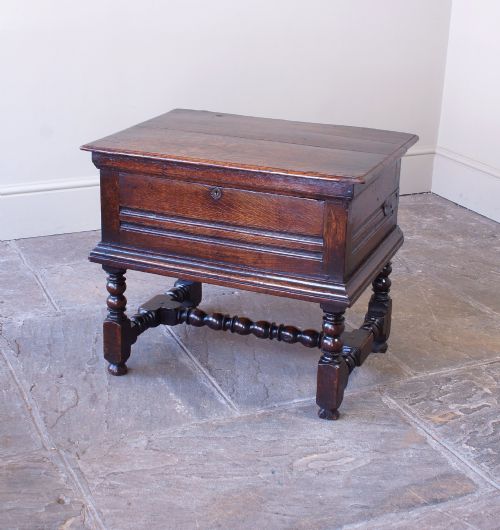
A jacobean oak commode search points you toward robust timber furniture, primarily encountering seventeenth-century chests of drawers and box stools from the Charles II and Carolean periods.
The items listed span multiple centuries, including later Edwardian revivals and eighteenth-century examples alongside genuine seventeenth-century two-part chests.
Forms vary from standard drawer configurations to close stools and small moulded fronts, united by their heavy oak construction and period joinery.
How they were made
Construction relies heavily on solid oak, shaped with geometric mouldings and occasionally enriched with walnut, fruitwood, or oyster veneer.
Metal components such as iron and brass appear in original handles and hinges, while wood inlay adds surface detail to specific panels.
Early box stools doubled as seating for unexpected guests before being tucked away by the hearth.
What varies in quality
Distinction across the range rests on the survival of original brasses and surface treatments, separating untouched period pieces from later adaptations.
The crispness of geometric mouldings and the integration of original components dictate the standing of each individual chest.
The Jacobean Oak Commode Glossary
- Commode
- A low piece of furniture with drawers or doors, historically used for storage or as a close stool.
- Oyster Veneer
- Thin slices of wood cut across the branch to display circular growth rings, popular in seventeenth-century joinery.
- Geometric Moulding
- Raised wooden profiles applied to drawer fronts in repeating patterns, defining Carolean and Charles II design.
- Two-Part Chest
- A storage unit constructed in upper and lower sections to ease transport through tight spaces in period houses.
Jacobean Oak Commode: Frequently Asked Questions
Are these chests heavy?
Solid oak construction gives these pieces substantial weight, particularly the two-part versions built from thick timber.
Positioning them requires care, and moving them typically demands two people to avoid damaging the joints.
How do I spot a later revival?
Twentieth-century Edwardian pieces lack the timber shrinkage and tool marks found on genuine seventeenth-century surfaces.
Examining the interior drawer construction reveals the age of the wood and the joinery methods used.
What is a close stool?
A box stool functioned as a portable seat enclosing a chamber pot for private domestic use.
These pieces often feature hinged lids concealing compartment spaces within the oak frame.
Can I use one for daily storage?
Deep drawers provide practical capacity for clothes or household linens in modern bedrooms.
Maintaining moderate room humidity protects the historic oak and prevents the wood from splitting.