




Jacobean Oak Bedroom Chest
A jacobean oak bedroom chest brings centuries of English craftsmanship and robust timber into a modern interior.
Jacobean Oak Bedroom Chest
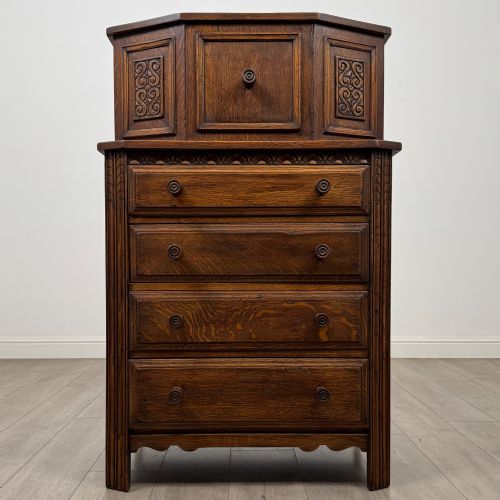
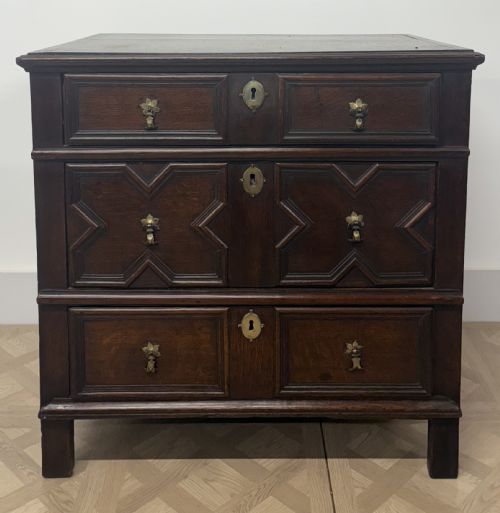
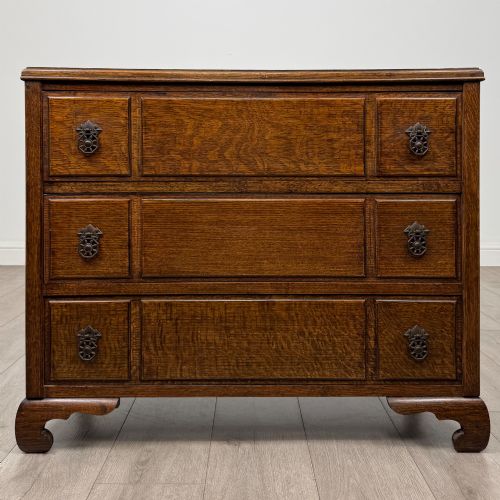
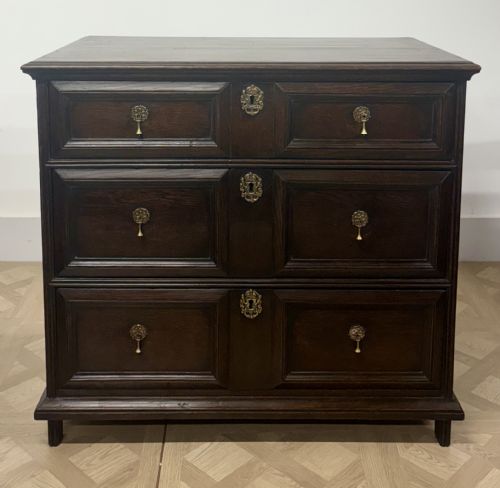
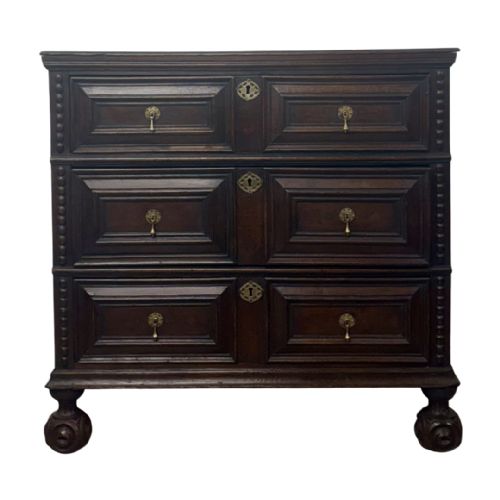
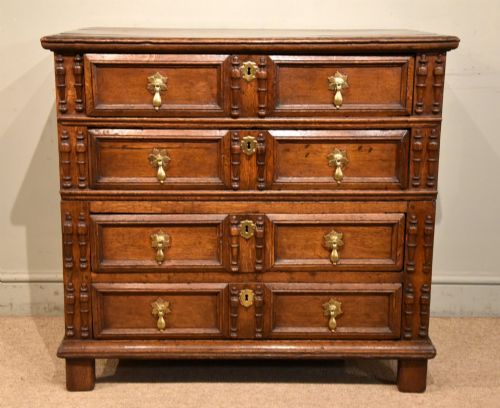
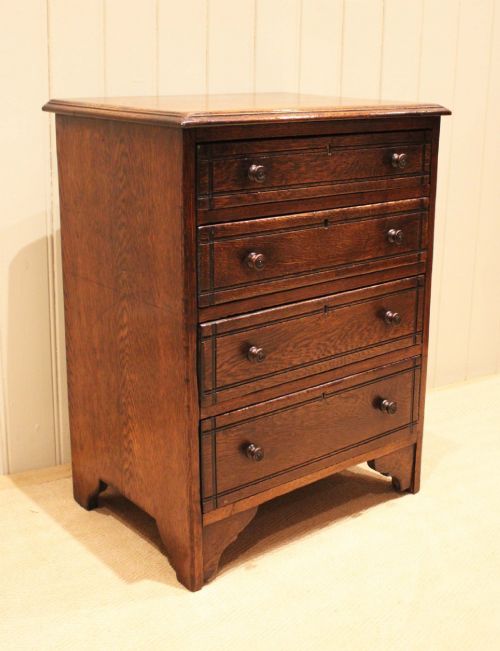
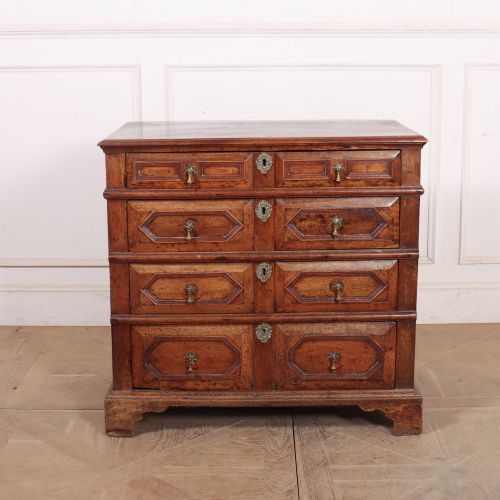
A jacobean oak bedroom chest encompasses substantial storage furniture built primarily from native hardwood, spanning genuine seventeenth-century examples alongside later revival pieces. Buyers encounter both rigorous period items featuring geometric mouldings and later Edwardian interpretations designed for domestic utility.
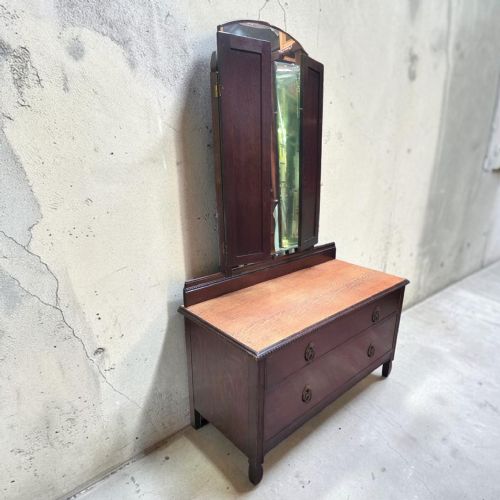
The selection ranges from low coffers and trunks to tall chests of drawers and dressing tables equipped with mirrors. Seventeenth-century forms dominate the historic examples, whilst twentieth-century revivals supply the dressing chests and smaller scaled pieces.
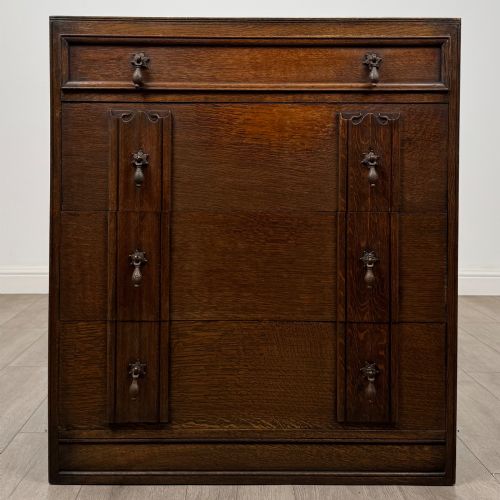
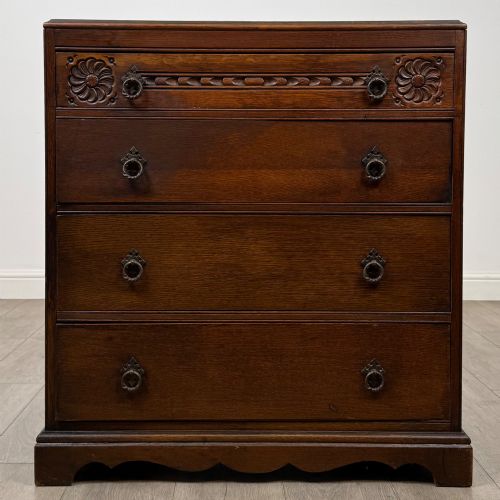
Period examples display pegged construction and panelled sides, whereas early twentieth-century pieces adapt traditional motifs into domestic dressing furniture. Most items on this page utilise solid oak boards combined with brass or iron hardware.
How they were made
Cabinetmakers constructed these pieces using solid oak, shaped with hand tools and joined through traditional framing techniques. Timber boards formed the carcases, drawers and tops, supported by iron and brass hinges, locks and drop handles.
Surface treatments vary from polished wood displaying natural grain patterns to painted finishes and carved geometric panels. Edwardian and later revivals often incorporated mirrors in glass alongside swivel frames and decorative twist turnings.
Materials recorded across the inventory include solid oak, brass, iron, glass and painted wood.
What varies in quality
The grade of timber and the complexity of surface decoration separate simpler utility items from finer works. Original brasses and crisp geometric mouldings elevate seventeenth-century examples, whereas later pieces rely on proportion and timber figure.
Construction depth dictates overall merit, distinguishing heavy seventeenth-century carcases built with pegged joints from lighter twentieth-century revival dressing chests. The presence of period surface patination and untouched hardware marks the highest tier of surviving examples.
The Jacobean Oak Bedroom Chest Glossary
- Jacobean
- Pertaining to the reign of James I, characterised by heavy proportions, dark timber and geometric ornamentation. Later revivals borrow these distinct seventeenth-century motifs.
- Coffer
- A large heavy box used for storage, often predating multi-drawer chests. These trunk forms represent early domestic storage solutions.
- Geometric moulding
- Raised wooden strips applied to drawer fronts in rectilinear patterns. Craftsmen utilised this technique extensively on seventeenth-century case furniture.
- Linenfold
- A style of wood carving resembling folded fabric. This decorative panel treatment appears on Edwardian and earlier revival pieces.
Jacobean Oak Bedroom Chest: Frequently Asked Questions
How do I date a jacobean oak chest?
Dating relies on examining construction methods, tool marks and hardware. Seventeenth-century pieces typically feature hand-cleaved timber and pegged joinery.
Later Edwardian and 1920s revivals utilise machine-cut boards, modern fixings and standardised drawer runners alongside traditional styling.
Are these chests suitable for modern bedrooms?
These robust items provide practical drawer storage and surface space while introducing historical texture to contemporary rooms. Smaller scaled examples fit easily into standard bedroom layouts without dominating the floor space.
Many incorporate dressing mirrors or compact proportions that suit daily use.
What is the difference between original and revival pieces?
Original period pieces date from the seventeenth and eighteenth centuries, bearing the wear and construction hallmarks of their era. They utilise hand-worked joints and period brassware.
Revival pieces date from the Edwardian period or the 1920s, reproducing earlier styles for twentieth-century homes using contemporary workshop methods.
How should I care for antique oak furniture?
Maintain stable indoor humidity levels and keep wooden surfaces away from direct heat sources and strong sunlight. Regular dusting with a dry cloth protects the finish.
Apply occasional traditional wax polish sparingly to nourish the timber and preserve the natural patination built up over centuries.