
Jacobean Geometric Oak Chest
A jacobean geometric oak chest brings the architectural lines and robust timber of the seventeenth century directly into a modern room.
Jacobean Geometric Oak Chest
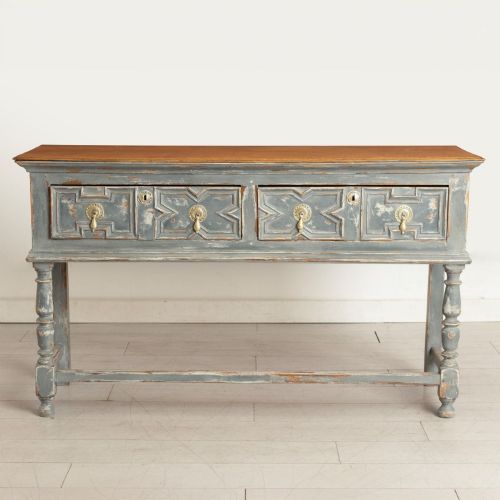
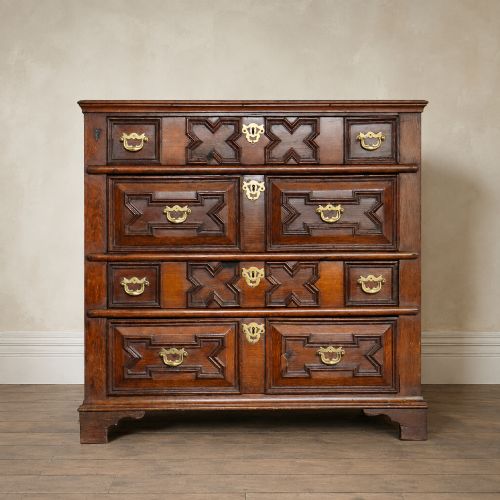
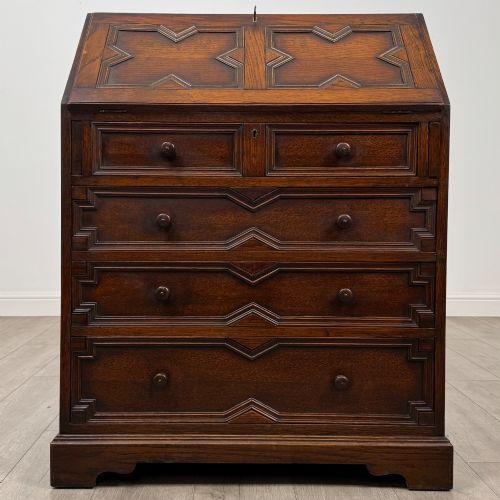
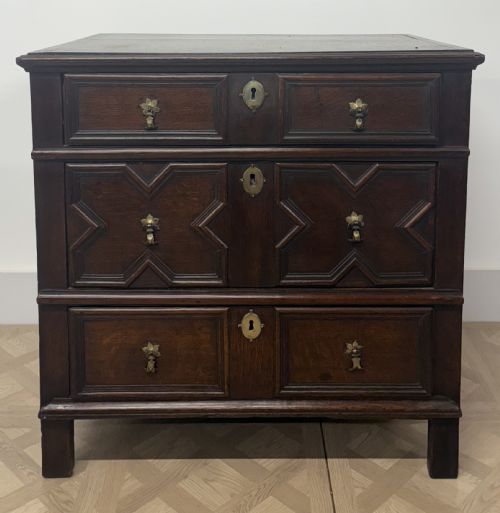
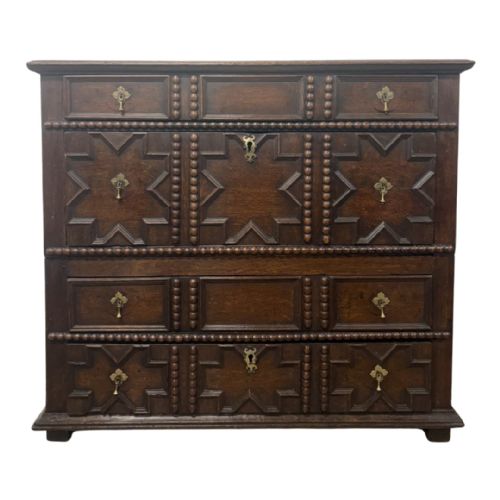
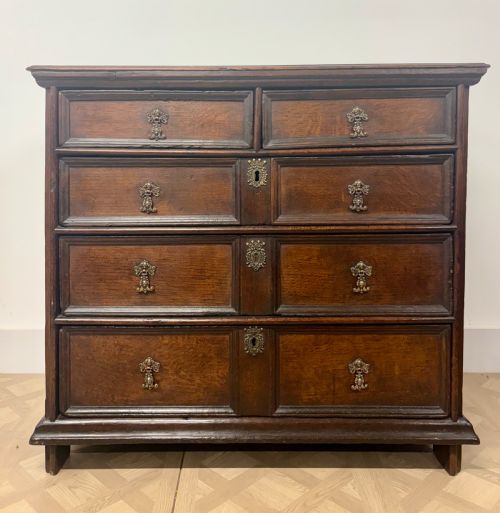
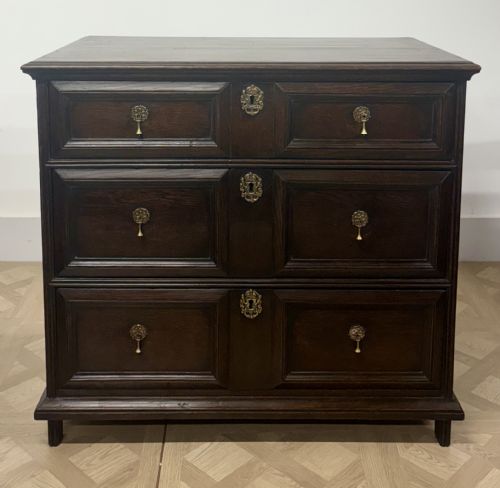
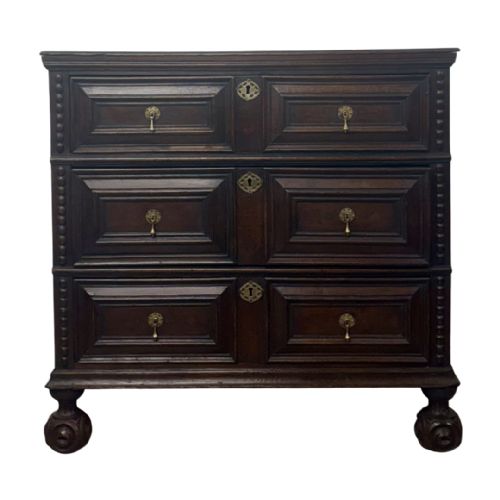
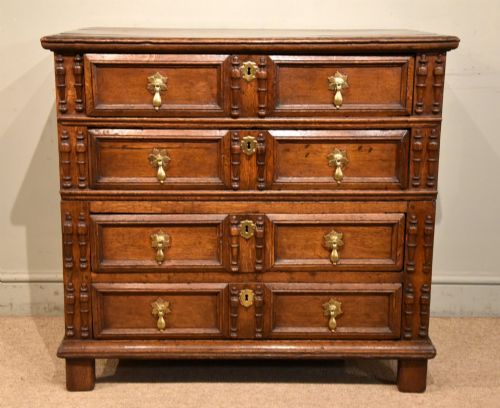
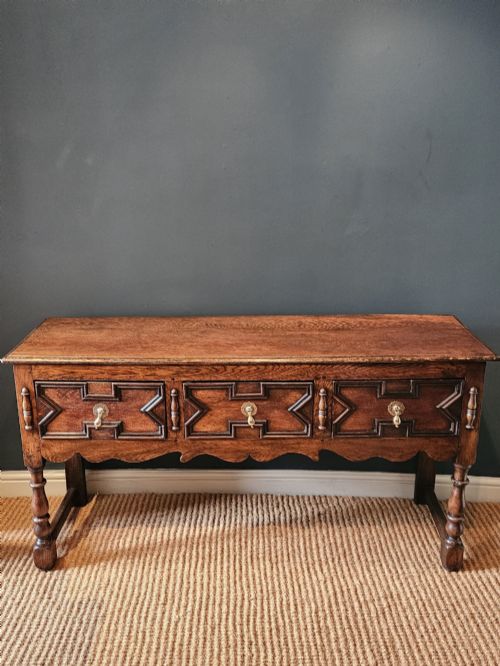
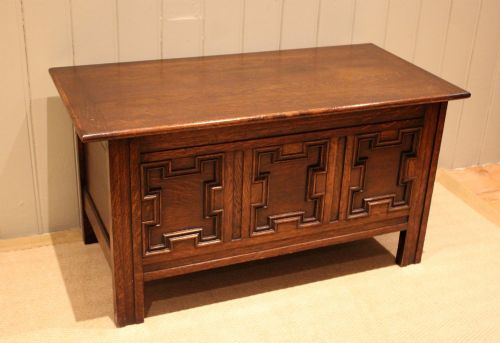
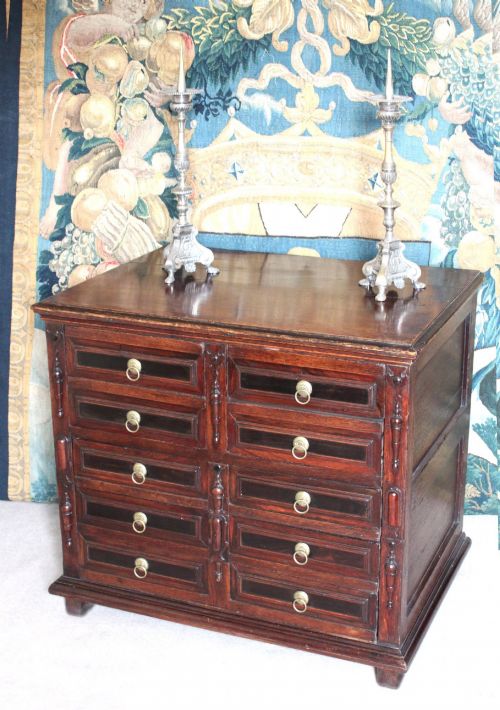
A jacobean geometric oak chest typically presents as a sturdy storage piece defined by applied mouldings on the drawer fronts. These details create repeating octagonal, rectangular, or diamond patterns across the facade.
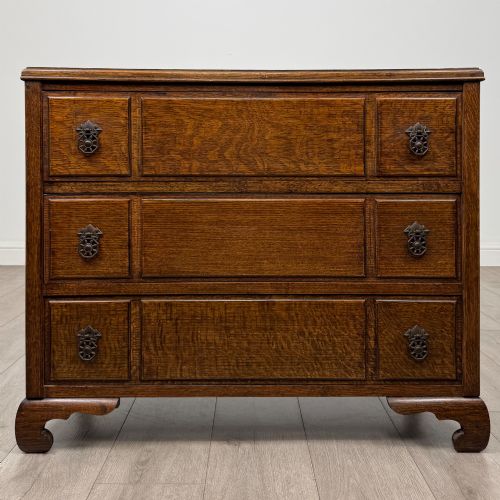
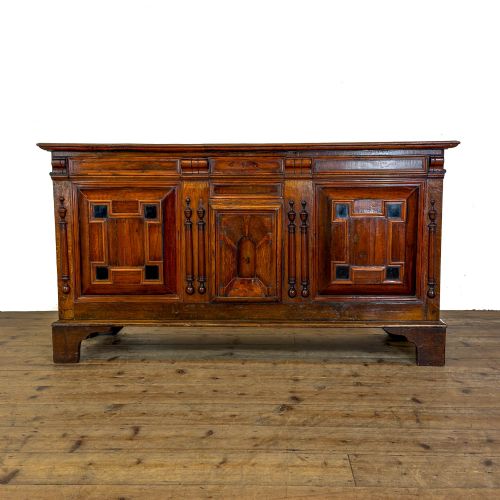
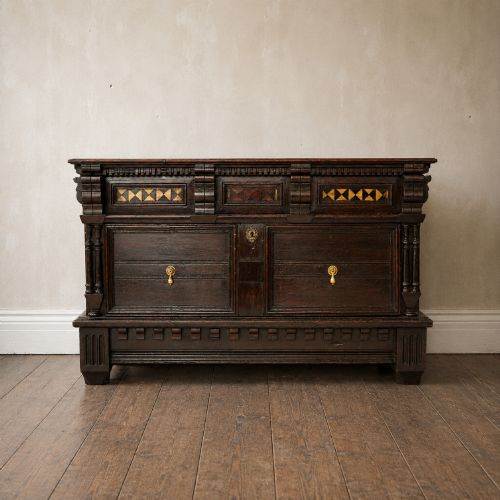
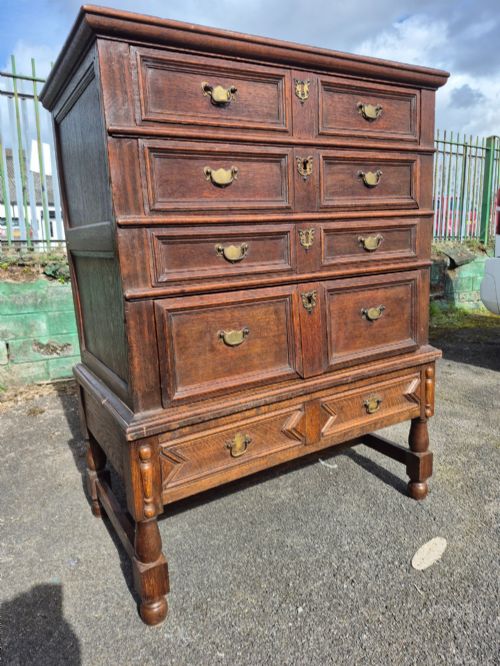
Most examples originate from the seventeenth century and the Charles II or Restoration periods, though revival pieces from the Edwardian era and the nineteen-thirties also appear. Forms include chests of drawers, two-part chests, chests on stands, and occasional dressers bearing the same geometric language.
Buyers encounter period originals alongside later interpretations, all constructed to serve as functional storage while displaying the characteristic panelled and moulded fronts of the era.
How they were made
Cabinetmakers built these pieces primarily from solid oak, frequently incorporating walnut, fruitwood, and occasionally oyster veneers on the drawer fronts and panels. Timber was quarter-sawn to expose the rich medullary rays, providing both structural stability and visual depth.
Applied mouldings were shaped individually and pinned or glued to the drawer faces to form the intricate geometric patterns. Joinery relied on traditional methods such as mortise and tenon frames, while hardware typically included brass drop handles and escutcheons.
Some seventeenth-century drawers shut with such airtight precision that opening one quickly can accidentally cause the drawer below it to slide out.
What varies in quality
The sophistication of the geometric moulding work sets the standard across these pieces, with crisp, deeply cut profiles separating finer examples from simpler work. The choice of secondary timbers, such as the selective integration of walnut or fruitwood alongside oak, often denotes a higher grade of commission.
Surface condition and the presence of original brasses or mounts heavily influence the character of an individual chest. Pieces retaining an untouched, faded patina demonstrate how well the wood has aged over centuries of handling.
The Jacobean Geometric Oak Chest Glossary
- Geometric moulding
- Applied wooden strips arranged in repeating patterns on drawer fronts. This technique defined the decorative vocabulary of late seventeenth-century case furniture.
- Oyster veneer
- Thin circular slices cut transversely from small branches or roots. This method produces intricate, swirling grain patterns across the surface of the wood.
- Quarter-sawn
- A method of cutting timber logs radially from the centre to the bark. This process yields boards with enhanced durability and prominent grain figuring.
- Coffer
- A large, heavy storage chest with a hinged lid. These pieces represent some of the earliest forms of domestic furniture.
- Patina
- The surface sheen and colour developed by wood over prolonged periods of use and exposure. It reflects the natural ageing of the timber.
Jacobean Geometric Oak Chest: Frequently Asked Questions
How do I care for an oak chest?
Keep the wood away from direct heat sources and sudden humidity changes to prevent the solid oak and applied mouldings from splitting. Apply a traditional wax polish occasionally to nourish the surface and maintain the natural lustre of the timber.
Avoid using modern liquid sprays or silicones, which can penetrate the grain and harm the historic finish. Gentle dusting with a dry, soft cloth is sufficient for routine maintenance.
Where should I place it?
These sturdy storage pieces work well in hallways, living rooms, or bedrooms where their sculptural drawer fronts can be appreciated. Their flat tops also provide a practical surface for lamps or decorative objects.
Ensure the room maintains stable environmental conditions, as antique timber reacts poorly to dampness or overly dry radiator heat. Placement against an interior wall away from direct sunlight preserves the colour of the wood.
How are seventeenth and twentieth century chests told apart?
Seventeenth-century originals display period construction methods, such as hand-cut joinery, pegged frames, and timber that shows natural wear and oxidation over centuries. Revival pieces from later eras often feature machine-cut elements and standardised fixings.
Examining the drawer linings, backboards, and the base of the piece reveals the tool marks and ageing characteristics specific to early cabinetmaking.
What is a two-part chest?
A two-part chest consists of a top section and a bottom section stacked together to form a single tall storage unit. This construction method was common in the seventeenth century to ease transport and maneuverability.
Each section retains its own structural frame, and the join is often concealed by a horizontal moulding running around the waist of the piece.