
Jacobean Geometric Drawers
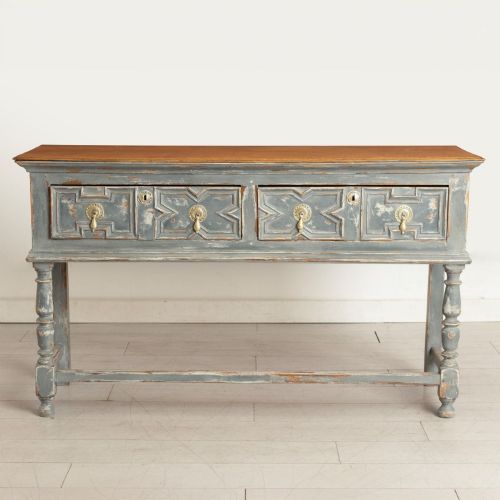
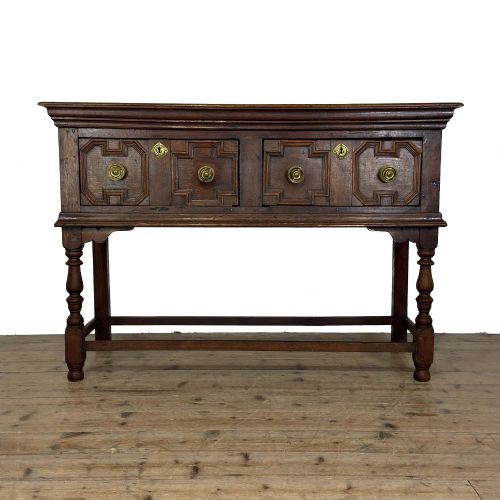
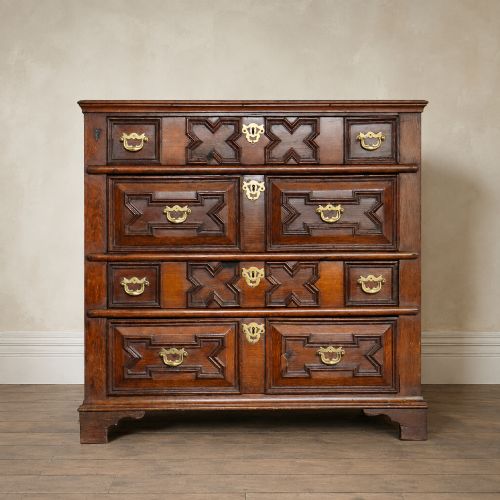
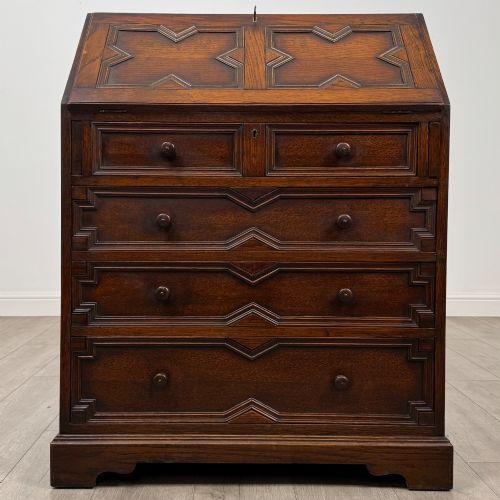
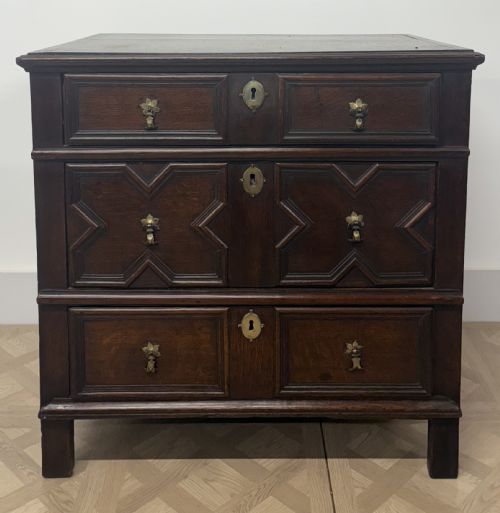
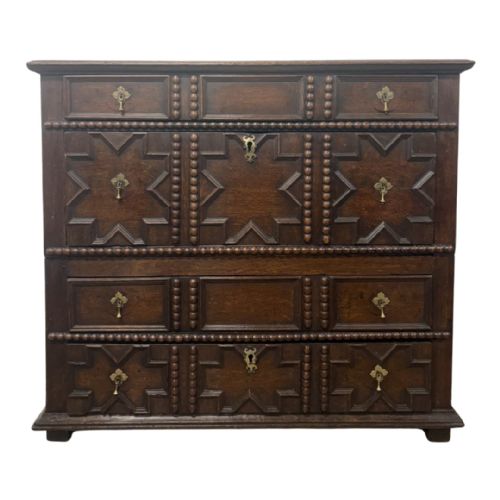
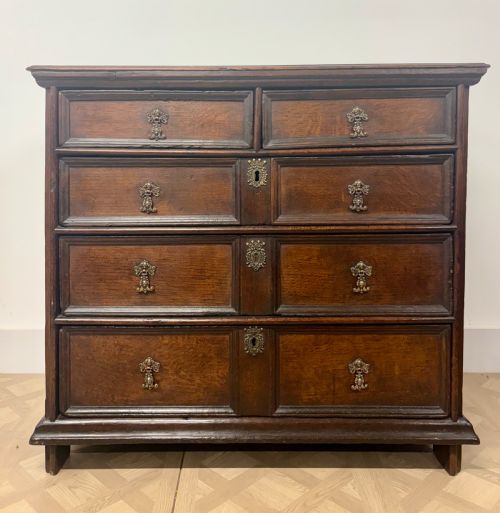
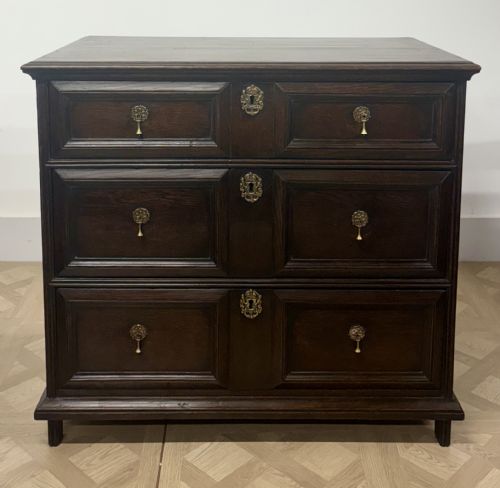
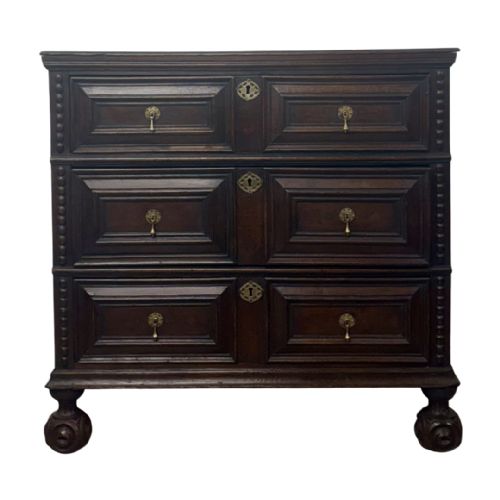
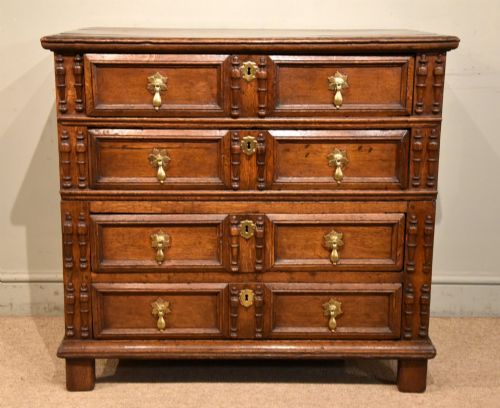
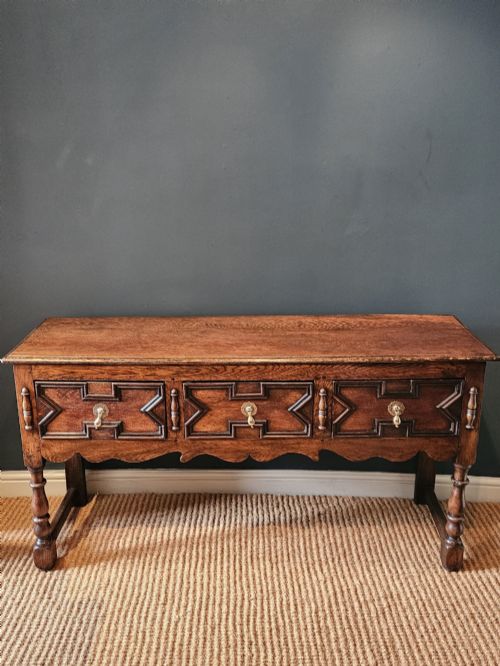
Jacobean geometric drawers bring heavy timber structure and striking panelled fronts into a room.
Jacobean Geometric Drawers
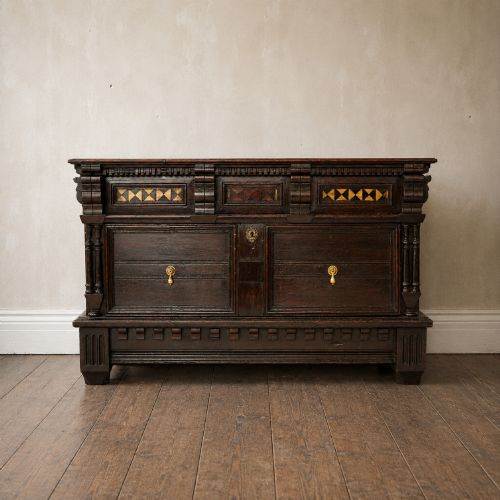
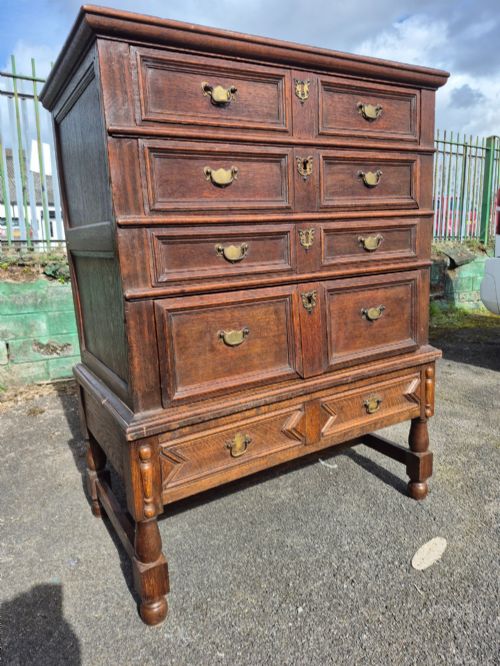
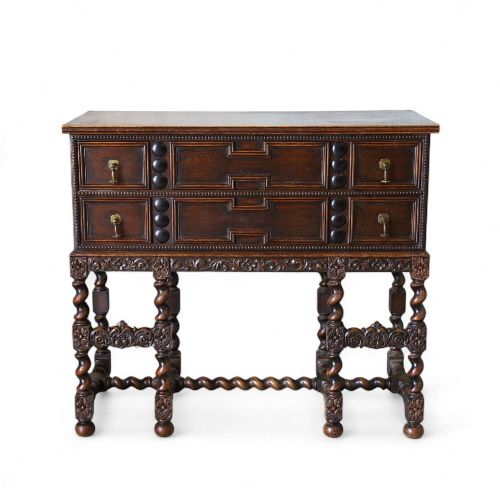
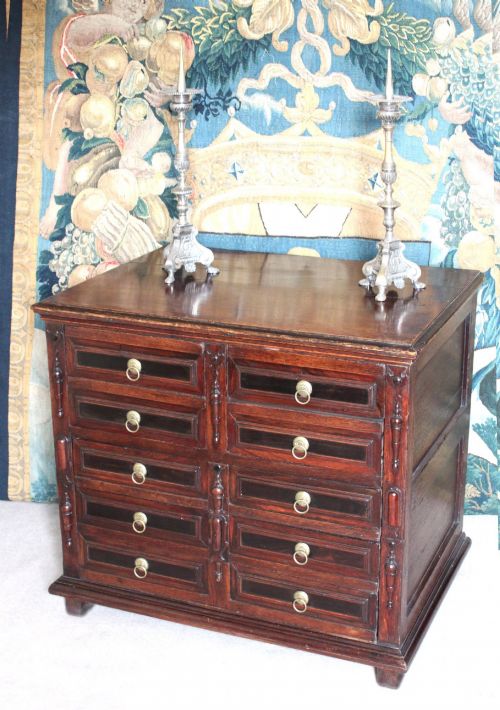
When searching for jacobean geometric drawers, a buyer encounters heavy timber storage pieces built primarily during the seventeenth century, alongside later revival interpretations from the Edwardian era and the twentieth century. The form most commonly met on this page is the chest of drawers, though dresser bases, sideboards, and chests on stands also appear.
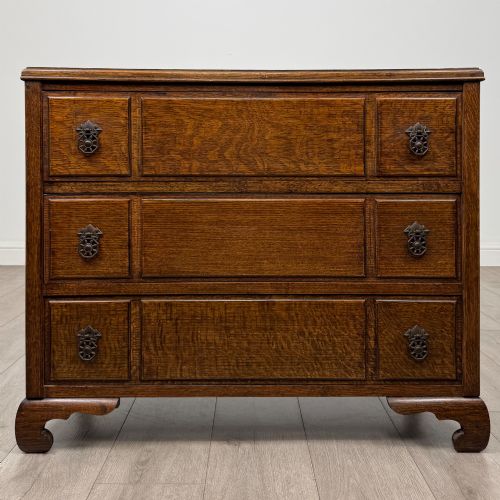
These items originate predominantly from English workshops, spanning periods from the seventeenth century through to the Georgian era and later revivals. Original pieces often display deep mouldings applied to drawer fronts in geometric patterns, while later versions adopt the same stylistic vocabulary using oak, walnut, and fruitwood.
Materials and construction methods
Construction relies heavily on solid oak, frequently augmented with walnut and fruitwood veneers to form contrasting geometric patterns on the drawer faces. Timber was cut and joined using traditional framing techniques, supporting the weight of heavy panelled doors and multi-tiered drawer arrangements.
Applied mouldings were glued and pinned to drawer fronts to create intricate rectangular and octagonal designs, often paired with brass drop handles and escutcheons. Surfaces received finishes such as paint or natural wax, allowing the grain of the wood to develop a rich patina over centuries of use.
Some chests retain their original brass drop handles, having witnessed centuries of opening by eager hands.
Assessing craftsmanship and condition
Quality in these items is determined by the crispness of the geometric mouldings and the integrity of the timber framing. Pieces retaining their original brass hardware and untouched surface patinas sit at the upper end of the range.
Lesser examples show losses to the applied mouldings, unsympathetic timber replacements, or later alterations to the base stands and drawer configurations. The precision of the joinery and the selection of figured veneers distinguish seventeenth-century originals from later revival work.
The Jacobean Geometric Drawers Glossary
- Geometric moulding
- Applied strips of wood arranged in repeating geometric patterns on drawer fronts. This technique defined the decorative vocabulary of seventeenth-century case furniture.
- Dresser base
- A long, low table form featuring drawers beneath the main surface. These items served functional storage roles in early domestic interiors.
- Chest on stand
- A case of drawers elevated on an independent framed base with legs. This configuration lifted storage off damp floors and added vertical proportion.
- Oyster veneer
- Thin circular slices cut horizontally from small branches or roots. The resulting concentric growth rings created patterned wooden surfaces.
- Patina
- The surface sheen and colour acquired by wood through age, handling, and light exposure. This layer develops naturally over centuries.
Jacobean Geometric Drawers: Frequently Asked Questions
What defines jacobean geometric drawers?
These pieces are storage furniture characterised by heavy oak construction and applied wooden mouldings arranged in geometric patterns across the drawer fronts. They emerged during the seventeenth century as standard domestic storage.
Over time, later revival periods reinterpreted these architectural layouts using similar timbers and decorative panels. The resulting items combine robust joinery with complex surface geometry.
How were these pieces used historically?
Historically, chests of drawers and dresser bases stored textiles, household linens, and dry goods within domestic settings. Their sturdy construction suited the daily demands of seventeenth-century households.
As domestic spaces evolved, these items transitioned from utilitarian storage into prominent furnishings displayed in halls and living chambers.
How do I live with antique oak furniture?
Living with these items involves placing them away from direct heat sources and rapid temperature fluctuations to protect aged timber. Maintaining stable indoor humidity prevents wood shrinkage and veneer lifting.
Routine care requires only soft dusting and occasional waxing to preserve the natural finish and historical surface patina.
How do I distinguish seventeenth century originals from later revivals?
Original pieces display authentic tool marks, period-specific timber framing techniques, and centuries of accumulated surface wear. The construction methods reflect seventeenth-century carpentry practices.
Revival pieces, such as those from the Edwardian period or the twentieth century, often utilise machine-cut elements and standardised fixings while imitating the earlier geometric style.