



Italian Blackamoor Stand
An italian blackamoor stand brings dramatic Venetian theatricality to a room, combining carved wood and rich polychrome decoration.
Italian Blackamoor Stand
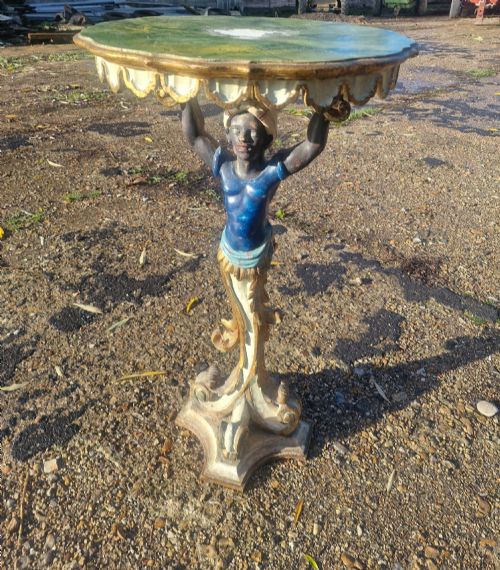
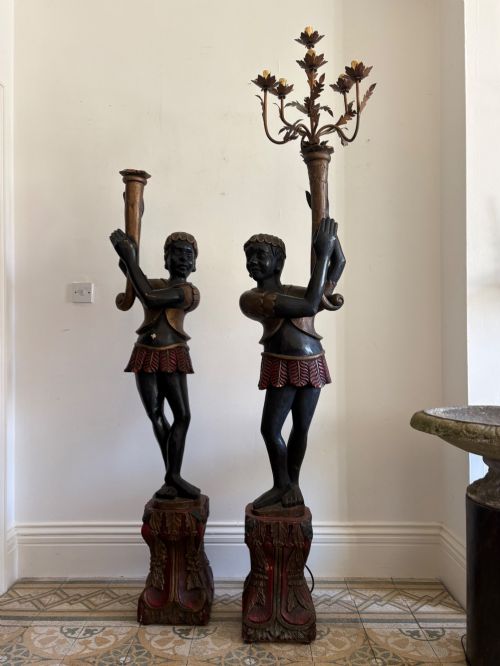
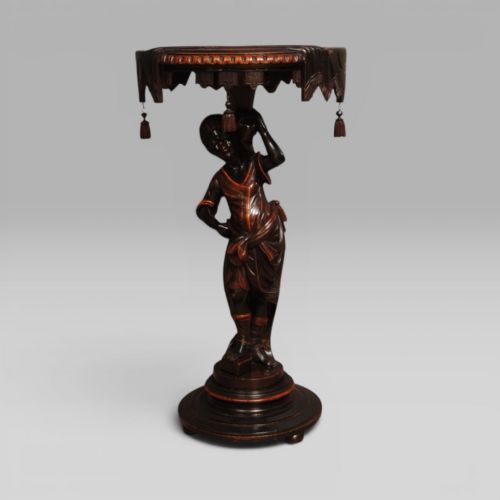
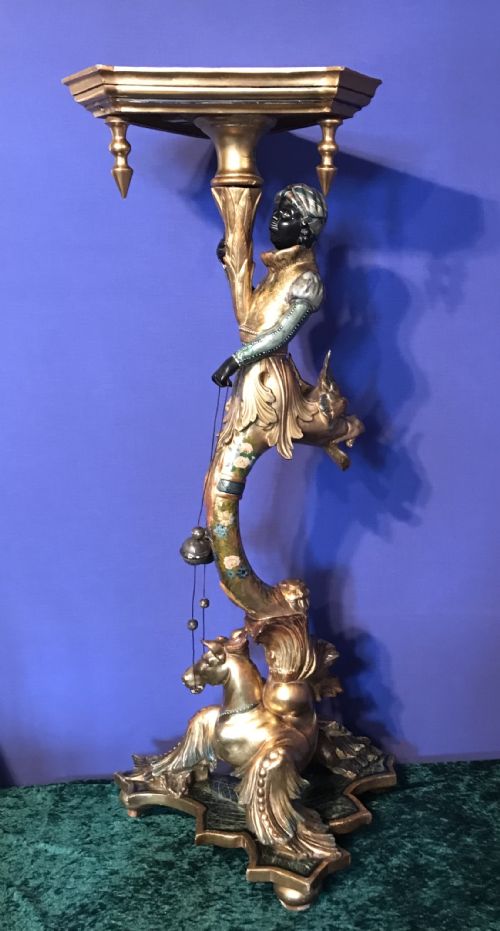
An italian blackamoor stand takes many sculptural forms across the selection here, appearing as torchere stands, pedestal tables, floor lamps and waiters from the nineteenth and early twentieth centuries. These figural works draw heavily upon Venetian Baroque and Rococo traditions, translating ornate furniture design into striking human representations.
Most examples you encounter date from the Victorian and Edwardian eras, or stretch back through the nineteenth century to earlier Venetian styles. The forms serve practical functions such as holding lights, plants or serving trays while functioning primarily as decorative sculpture.
Materials and construction
Makers shaped these pieces from carved wood, applying layers of gesso to build up intricate surface details before finishing the works with polychrome paint, gold leaf and parcel-gilt. Ebonised wood often forms the dark skin tones of the figures, contrasting sharply with the bright metallic leaf and vivid pigments of their elaborate garments.
Casting also appears in related accessories like brass candlestick figures, though carved wood remains the dominant medium for the larger statues and torchere stands.
Italian Blackamoor Stand Retail Price Guide 2026
Typical asking prices for italian blackamoor stand among the pieces listed under this phrase on Sellingantiques today, from the lower quarter to the upper quarter. They describe what is for sale here now, not the wider market.
One cheerful gondolier figure appears ready to navigate a Venetian canal straight into your hallway.
Assessing quality and execution
The application of polychrome paint and gold leaf significantly influences the visual impact, where layered, nuanced pigments and well-preserved gilding outshine flat or crudely repainted surfaces.
The Italian Blackamoor Stand Glossary
- Torchere
- A tall stand or pedestal originally designed to carry a torch or candle, later adapted for electric lamps.
- Polychrome
- Decorated in a variety of different colours, often applied to wood or gesso to render vivid clothing.
- Gesso
- A plaster mixture applied to wood surfaces as a smooth base for painting and gilding.
- Parcel-gilt
- Partially gilded with gold leaf, leaving areas of painted or dark wood exposed for contrast.
- Ebonised
- Wood finished with a dark stain or polish to imitate the appearance of ebony.
Italian Blackamoor Stand: Frequently Asked Questions
What is an italian blackamoor stand?
These pieces are decorative figural sculptures from Venetian traditions, carved as human figures holding trays, torchers or lamps.
They function as both furniture and theatrical art, originating largely from nineteenth and early twentieth-century workshops.
How were these stands used originally?
Wealthy households used them in grand interiors as functional supports for lighting, candelabras, planters or small serving waiters.
Their striking presence made them conversation pieces positioned in entrance halls, drawing rooms and reception spaces.
Where should I place one at home?
These substantial pieces command attention, making them ideal for corners of living rooms, grand hallways or beside large pieces of period furniture.
Ensure they have adequate space around them so the intricate carving and polychrome details remain fully visible.
How do I date these figures?
Dating relies on stylistic clues, comparing the proportions and decorative motifs against Venetian Baroque revival trends spanning the Victorian and Edwardian eras.
Material analysis of the wood, gesso and pigments also helps determine whether a piece originates from the nineteenth or early twentieth century.