



Venetian Polychrome Figure
These venetian polychrome figure works bring dramatic Italian craft and rich colour into a room, offering striking carved presence.
Venetian Polychrome Figure
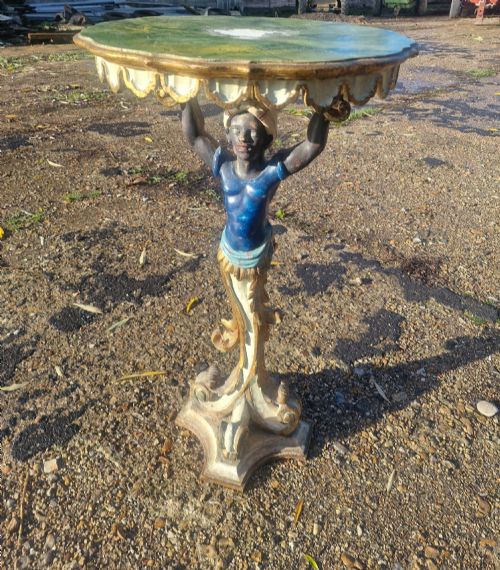
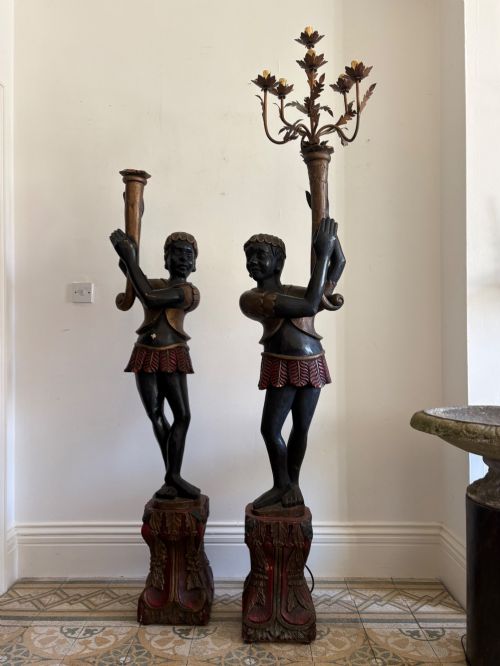
A venetian polychrome figure brings carved wooden presence into a space, most commonly taking the form of a Blackamoor statue, floor lamp, or torchere. These pieces originate across the nineteenth and early twentieth centuries, spanning periods from Victorian production up to the nineteen-twenties.
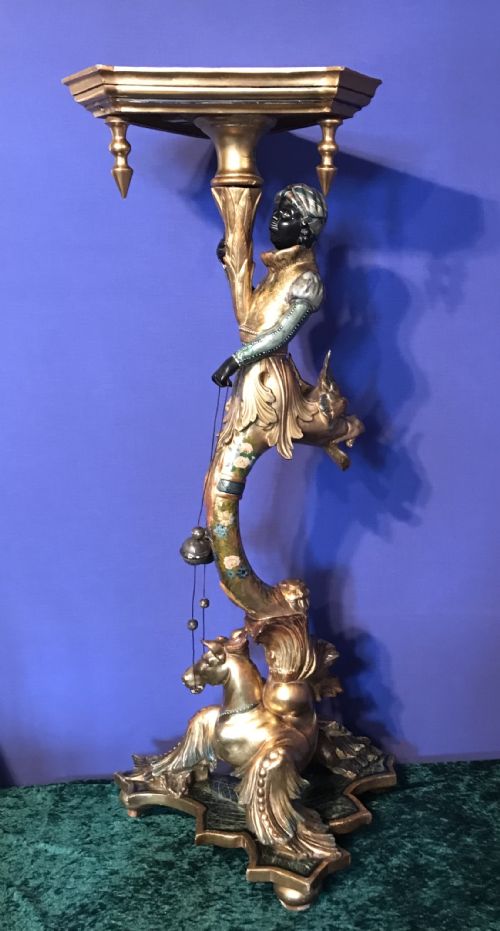
Makers shaped these works as functional objects as well as sculpture, producing candelabras, candlesticks, side tables, and pedestal stands alongside free-standing statues. The Venetian Baroque and Rococo revivals heavily influence the design, resulting in ornate figures holding trays, lights, or stands.
The materials rely upon carved wood finished with polychrome paint, gesso, and gold leaf highlights. Buyers encounter life-size floor lamps and smaller table figures alike, all sharing the distinct Venetian aesthetic.
How they were made
Artisans carved solid wood to form the body and drapery of each sculpture, building up fine details with gesso before applying the final layers of paint. This combination provided a stable base for intricate carving and surface decoration.
Gilding techniques involving gold leaf and parcel-gilding accentuate specific areas of the carving, contrasting against the rich polychrome paintwork. Craftsmen utilised original paint schemes that incorporated varied pigments to achieve the characteristic vibrant look.
Venetian Polychrome Figure Retail Price Guide 2026
Typical asking prices for venetian polychrome figure among the pieces listed under this phrase on Sellingantiques today, from the lower quarter to the upper quarter. They describe what is for sale here now, not the wider market.
Some figures double as polite waiters, holding out trays as if waiting to take your afternoon tea order.
What varies in quality
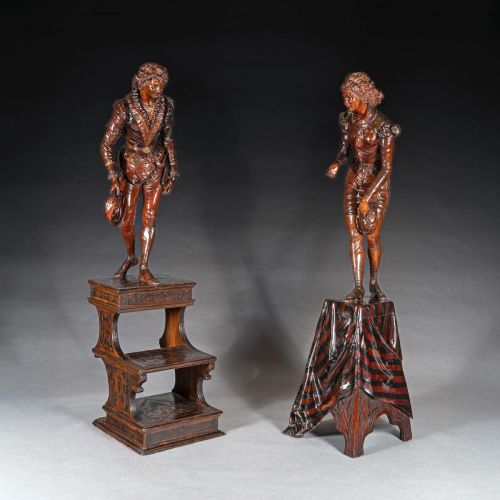
The finesse of the initial wood carving separates standard workshop output from exceptional sculpture, particularly in the rendering of facial expressions, hands, and folds of fabric. Superior pieces display deep, crisp undercutting and anatomical precision.
The preservation of the original polychrome paint and gold leaf dictates the visual impact of the work, as later repainting alters the intended surface texture. Depth and subtlety in the application of pigment and gilding elevate the status of a piece.
Valentino Besarel
The Venetian Polychrome Figure Glossary
- Polychrome paint
- Decoration applied in multiple colours across the wooden surface. This finish defines the vibrant appearance of Venetian figures.
- Gesso
- A plaster-like mixture applied to wood to create a smooth surface for painting or gilding. Artisans used this to build up crisp decorative details.
- Parcel-gilt
- Woodwork where only specific raised parts or details receive gold leaf application. This technique creates a contrast between gilded highlights and painted sections.
- Torchere
- A tall ornamental stand or floor lamp designed to hold a light source. These functional sculptures frequently appear among Venetian furnishings.
- Venetian Baroque Revival
- A nineteenth-century artistic movement reviving seventeenth-century Italian decorative styles. This aesthetic informs the elaborate curves and dramatic poses of these figures.
Venetian Polychrome Figure: Frequently Asked Questions
What functions do these figures serve?
Many of these pieces function as floor lamps, candlesticks, or candelabras designed to illuminate a room while acting as sculpture. Others incorporate small tables, trays, or pedestals intended to hold items.
Craftsmen built these dual-purpose items to combine decorative impact with practical use in grand interiors.
How do I identify the period of a figure?
Dating relies upon examining the style of the carving, the formulation of the underlying gesso, and the wear patterns within the polychrome paint. Nineteenth-century examples often reflect strict adherence to Baroque revival motifs.
Twentieth-century pieces from the nineteen-tens and twenties display subtle shifts in proportion and preparation techniques compared to Victorian work.
Where were these pieces originally placed?
These decorative works stood in grand entrance halls, principal reception rooms, and stairwells of wealthy residences. Their scale allowed them to command attention in large architectural spaces.
Figures holding torches or trays were positioned to greet visitors or serve guests in formal settings.
How should I care for the painted surface?
Preservation requires keeping the sculpture away from direct sunlight and maintaining stable humidity to protect the underlying wood and gesso. Dusting should be done gently with a dry, soft cloth.
Harsh cleaning products damage the original polychrome paint and fragile gold leaf layers.