

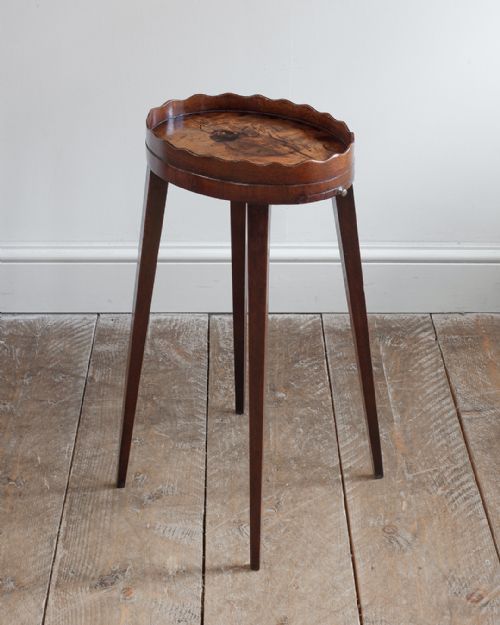
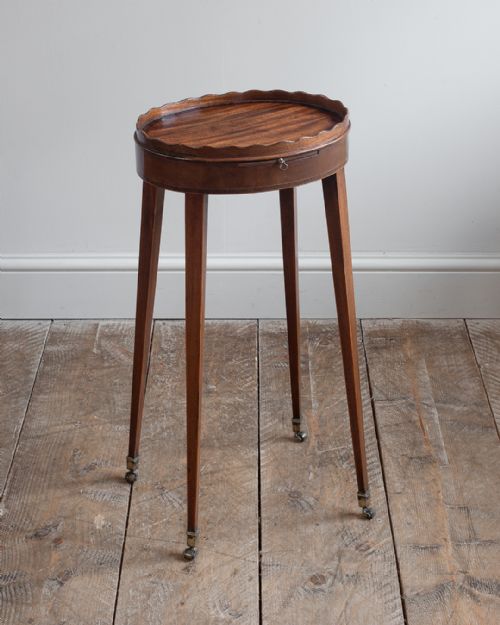


Scalloped Top Plant Stand
These scalloped top plant stand pieces bring refined timber surfaces and elevated display to traditional interiors.
Scalloped Top Plant Stand
A scalloped top plant stand comprises elevated display surfaces and slender pedestals designed to showcase decorative objects within period interiors. The selections gathered here span the nineteenth century, Edwardian era, and Georgian periods, alongside revival pieces.
Most examples you encounter on this page take the form of small occasional tables, wine tables, torchieres, and urn stands rather than heavy furniture. Mahogany dominates the current stock, accompanied by walnut, fruitwood marquetry, and delicate wood inlay.
The aesthetic ranges from strict George III and Victorian designs to Arts and Crafts interpretations and Morris and Co style occasional tables. These versatile stands function equally well as candle stands, kettlestands, and lamp tables.
How they were made
Cabinetmakers utilised solid mahogany and walnut for the primary structures of these stands, ensuring structural stability for elevated tops. Turning and joinery created slender uprights and stable pedestal bases suited to holding lamps, urns, and plants.
Surface decoration frequently involved fruitwood marquetry and intricate wood inlay to create floral motifs across the timber. Craftsmen shaped the edges into distinctive profiles, employing traditional hand-finishing techniques to highlight the natural grain of the wood.
Scalloped Top Plant Stand Retail Price Guide 2026
Typical asking prices for scalloped top plant stand among the pieces listed under this phrase on Sellingantiques today, from the lower quarter to the upper quarter. They describe what is for sale here now, not the wider market.
The inventory spans the nineteenth century, Edwardian era, and Georgian periods alongside later revival styles.
What varies in quality
The distinction between standard production and superior craftsmanship lies in the crispness of the timber carving and the precision of the inlay work. Finer examples display meticulous attention to detail in the turning of the pedestal and the shaping of the raised edge.
Material selection dictates the overall presence of the piece, with choice cuts of figured mahogany and balanced floral marquetry elevating simple occasional tables. Integration of secondary woods and the harmony of proportion separate modest utilitarian items from exceptional period works.
The Scalloped Top Plant Stand Glossary
- Torchere
- A tall ornamental stand designed to hold a lamp or candle. These slender pedestals lift light sources or decorative items to eye level.
- Marquetry
- Decorative veneer applied to furniture in patterns using different woods. Floral designs appear frequently on the inlaid surfaces of these pieces.
- Urn stand
- A small occasional table traditionally used for holding a tea urn. They share similar proportions with plant stands and wine tables.
- Occasional table
- A small, versatile table intended for flexible placement within a room. They function as lamp stands, plant holders, and general display surfaces.
- George III
- The period of British furniture design spanning the mid to late eighteenth century. Pieces from this era emphasise classical proportions and refined timber work.
Scalloped Top Plant Stand: Frequently Asked Questions
What is a scalloped top plant stand used for?
These elevated stands provide a dedicated surface for displaying decorative plants, urns, and lamps within a room. Their compact footprints allow them to occupy tight corners and empty spaces.
Historically, similar small tables served specialised functions as tea urn holders or candle stands. Today, they remain practical accent pieces that add vertical interest to traditional interior schemes.
How do I distinguish Edwardian stands from Georgian ones?
Georgian and George III pieces generally exhibit heavier timber construction, simpler classical lines, and authentic eighteenth-century proportions. Edwardian reproductions and originals often incorporate lighter framing and decorative inlay work.
Examining the underside, secondary woods, and hardware provides further clues regarding the actual period of manufacture. Revival pieces from the Edwardian era often blend earlier styles with turn-of-the-century manufacturing methods.
Where should I place a torchere stand at home?
Torchere stands suit empty corners, hallway landings, and flanking positions beside seating furniture. Their slender profiles ensure they do not obstruct pathways while adding height to room arrangements.
Ensure the stand rests on a level floor surface to maintain stability when supporting heavy ceramic planters or delicate lamps. Pairing them with complementary mahogany furniture creates a cohesive period aesthetic.
What woods were commonly used for these tables?
Mahogany serves as the predominant timber across these listings, valued for its durability and rich grain. Walnut also appears frequently, particularly on pieces featuring detailed floral marquetry.
Fruitwood and specialised veneers were utilised by cabinetmakers to create contrasting inlay patterns on tabletop surfaces. These traditional hardwoods ensure the structural integrity of slender pedestals and raised rims.