
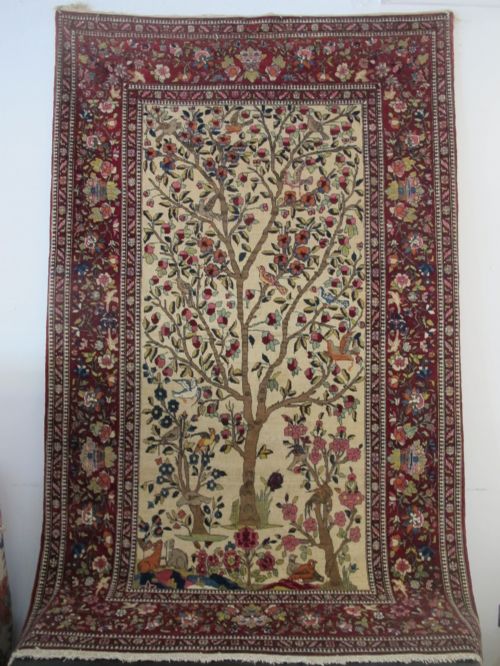


Isfahan Wool Area Rug
An isfahan wool area rug brings historic central Persian artistry into a room through intricate medallion patterns and fine craftsmanship.
Isfahan Wool Area Rug
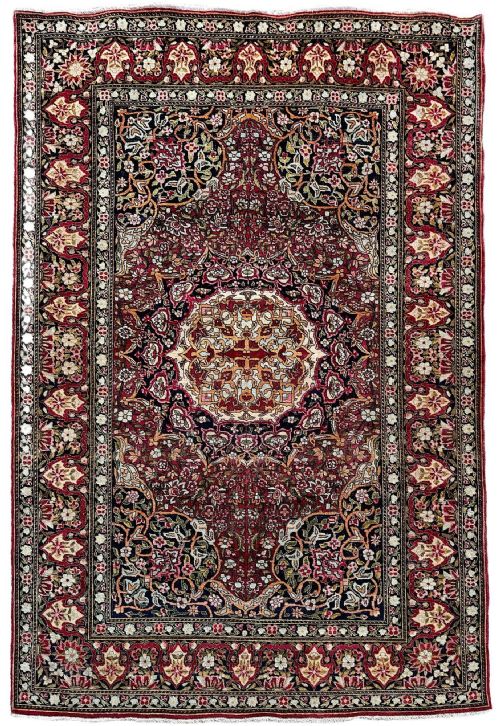
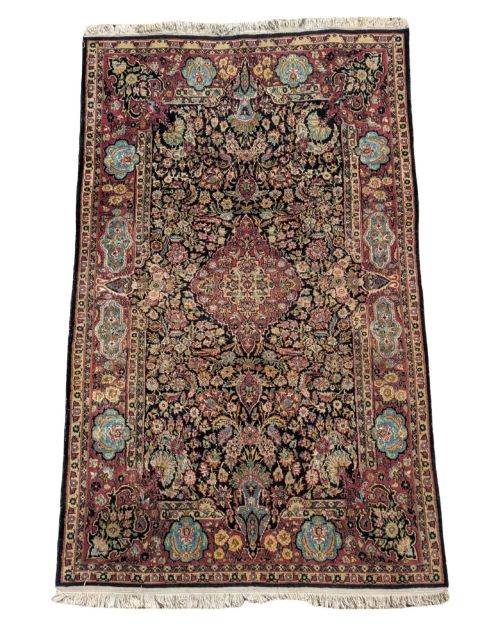
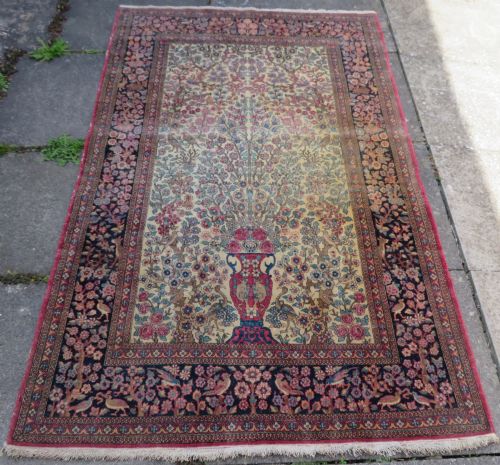
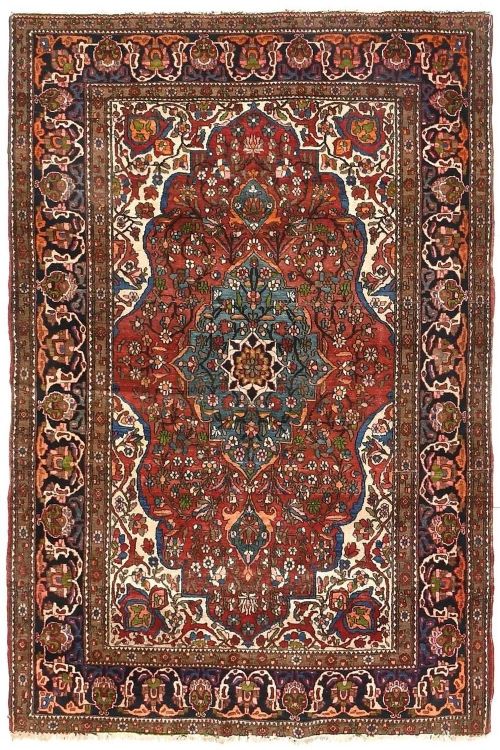
When searching for an isfahan wool area rug, you are looking at floor coverings originating from central Persia, dating from the late nineteenth century through to the early twentieth century. These pieces encompass both smaller floor rugs and larger carpets designed with traditional Persian motifs, such as classic central medallions and tree of life compositions. Most examples met here date between 1890 and 1930, reflecting established regional workshop traditions from central Persia.
The format typically spans manageable room-size area rugs up to larger carpets exceeding four metres in length. Stylistic variations include Safavid and Qajar influences, alongside classic medallion layouts. Buyers encounter traditional Persian aesthetics that function effectively as decorative centrepieces within period and country house interiors.
How they were made
These carpets and rugs rely primarily on a wool pile, occasionally utilising lambswool for a softer texture. Foundations frequently incorporate cotton, though certain finer examples employ silk foundations to support intricate structural details.
Weavers integrated fine knotting techniques to achieve detailed pictorial and floral patterns. Silk highlights appear in specific examples to accentuate central designs and border elements against the wool ground.
Current listings span the years 1890 to 1930, encompassing both compact area rugs and large carpets.
What varies in quality
Quality depends upon the density of the weave and the finesse of the materials used in construction. Pieces featuring a very fine weave on silk foundations represent a higher tier of production compared to standard wool-on-cotton structures.
The complexity of the design execution and the crispness of the classic medallion motifs also distinguish individual carpets. Examples incorporating silk highlights or distinct regional workshop attributions demonstrate superior craftsmanship within the tradition.
Ahmadi
The Isfahan Wool Area Rug Glossary
- Medallion
- A central decorative motif placed in the middle of the rug field. This design element forms the focal point for classic Isfahan compositions.
- Foundation
- The underlying grid of warp and weft threads that supports the knotted pile. Materials vary from cotton to silk in finer Persian weaving.
- Pile
- The vertical tufts of wool, lambswool or silk that form the usable surface of the carpet. Higher density piles allow for greater pattern definition.
- Tree of Life
- A traditional pictorial motif depicting branches, leaves and birds. This symbol appears frequently in country house rugs from central Persia.
- Qajar
- A Persian dynastic style influencing nineteenth and early twentieth century art. Pieces bearing this style classification reflect specific regional aesthetic periods.
Isfahan Wool Area Rug: Frequently Asked Questions
Where were these rugs made?
These rugs originate from Isfahan in central Persia, a historic centre known for refined carpet production.
Workshop weavers in the region produced pieces for both local use and export during the late nineteenth and early twentieth centuries.
What materials are used?
The pile is typically composed of wool or soft lambswool, sometimes enhanced with silk highlights for textural contrast.
Foundations generally consist of cotton, though select finer pieces utilise a silk foundation to achieve a lower profile and tighter weave.
How do I date an Isfahan rug?
Dating relies on stylistic markers, construction methods, and documented workshop periods ranging from 1890 to 1930.
Examining the weave density and foundation materials helps place a rug within this established generational window.
How do I care for wool rugs?
Regular gentle vacuuming without a beater bar removes surface dust without damaging the delicate pile.
Professional specialist cleaning is recommended for antique carpets to preserve the integrity of the natural fibres.