
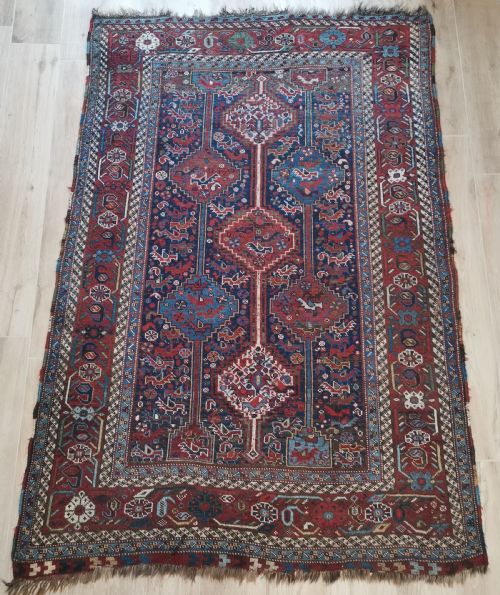
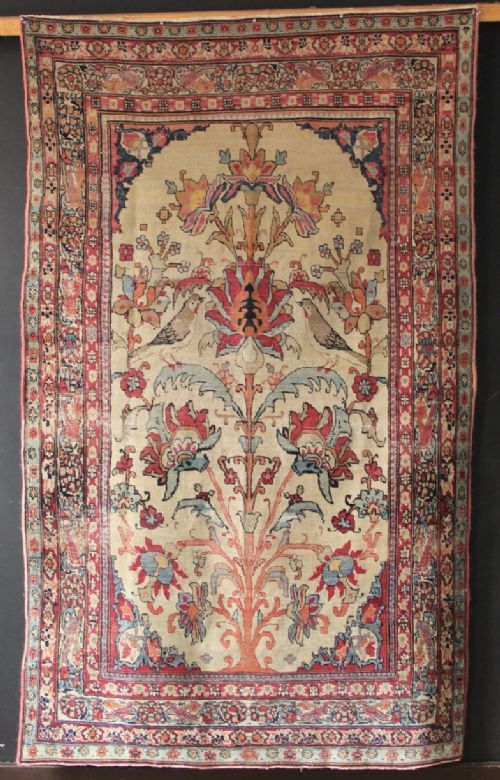
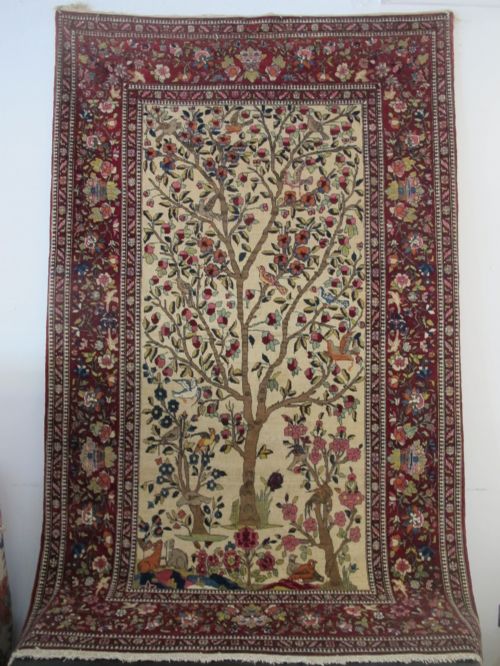


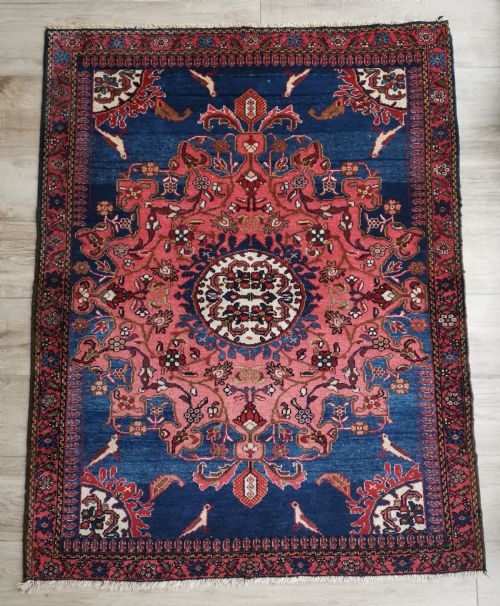


Persian Bird Motif Carpet
These persian bird motif carpet examples bring centuries of village and tribal artistry into your home.
Persian Bird Motif Carpet
A persian bird motif carpet brings together centuries of regional weaving traditions, featuring distinctive avian and animal imagery across village and nomadic pieces. When searching this phrase, buyers encounter formats ranging from large carpets and room-sized rugs down to compact bag faces and narrow runners.
The objects on this page largely originate from tribal and village contexts across Persia, encompassing Khamseh, Kirman, Isfahan, Tafresh, Fereghan Sarouk, Kurdish, Malayer, Shahsavan, Kolyai, and Luri traditions. These regional works span production dates from the late nineteenth century through the early twentieth century.
Village and nomadic weavers constructed these textiles to serve practical flooring and furnishing needs within domestic spaces. The inclusion of chickens, perching birds, and symbolic fauna separates these specific compositions from standard geometric designs.
Materials and construction
Weavers utilised natural materials such as wool, hand-spun wool, cotton for foundations, and occasional goat hair for sturdy selvedges. These organic fibres provide the tensile strength required for dense pile carpets and flat-woven soumak structures.
Colour palettes derived from vegetable dyes and natural dyes produced the rich, lasting hues visible across these historical textiles. The application of these traditional plant-based colorants ensures the distinctive visual depth inherent in regional Persian weaving.
Listings feature pieces dated across the late nineteenth and early twentieth centuries, spanning the 1870s to the 1920s.
Distinctions in execution
Quality rests in the precision of the knotting and the crispness of the avian and botanical depictions. Finer pieces demonstrate superior control over curvilinear and geometric lines, rendering birds and foliage with distinct clarity.
The choice of materials dictates durability and handle, with tightly packed hand-spun wool offering a resilient foundation. Superior examples balance harmonious natural dye palettes with balanced proportions across the field and border.
The Persian Bird Motif Carpet Glossary
- Khamseh
- A confederation of pastoral tribes in southwestern Persia known for distinctive dark wools and bold tribal patterns. Their rugs frequently incorporate avian motifs and pecking chickens.
- Soumak
- A flat-weave technique where working threads wrap over and under warp threads to create a durable, textured surface. This method appears on bags and trappings.
- Boteh
- A stylised almond or paisley motif representing a floral spray or cypress tree. It frequently appears alongside bird designs in West Persian weaving.
- Main Carpet
- A large-format floor covering intended for central placement in a dwelling, distinct from smaller scatter rugs or runner formats.
- Natural Dyes
- Colourants extracted from plants, roots, and insects before the widespread adoption of synthetic alternatives. They impart a rich patina that deepens with age.
Persian Bird Motif Carpet: Frequently Asked Questions
Where were these carpets made?
These textiles originate from various regions across Persia, including tribal territories in the southwest and village workshops in the west and central districts.
Specific provenances include Khamseh, Isfahan, Malayer, and Tafresh, each contributing distinct local weaving habits and design vocabularies.
How do I care for an antique rug?
Vacuum gently without using a beater bar and keep the textile away from direct, harsh sunlight to protect the natural dyes.
Professional cleaning tailored to antique wool is recommended every few years to preserve the integrity of the pile.
What do the bird motifs mean?
Avian figures in Persian weaving often symbolise souls, paradise, or prosperity within traditional village and nomadic folklore.
Weavers rendered these creatures as stylised perching birds or pecking chickens to imbue the textiles with protective or auspicious qualities.
How are runners different from carpets?
Runners feature an elongated, narrow format designed specifically for hallways, corridors, or alongside furniture.
Carpets offer a broader surface area suited for central placement in principal living spaces.