


Floral Border Persian Rug
A floral border persian rug brings traditional craftsmanship and patterned depth to a room through centuries-old weaving traditions.
Floral Border Persian Rug
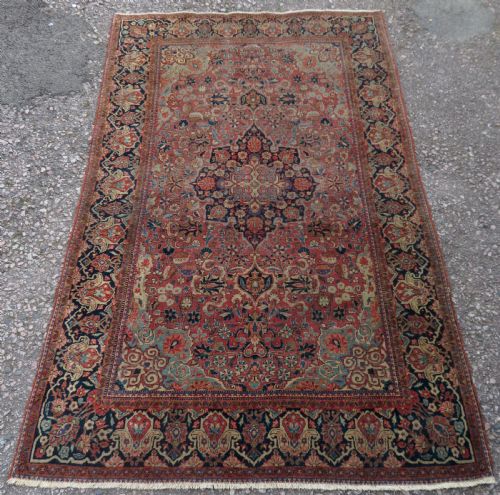
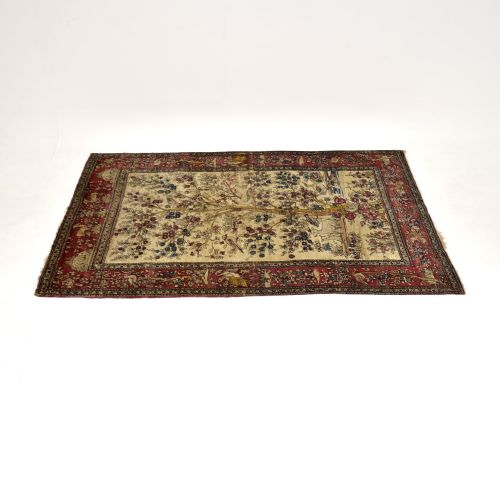
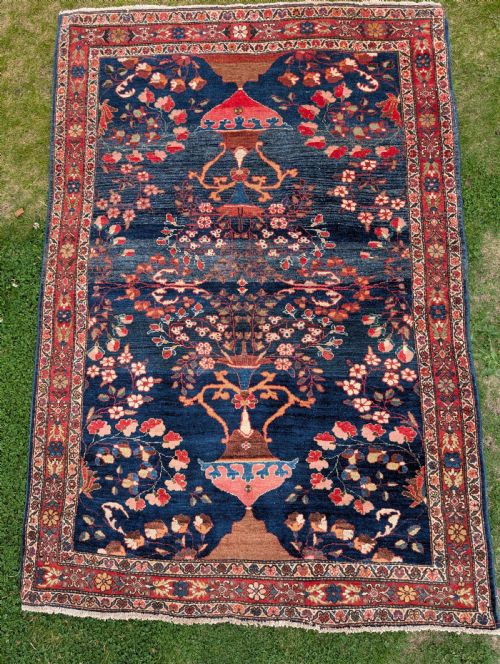
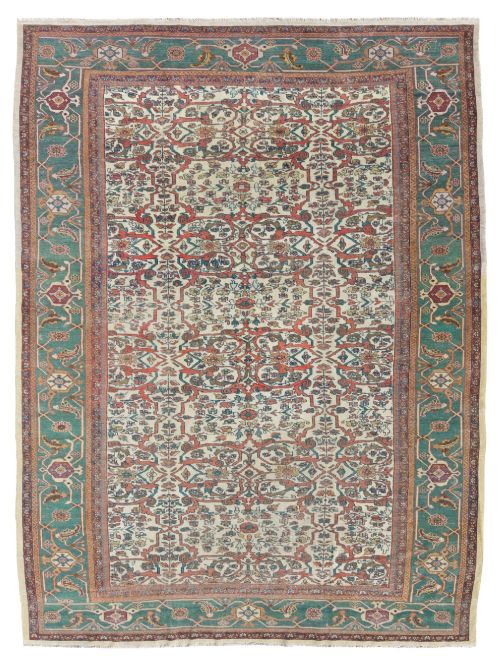
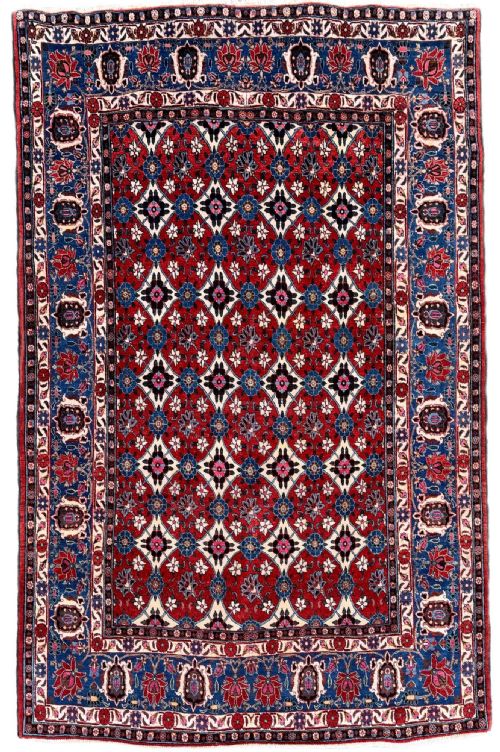
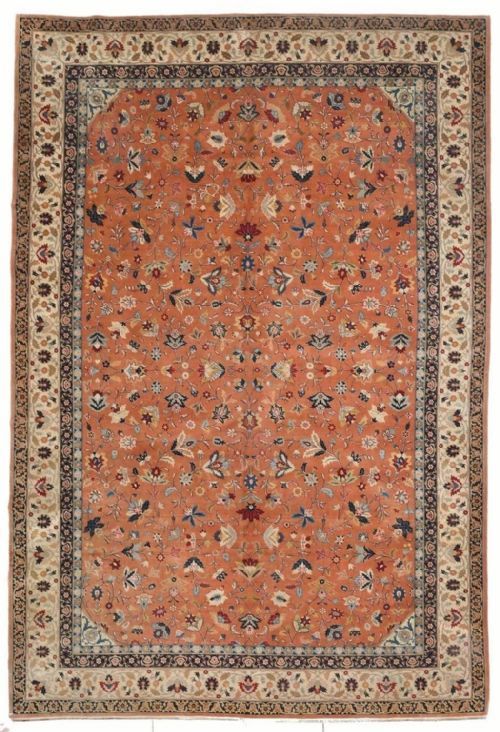
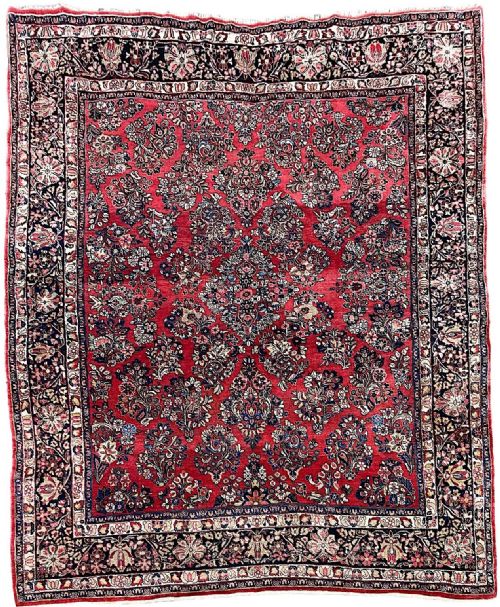
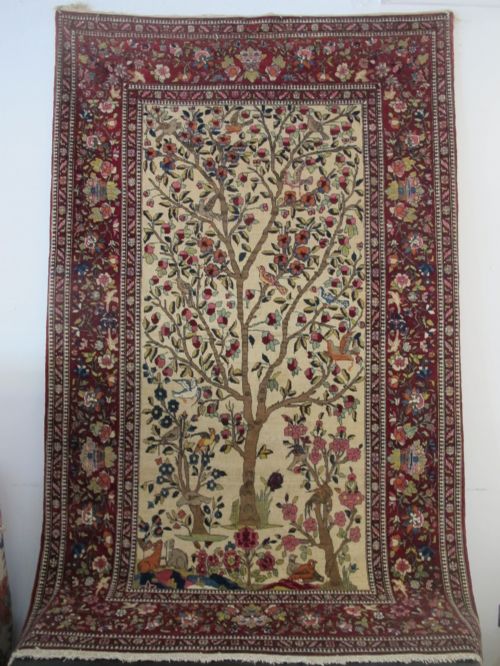
A floral border persian rug spans regional workshops and village productions across Persia, dating from the mid-nineteenth century through the early twentieth century. Buyers seeking this style encounter diverse room-sized carpets and smaller area rugs bearing intricate botanical motifs along their margins.
The pieces on this page originate from historic weaving centres including Tabriz, Sultanabad, Kashan, Heriz, and Ziegler, each bringing distinct structural characteristics to the floral border persian rug. Village and city workshops alike employed traditional dyeing and knotting methods that defined the aesthetic of these floor coverings.
Materials and construction
The physical structure of these textiles relies on natural fibres, combining sturdy cotton foundations with resilient wool pile, and occasionally finer silk elements. Spinners carded and spun the fleece by hand before dyers applied natural colourants derived from plants and minerals.
Weavers knotted the pile by hand onto warp and weft threads, securing the edges with overcast selvages and finishing the ends with flatwoven fringes. This intensive labour created dense, durable surfaces capable of withstanding heavy daily use over generations.
Weavers occasionally incorporated tiny intentional geometric flaws into symmetrical floral patterns to ward off the evil eye.
Distinctions in execution
The fineness of the weave and the complexity of the botanical drawing dictate the tier of a piece, separating standard village productions from master city workshop creations. Knot density per square decimetre determines how sharply the curved floral lines and medallion outlines resolve on the surface.
The palette depth and the stability of the natural dyes also establish the standing of an example, as uniform saturation across large areas requires expert mordanting. Additionally, the overall preservation of the original pile height and the integrity of the outer borders influence the character of the textile.
Ahmadi·Ziegler and Co
The Floral Border Persian Rug Glossary
- Warp
- The stationary vertical threads stretched across the loom that form the skeletal structure of the rug. The exposed ends of these threads often emerge as fringes.
- Weft
- The horizontal threads passed back and forth over and under the warp threads to bind the knots in place. Shoots of weft are beaten down firmly after each row of knots is complete.
- Pile
- The vertical tufts of wool, cotton, or silk that form the soft upper surface of the textile. Trimming this pile during shearing reveals the clarity of the underlying pattern.
- Medallion
- A symmetrical ornamental design centred in the middle of the carpet field. This central motif is often echoed in the corner spandrels and surrounded by floral borders.
- Selvage
- The reinforced outer side edges of a rug formed by wrapping the lateral warp threads. This finishing technique prevents the sides from fraying or curling.
Floral Border Persian Rug: Frequently Asked Questions
How do I clean a wool rug?
Professional dusting and specialist immersion washing preserve the integrity of natural wool pile and traditional dye stuffs. Regular gentle vacuuming without a beater bar removes surface grit before it settles deep into the foundation.
Avoid chemical spot treatments and domestic steam cleaning machines, which can strip natural lanolin from the fleece and cause dyes to bleed. Consult a specialist experienced in antique oriental carpets for seasonal maintenance.
Where were these carpets woven?
Weavers produced these textiles in urban workshops, rural village communities, and nomadic tribal encampments across Persia. Major centres such as Tabriz, Kashan, Isfahan, and Sultanabad developed signature styles that distinguish their output.
Regional water supplies, local plant species for dyeing, and specific tribal motifs dictated the visual vocabulary of each distinct weaving district.
Are these rugs durable for hallways?
Thickly knotted wool pile on sturdy cotton foundations provides exceptional resilience for high-traffic corridors and living spaces. The natural elasticity of hand-spun sheep's wool allows the fibres to absorb pressure without crushing permanently.
Placing a breathable, high-friction underlay beneath the textile prevents slipping and reduces internal fibre friction caused by foot traffic.
How do I identify regional designs?
Structural analysis of the knot type, foundation materials, and border arrangements reveals the likely geographical origin of an antique carpet. City workshops often utilised asymmetrical knots on silk or fine cotton, whereas village looms favoured symmetrical knots on heavier wool.
Comparing the floral border arrangements and secondary motifs against documented regional corpuses helps narrow down the specific weaving centre or tribe.