
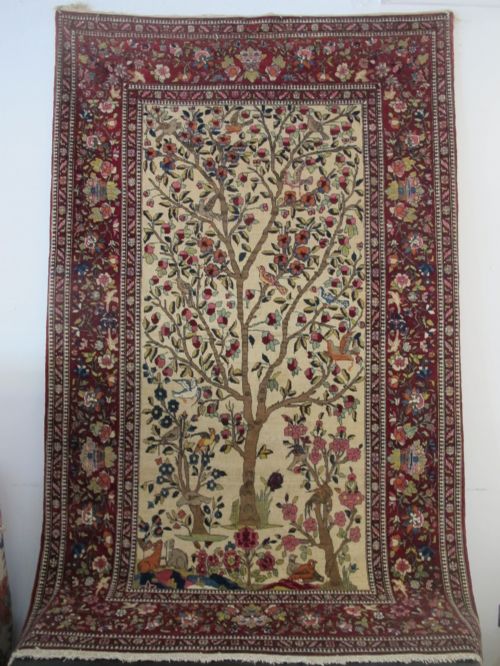


Vintage Persian Tree Carpet
A vintage Persian tree carpet brings centuries of textile tradition into a room, grounding your floor with deep wool piles and enduring floral motifs.
Vintage Persian Tree Carpet
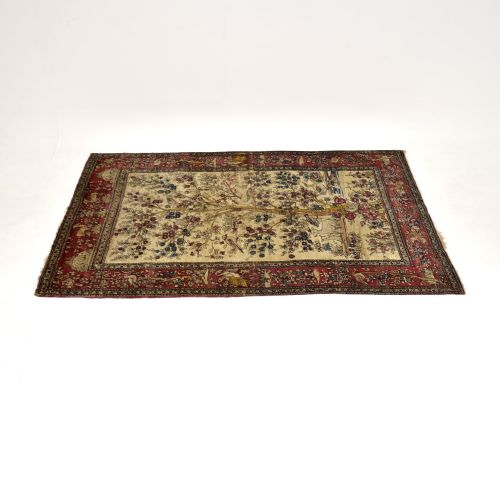
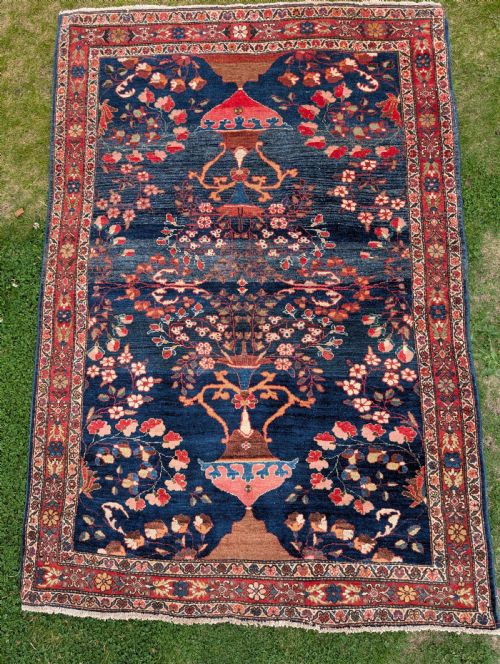
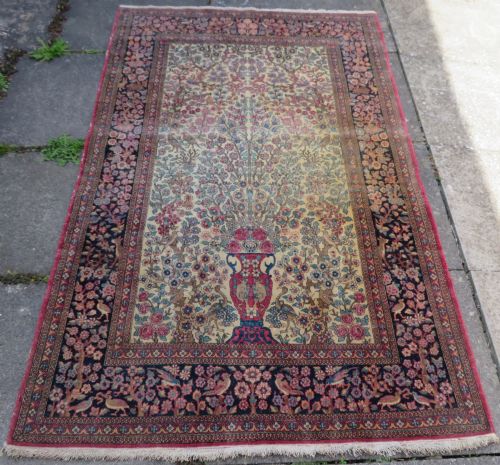
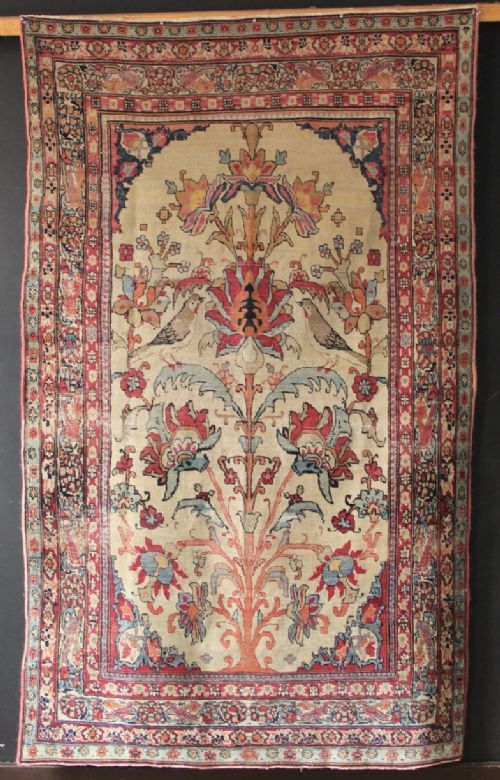
When you search for a vintage Persian tree carpet, you are looking at handwoven floor coverings originating from Persia that incorporate distinct tree of life or garden iconography into their composition. The pieces on this page span several decades from the mid-nineteenth century through the 1930s, encompassing regional workshops and tribal groupings alike.
Most examples you will encounter here display traditional wool foundations and piles, sometimes supplemented by cotton structures or camel hair accents. The designs range from structured central vases and floral sprays associated with city workshops in Isfahan, Kashan, Kirman, and Tabriz to more geometric interpretations woven by nomadic groups including the Baluch, Bakhtiari, Kurdish, and Qashqai.
Forms vary from compact scatter rugs and prayer rugs to expansive room-sized carpets and elongated runners. This diversity means you might find a room-anchoring Bakhtiar carpet alongside a smaller Baluch prayer rug featuring a camel ground tree design.
Materials and Construction Methods
The foundation of these textiles relies predominantly on hand-spun wool and cotton, utilised for warps, wefts, and dense pile knots. Certain regional weavers also incorporated camel hair, particularly for neutral brown or golden ground tones within tribal formats.
Weavers tied knots by hand onto vertical looms, creating complex pictorial arrangements of branches, leaves, and vases without printed templates. Natural dyestuffs provided the deep reds, indigos, and earth tones that characterise these nineteenth and early twentieth-century textiles.
Listings span from mid-nineteenth-century village pieces to 1930s Isfahan pictorials, covering wool, cotton, camel hair, and silk materials.
Factors Affecting Quality
Knot density and structural fineness dictate how sharply rendered the arboreal motifs and floral details appear across the field. Higher knot counts permit intricate curves in the depiction of branches and foliage, whereas coarser tribal rugs favour stylised, geometric interpretations.
The handling of materials also separates standard production from finer examples, visible in the suppleness of the wool and the precision of the weave. Consistency in dye saturation and the complexity of the secondary borders further distinguish workshop masterworks from everyday village weaving.
The Vintage Persian Tree Carpet Glossary
- Tree of life
- A central symbolic motif depicting a tree rising from a hill, pot, or ground, representing spiritual growth and eternity. It serves as the primary visual anchor for this group of rugs.
- Knot density
- The number of knots per unit area on the reverse of the carpet, which dictates the clarity of the pattern. Higher densities usually correlate with urban workshop production rather than tribal weaving.
- Warp
- The vertical foundation threads stretched tightly on the loom before knotting begins. Cotton and wool are the primary fibres found in these listings.
- Weft
- The horizontal threads passed through the warps after each row of knots to secure the structure. They help determine the flexibility and handle of the finished rug.
- Prayer rug
- A format defined by a mihrab or niche arch at one end, indicating the direction of prayer. These are typically smaller in scale for personal use.
Vintage Persian Tree Carpet: Frequently Asked Questions
How do I style a tree carpet?
These carpets work well as the visual anchor in a living room, study, or bedroom. Place them on neutral wooden floors to let the detailed tree and floral motifs stand out without visual competition from surrounding patterns.
Because many examples feature strong vertical axes, aligning the tree motif with the primary sightline of the room enhances their decorative impact. Balance the rich tones of the wool with complementary textiles and simple furnishings.
How do I clean an old wool rug?
Regular gentle vacuuming without a beater bar removes surface dust trapped deep within the pile. Avoid shaking the textile or using stiff rotary brushes that can strain the hand-spun wool foundation.
For deeper cleaning, consult a professional textile conservator experienced with antique Persian weaves. Household detergents and excessive water can cause natural dyes to bleed or weaken the aged cotton and wool fibres.
What is a Baluch camel ground rug?
Baluch weavers often utilised un-dyed camel hair for the background of their rugs, creating a warm, durable field of natural brown or golden hue. These pieces frequently incorporate tree of life designs woven by nomadic groups in the borderlands of Persia.
The inclusion of camel hair provides a softer handle and a distinct tactile quality that differs from standard dyed sheep wool piles.
How do I tell city carpets from tribal rugs?
City carpets from centres like Isfahan, Kashan, and Kirman display symmetrical floral precision, curved lines, and fine workshop execution. They often employ cotton foundations for added structural stability.
Tribal rugs from Bakhtiari, Qashqai, or Kurdish groups favour more direct, geometric interpretations of trees and gardens, occasionally using all-wool foundations and richer variations in tribal dye palettes.