


Qajar Persian Rug
A qajar persian rug brings rich nineteenth-century history and master weaving into a room, offering distinct narrative designs and deep character for any interior.
Qajar Persian Rug
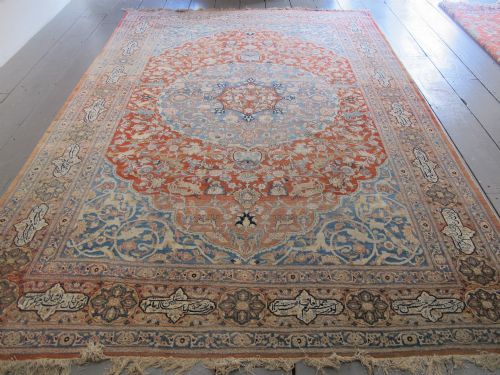
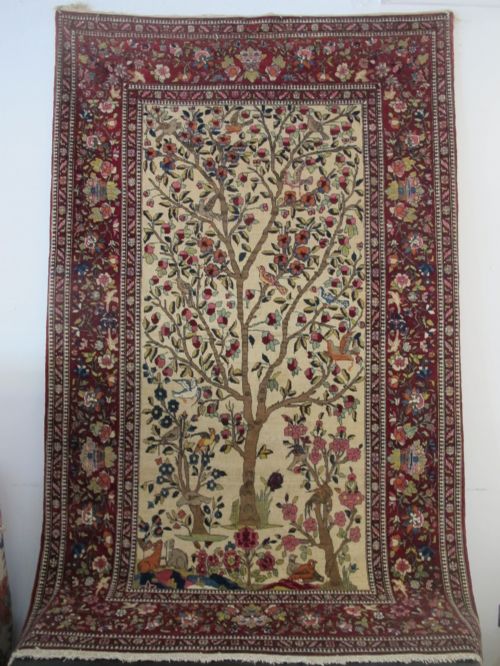
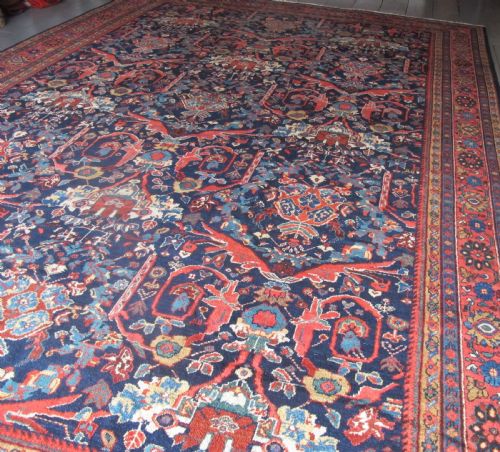
A qajar persian rug encompasses woven carpets, pictorial rugs, and intricate textile panels originating from Persia during the nineteenth and early twentieth centuries. These pieces display the artistic output of the Qajar dynasty, ranging in date from the mid-nineteenth century up to the 1920s.
The selections on this page feature both finely knotted pile carpets from centres like Tabriz, Isfahan, Kashan, and Malayer alongside needlework textiles and embroidered felt panels. Buyers encounter pictorial portraits of historical figures, floral medallions, and classical Persian designs executed in diverse regional formats.
Most examples date from the transition between the nineteenth and twentieth centuries, representing established weaving traditions that span wool pile structures and silk-on-felt embroidery. Each piece reflects the distinct aesthetic preferences of Persian workshops during this imperial era.
How they were made
These textiles rely on traditional foundations of hand-spun wool and cotton, utilised for both pile knots and structural warps and wefts. Artisans combined these natural fibres with natural dyes to achieve durable, saturated tones across carpets and area rugs.
Alternative pieces employ wool felt and red or black felt as a ground fabric, decorated through detailed silk applique work and hand embroidery. Block printing and painting techniques also appear on mid-nineteenth century panels, demonstrating varied regional craft methods.
Some carpets break tradition by featuring portraits of European leaders rather than classical floral geometry.
What varies in quality
Quality rests in the precision of the hand-knotted pile or the intricacy of the silk needlework applied to the felt ground. Finer knots per square inch and tightly executed pictorial portraits or medallions indicate superior workshop execution.
The choice of materials, such as finely spun wool or resilient silk thread on heavy felt, dictates the overall longevity and handle of the textile. Master weavers achieved greater depth and clarity of design through disciplined execution of classical Persian motifs.
Haji Jalili·Mohtasham Kashan·Ahmadi
The Qajar Persian Rug Glossary
- Qajar
- Pertaining to the royal dynasty that ruled Persia from the late eighteenth century until 1925. This period produced distinctive pictorial rugs and refined court carpets.
- Applique
- A needlework technique where pieces of fabric, such as silk, are sewn onto a larger background material like felt. Rasht embroideries frequently utilise this method.
- Mohtasham
- A term associated with master weavers in Kashan renowned for producing exceptionally fine carpets with dense piles and intricate designs.
- Medallion
- A central ornamental motif woven into the field of a rug or embroidered onto a textile panel. These range from floral arrangements to star formations.
- Felt
- A non-woven textile produced by matting, condensing, and pressing fibres together. Several regional Persian panels use this material as a base for silk embroidery.
Qajar Persian Rug: Frequently Asked Questions
What is a Qajar Persian rug?
It is a textile or carpet created in Persia during the Qajar dynasty, known for incorporating traditional motifs, floral designs, or historical portraits.
These pieces reflect the specific weaving and embroidery practices of Persian workshops active from the mid-nineteenth century into the early twentieth century.
How do I identify a Rasht embroidery?
Rasht embroideries are characterised by silk threads and applique work applied directly onto a wool felt ground, often featuring black, red, or neutral tones.
They originate from the Gilan province in northern Persia and display dense floral or medallion patterns executed entirely by hand.
How should I care for an antique textile?
Protect the piece from direct sunlight to prevent fading of natural dyes, and use a suitable underlay to reduce friction against the floor.
Gentle surface cleaning by a specialist conservator helps preserve delicate wool and silk fibres without damaging the underlying structure.