




Edwardian Era Rug
An edwardian era rug brings rich dye palettes and intricate tribal motifs into a room, offering both history and texture underfoot.
Edwardian Era Rug
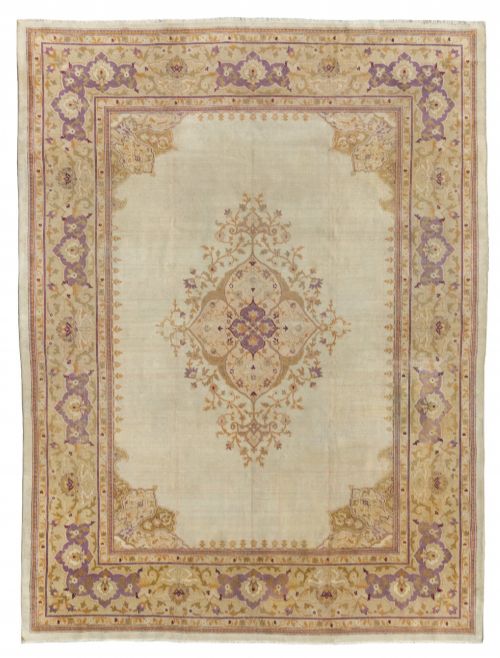
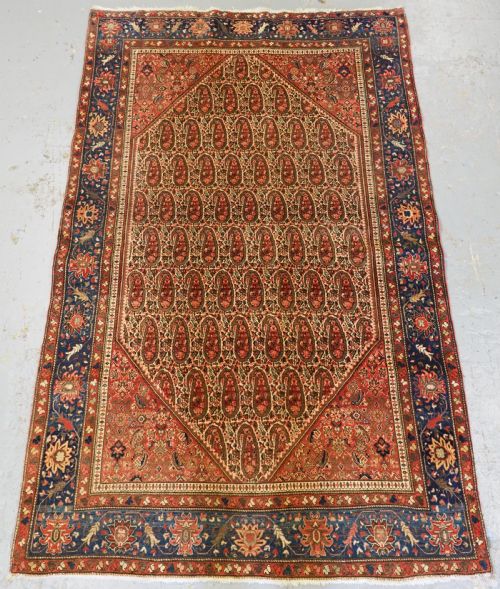
When you search for an edwardian era rug, you encounter hand-knotted and woven floor coverings alongside embroidered textiles originating from around nineteen hundred to nineteen twenty. These items span traditional Persian designs, Kurdish tribal work, and North Indian or Turkish workshops.
The version most commonly met on this page is the Persian village or tribal rug, featuring classic medallion layouts, boteh motifs, or garden patterns. Alongside these, buyers find specific regional pieces such as Amritsar, Malayer, and Baluch prayer rugs.
Originating from a period bridging the late nineteenth and early twentieth centuries, these carpets reflect diverse cultural weaving traditions. They range from small mats suitable for intimate spaces to larger carpets designed for grander rooms.
How they were made
Makers utilised natural materials such as wool, cotton, and silk, sometimes applying embroidery onto velvet grounds. Weavers knotted these fibres by hand onto cotton or wool foundations, building dense piles that endured heavy daily use.
Dyes derived from natural sources yielded deep blues, greens, ivory, and soft multicolour palettes. Artisans employed traditional knotting techniques characteristic of Persian, Turkish, and Turkmen workshops, ensuring structural integrity across generations.
Listings span the period from eighteen eighty to nineteen twenty, featuring wool, cotton, silk, and velvet textiles.
What varies in quality
Knot density and precision of design execution determine the refinement of a piece, with finer weaves allowing for sharper execution of complex medallions and floral motifs. The choice of materials also elevates a piece, particularly when employing fine silk or superior wool grades.
The depth and preservation of the colour palette influence the visual impact, as natural dyes age with distinct character. Additionally, the cultural significance and scarcity of specific regional designs, such as scarce blue and green grounds or distinct tribal prayer formats, distinguish exceptional examples from standard production.
The Edwardian Era Rug Glossary
- Boteh
- A stylised almond or pear-shaped motif representing a shrub or cypress tree. It appears frequently across Persian and regional carpets.
- Prayer rug
- A rug featuring a mihrab or arch design indicating the direction of prayer. These are typically smaller formats created for personal devotion.
- Medallion
- A central ornamental design motif placed in the middle of the field. Classic examples anchor symmetrical geometric or floral layouts.
- Torba
- A small tribal storage bag face woven by Turkmen groups. These pieces display distinct gul patterns and were traditionally used inside nomadic tents.
- Mihrab
- The architectural arch niche depicted on prayer rugs. This sacred shape directs the visual focus of the design.
Edwardian Era Rug: Frequently Asked Questions
How do I clean an old rug?
Professional specialist cleaning is recommended for antique textiles to protect natural fibres and dyes. Gentle vacuuming without a beater bar removes loose debris between cleanings.
Avoid immersion washing or harsh chemical agents at home. Proper maintenance preserves the structural integrity of the weave.
Can I place these rugs in high traffic areas?
Many sturdy wool tribal rugs withstand regular foot traffic when paired with a quality underlay. Placing them in moderate zones balances enjoyment with preservation.
Delicate silk pieces or fine velvet embroideries require wall display or low-traffic placement. Assess the pile density and foundation strength before deciding on room placement.
How do I identify a tribal design?
Tribal rugs typically display geometric motifs, repeating guls, and asymmetric village patterns rather than formal court curves. Weavers worked from memory rather than precise cartoons, creating charming irregularities.
Palettes often reflect regional dye availability and nomadic traditions. Quchan, Baluch, and Yuruk pieces showcase these distinctive styles.
What underlay should I use?
A breathable, non-slip rug pad prevents sliding and cushions the foundation against hard flooring. Select a material that allows air circulation beneath the textile.
Proper padding reduces friction between the floor and the antique fibres. This simple addition extends the lifespan of the weave.