
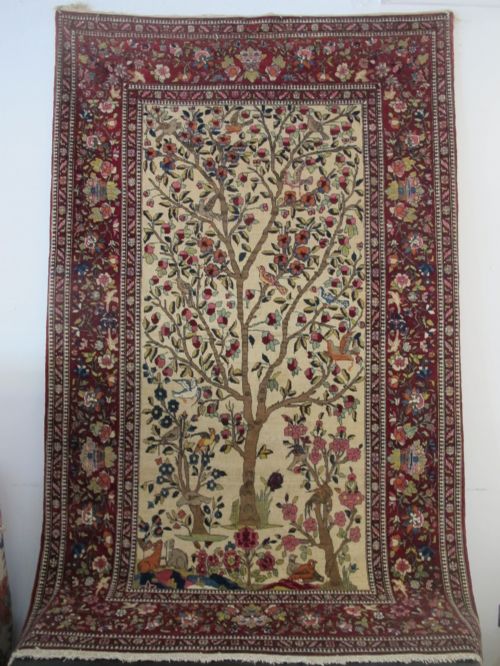


Pictorial Persian Rug
A pictorial persian rug brings narrative and portraiture to the floor, offering collectors a striking window into historical narratives.
Pictorial Persian Rug
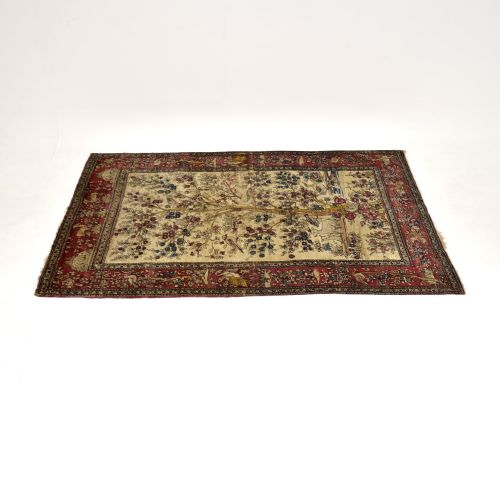
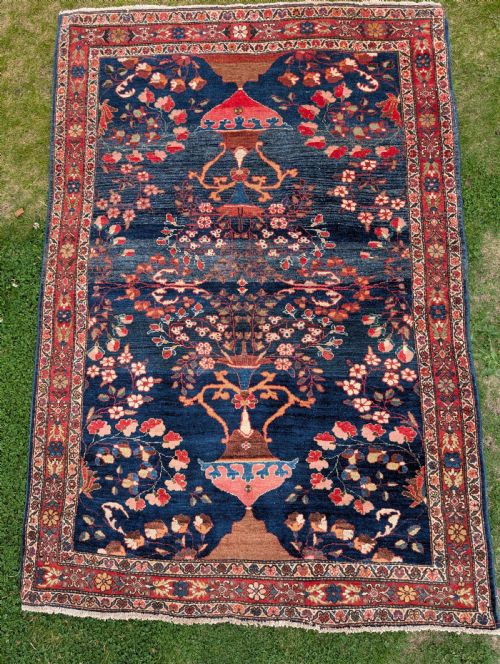
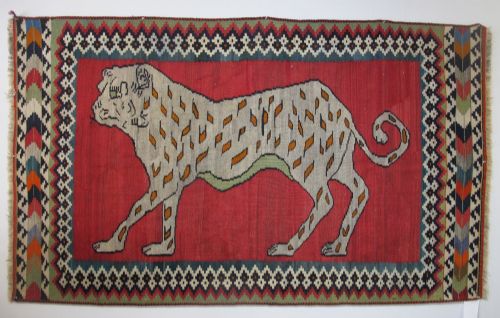
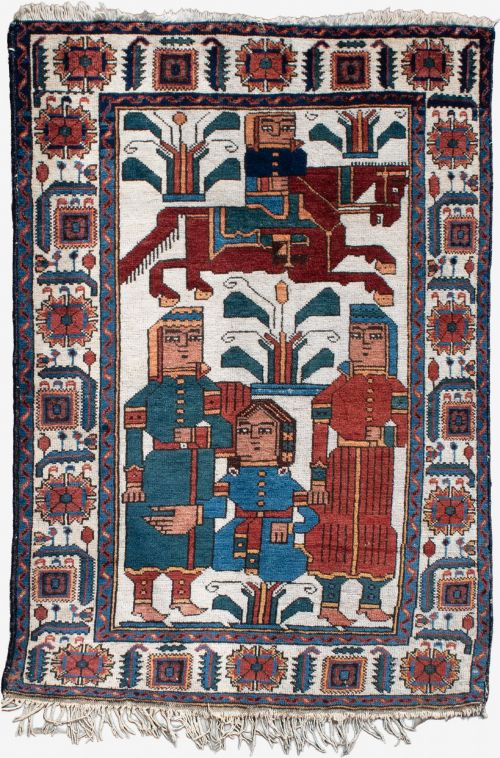
A pictorial persian rug presents figurative imagery, historical portraits, and narrative scenes woven directly into the textile. These floor coverings shift away from purely geometric or floral motifs to tell specific visual stories from Persian heritage.
The selection ranges from intimate mats to larger area rugs spanning several decades around the turn of the twentieth century. Pieces include specific regional styles such as Kashan, Isfahan, Sarouk, and Lavar Kirman.
Collectors frequently encounter specific portraits, such as depictions of rulers like Ahmad Shah Qajar, woven with immense detail. Each piece functions simultaneously as a practical floor covering and a canvas of historical record.
Materials and construction
Every pictorial persian rug relies on natural fibres, combining wool pile with cotton foundations for stability and structure. The wool provides softness and durability, while the cotton warps and wefts allow for fine, precise knotting.
Pictorial Persian Rug Retail Price Guide 2026
Typical asking prices for pictorial persian rug among the pieces listed under this phrase on Sellingantiques today, from the lower quarter to the upper quarter. They describe what is for sale here now, not the wider market.
Some weavers immortalised royal figures in wool, ensuring absolute monarchs spent eternity under everyone's feet.
Judging quality
The density of the hand-knotted weave dictates how sharply the pictorial elements render against the background. Superior density allows for subtle shading and expression within the woven portraits.
Mohtasham Kashan·Lavar Kirman
The Pictorial Persian Rug Glossary
- Pile
- The upright yarn loops that form the usable surface of a rug. This forms the soft layer that walkers step upon and holds the visual design.
- Warp
- The stationary longitudinal threads stretched onto a loom before weaving begins. The fringe of the rug typically forms from these enduring parallel strands.
- Weft
- The horizontal threads passed through the warps to bind the knots in place. Proper tension here ensures the structural integrity of the woven pictorial scene.
- Knot
- The individual loops of wool tied around warp threads to build the rug pattern. Higher counts of these individual ties generally permit greater detail in figurative work.
Pictorial Persian Rug: Frequently Asked Questions
What is a pictorial persian rug?
A pictorial persian rug is a hand-knotted textile featuring figurative imagery, historical scenes, or portraits rather than standard geometric patterns.
These works serve as both decorative floor coverings and historical documents preserving specific cultural narratives.
How do I date a pictorial rug?
Dating relies on stylistic analysis, material examination, and occasionally woven signatures or dates within the border. Periods span from the late nineteenth century through the early twentieth century.
Comparing portrait subjects, such as specific rulers, against known historical eras helps narrow the window of origin.
Where were these rugs made?
These textiles originate from renowned weaving centres across Persia, including Kashan, Isfahan, Sarouk, and Kirman.
Each region developed distinct palettes and knotting techniques that influence the clarity of the pictorial scenes.
How should I care for a pictorial rug?
Protect the textile by avoiding direct sunlight and using appropriate underlays to prevent slipping and friction wear.
Gentle vacuuming without a rotating brush roll helps preserve the delicate wool pile and intricate figurative details.