
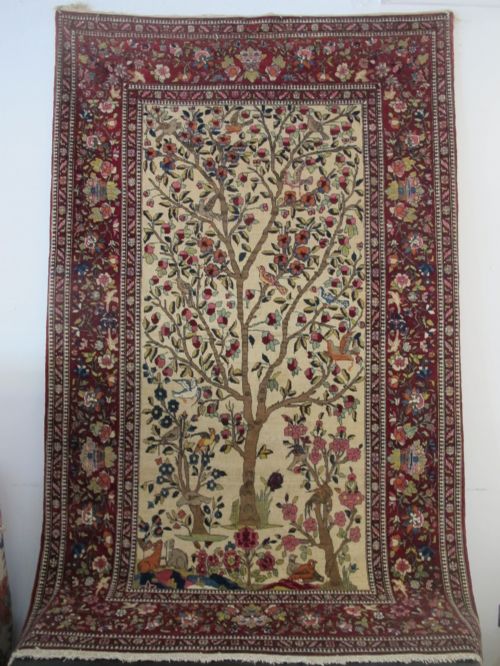


Persian Pictorial Carpet
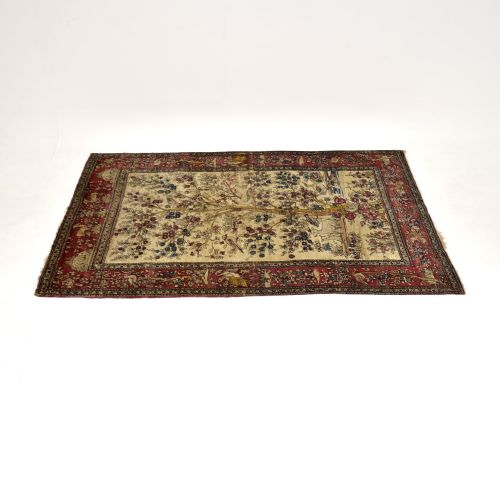
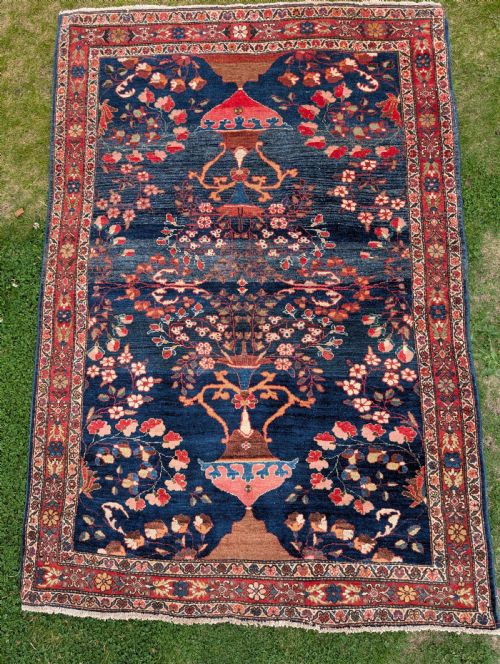
These persian pictorial carpet pieces bring figural narratives and portraits into woven textile form, offering collectors detailed historical scenes.
Persian Pictorial Carpet
A persian pictorial carpet displays complex figurative scenes, royal portraits, and historical figures rather than standard geometric or floral medallions. When exploring this group, buyers encounter formats ranging from small mats to large area rugs originating from centres such as Kashan, Isfahan, Kirman, and Tabriz.
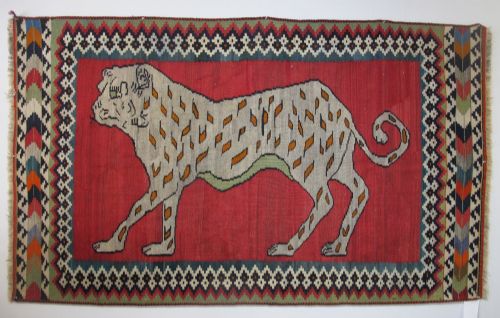
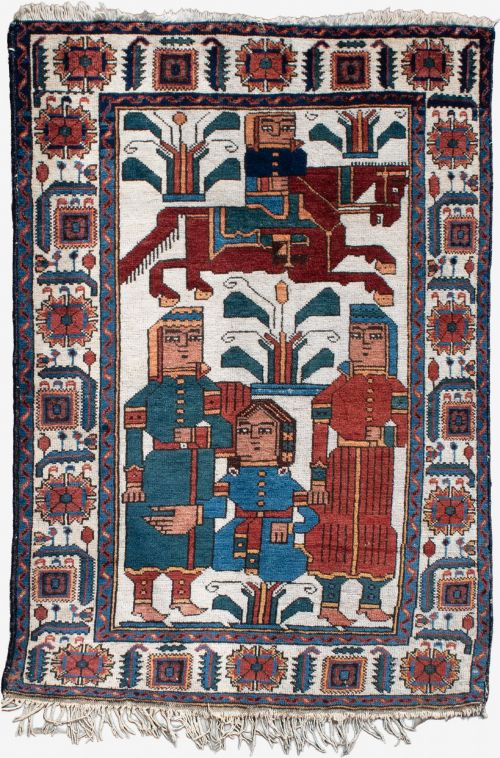
The selection includes examples bearing likenesses of figures like Ahmad Shah Qajar, Kaiser Wilhelm II, and the last Tsar of Russia Nicholas. Alongside these royal portraits, weavers produced tribal pieces incorporating human figures, animal motifs, and narrative storytelling.
Production dates span from the late nineteenth century into the early decades of the twentieth century, capturing distinct periods of Qajar and later Persian craftsmanship. The forms appear primarily as hand-knotted rugs, carpets, mats, and kilims created across diverse regional workshops.
Distinguishing quality in weaving and portraiture
The choice of materials also divides the grade of these carpets, with finer silk elements or densely packed wool piles achieving greater durability and visual definition. Foundation tightness and the uniformity of the hand-knotted structure further separate standard utility rugs from master workshop productions.
Weavers immortalised figures as varied as European tsars, kaisers, and local shahs within the soft wool pile of these unusual Persian carpets.
Mohtasham Kashan·Ahmadi Isfahan
The Persian Pictorial Carpet Glossary
- Pile
- The upright yarn loops that form the tactile surface of the carpet. This surface is sheared to a uniform height after knotting to display the woven design.
- Warp
- The stationary vertical threads stretched across the loom upon which the knots are tied. They form the structural skeleton of the textile.
- Weft
- The horizontal threads passed across the warps between rows of knots to secure the structure. They bind the vertical foundation firmly together.
- Natural Dyes
- Colourants derived from plants, insects, and minerals rather than synthetic compounds. These substances yield complex, stable hues that age gracefully.
- Kilim
- A flat-woven textile produced without a pile by tightly interweaving warp and weft strands. These pieces display sharp geometric or tribal patterns flatly on the surface.
Persian Pictorial Carpet: Frequently Asked Questions
What defines a persian pictorial carpet?
A persian pictorial carpet breaks from traditional abstract or floral motifs by depicting recognizable human figures, historical events, or specific royal portraits. These works function as narrative documents woven directly into the textile tradition.
Weavers structured these pieces to tell stories or commemorate political figures, utilising high knot densities to achieve facial expressions and costume details.
Where were these pictorial carpets made?
Production centred in established Persian weaving regions such as Kashan, Isfahan, Kirman, Tabriz, and Veramin. Urban workshops in these cities employed master artisans capable of executing complex portraits.
At the same time, regional tribal groups produced their own interpretations featuring human figures and animals using local materials and simpler techniques.
How should I care for an antique rug?
Protect antique wool and silk textiles by keeping them out of direct sunlight to prevent fading of natural dyes. Gentle vacuuming without a beater bar removes trapped grit without pulling the foundation.
Rotate the rug periodically to ensure even wear across traffic areas and consult a specialist for professional cleaning when necessary.
How do I date a pictorial carpet?
Dating relies on stylistic markers, specific historical figures depicted in the weave, and structural materials such as wool, cotton, or silk. Pieces often reference monarchs or political events from the late nineteenth and early twentieth centuries.
Examining the palette of natural dyes and the crispness of the hand-knotted pictorial elements also provides clues to the period of origin.