

Iron Umbrella Holder
An iron umbrella holder keeps wet coats and walking sticks orderly in a hallway, combining utility with decorative metalwork from the Victorian and Edwardian periods.
Iron Umbrella Holder
An iron umbrella holder encompasses heavy hall furniture designed to receive wet walking sticks and umbrellas in domestic entryways. These items appear primarily in nineteenth-century and early twentieth-century variations, spanning Victorian, Edwardian, and Art Deco eras.
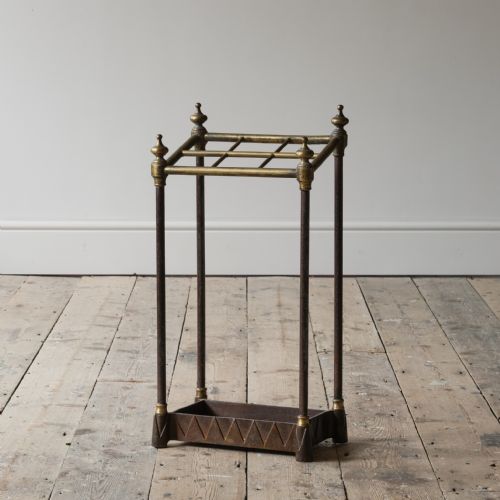
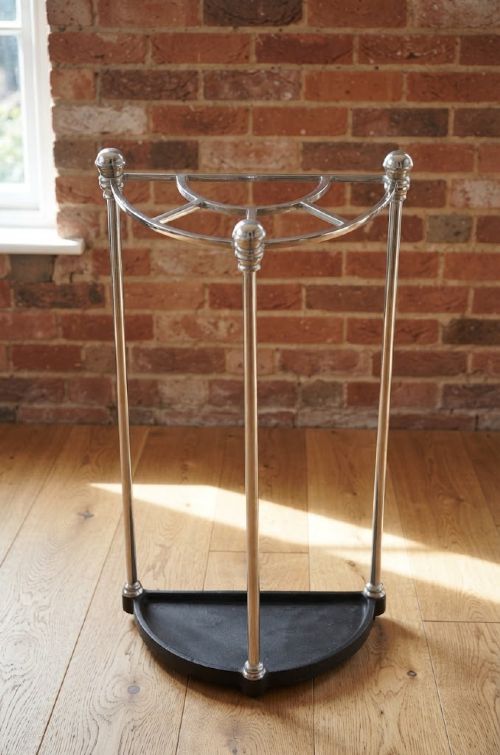
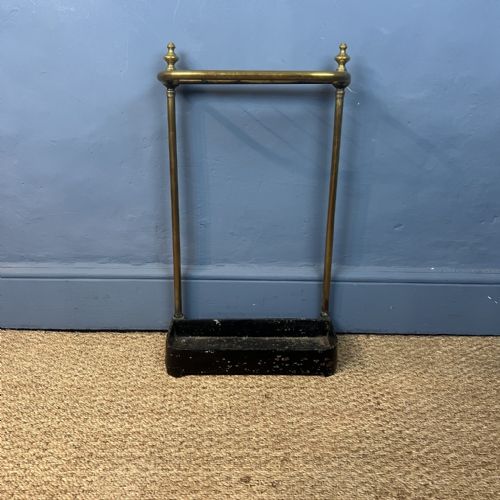
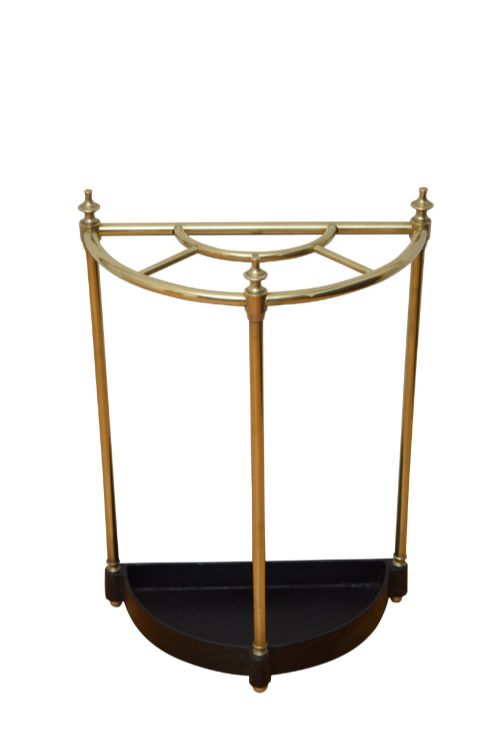
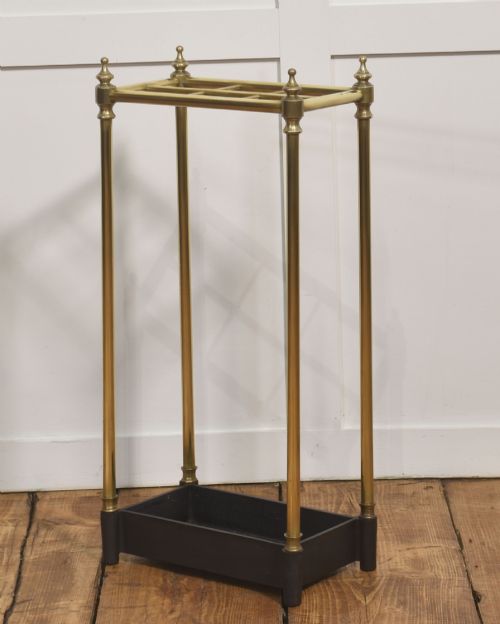
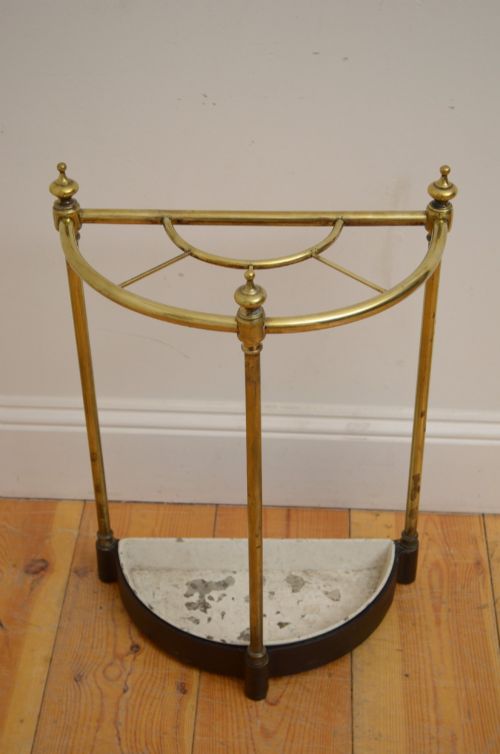
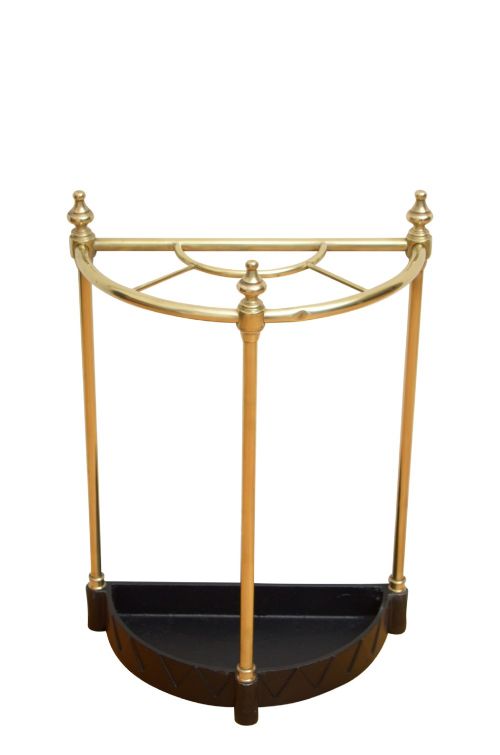
The most frequent form encountered on this page is the demi-lune or half-moon design, built to sit flush against a hallway wall. Makers also produced circular and rectangular variations, sometimes incorporating removable drip trays at the base to catch rainwater.
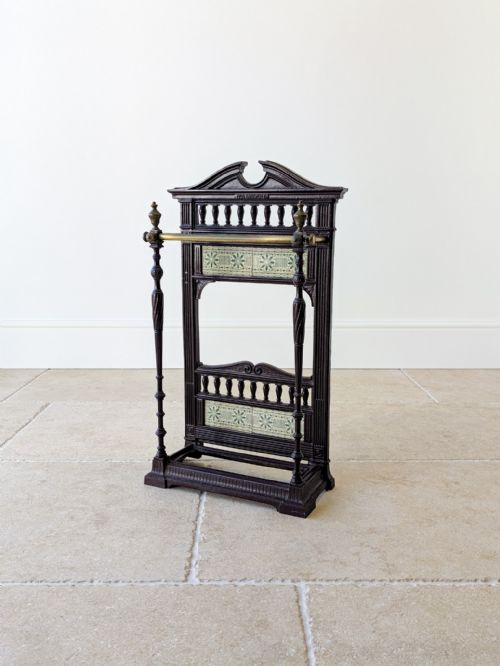
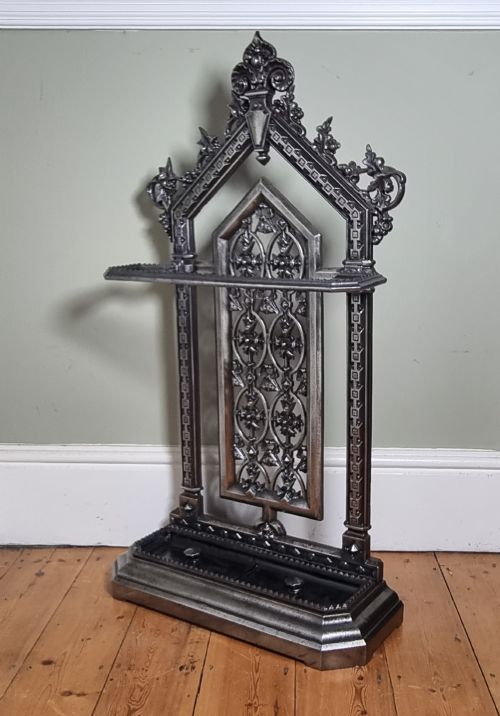
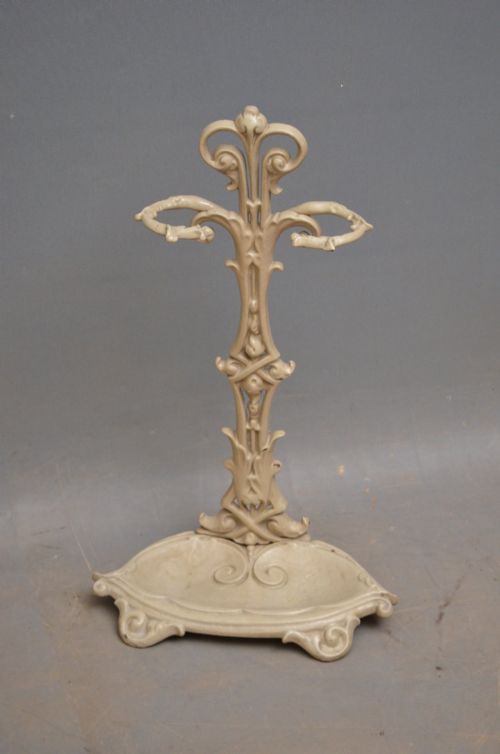
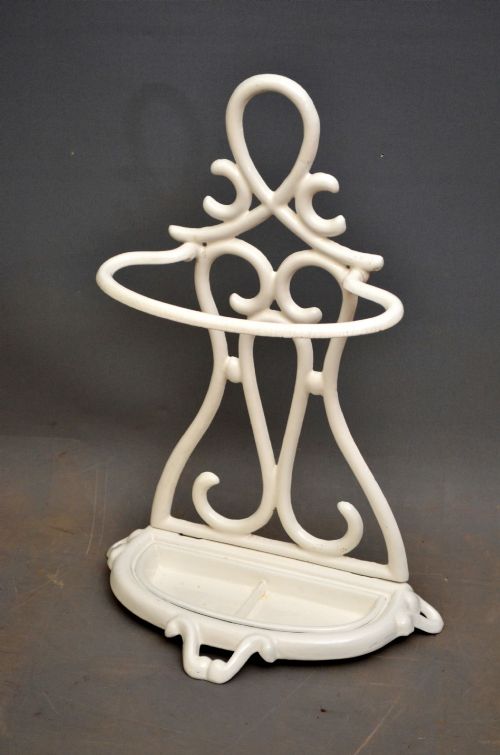
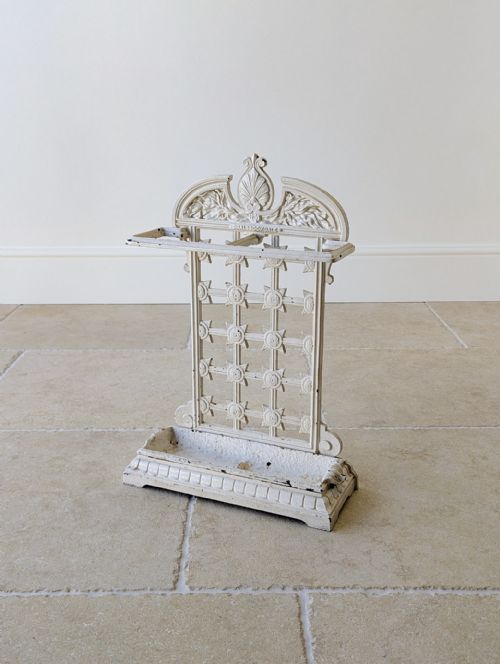
Design influences range from strict Victorian and Gothic motifs to flowing French Art Nouveau and Aesthetic Movement patterns. Many examples combine cast iron frames with brass rails or ceramic inserts, reflecting the diverse material tastes of period households.
Materials and Technique
Foundries utilised cast iron for the heavy structural frames and backplates, allowing intricate openwork patterns, faux bois bamboo textures, and figural designs like footballers to emerge from moulds. This heavy metal gives each holder the stability required to support multiple heavy walking sticks without tipping.
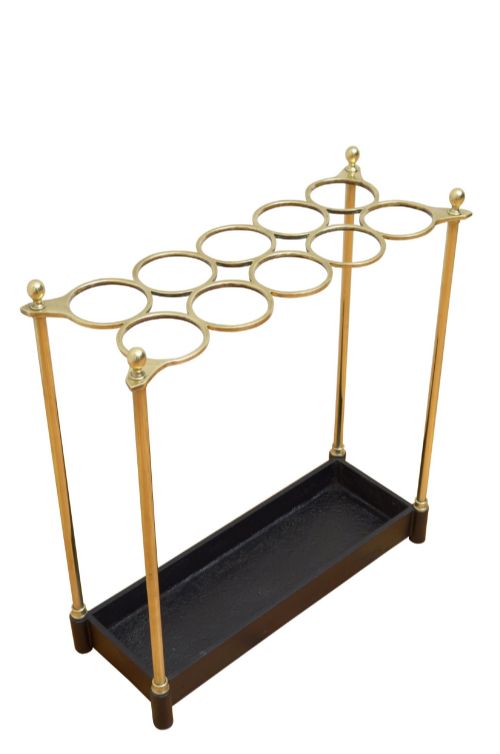
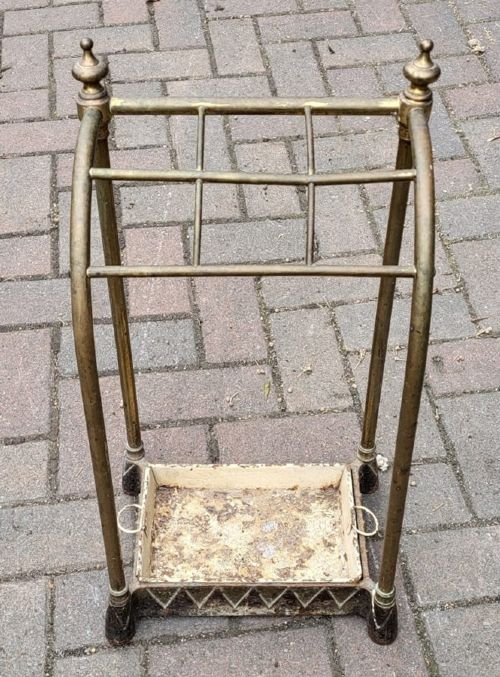
Brass elements appear frequently as tubular rails, decorative ball finials, and lower drip trays, contrasting sharply with the dark iron body. Some pieces incorporate steel components, white enamel finishes, or nickel plating to provide alternative surface textures and colours.
Makers assembled these multi-part objects using threaded bolts and screws to join the heavy iron base to the upper retainers. Removable metal trays at the bottom allowed water to be emptied easily without damaging the surrounding floorboards.
Some Victorian ironmasters cast umbrella holders to resemble footballers, blending hallway utility with nineteenth-century sporting enthusiasm.
Craftsmanship and Detail
Quality in an iron umbrella holder rests upon the crispness of the casting and the ambition of the design. Foundries that employed renowned designers produced pieces with sharp relief, clean edges, and balanced proportions.
The sophistication of the secondary materials also dictates the standard of the piece. Heavy-gauge brass tubing, solid cast foundations, and original integrated drip trays distinguish superior examples from simpler utilitarian foundry output.
Coalbrookdale·Thomas Jeckyll·Falkirk Ironworks·A. Kenrick & Sons
The Iron Umbrella Holder Glossary
- Demi-lune
- A half-moon shape designed to fit flat against a corridor wall. This format maximises floor space in narrow entrance halls.
- Faux bois
- A decorative finish mimicking natural wood grain. In these metalwork examples, the iron is cast to resemble knotted bamboo or timber branches.
- Drip tray
- A shallow metal or ceramic pan positioned at the base. It catches water running off wet umbrellas to protect interior floors.
- Finial
- A decorative crowning ornament. These often take the form of brass spheres terminating upright structural bars.
- Aesthetic Movement
- A late nineteenth-century design current emphasising visual beauty over narrative content. Pieces from this school often feature stylised natural forms and geometric restraint.
Iron Umbrella Holder: Frequently Asked Questions
Where did these stand in a home?
These holders stood directly inside the front entrance door of Victorian and Edwardian houses. They provided a designated drop-off point for guests and residents to store wet walking sticks and brollies upon entering.
Positioned in hallways or porches, they kept dripping water off carpets and wooden floorboards. Their compact footprints allowed them to occupy narrow passageways without blocking thoroughfares.
How do I clean the metal?
Dust the iron frame regularly with a dry cloth to prevent dirt accumulation in the recessed casting details. Avoid harsh chemical cleaners that might strip historic finishes or protective patinas.
For brass elements, apply a gentle metal polish sparingly while taking care not to stain adjacent iron surfaces. Empty and dry the bottom tray frequently to prevent moisture buildup.
Are drip trays usually original?
Many surviving holders retain their original iron or brass drip trays resting in the lower frame. Because these pans collected standing water, replacements are common additions in the history of individual pieces.
Examining the wear patterns and metal composition helps determine whether a tray matches the age and manufacture of the upper frame.
How do I identify the period?
Stylistic cues offer the clearest indication of date, moving from ornate Victorian Gothic designs towards flowing Art Nouveau curves and geometric Art Deco lines. Foundry marks and registration numbers cast into the metal can narrow down the production decade.
Heavier cast iron constructions generally point to the nineteenth century, while nickel plating and simpler tubular metal frameworks frequently suggest early twentieth-century manufacturing.