




Black Umbrella Stand
A black umbrella stand sets the tone of a hallway, holding wet coats and walking sticks with functional Victorian presence.
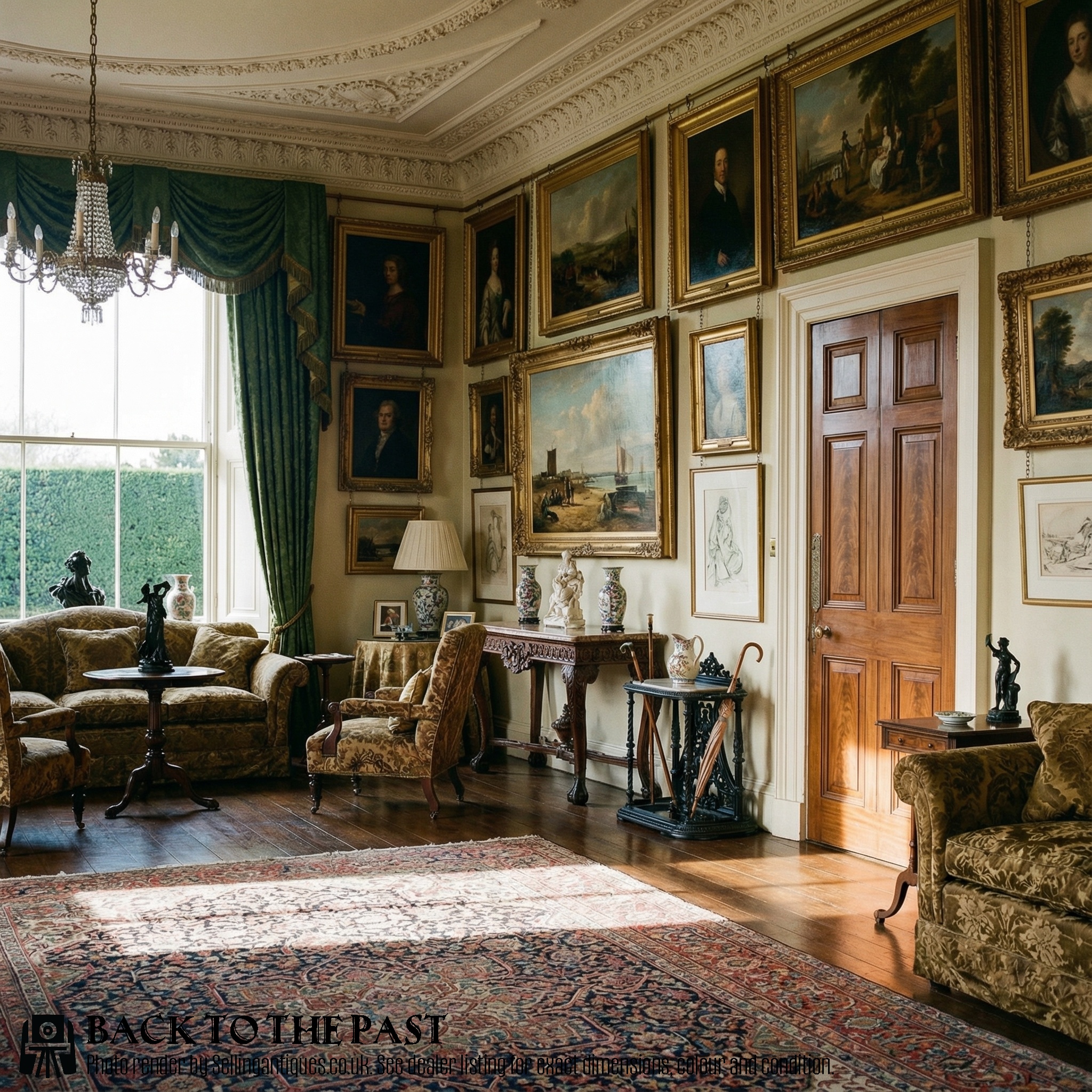
Black Umbrella Stand
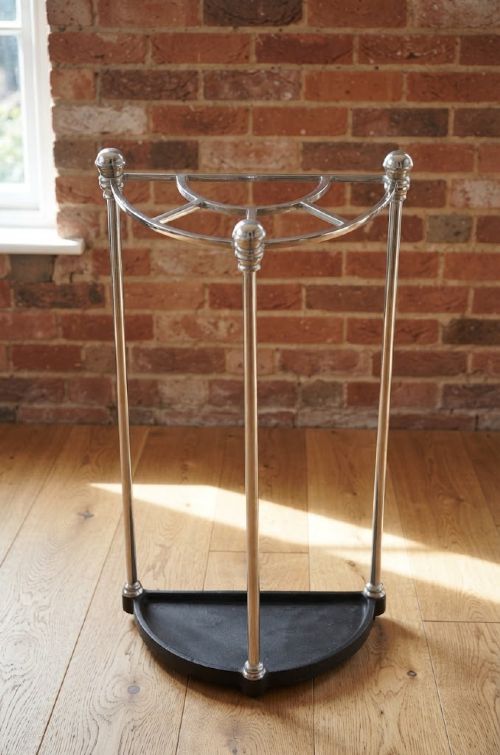
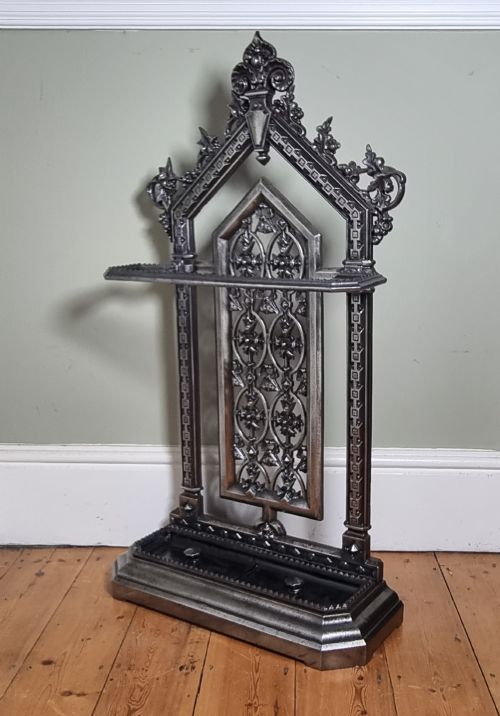
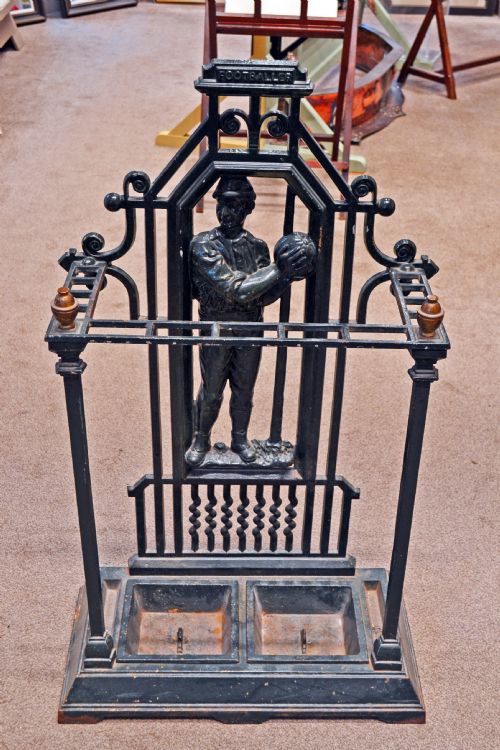
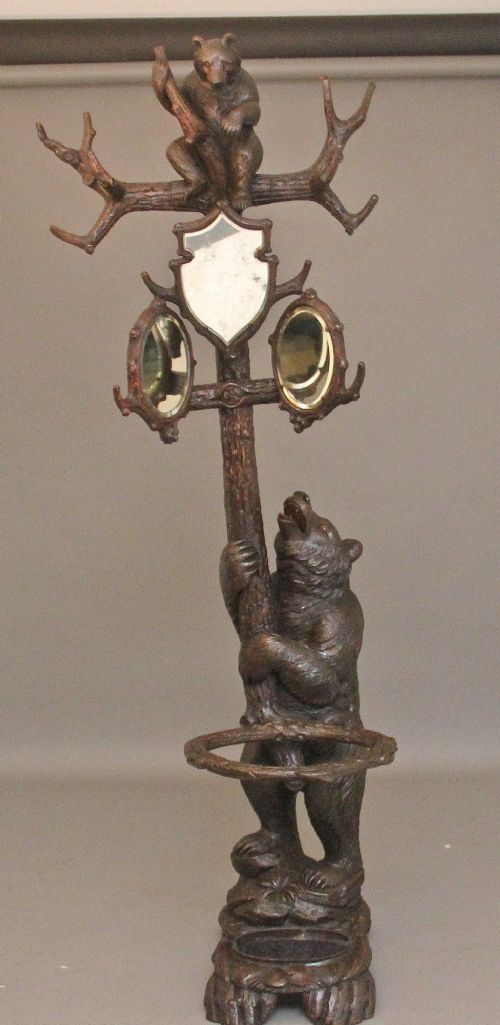
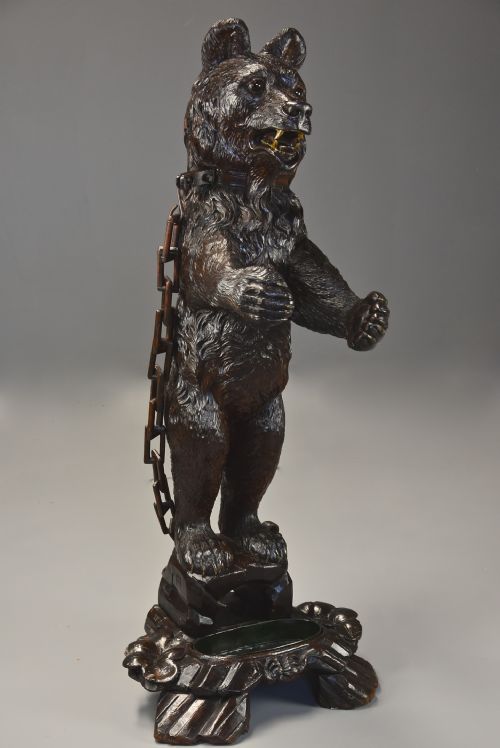
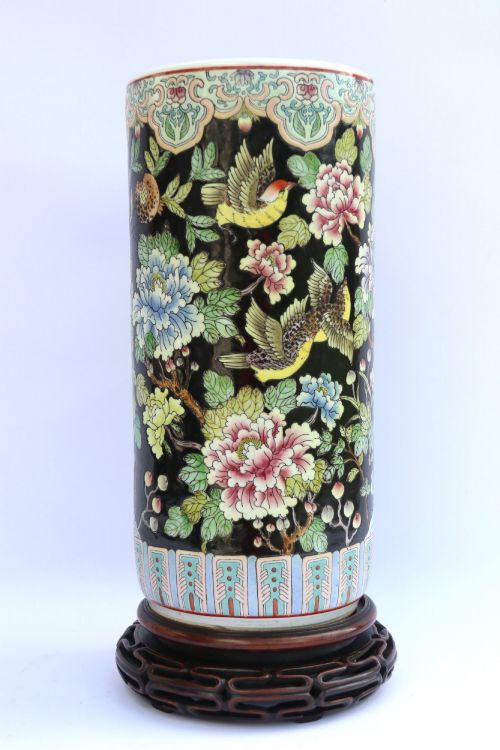
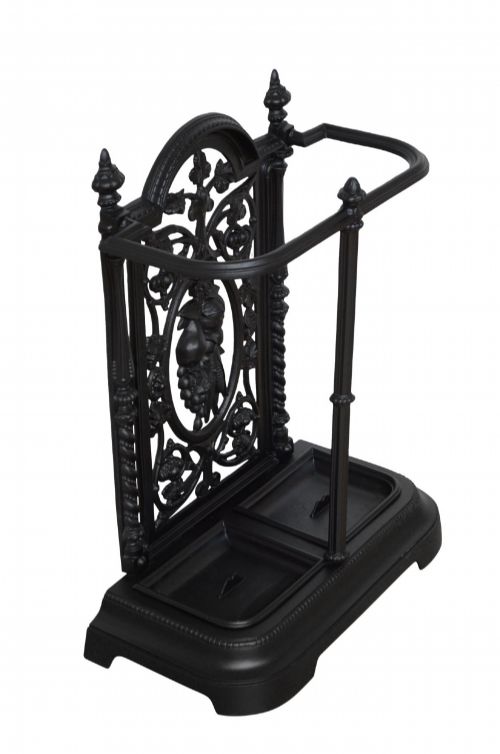
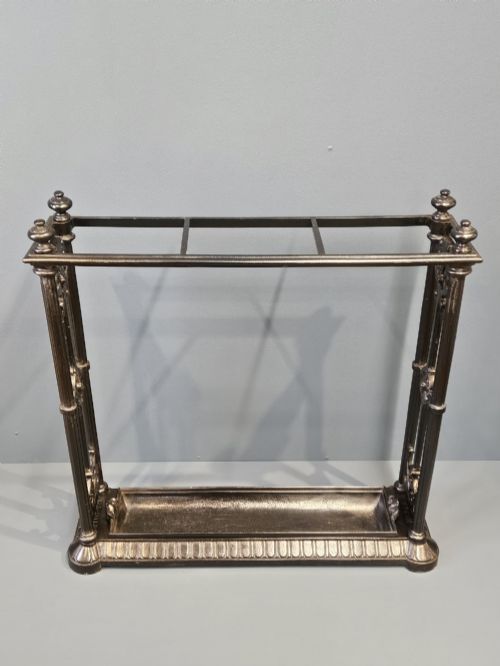
A black umbrella stand appears primarily as a heavy cast iron stick stand or an ornate carved lindenwood Black Forest hall stand. The cast iron examples span the Victorian period, whilst the carved wood pieces frequently depict bears holding branches.
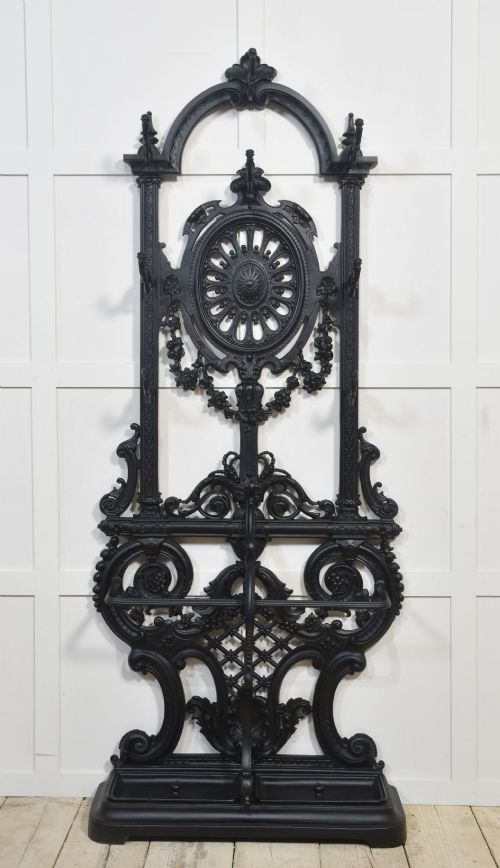
Buyers looking for this phrase meet utilitarian hall stands, stick stands, and combined umbrella and coat racks dating from the nineteenth century into the 1930s. Styles range from strict Gothic Revival and Aesthetic Movement to decorative Art Deco designs.
Materials and Technique
Foundry workers poured molten iron into sand moulds to create robust stick stands with openwork grilles and integrated drip pans. Manufacturers finished many of these cast iron pieces with black paint to prevent corrosion and unify the surface.
Woodcarvers shaped lindenwood and hardwood by hand for Black Forest examples, rendering realistic fur textures on bear figures. Artisans combined carved wooden panels with applied hooks, brass elements, and glass or metal reservoirs.
Several bears stand ready in the woodcarvings to hold your walking stick, whether carved in the nineteenth century or the early twentieth.
Design and Execution
Quality rests on the crispness of the foundry casting or the depth of the wood carving, distinguishing mass production from exhibition pieces. Finer cast iron examples display sharp relief work in figural subjects like gun dogs or literary characters.
The integration of original drip pans and structural hardware dictates the integrity of a piece. Well-preserved painted surfaces and retained maker marks elevate the standing of ironwork within its period.
Coalbrookdale·Falkirk Foundry
The Black Umbrella Stand Glossary
- Cast iron
- An iron-carbon alloy poured into moulds to create heavy, rigid objects. It forms the backbone of durable nineteenth-century hallway furniture.
- Black Forest
- A style of wood carving originating in Switzerland and Germany during the nineteenth century. Carvers specialised in naturalistic animals, particularly bears holding utility items.
- Demi-lune
- A half-moon shape used for furniture designed to sit flush against a hallway wall. This profile saves floor space in narrow corridors.
- Stick stand
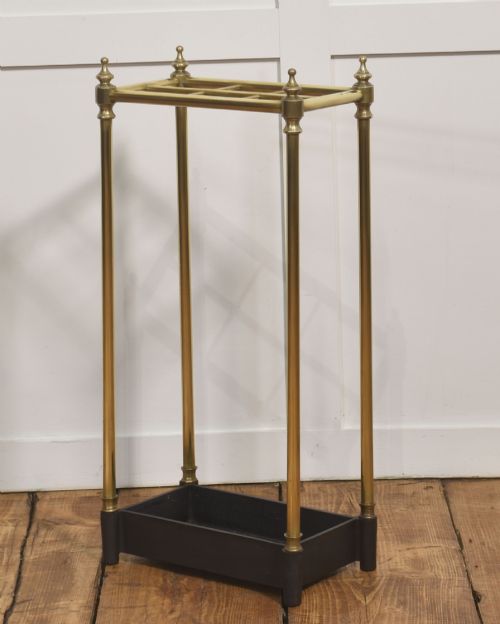
- A piece of furniture dedicated to holding walking sticks, canes, and umbrellas. They often feature partitioned dividers to keep items upright.
Black Umbrella Stand: Frequently Asked Questions
Where do I put an umbrella stand?
Place the stand in the primary entrance hall or porch where wet weather gear enters the house. Solid iron or carved wood pieces handle damp items best when paired with an internal drip tray.
Ensure adequate clearance around the piece so walking sticks and umbrellas can be retrieved easily without crowding narrow passageways.
How do I clean cast iron?
Dust the iron surface regularly with a soft, dry cloth to prevent grime buildup in the recessed cast details. Avoid harsh chemical cleaners that strip the protective black paint finish.
Check the base tray periodically for accumulated moisture and dry it thoroughly to protect the metal from rust formation.
Are Black Forest stands heavy?
Carved wooden hall stands made from lindenwood or hardwood possess substantial weight due to their dense construction and large figural elements. They require stable, level flooring to stand securely.
When positioning a carved bear stand, verify that the weight distribution remains balanced, especially if coats hang from the attached hooks.
What is a hall stand?
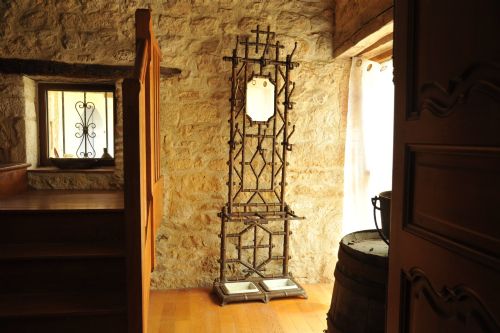
A hall stand combines an umbrella rack with coat hooks, a mirror, and sometimes a glove drawer into a single piece of furniture. These multi-functional items served as the central organising hub for nineteenth-century visitors.
They differ from dedicated stick stands by offering vertical storage for outerwear alongside lower wells for wet umbrellas.