


Iron Log Grate
An iron log grate anchors a hearth, bringing weight and history to an open fireplace.
Iron Log Grate
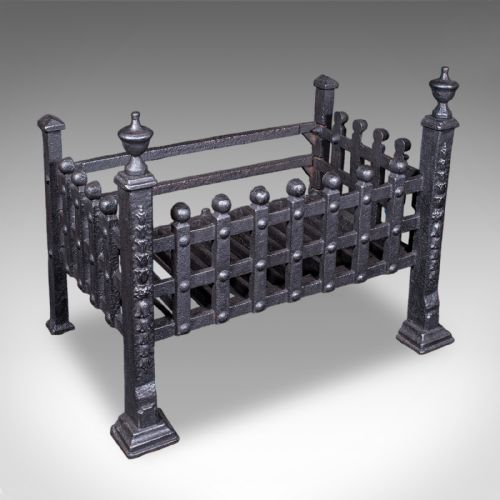
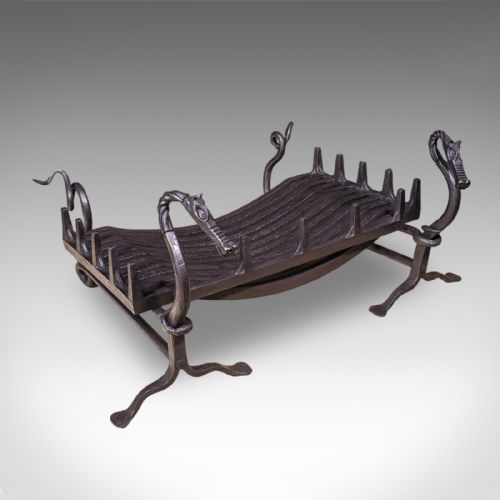
An iron log grate is a sturdy metal basket or frame designed to hold wood logs securely within an open fireplace. When you search for this phrase, you find practical hearth furniture spanning the Victorian, Edwardian, and Georgian periods, alongside later 20th century revivals.
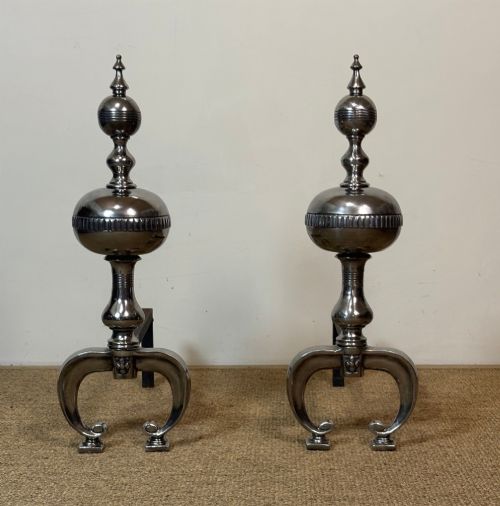
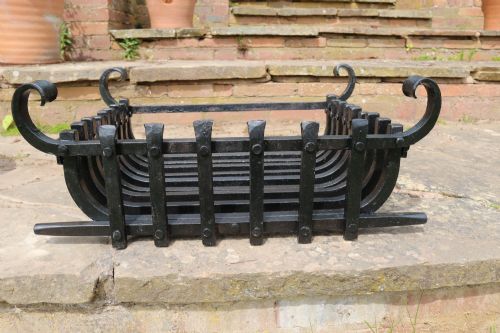
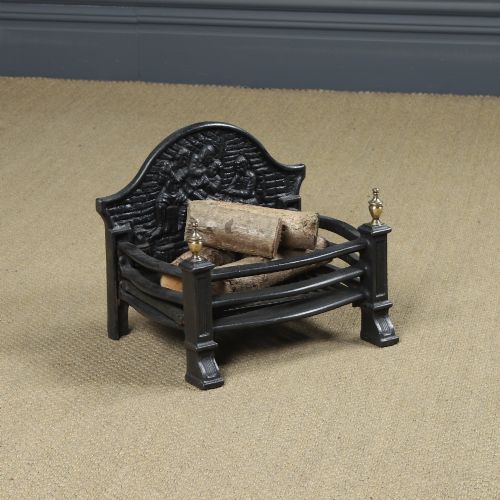
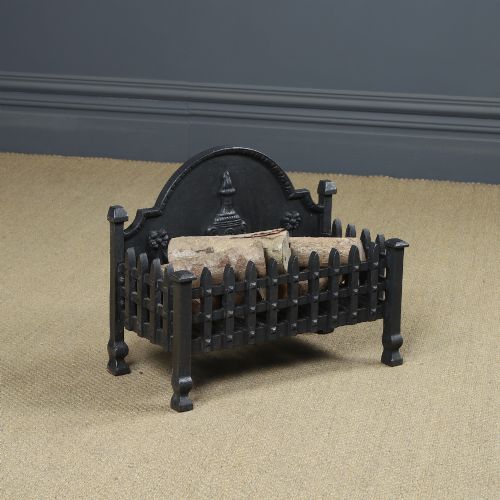
The pieces on this page appear as freestanding fire baskets, grates paired with andirons or fire dogs, and complete hearth sets featuring fire backs. Many incorporate integral baskets supported by heavy iron legs or paired fire dogs.
Victorian and Edwardian examples dominate the selection, often taking the form of deep wrought iron baskets or cast iron grates. Stylistic influences range from Gothic Revival and Arts and Crafts to Neo-Classical and Adams designs.
How they were made
Makers utilised cast iron for rigid structural frames, fire backs, and intricate decorative motifs, allowing for crisp surface details and heavy load-bearing forms. Wrought iron was hammered and forged into slender, resilient fire baskets and structural bars that could withstand intense hearth temperatures.
Brass elements and steel components occasionally supplement the iron construction, providing polished highlights on andirons and decorative trims. Individual pieces often combine cast and wrought elements within a single hearth assembly to balance mass with ornamental detail.
Listings feature periods from the Georgian era through the 1930s, constructed predominantly in cast iron, wrought iron, and brass.
What varies in quality
Quality rests in the substantial weight of the metal and the integrity of the joinery between the basket bars and support legs. Heavier castings and thicker wrought iron bars indicate a hearth piece built to endure decades of direct flame and heavy logs.
The refinement of the decorative execution separates standard utilitarian grates from finer architectural examples. Pieces displaying crisp casting details, balanced proportions, and cohesive period styling command greater appreciation.
The Iron Log Grate Glossary
- Fire grate
- A metal framework designed to hold burning fuel safely above the hearth floor. It allows air to circulate underneath for better combustion.
- Andirons
- A pair of supporting metal bars placed horizontally in a fireplace to raise logs off the floor. They frequently accompany larger fire baskets.
- Fire back
- A heavy iron plate placed against the back wall of a fireplace. It protects the masonry and reflects heat back into the room.
- Fire basket
- An open container made of metal bars to hold firewood within the hearth. These often form the central body of an iron log grate.
- Fire dogs
- Alternative terminology for andirons, used to describe the upright metal supports flanking a fire grate.
Iron Log Grate: Frequently Asked Questions
How do I choose the right size?
Measure the width, depth, and height of your fireplace opening carefully before selecting a grate. Leave adequate clearance around the basket for proper airflow and safety.
Larger inglenook grates require substantial hearth space, whereas smaller proportions suit standard domestic fireplaces.
Can I burn real logs in these?
These pieces were built specifically for burning wood logs in open hearths. The heavy iron and steel construction handles high temperatures reliably.
Ensure the grate sits securely on its base or andirons before loading firewood.
What is the difference between cast and wrought iron?
Cast iron is poured into moulds, resulting in heavier, rigid forms with detailed surface decoration. It offers great compressive strength.
Wrought iron is worked by hand while hot, yielding fibrous metal that bends rather than snaps under thermal stress.
How do I maintain an iron grate?
Brush away ash regularly to prevent moisture retention and subsequent surface corrosion. Keep the metal dry when the fireplace is not in use.
Apply suitable protective stove blacking or grates polish periodically to preserve the dark iron finish.