





Irish Chairs
Irish antique chairs carry the distinct presence of eighteenth and nineteenth-century craftsmanship, offering seating that grounds a room with regional character.
Irish Chairs
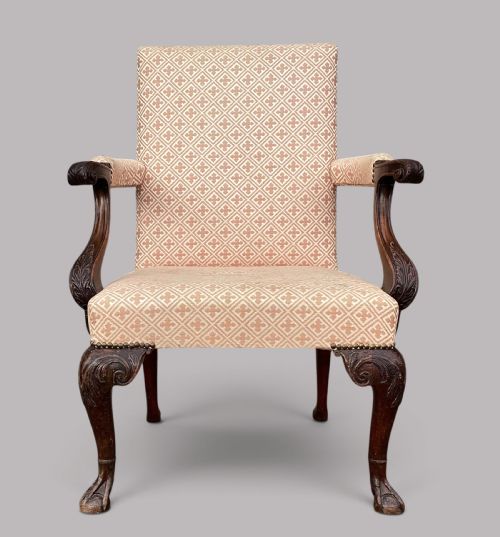
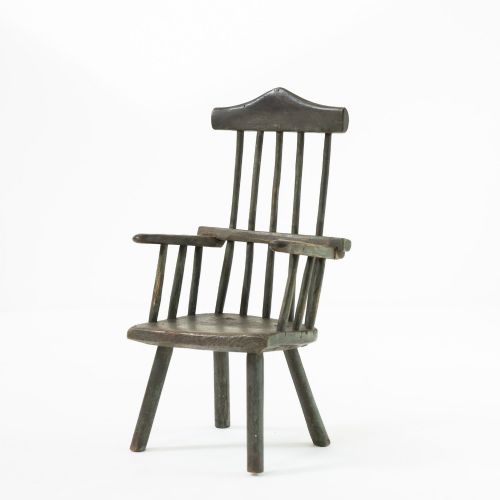
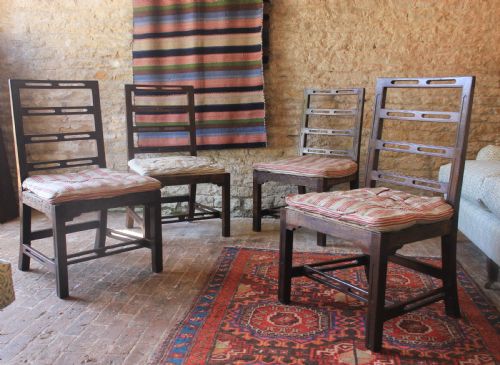
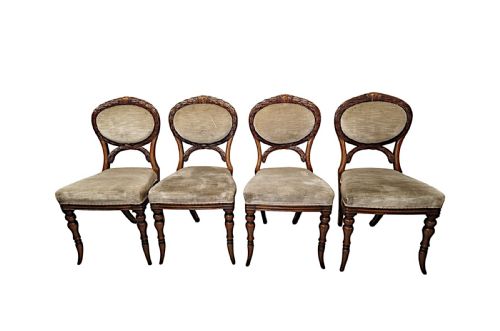
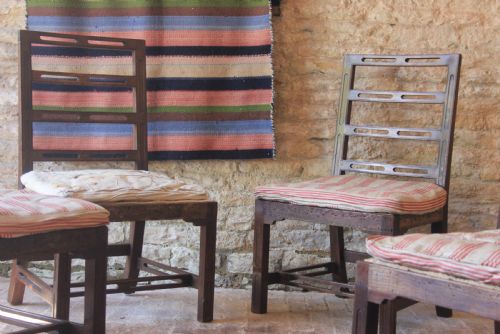
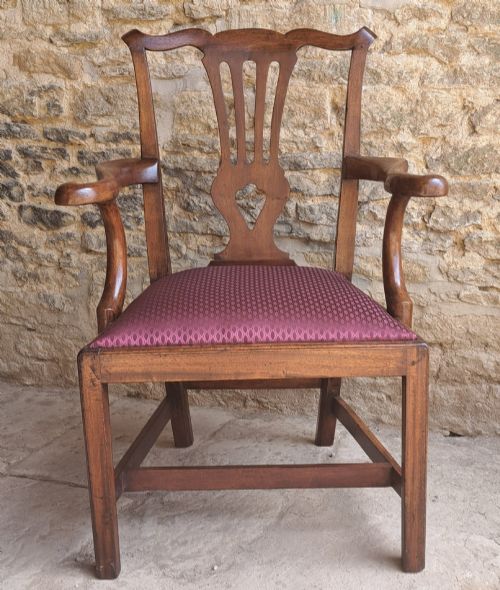
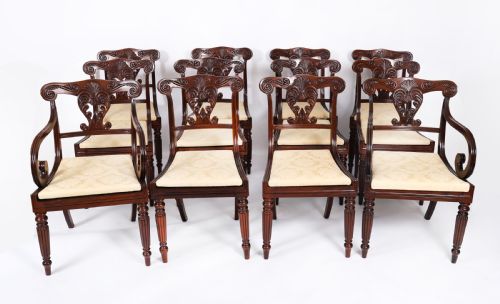
Irish antique chairs encompass a diverse range of forms, from formal dining sets and library armchairs to rustic vernacular seating. Buyers seeking irish antique chairs will encounter dining chairs, side chairs, armchairs, hall chairs, desk chairs, children's armchairs, and stools.
The selection spans periods from the mid-eighteenth century through the Victorian era and into the early twentieth century, reflecting Georgian, Regency, and revival designs alongside folk art traditions. Mahogany and walnut appear frequently in formal seating, while oak, ash, and painted surfaces define the vernacular output.
Materials and Construction
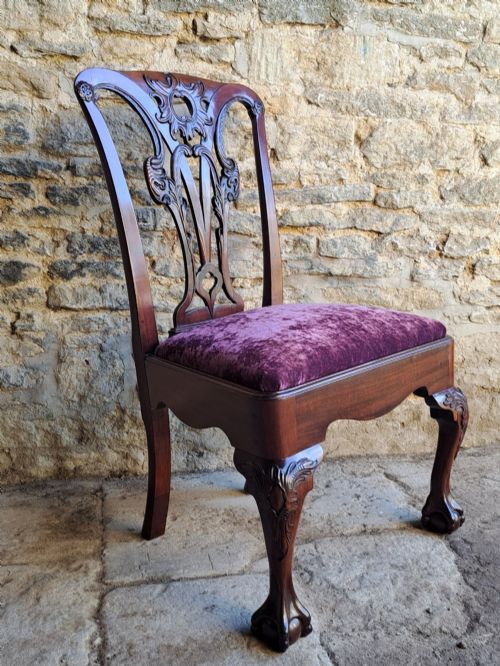
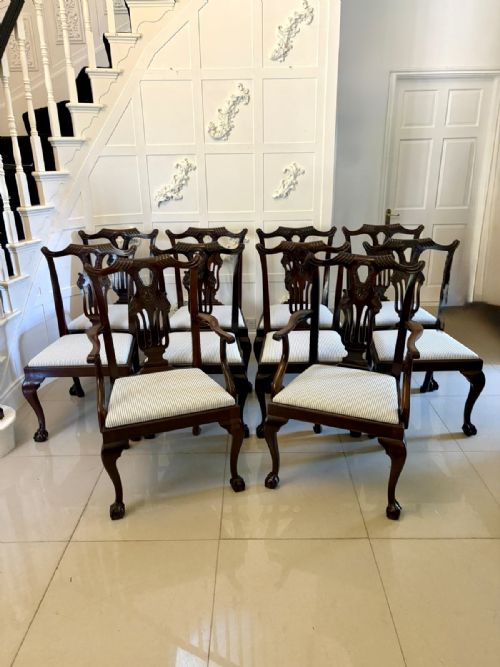
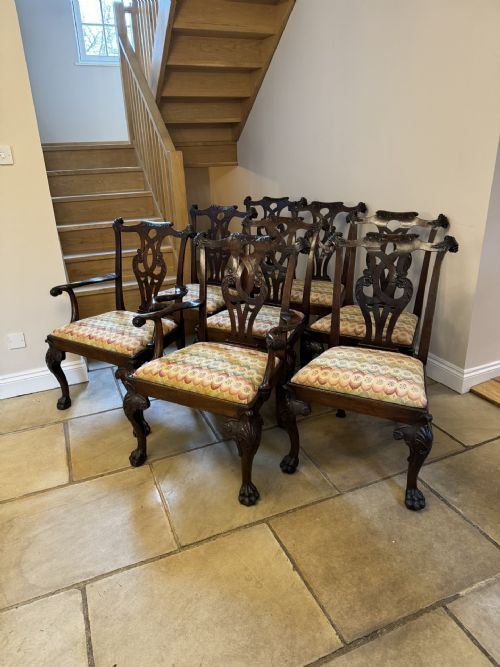
Makers utilised dense timbers such as mahogany, red walnut, oak, and ash, often shaping them into robust frames with carved details including ball and claw feet. Formal seating frequently incorporates upholstered elements in leather, velvet, or fabric, whilst rustic alternatives rely on plaited straw or stick-back construction.
Joinery methods demonstrate traditional craftsmanship, from pegged mortise and tenon joints in sturdy dining sets to turned spindles in primitive folk pieces and structural brass accents in specific designs.
The inventory records pieces spanning the eighteenth, nineteenth, and early twentieth centuries, constructed primarily in mahogany, walnut, oak, and ash.
Quality and Distinction
The distinction between tiers rests upon timber selection, the crispness of carved ornament, and the integrity of the original frame construction. Superior examples display carefully figured mahogany or walnut, deep relief carving on knees and crest rails, and well-proportioned geometry.
Modifications or later copies integrated into older sets alter the standing of a piece, whereas uniform sets originating from recorded workshops maintain greater architectural and historical coherence.
Strahan·Robert Strahan
The Irish Chairs Glossary
- George II Style
- A design mode recalling the heavy proportions and substantial carved ornament of the mid-eighteenth century. This aesthetic often reappears in later revival dining and armchair suites.
- Stick Back
- A vernacular chair construction where turned spindles or sticks are inserted directly into a solid wooden seat. This method produces robust, unpretentious seating typical of regional folk traditions.
- Súgán Chair
- A traditional Irish seating form featuring a seat woven from straw or twisted organic cord. The plaiting provides a resilient surface supported by a simple wooden frame.
- Hall Chair
- A formal, often wooden-seated chair designed for an entrance hall, typically featuring a solid carved back and heraldic motifs. These pieces prioritise architectural presence over cushioned comfort.
- Ball and Claw
- A foot motif carved to resemble a bird's talon grasping a spherical ball. This detail frequently terminates the legs of eighteenth-century and revival seating.
Irish Chairs: Frequently Asked Questions
How do I identify genuine Irish dining chairs?
Examine the timber species, secondary woods, and regional construction methods characteristic of Irish workshops rather than English equivalents. Subtle variations in carving depth and local framing techniques often provide the clearest indication of origin.
Matching the period characteristics across a set requires checking for uniform wear and consistent timber grain throughout all pieces.
What is a súgán chair?
A súgán chair is a traditional vernacular seat featuring a woven straw or cord base fitted to an ash or timber frame. These pieces stem from rural craft traditions and emphasise utility.
The plaited seat offers natural flexibility and durability without relying on conventional upholstery materials.
How should I care for antique leather upholstery?
Maintain antique leather by keeping it away from direct heat sources and applying specialised conservation balms sparingly to prevent drying. Avoid modern synthetic cleaners that can strip the original finish.
Gentle dusting with a soft cloth preserves the surface texture and patina built up over generations.
Can I use antique chairs for daily dining?
Many solid mahogany and oak dining chairs remain structurally sound for everyday use provided joints are stable. Assessing the weight capacity and frame tightness helps determine suitability for regular seating.
Lighter vernacular or delicate carved armchairs benefit from more careful placement to protect historic frames.