
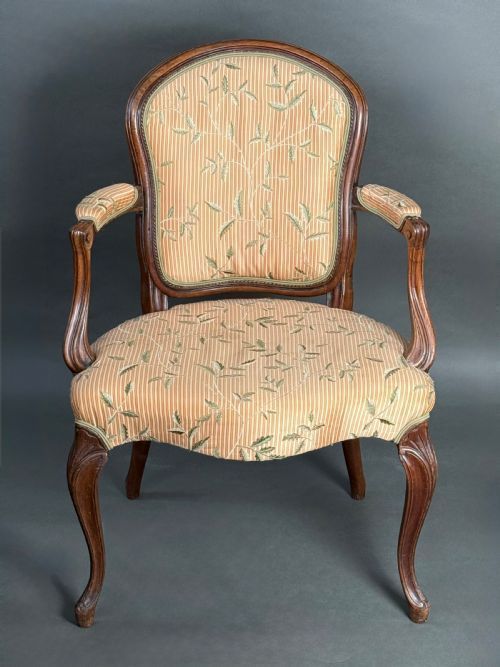
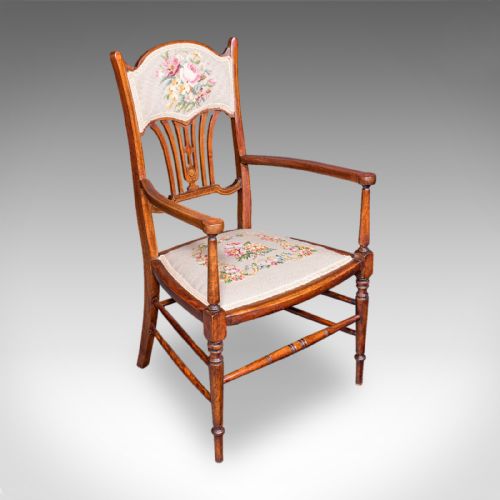
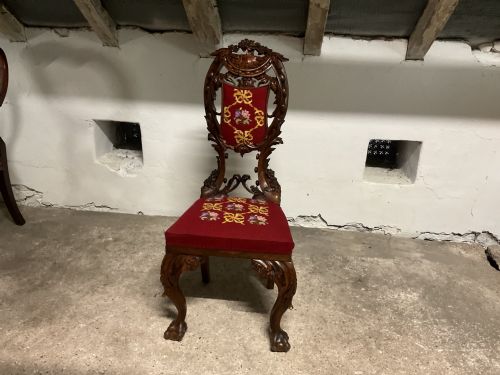
Antique Padded Chairs
Antique padded chairs bring comfortable seating and period presence into a room, spanning styles from Georgian library seats to Victorian library chairs.
Antique Padded Chairs
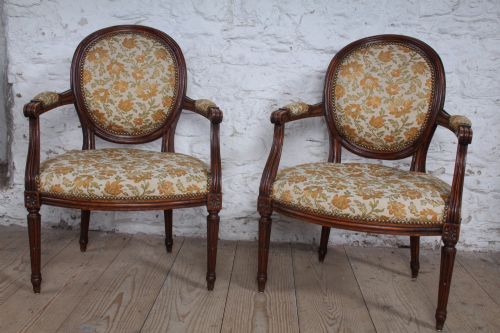
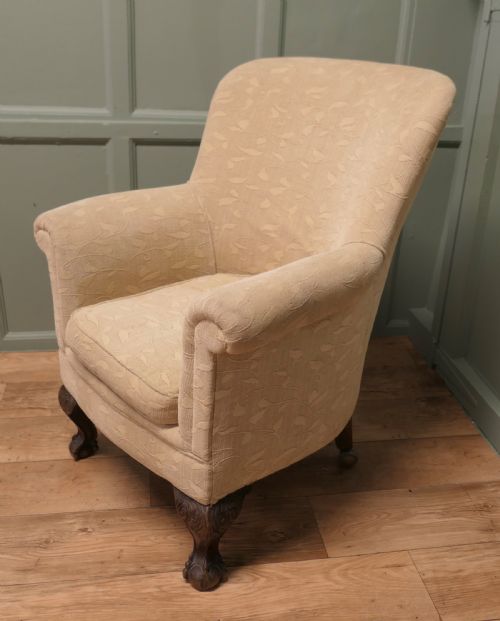
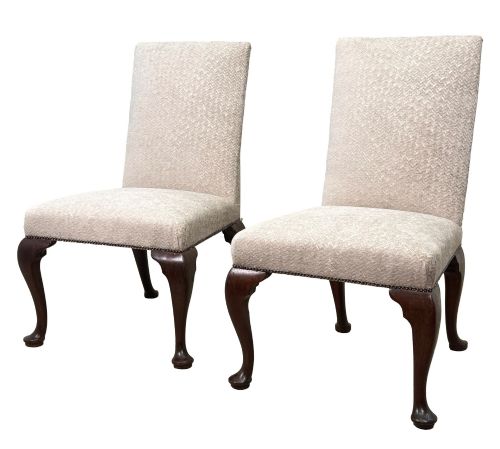
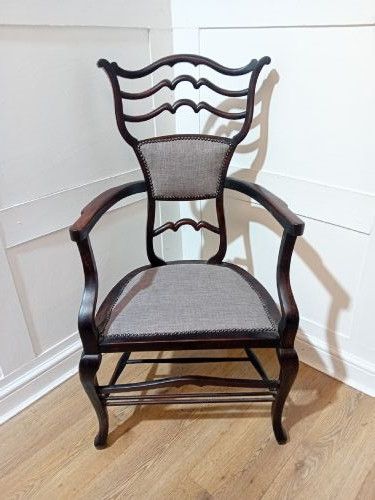
When you search for antique padded chairs, you encounter a wide selection of seating forms spanning the Georgian, Victorian and Edwardian eras. The inventory includes dining chairs, armchairs, desk chairs, side chairs, stools and settee designs intended for various domestic rooms.
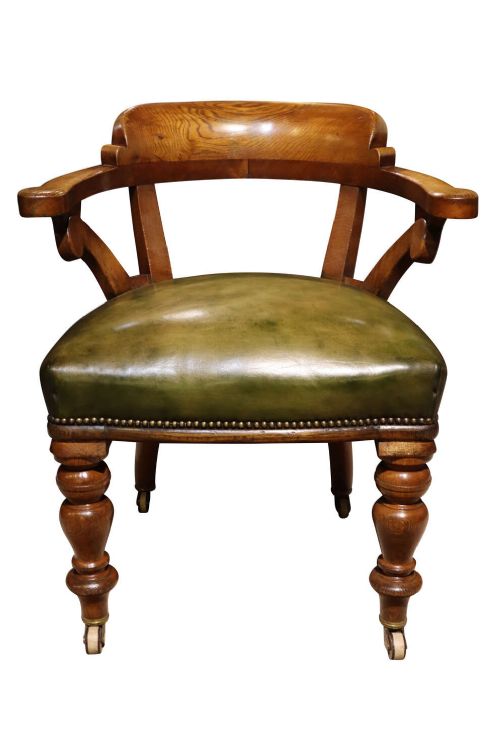
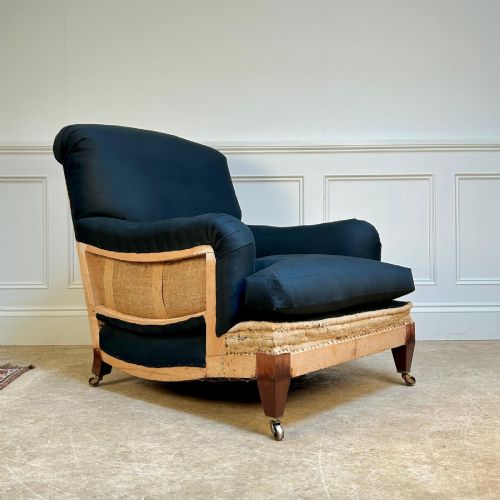
The most common versions on this page are Victorian and 19th-century examples, frequently framed in walnut, mahogany or oak. These pieces range from simple side chairs to generous library armchairs and wing chairs upholstered in leather, velvet or textile.
Earlier pieces from the 18th century, including George III and George II styles, appear alongside later Edwardian and 1930s interpretations. Each era brings distinct proportions and carving details, from cabriole legs to buttoned upholstery.
Materials and construction
Frames are constructed from dense hardwoods like mahogany, walnut, oak and beech, chosen for their structural strength and capacity to hold intricate carved details. Master cabinetmakers utilised mortise and tenon joints to ensure long-term stability in high-use seating.
Upholstery relies on traditional stuffing materials contained beneath top coverings of leather, silk, velvet or woven textiles. Brass tacks and piping frequently secure the edges of the padded surfaces to the wooden frames.
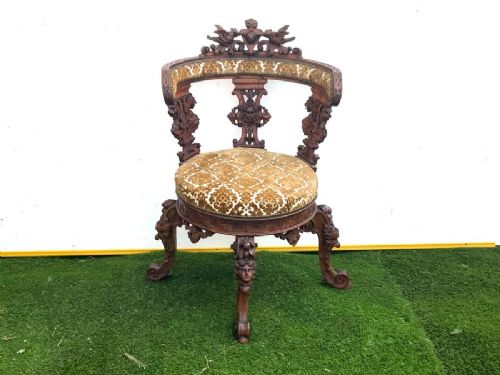
One chair bears witness to an Italian nobleman's audience room, ready for visitors who sat down with considerably more formality than we manage today.
Judging quality in seating
Quality rests upon the crispness of the timber carving and the architectural proportion of the frame. Superior examples demonstrate fluent lines in components like cabriole legs, arm supports and wing profiles without awkward transitions.
The integrity of the underlying joinery dictates longevity, separating robust workshop production from weaker builds. Original timber surfaces with deep patination hold greater appeal than stripped or heavily over-finished frames.
Thomas Chippendale·Jacob-Desmalter·Morris & Co·George Jack·Colefax and Fowler
The Antique Padded Chairs Glossary
- Bergère
- An enclosed upholstered armchair with wooden framing exposed around the sides and back. These seats typically feature cane or upholstered panels.
- Cabriole leg
- A furniture leg that curves out and then narrows inward, imitating an animal's curving leg. This form terminates in pad, claw-and-ball or scroll feet.
- Gainsborough chair
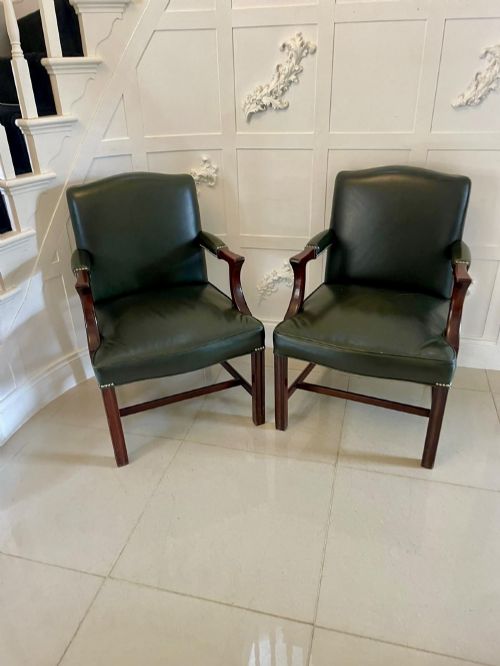
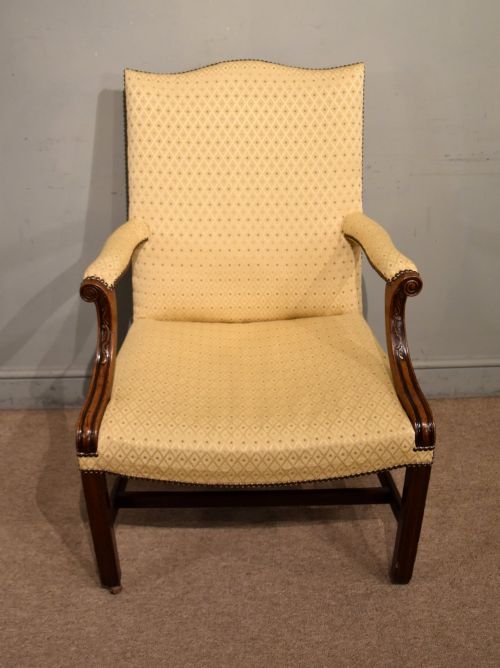
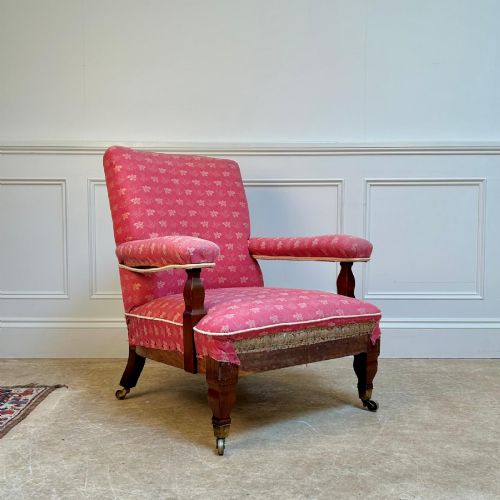
- A wide, open-armed armchair with a padded back and seat, designed during the 18th century for libraries and writing desks.
- Wing chair
- An armchair with side panels attached to the back to shield the sitter from drafts. These seats date predominantly from the Georgian period onward.
- Fauteuil
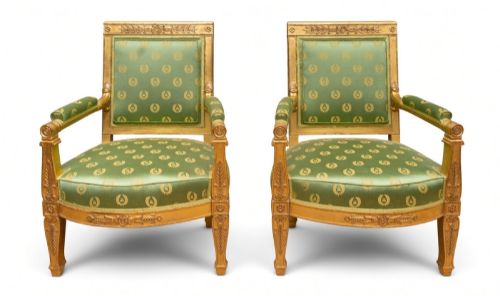
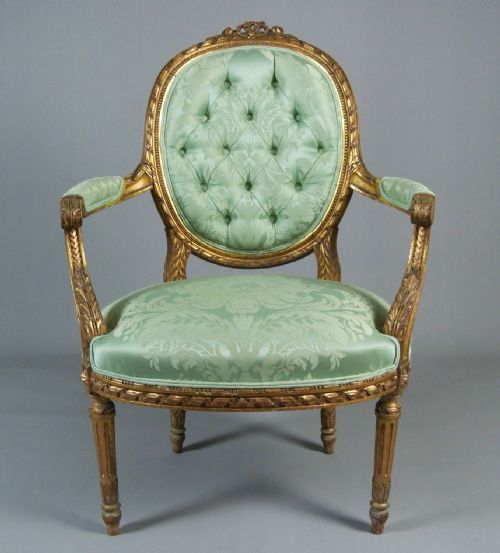
- An open-arm armchair with an exposed wooden frame of French origin. The arms typically feature padded elbow rests.
Antique Padded Chairs: Frequently Asked Questions
How do I clean leather upholstery?
Wipe the surface gently with a soft, damp cloth to remove accumulated dust. Avoid harsh chemical detergents that strip natural oils from antique hide.
Condition the material periodically using a specialist leather balm to maintain suppleness and prevent cracking over time.
Can I use these chairs daily?
Solid hardwood frames and sturdy joinery make most examples suitable for regular seating. Inspect the frame stability and internal webbing before heavy daily use.
Lighter decorative side chairs or delicate giltwood pieces require more careful handling than robust dining or library armchairs.
How do I identify a Georgian chair?
Look for characteristic timber choices such as dense mahogany or walnut, paired with restrained carved details like ball-and-claw feet. Proportions are typically balanced and elegant, reflecting classical design rules.
Check for traditional hand-cut joinery methods underneath the seat frame to confirm period manufacturing techniques.
What is a Gainsborough chair used for?
These wide armed seats were originally placed in libraries, studies and around writing desks. Their open arm design accommodated bulky historical clothing.
Today they function effectively as occasional seating in living rooms or as executive desk chairs.