
Inlay Mahogany Chest
An inlay mahogany chest brings together rich timber and precise stringing, offering practical storage with distinct period character.
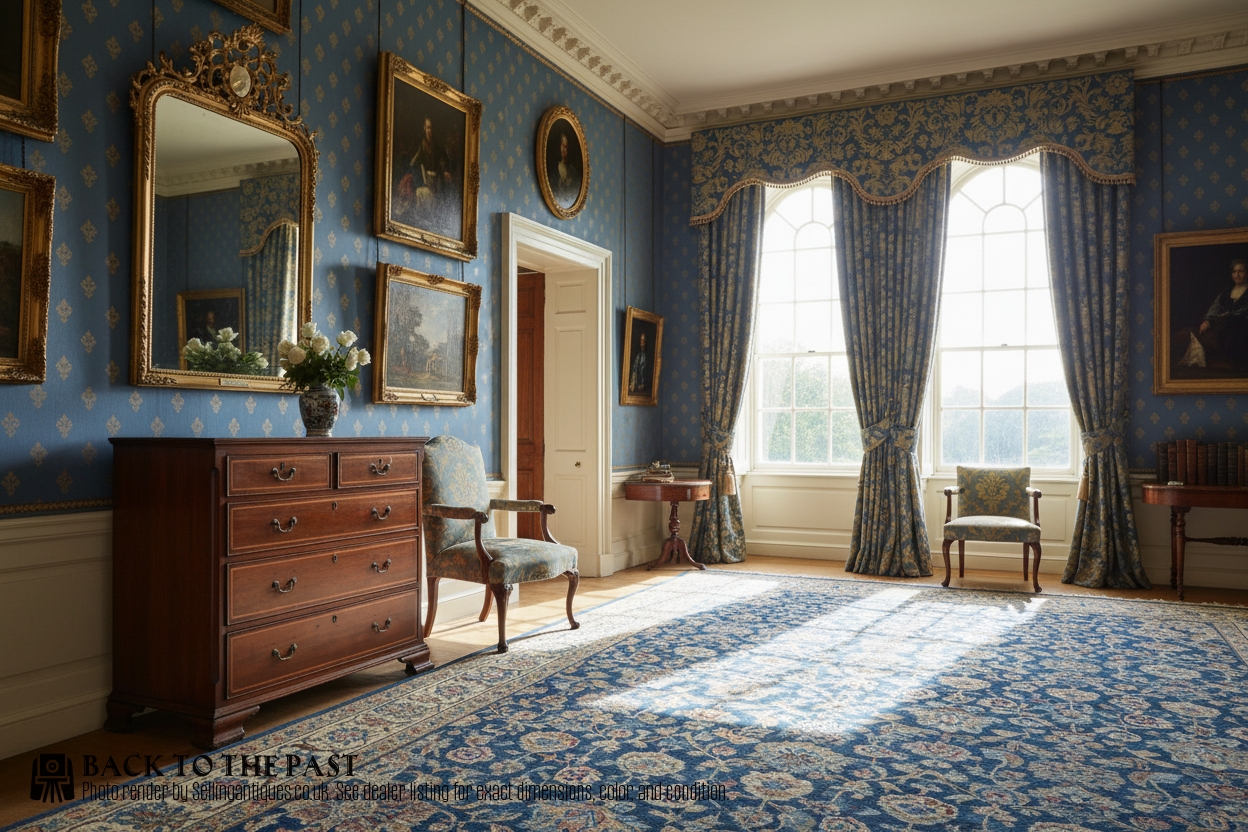
Inlay Mahogany Chest
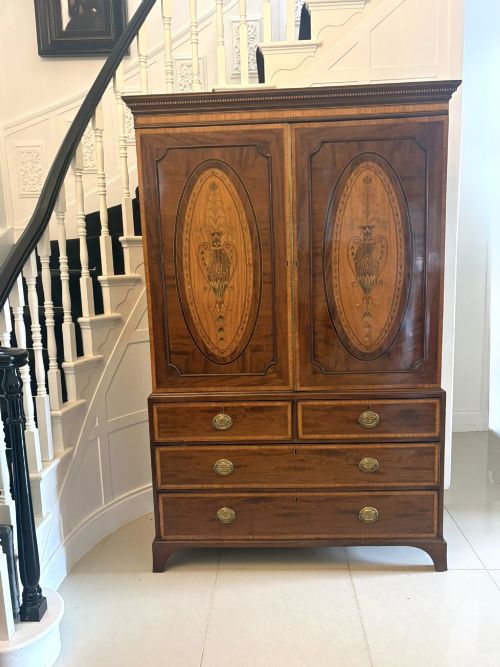
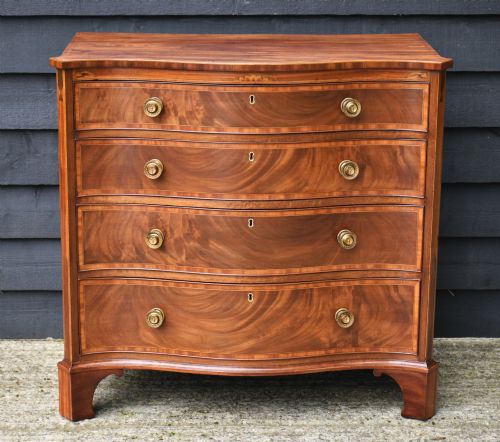
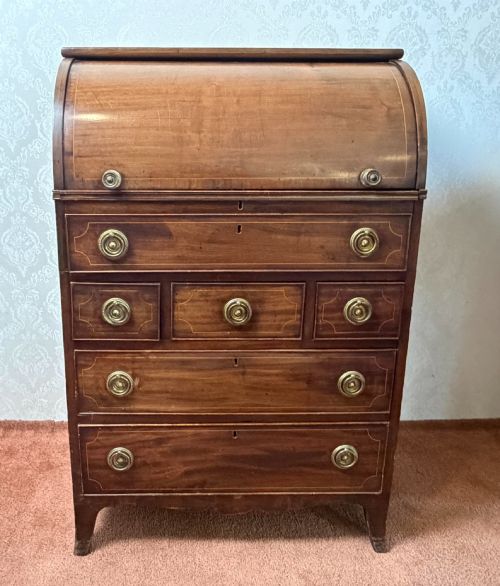
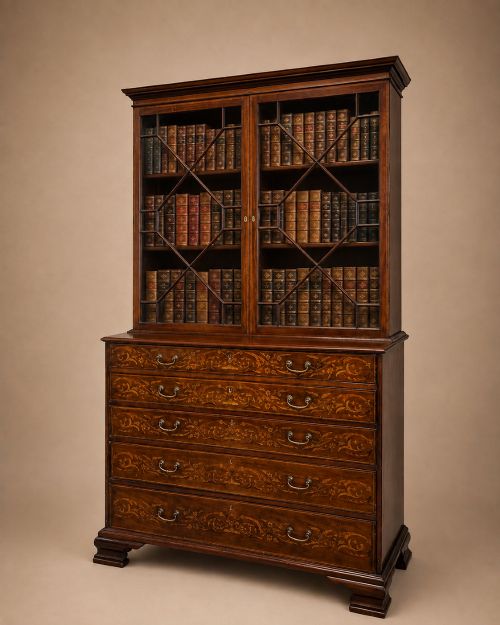
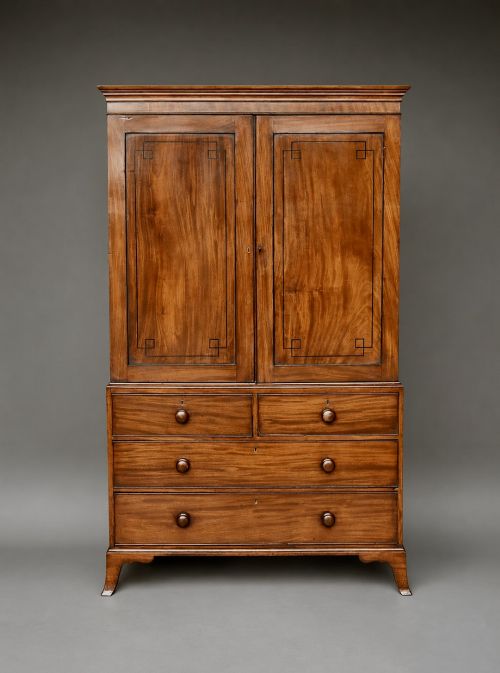
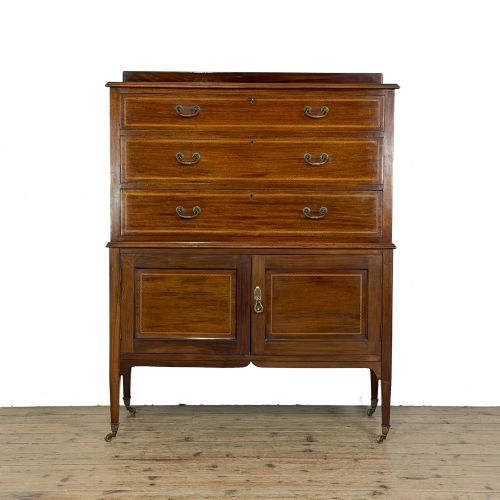
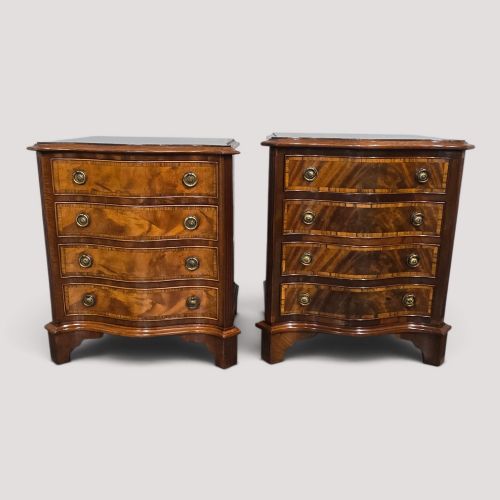
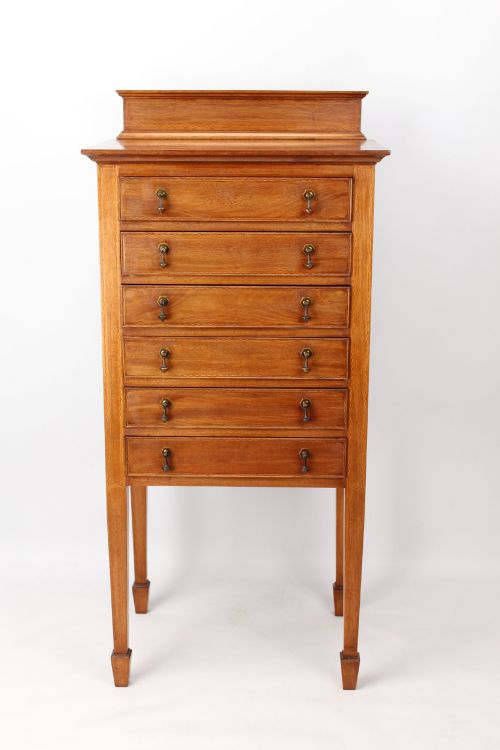
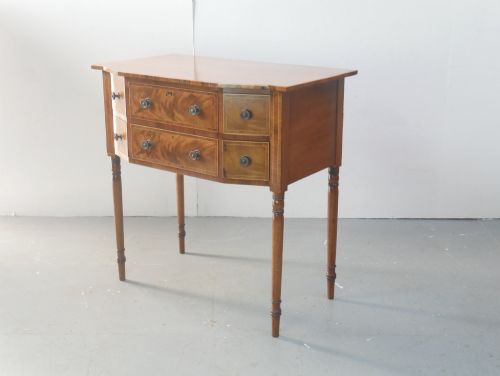
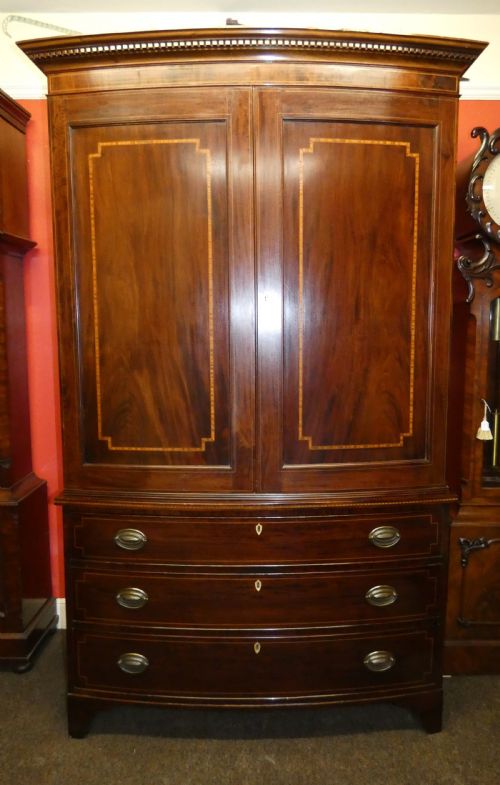
When you search for an inlay mahogany chest, you encounter a wide array of storage forms spanning the Georgian, Regency, and Edwardian periods. These pieces range from full-sized bedroom chests and bow fronts to compact linen presses and bedside cabinets, all united by their primary timber and decorative contrast work.
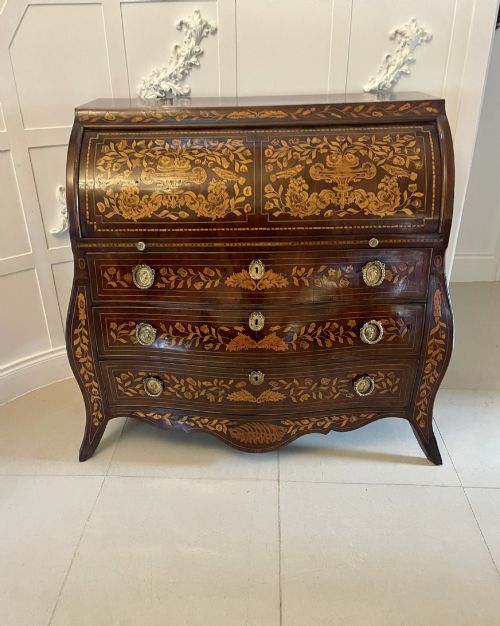
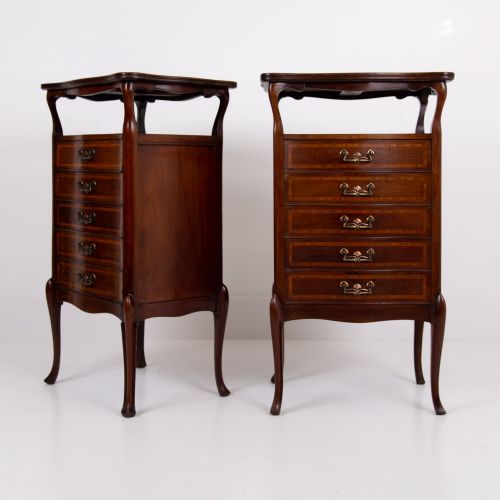
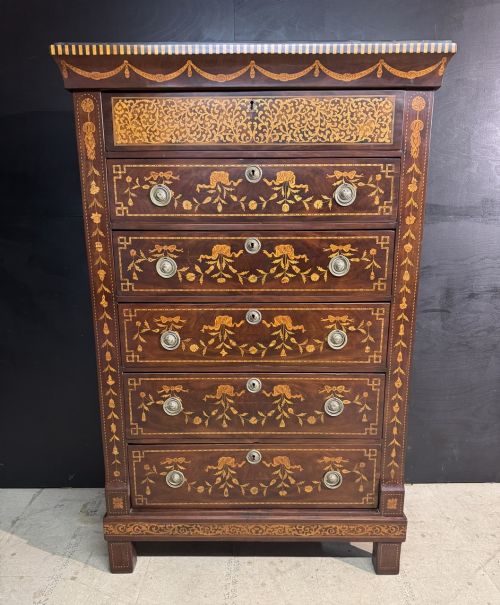
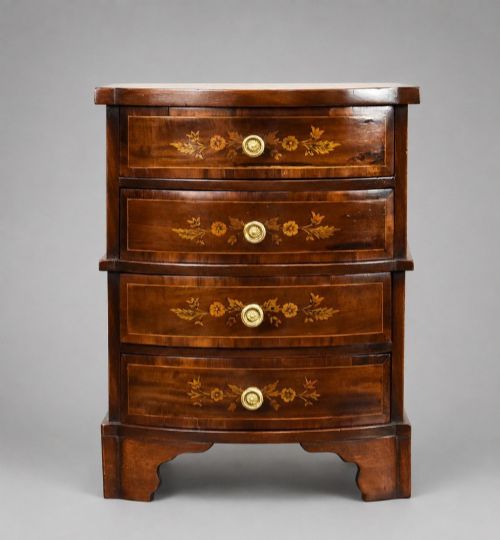
The most common examples on this page are Georgian and 19th-century chests of drawers featuring linear stringing, shell motifs, or floral marquetry. Makers combined the deep reddish-brown tones of mahogany with lighter contrasting woods to frame drawer fronts and borders with crisp geometry.
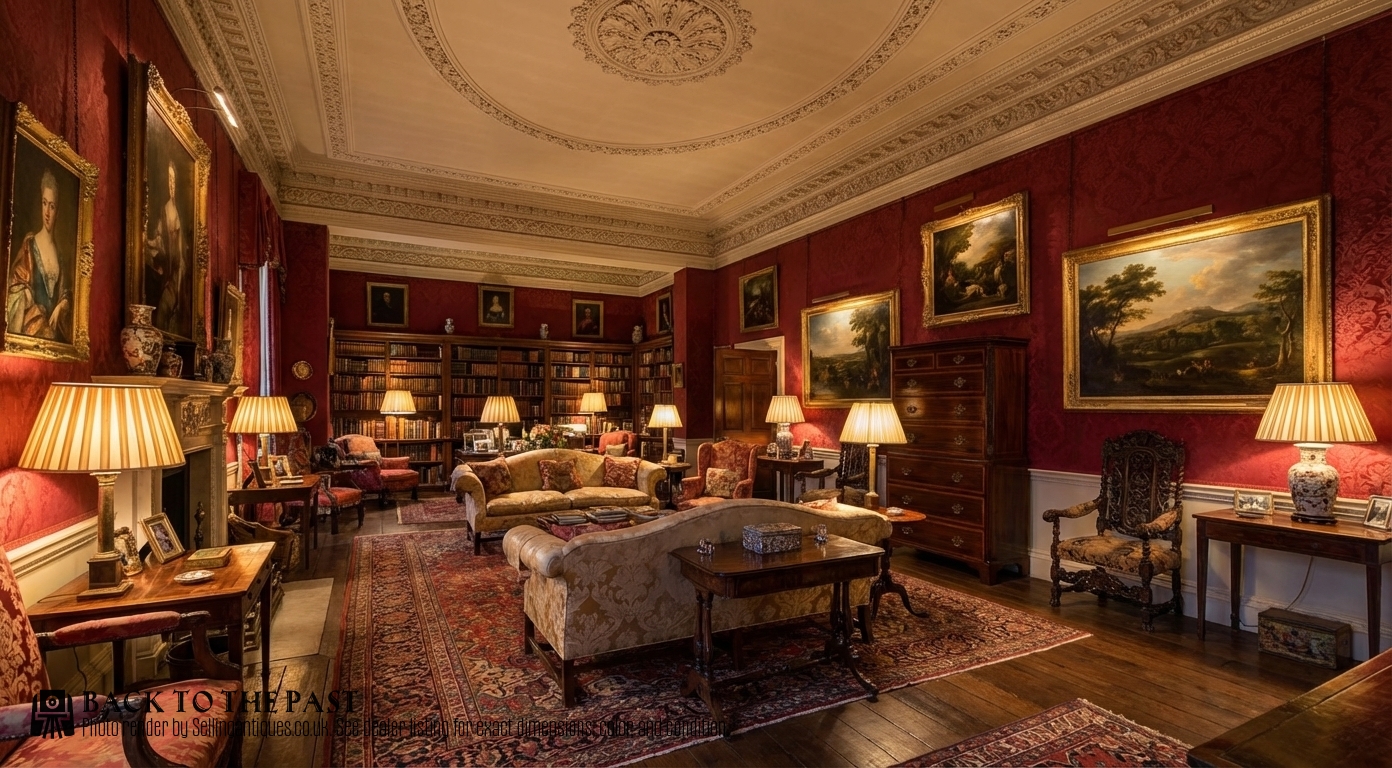
How they were made
Cabinet makers constructed the carcases using solid mahogany and figured veneers, frequently incorporating oak or pine for internal drawer linings. Surfaces were planed, scraped, and polished to reveal the deep grain patterns inherent to the timber.
Inlay work relied on cutting precise channels into the solid wood or veneer to receive contrasting strips of satinwood, boxwood, ebony, or bone. Craftsmen secured these elements with animal glue before scraping the entire surface flush and applying traditional finishes.
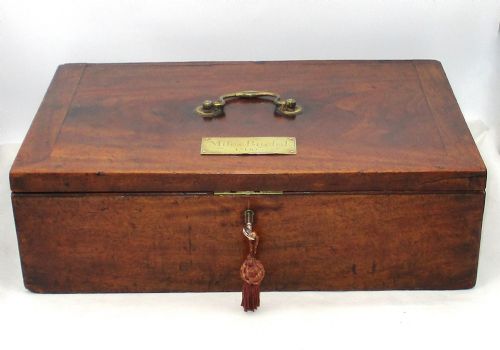
A tiny apprentice piece sits quietly on this page, proving that miniature chests once doubled as a master craftsman's proof of skill.
What varies in quality
The standard of an inlay mahogany chest rests on the precision of its contrasting timber work and the integrity of its construction. Superior examples display tightly fitted inlay without visible gaps, alongside hand-cut dovetails on the drawer sides.
Quality also shows in the choice of timber figures, such as flame mahogany veneers, and the survival of original brass hardware like swing handles and escutcheons. Lesser pieces often exhibit clumsy repairs, replacement feet, or simplified linear banding executed with less care.
Edwards and Roberts·J Shoolbred·Druce & Co
The Inlay Mahogany Chest Glossary
- Inlay
- The technique of inserting pieces of contrasting material into a depressed wooden matrix to form a decorative design. This method creates flat, patterned surfaces across drawer fronts and top panels.
- Marquetry
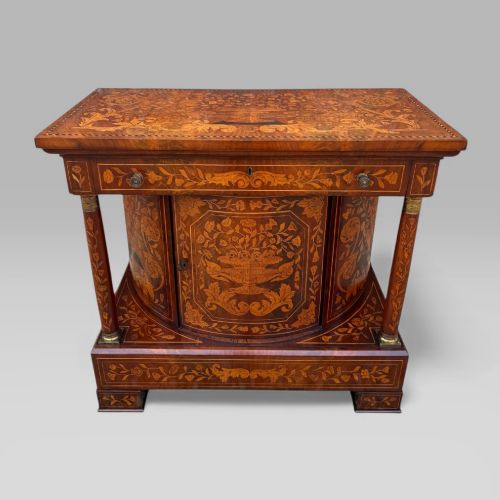
- Elaborate pictorial or floral inlay assembled from various wood veneers to create intricate scenes. Craftsmen often utilised this technique on 18th-century Dutch and English furniture.
- Stringing
- Thin, narrow strips of light or dark wood inlaid into grooves around drawer edges and borders. It provides a sharp linear contrast against the darker mahogany background.
- Flame mahogany
- A highly figured timber veneer showing characteristic flickering patterns resembling flames. Cabinet makers reserved this material for the most prominent display surfaces.
- Bracket foot
- A structural foot supporting the corners of a case piece, shaped in the form of a simple bracket. Many Georgian chests stand on ogee or shaped versions of these supports.
- Linen press
- A tall cabinet featuring upper sliding trays or shelves above a chest of drawers base. These pieces served to store folded textiles and garments.
Inlay Mahogany Chest: Frequently Asked Questions
What is an inlay mahogany chest?
An inlay mahogany chest is a wooden storage unit built from mahogany and decorated with contrasting wood or bone insertions. These pieces typically feature multiple drawers and date from the 18th century through the Edwardian era.
Craftsmen used light timbers like boxwood and satinwood to create geometric lines, shell motifs, or floral designs against the dark background. They serve as both functional bedroom furniture and decorative antiques.
How do I date a mahogany chest?
Dating relies on examining construction methods, hardware, and the style of the inlay work. Georgian pieces often feature hand-cut dovetails and bracket feet, while Edwardian revivals display lighter framing and machine-cut elements.
The complexity of the inlay also offers clues, as 18th-century pieces frequently utilise elaborate marquetry or simple stringing, whereas later 19th-century examples introduced black lines and varied veneers.
How should I care for mahogany?
Mahgrove timber requires stable environmental conditions away from direct sunlight and strong heat sources. Excessive temperature changes cause wood and veneer to dry out and split.
Dust the surface regularly with a soft cloth and apply traditional beeswax occasionally to nourish the polish. Avoid modern silicone sprays, which damage historic finishes over time.
Where were these chests used?
Historically, these chests occupied bedrooms, dressing rooms, and formal hallways in large houses and town residences. They provided secure storage for clothing, linens, and personal valuables.
Today, they adapt easily to modern interiors as bedroom storage, bedside tables, or living room statement pieces. Their compact proportions make them suitable for various domestic spaces.