
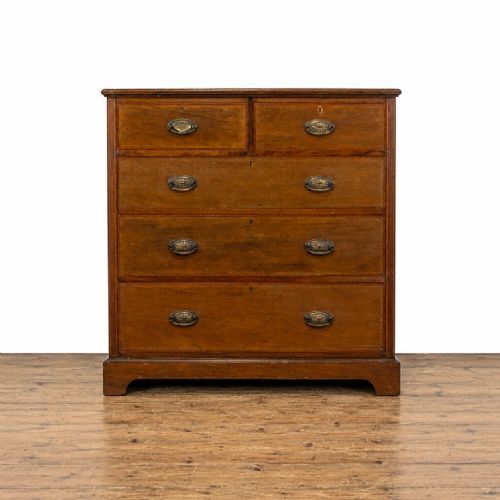
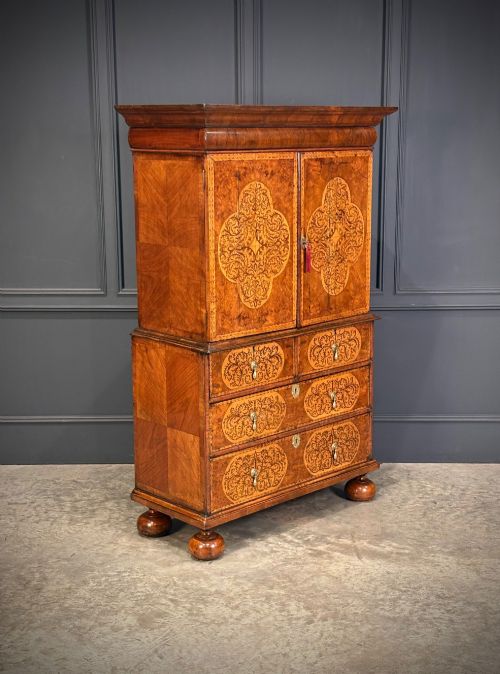
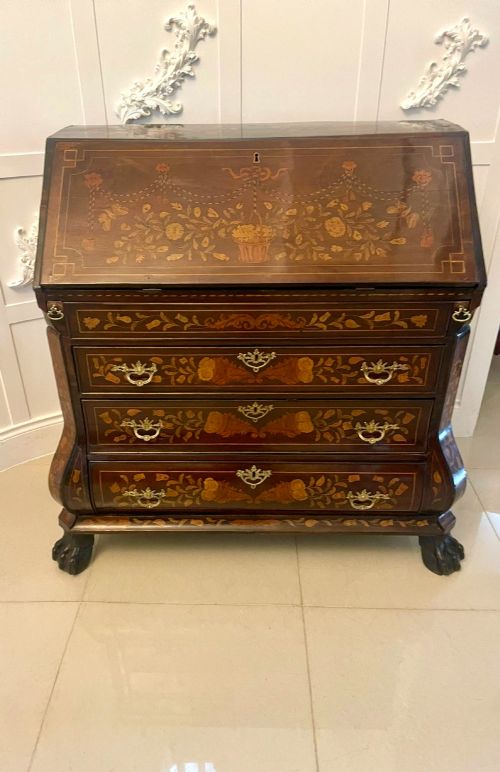
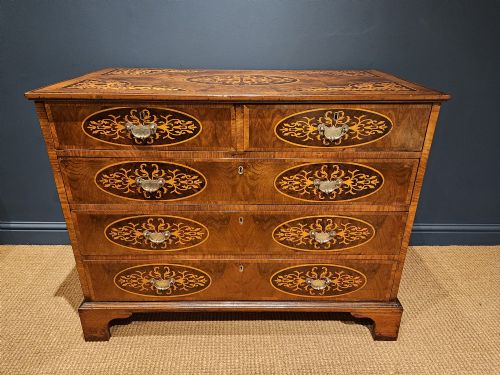
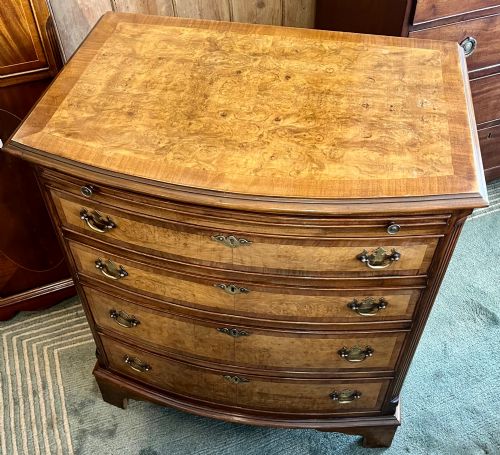
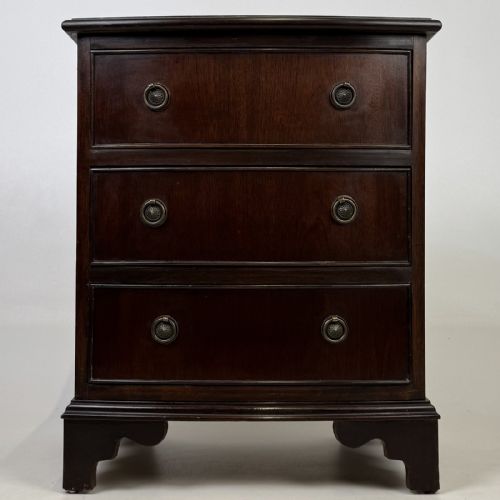
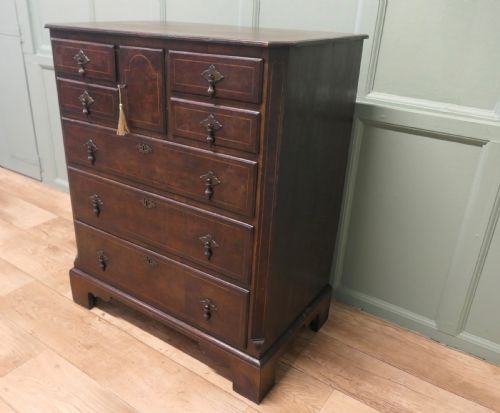
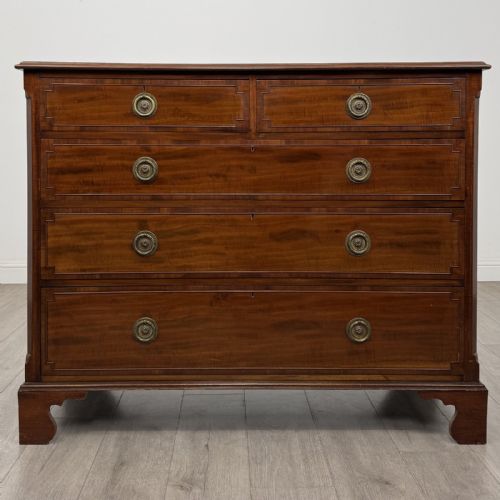
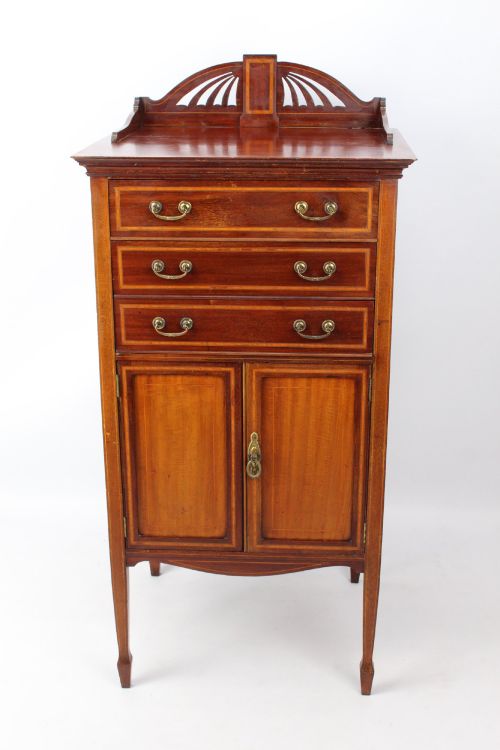
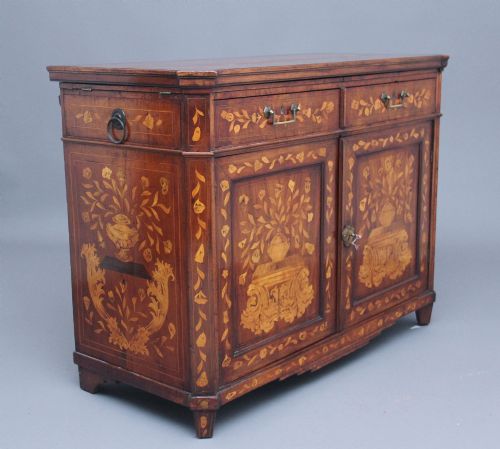
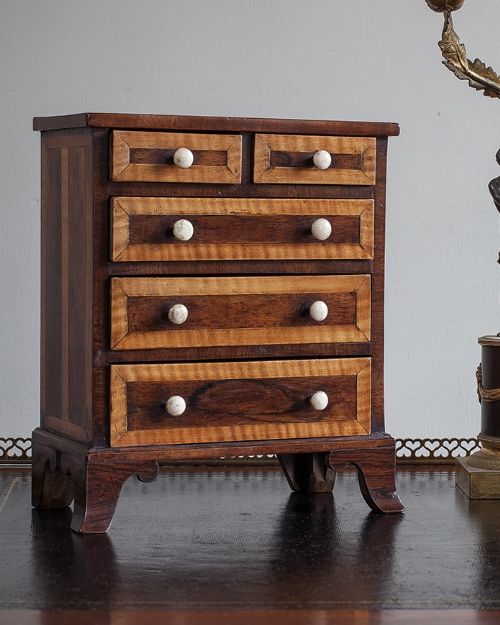
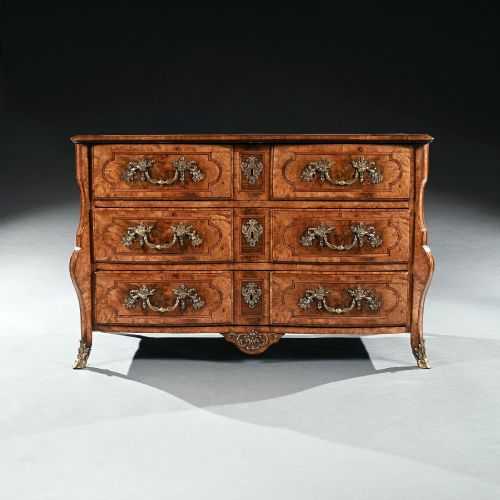
Inlay Chest of Drawers
An inlay chest of drawers brings timber surfaces alive with contrasting woods, brass and shell, uniting utilitarian storage with centuries of cabinet-making skill.
Inlay Chest of Drawers
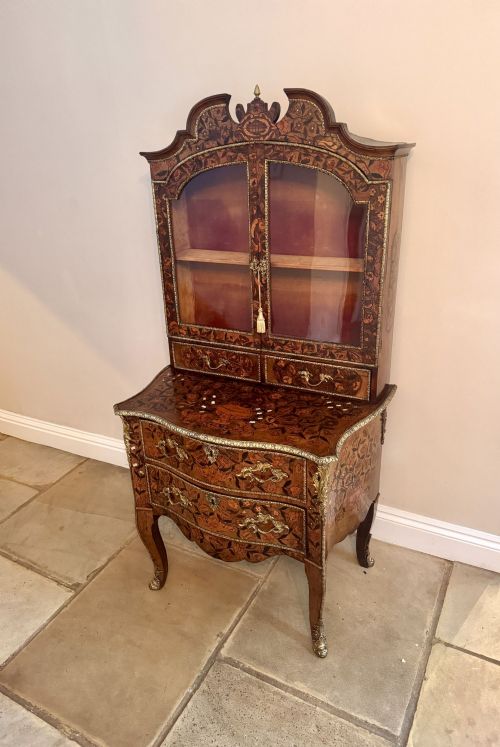
An inlay chest of drawers encompasses practical storage furniture decorated with contrasting wood veneers, stringing or pictorial marquetry. Pieces span the seventeenth century through to the Edwardian era, originating from English, French, Dutch, German and Italian workshops.
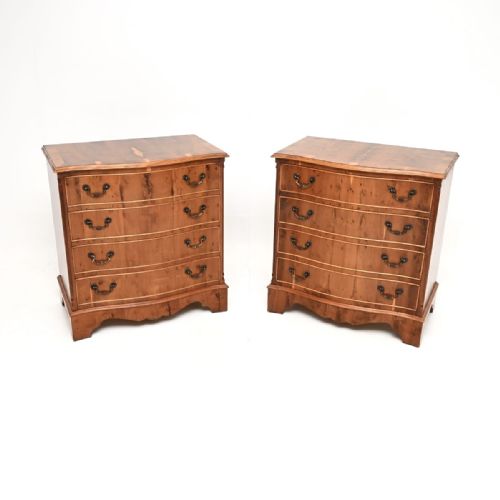
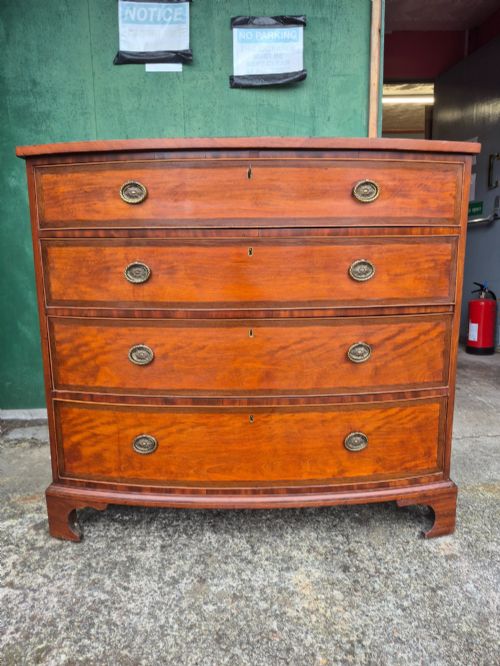
The most common iterations on this page are Georgian mahogany designs featuring delicate boxwood or ebony stringing, alongside continental walnut and kingwood commodes shaped in bombe or serpentine outlines. Oak examples appear from earlier periods, often displaying robust geometric banding and foundational carcass construction.
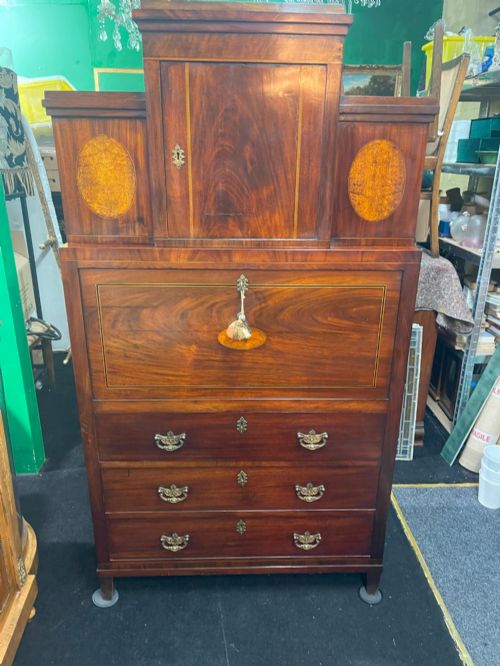
Buyers also encounter specialised forms such as tallboys, miniature apprentice pieces, secretaire chests and bedside cabinets. Each variant applies surface decoration to delineate drawer fronts, top surfaces and canted corners.
Judging Quality and Execution
Quality rests upon the precision of the veneer work and the crispness of the inlaid details, where tight joints and minimal filler indicate superior craftsmanship. The choice of primary and secondary timbers also dictates value, with well-figured burr walnut, rich mahogany and exotic kingwood marking out finer pieces.
Structural integrity, the survival of original brass hardware, and the harmonious fading of timber over centuries separate standard regional items from exceptional workshop productions. Original timber linings to the drawers and undisturbed backboards confirm authenticity and careful historical maintenance.
The listings span multiple centuries, uniting English oak and mahogany examples with continental walnut, kingwood and rosewood pieces.
Grand Ducal Workshops·Maison Krieger·J Shoolbred
The Inlay Chest of Drawers Glossary
- Marquetry
- Elaborate pictorial veneer work assembled from various woods, ivories or metals to create floral or figurative scenes across the drawer fronts and top surfaces.
- Parquetry
- Geometric mosaic patterns formed by small pieces of wood veneer fitted together in repeating grids or cubes.
- Bombe
- A swelling, outward-curving chest profile characteristic of continental furniture, requiring specialised curved drawer construction.
- Stringing
- Thin, narrow strips of contrasting timber inlaid into grooves on a cabinet face to outline drawers or panel borders.
- Oyster veneering
- Cross-section slices of branch wood laid to resemble the pattern of oyster shells, popular on seventeenth-century walnut furniture.
- Serpentine
- A shaped furniture front featuring a concave centre flanked by two convex curves, creating a fluid undulating line.
Inlay Chest of Drawers: Frequently Asked Questions
How do I date an inlaid chest?
Dating relies on combining the carcass timber, the style of the feet, the handle hardware, and the specific technique used for the inlay work. Earlier seventeenth-century pieces use oak and walnut with geometric banding, whereas Georgian pieces favour mahogany with fine boxwood lines.
Later Edwardian and continental revival pieces often mix woods freely or incorporate machine-sawn veneers. Examining the drawer linings and internal construction methods helps confirm the manufacturing era.
What is the difference between marquetry and parquetry?
Marquetry forms pictorial and organic compositions like flowers, urns or landscapes using varied wood veneers and sometimes ivory or metal. It is designed to create a decorative picture across the flat surfaces of a chest.
Parquetry constructs geometric and repeating abstract patterns, such as cubes or triangles. Both techniques decorate the carcass but achieve entirely different visual effects.
Are these chests suitable for daily bedroom use?
These chests were originally built for domestic storage and remain robust enough for everyday use when handled with reasonable care. Modern placement should avoid direct sunlight and extreme humidity fluctuations to protect fragile historical veneers.
Drawer runners and internal oak or mahogany linings function reliably after centuries, provided the piece has been properly maintained by previous owners.
Why do some chests have marble tops?
Marble tops were primarily specified on continental commodes, particularly French Louis XV and XVI designs, to provide a durable, heat-resistant surface. They also added substantial weight to the top of the carcass, balancing the decorative bombe or serpentine shapes below.
White and rouge marble slabs are most frequently encountered on eighteenth and nineteenth-century pieces.