

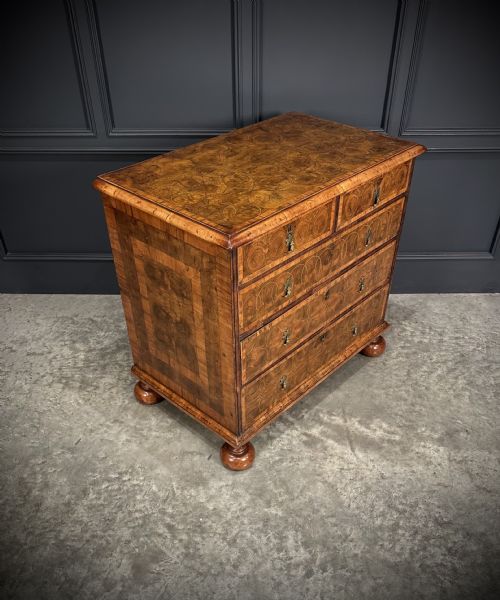


Oyster Veneer Chest Drawers
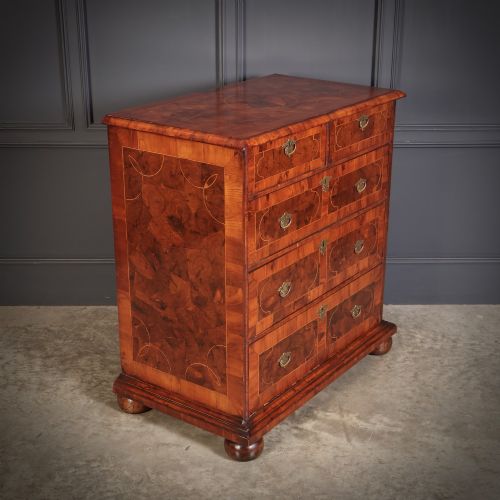
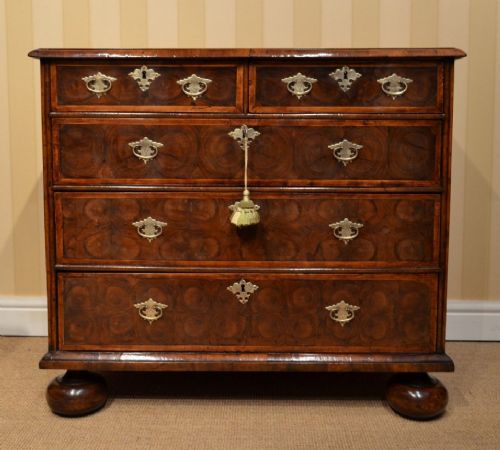
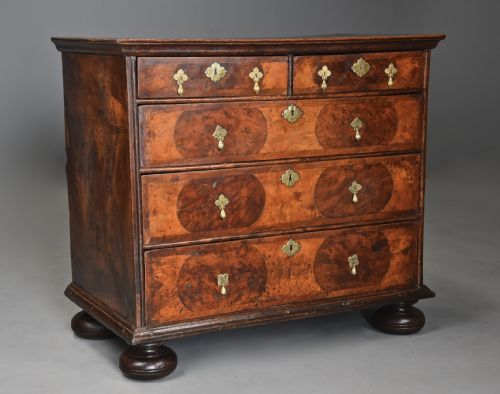
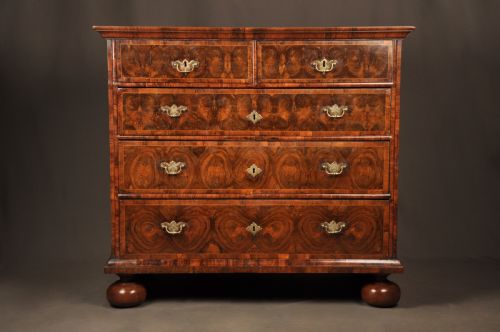
An oyster veneer chest drawers brings together centuries of cabinet-making skill, offering concentric timber roundels that catch the eye and warm a room.
Oyster Veneer Chest Drawers
An oyster veneer chest drawers is a striking storage piece created predominantly during the seventeenth century and the William and Mary period, alongside later twentieth-century revivals. These items take the form of standard chests of drawers or taller chests on stand.
The version you are most likely to meet on this page dates from the seventeenth century and pairs walnut, olivewood, laburnum, or yew wood with distinctive circular veneer patterns.
How they were made
Cabinet-makers produced oyster veneer by cross-cutting small branches of timbers such as walnut, olivewood, and laburnum to reveal circular or oval rings resembling oysters. These thin slices were laid across drawer fronts and carcases in intricate geometric arrangements.
Craftsmen often combined these wooden roundels with oak carcases, boxwood stringing, and brass drop handles, sometimes incorporating marquetry or cross-banding to frame the swirling grain.
Materials recorded across the archive include brass, oak, boxwood, walnut, laburnum, olivewood, and yew.
What varies in quality
Quality rests upon the choice of timber and the precision of the cutting, where denser groupings of olivewood or laburnum roundels create a more complex visual rhythm across the surface.
The refinement of the supporting stand, the subtlety of the cross-banding, and the preservation of the original patination separate standard examples from the finest pieces.
The Oyster Veneer Chest Drawers Glossary
- Oyster veneer
- Slices of branch wood cut transversely to show circular growth rings. This technique was highly favoured by late seventeenth-century cabinet-makers.
- Chest on stand
- A drawer chest elevated on a separate frame with legs. This form lifts the storage compartment higher off the floor.
- Cross-banding
- A narrow strip of veneer applied to the border of a drawer front or top. The grain runs perpendicular to the surrounding wood for contrast.
- Marquetry
- Decorative patterns formed by inlaying different woods into a veneer ground. It appears on finer seventeenth-century pieces.
- Boxwood
- A pale, dense wood used for fine stringing and inlay lines. It provides sharp contrast against darker walnut and olive timbers.
Oyster Veneer Chest Drawers: Frequently Asked Questions
Where should I place an oyster veneer chest drawers?
These chests suit hallways, drawing rooms, or bedrooms where their patterned timber surfaces can be appreciated at close quarters. Keep them away from direct sunlight and strong heat sources to protect the delicate veneers.
Because many examples have compact proportions, they function well in smaller spaces as focal points that also offer practical drawer storage.
How do I care for oyster veneer surfaces?
Dust the surfaces regularly with a soft, dry cloth and apply a traditional beeswax polish sparingly to maintain the sheen. Avoid modern silicone sprays and excessive moisture.
Checking the room humidity helps prevent the timber from drying out and keeps the individual veneer roundels stable within their setting.
What periods do these chests come from?
The majority of pieces date from the seventeenth century, particularly the William and Mary period, alongside occasional Georgian examples and early twentieth-century revivals.
Earlier pieces show distinct construction methods and timber choices, such as olivewood and laburnum, which differ from later interpretations.
What is a chest on stand version?
A chest on stand pairs the main drawer section with a raised underframe featuring legs, offering a lighter visual appearance than a floor-standing chest.
This form originated to elevate storage and provide additional elegance to the proportions of late seventeenth-century interiors.