
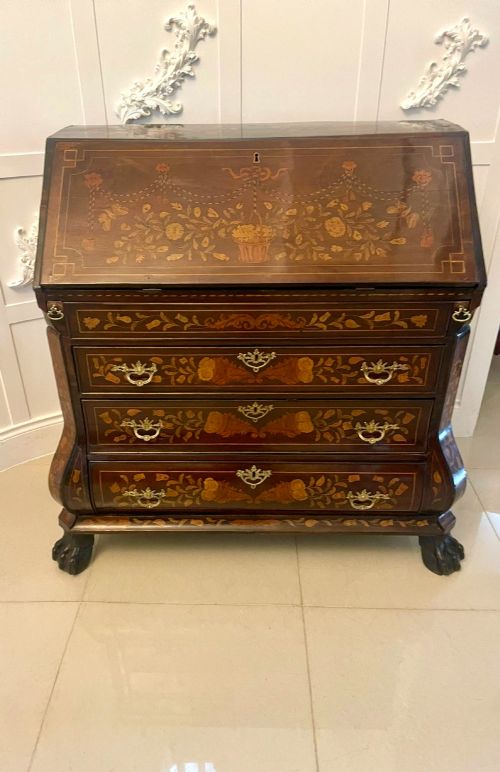
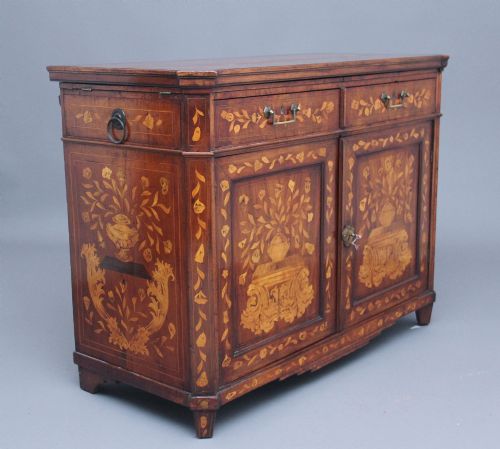
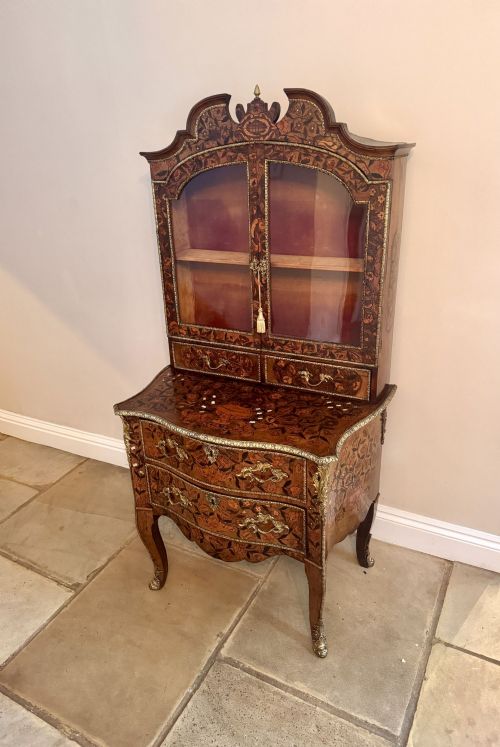
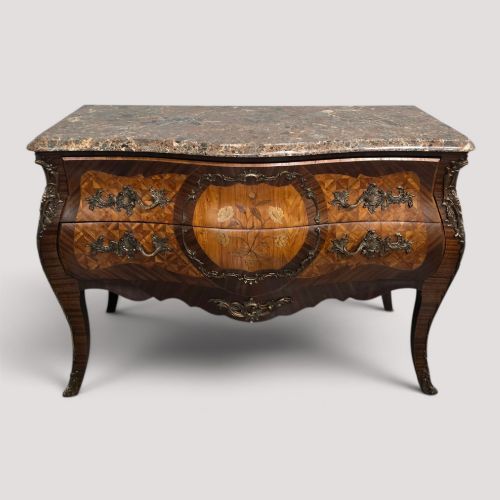
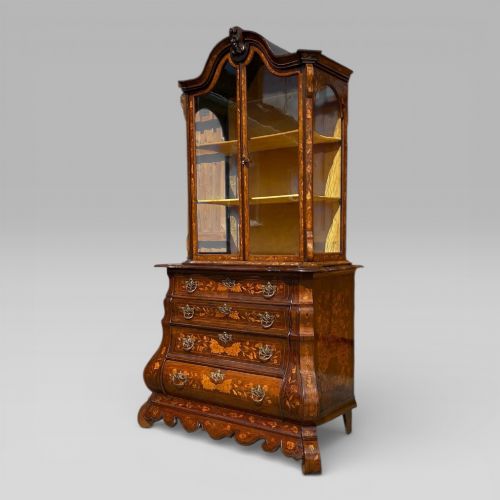
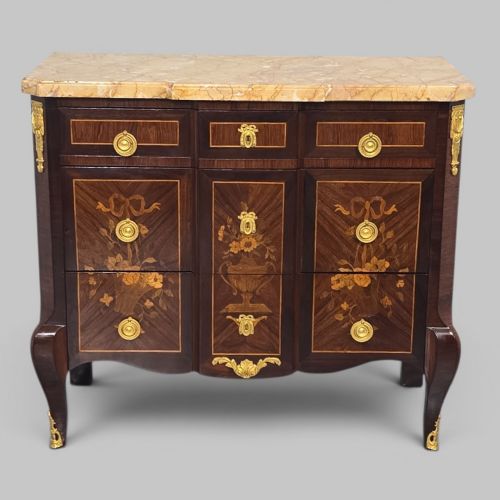
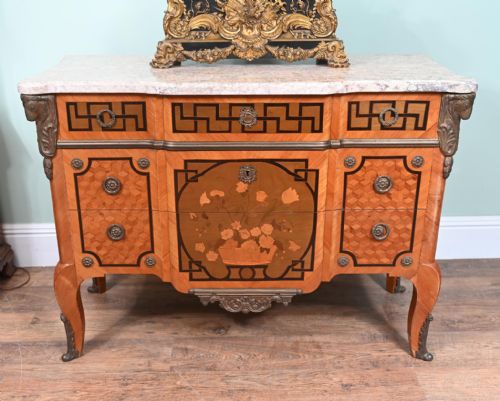
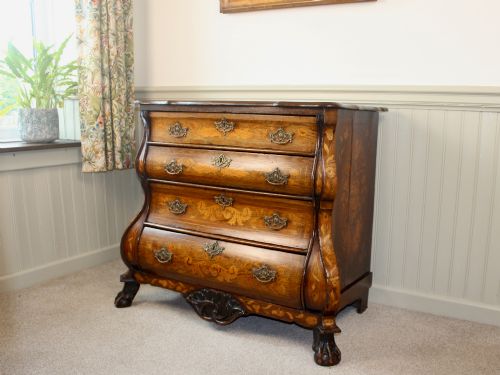
Floral Marquetry Chest Drawers
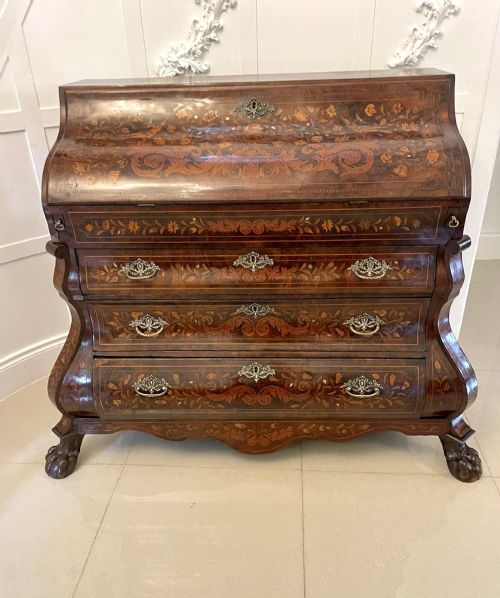
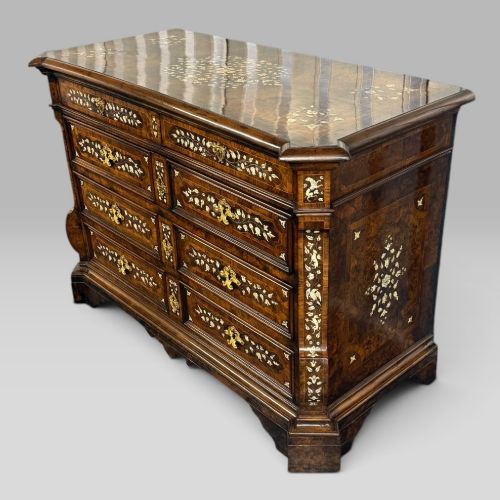
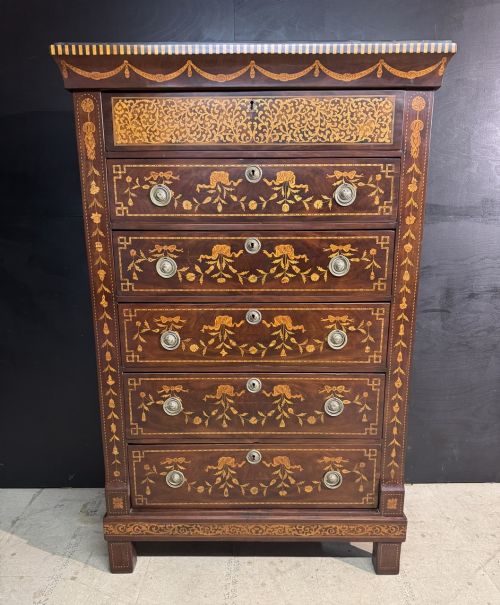
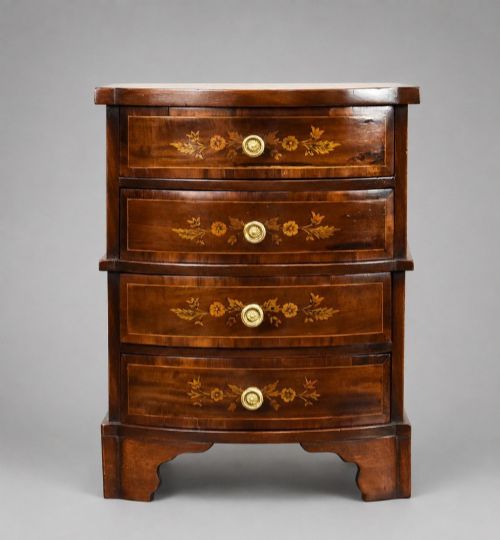
These floral marquetry chest drawers combine timber carcases with elaborate floral veneers spanning multiple centuries of European cabinetmaking.
Floral Marquetry Chest Drawers
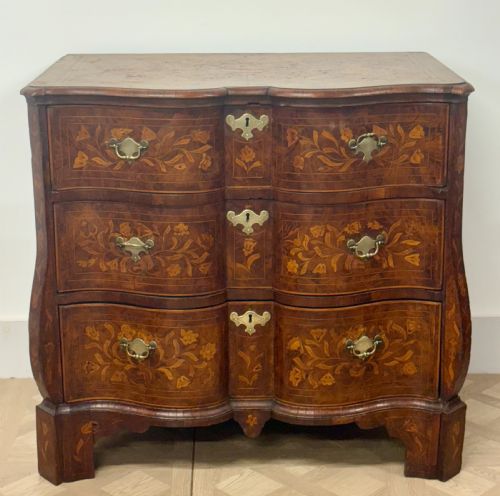
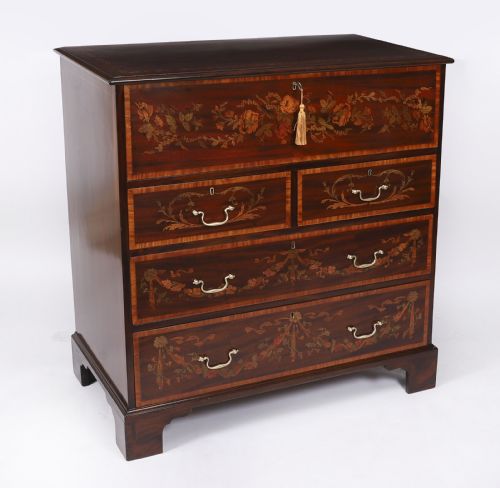
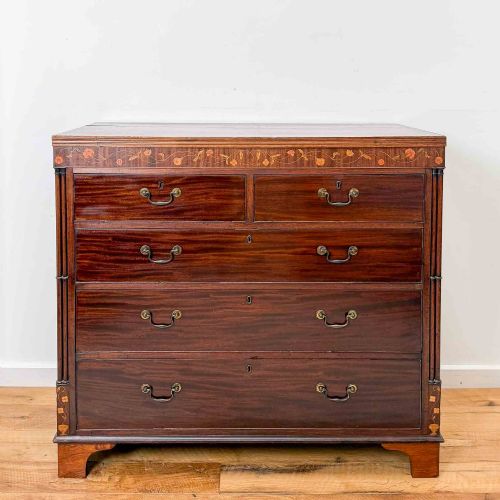
A floral marquetry chest drawers represents a tradition of cabinetmaking where floral patterns are formed from fine veneers and applied to storage furniture. These pieces span from the seventeenth century through the twentieth century, originating primarily in workshops across Britain, the Netherlands, and France.
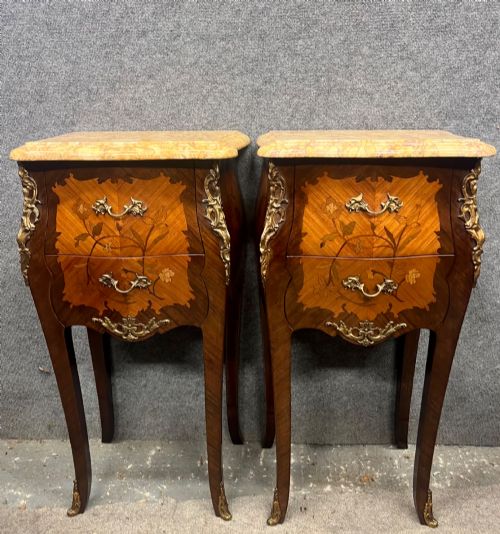
The selections available here encompass various regional forms, including tallboys, bombe chests, commodes, and bureau desks. Dutch Baroque and Louis XV revival styles dominate the inventory, accompanied by compact bedside cabinets and miniature items.
Walnut, mahogany, and rosewood provide the foundational timber for the carcases, while fruitwoods supply the contrasting tones required for the detailed floral foliage laid across the drawer fronts and tops.
How they were made
Cabinetmakers constructed the main carcase using solid timbers like oak, walnut, or mahogany before applying thin sheets of veneer to the exterior surfaces. Fruitwoods such as maple, box, and pear were often dyed or shaded with hot sand to create depth within the petals and leaves of the floral marquetry.
Brass hardware, ormolu mounts, and occasionally marble tops complete the construction of these decorative storage pieces. Craftsmen cut intricate floral and foliage patterns by hand using a fretsaw, fitting the contrasting wood pieces together like a jigsaw puzzle before gluing them to the substrate.
Early cabinetmakers occasionally hid small wooden insects amidst the floral marquetry panels to surprise attentive observers.
What varies in quality
The distinction between tiers of quality rests in the crispness of the veneer cutting and the natural ageing of the chosen timbers. Superior examples exhibit intricate shading within the floral motifs and seamless integration between the marquetry panel and the surrounding carcase.
Secondary wood selection and the complexity of the cabinet silhouette also dictate the calibre of a piece. Bombé profiles and serpentine fronts demand advanced carpentry skill, separating standard storage furniture from elaborate cabinetmaker commissions.
Edwards and Roberts
The Floral Marquetry Chest Drawers Glossary
- Marquetry
- A technique where pieces of veneer are assembled to form decorative patterns and pictorial designs on a wooden carcase. This differs from inlay, which involves inserting material into carved recesses.
- Bombé
- A swelling, outward-curved contour found on the front and sides of certain eighteenth-century chests and commodes. The curved shape requires specialised shaping of both the internal framework and the surface veneers.
- Ormolu
- Gilt-bronze decorative mounts applied to French and Continental furniture styles. This material adds metallic contrast to the timber surfaces.
- Tallboy
- A tall chest of drawers consisting of one chest stacked upon another or built as a single elongated unit. These forms maximise vertical storage capacity.
Floral Marquetry Chest Drawers: Frequently Asked Questions
How do I date a floral marquetry chest drawers?
Dating relies on examining the construction methods of the internal drawer carcases, the secondary timbers used behind the veneers, and the prevailing furniture style. Seventeenth and eighteenth-century pieces often display hand-cut dovetails and native European hardwoods.
Later nineteenth and twentieth-century revivals incorporate machine-sawn elements while imitating earlier Dutch Baroque or Louis XV aesthetics. Comparing the hardware fixings and the ageing of the fruitwood veneers helps clarify the manufacturing era.
Where were these pieces made?
The pieces originate predominantly from workshops in the Netherlands, France, and Britain. Dutch cabinetmakers specialised in floral marquetry across bombe and straight-front carcases during the seventeenth and eighteenth centuries.
French makers produced commodes and tables utilising kingwood, rosewood, and ormolu mounts. English makers also adopted these decorative veneer techniques on walnut and mahogany furniture.
How should I care for the veneer?
Protect the timber surfaces by keeping them away from direct sunlight and maintaining stable room humidity. Sudden environmental changes can cause the fine fruitwood veneers to lift or shrink away from the carcase.
Apply traditional wax polish sparingly to nourish the wood and maintain the natural sheen of the marquetry. Avoid using modern liquid sprays or silicone-based cleaning products.