


Inlaid Wood Tea Table
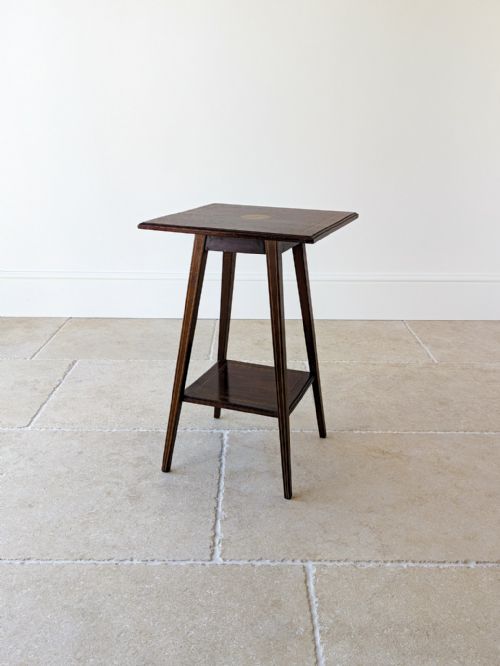
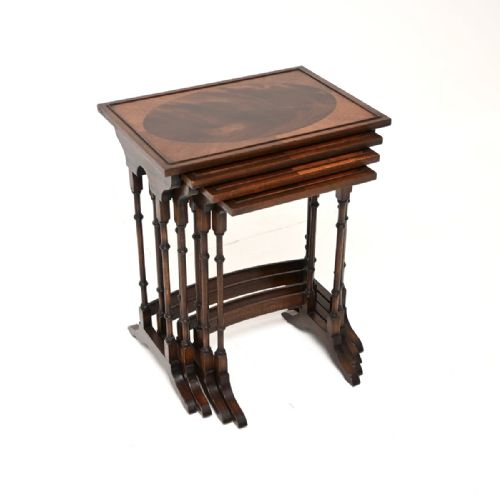
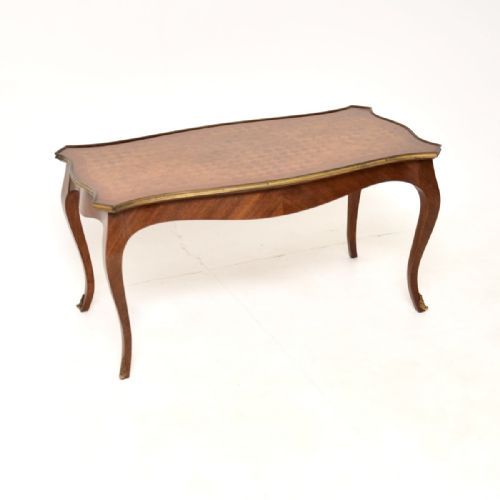
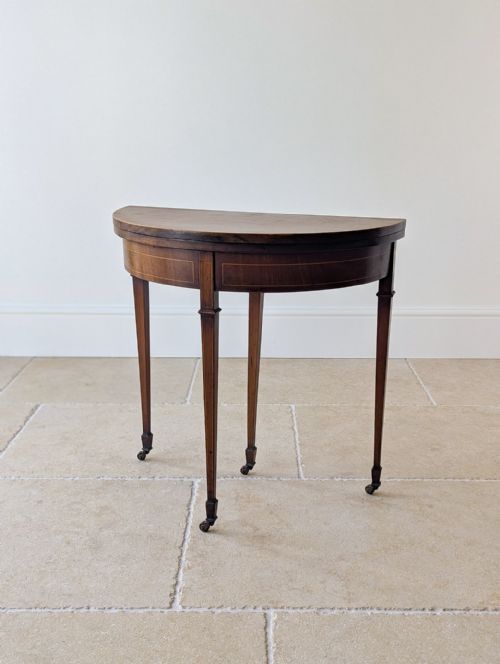
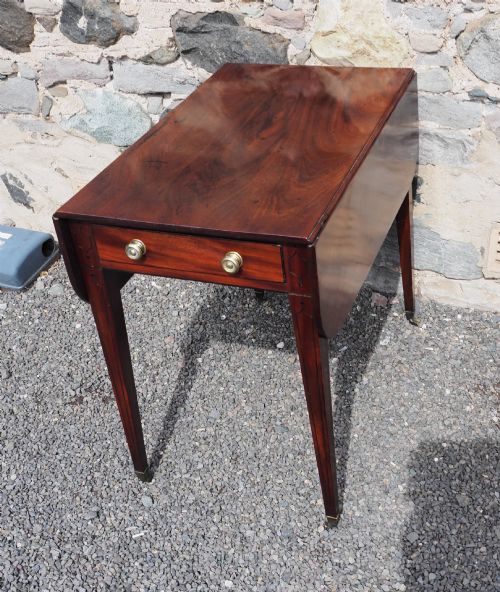
An inlaid wood tea table combines functional folding surfaces with intricate marquetry, offering a versatile centrepiece for a sitting room.
Inlaid Wood Tea Table
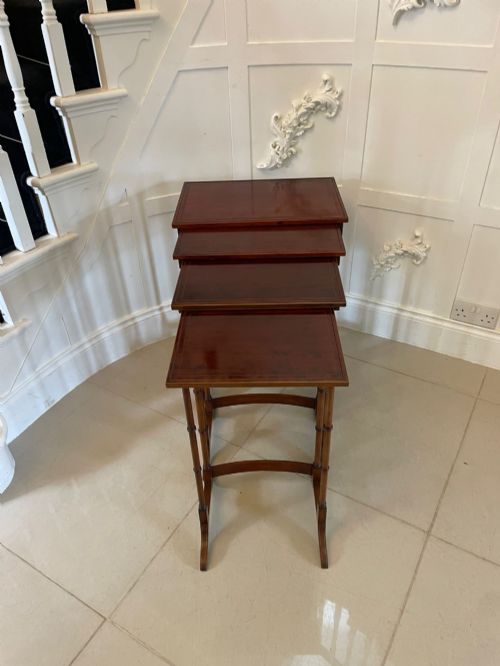
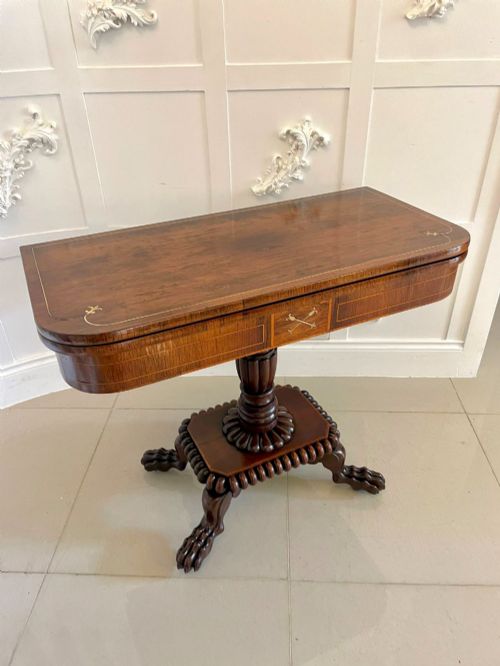
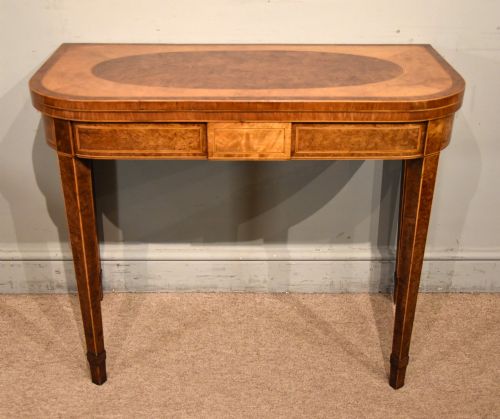
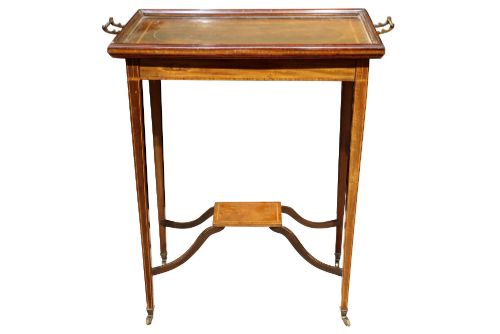
When you search for an inlaid wood tea table, you encounter diverse forms ranging from Georgian and Regency fold-over card or games designs to Edwardian occasional pieces. These tables typically feature hinged tops or compact proportions intended for domestic social rituals.
The selections span distinct periods including the eighteenth century, the Regency era, and the Edwardian epoch. Mahogany, rosewood, and satinwood form the primary structural timbers, often enhanced by contrasting stringing and detailed wood inlay.
You frequently meet tables adapted from pembroke or console formats into tea and games tables. Their origins stretch from English workshops to Anglo-Indian and Middle Eastern centres of production.
How they were made
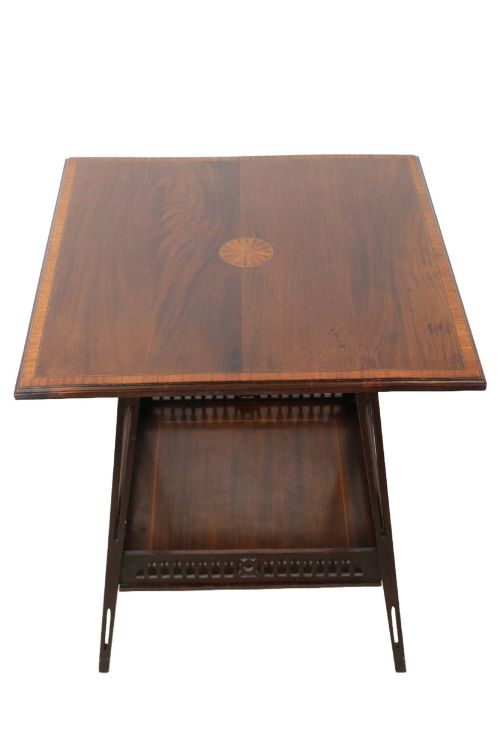
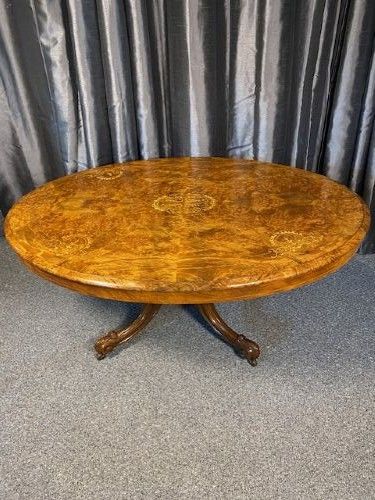
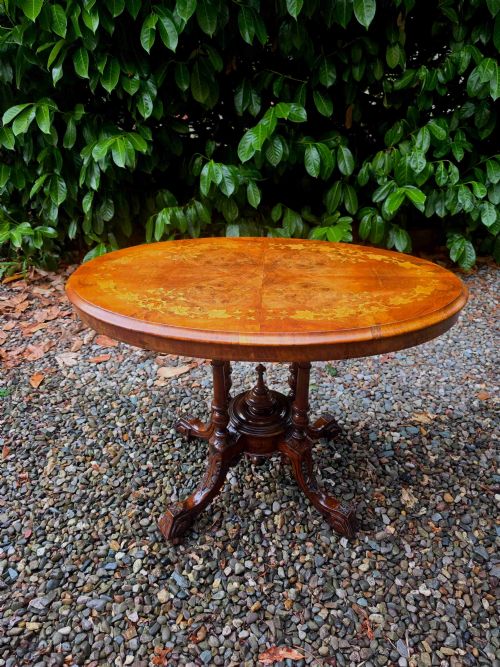
Cabinet makers utilised dense primary timbers like mahogany and rosewood as solid foundations and framing. Finer decorative veneers such as satinwood, burr walnut, and burr yew were applied to top surfaces to create striking grain patterns.
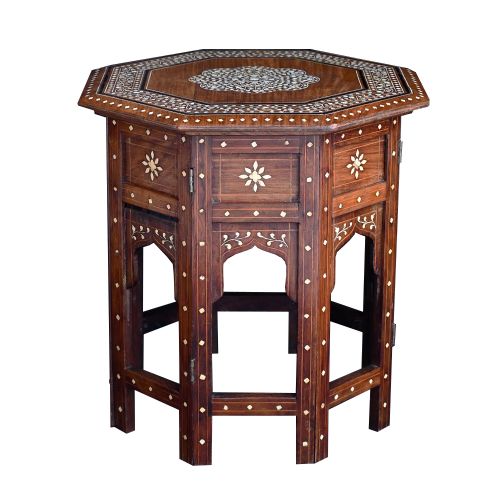
Inlay and stringing techniques integrated contrasting materials like ebony, boxwood, bone, and brass directly into the wood surface. Metal components including ormolu mounts and brass hinges provided structural support and visual definition.
Hoshiarpur production sometimes included depictions of elephants navigating dense floral foliage.
What varies in quality
The precision of the joinery and the crispness of the inlay distinguish standard production from exceptional craftsmanship. Tighter joints and sharper contrasts in the wood marquetry indicate higher workshop standards.
The choice of secondary timbers and the depth of figure in veneers dictate the overall distinction of a piece. Finer examples display harmonious grain selection across the fold-over leaves and balanced proportions in the supporting legs.
Trevor Page & Co·George Bullock·Liberty & Co·Bombay Furniture Company
The Inlaid Wood Tea Table Glossary
- Inlay
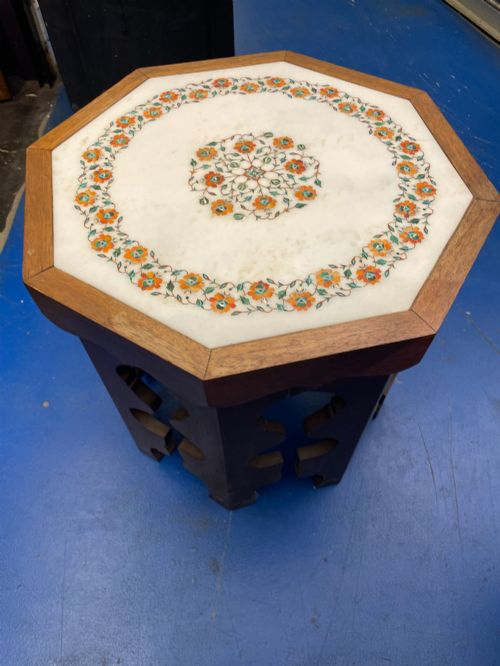
- A technique where pieces of contrasting wood, metal, or bone are inserted into depressions flush with the surface to form a decorative pattern. This method defines the primary ornamentation of the tabletops.
- Marquetry
- The art of applying veneer pieces to a structure to form decorative designs and pictorial scenes. It creates complex surface patterns using various tinted woods.
- Crossbanding
- A border strip of veneer laid around the perimeter of a tabletop with the grain running perpendicular to the centre panel. This frames the main field of the timber.
- Pembroke table
- A small rectangular table featuring two hinged drop leaves on opposite sides. They were designed for easy movement and casual dining or writing.
- Stringing
- Thin inlaid lines of contrasting timber used to outline panels and table edges. It provides a subtle linear border to geometric designs.
Inlaid Wood Tea Table: Frequently Asked Questions
How do I identify a Regency inlaid table?
Regency tables typically display dark timbers such as rosewood or mahogany contrasted with brass inlay, stringing, or ormolu mounts. The forms lean towards classical architectural lines, sometimes incorporating lyre pedestals or saber legs.
Craftsmen of this period favoured bold geometric borders and sharp material contrasts. Checking the interior framing and joinery helps confirm the period construction.
Where were Anglo-Indian inlaid tables made?
Anglo-Indian tables originated from production centres like Hoshiarpur and Bombay during the nineteenth and early twentieth centuries. Local artisans utilised regional timbers such as teak or shesham.
These pieces are distinct for intricate bone or mother-of-pearl inlay depicting floral and animal motifs. Their dense surface carving reflects a fusion of traditional Indian woodworking and British furniture forms.
How do I care for an antique wood table?
Antique inlaid wood tables require stable indoor humidity and protection from direct sunlight to prevent veneer cracking and fading. Regular dusting with a soft, dry cloth preserves the polished finish.
Avoid placing damp items or hot cups directly on the antique timber surface. Using coasters and wax polishes formulated for historic furniture maintains the condition of the inlay.