
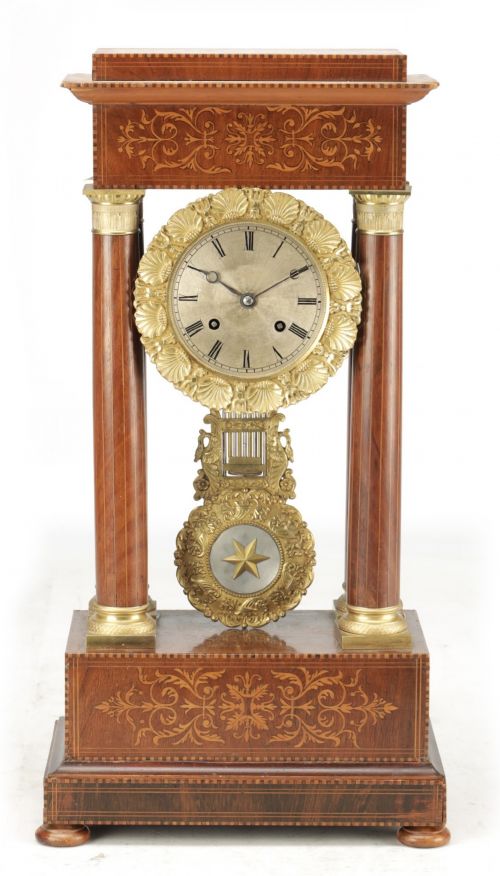
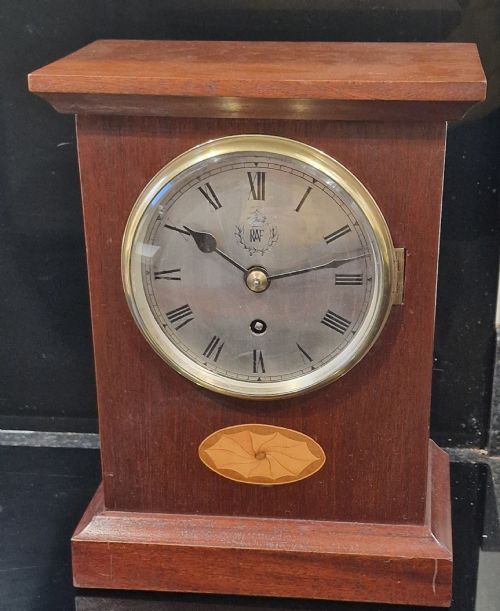
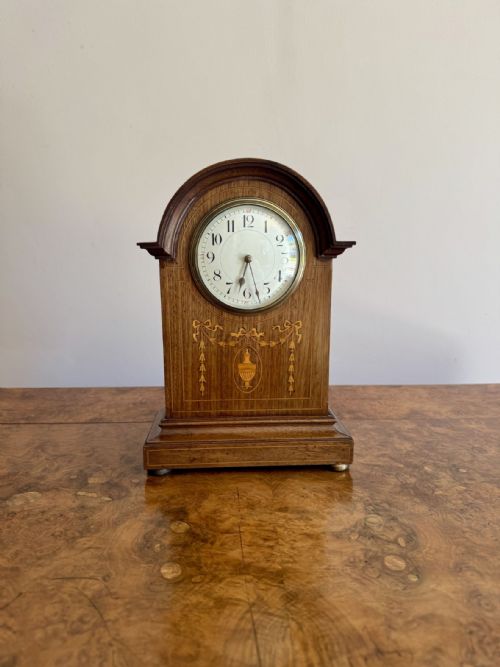


Inlaid Wood Table Clock
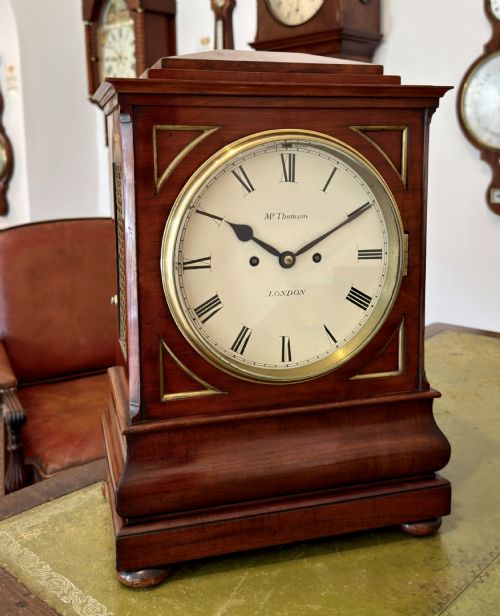
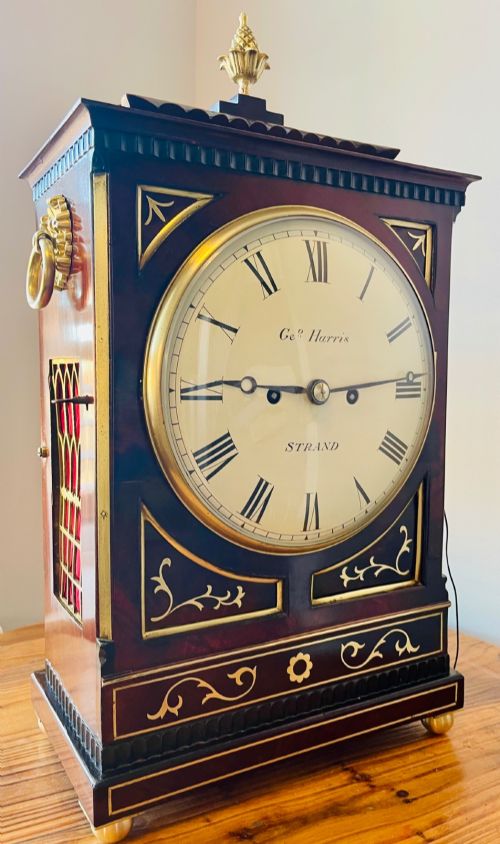
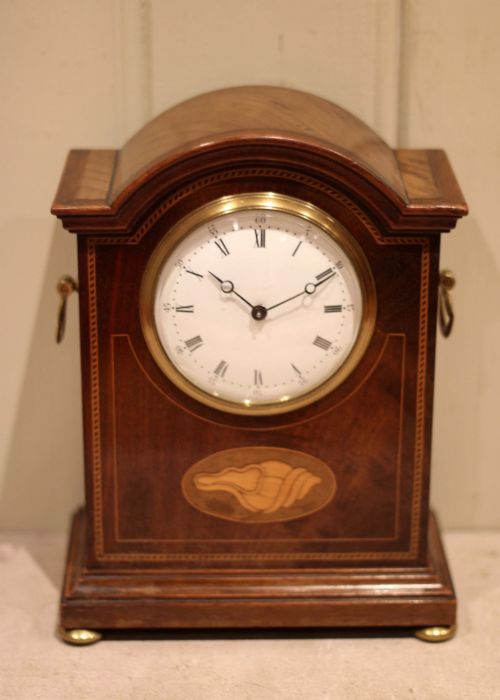
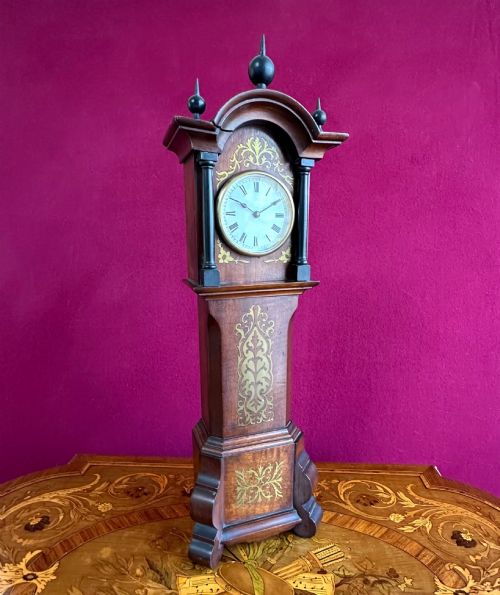
An inlaid wood table clock sits quietly on a bracket or mantel, bringing rich timber and meticulous marquetry to a room.
Materials and construction
Cabinet makers built these cases around solid frames of mahogany or rosewood, applying fine veneers to curved and flat surfaces alike. Artisans then cut contrasting strips of boxwood, satinwood, or lemon wood to create geometric borders and delicate floral inlay.
Dial construction relied on contrasting metals and enamels, pairing brass bezels with silvered chapter rings and convex glass covers. Movements inside ranged from fusee mechanisms driven by chains and cords to spring driven German and French striking trains.
Distinctions in quality
Quality rests heavily on the crispness of the timber inlay and the depth of the cabinet timber. Superior pieces display precisely fitted stringing and balanced grain patterns without lifting or shrinkage in the veneer.
The caliber of the mechanical movement inside determines the upper tiers of the market. Signed brass backplates, complex fusee setups, and original pendulum suspensions elevate a clock far beyond standard mass produced timepieces.
Several clocks hide complex German ting tang mechanisms behind polite English mahogany faces.
Thomson of London·Thomas Connold of Alysham·Paul Garnier·Henry Marc·Joseph Jump·Walker and Hall·Junghans
The Inlaid Wood Table Clock Glossary
- Bracket clock
- A portable timekeeper originally designed to sit upon a matching wall bracket. These spring driven pieces often feature arched mahogany or rosewood cases.
- Fusee
- A conical pulley used in better mechanical clocks to maintain even power as the mainspring unwinds. This clever device ensures consistent timekeeping right up to the end of the power reserve.
- Marquetry
- The art of forming decorative patterns by fitting together small pieces of wood veneer. Artisans combine contrasting timbers like satinwood and boxwood to produce floral or geometric motifs.
- Stringing
- A narrow strip of contrasting wood inlaid flush into the surface of a cabinet. It creates delicate borders around door panels and plinths.
- Ting tang
- A striking mechanism that sounds two different notes on quarters or half hours. This pleasant chime setup typically utilises two bells or gongs.
Inlaid Wood Table Clock: Frequently Asked Questions
How do I wind an old bracket clock?
Most mechanical clocks require a proper winding key inserted into the dial holes to tension the mainsprings gently. Take care not to overwind the mechanism.
Consult the specific strike or fusee requirements of your movement before adjusting the hands or setting the time.
Where should I place a mantel clock?
Position your timepiece on a stable, level surface away from direct sunlight, central heating vents, and damp exterior walls. Solid mantelpieces and sturdy side tables work best.
Ensuring the surface is level helps the pendulum swing evenly and keeps the beat regular.
What is the difference between a timepiece and a clock?
In horological terms, a timepiece simply tells the time and does not strike the hours or quarters. A clock incorporates a striking or chiming train.
Many antique table models feature full bell striking or gong movements rather than silent timekeeping.
How do I identify a Regency clock case?
Regency cases typically exhibit dark, highly figured rosewood or mahogany veneers accented with brass inlay or brass mounts. Architectural lines and bracket feet often define the era.
Look for classical proportions and restrained ornament that reflect early nineteenth century design values.