


Edwardian Inlaid Barometer
An edwardian inlaid barometer brings domestic weather tracking into rooms through polished timber and delicate marquetry.
Edwardian Inlaid Barometer
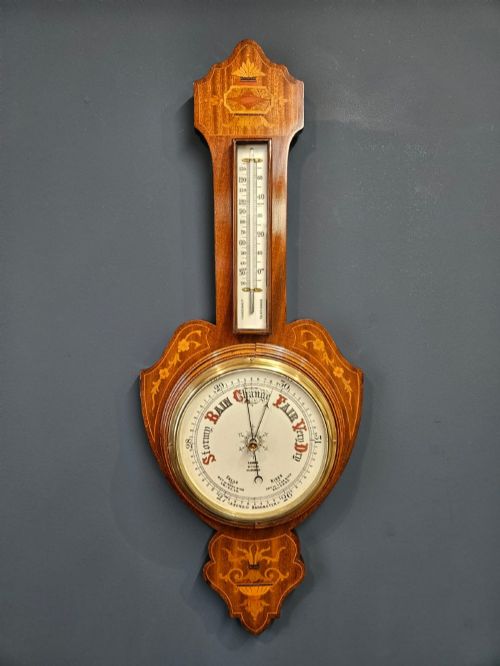
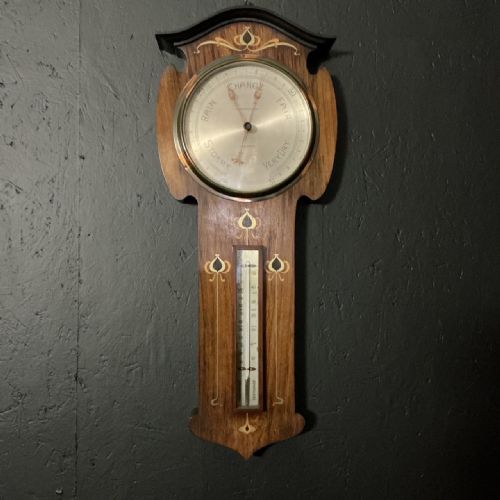
The edwardian inlaid barometer gathers domestic mercury and aneroid instruments housed in timber frames, often taking the banjo shape or standing as desk top pieces. These instruments combine the practical need for atmospheric reading with decorative cabinet work suited to period interiors.
Most examples appearing in trade show the distinctive influence of Sheraton revival design, translating eighteenth-century motifs into early twentieth-century homes. Mahogany, rosewood and fruitwood provide the background for contrasting wood inlay work that frames the silvered dials.
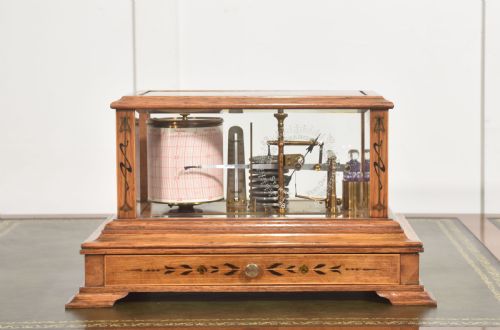
Alongside standard wall-hanging banjo barometers, the category encompasses heavier barographs and mantel instruments that integrate timepieces or thermometers into the wooden case. These variations reflect how households monitored weather changes in different rooms of the house.
Materials and construction
Cabinet makers constructed the bodies from solid and veneered timbers including mahogany, rosewood, oak, walnut and satinwood, applying contrasting wood inlay and marquetry to create geometric or floral patterns. Brass components protect the bezel glass and form the hygrometer or thermometer surrounds.
Internal movements rely on sealed aneroid capsules or mercury columns connected to visible silvered brass dials that display atmospheric pressure readings. Glass protects the delicate pointer needles and engraved paper or metal scales from dust and damage.
Recorded pieces span mahogany, rosewood, oak, walnut and satinwood, frequently decorated with fruitwood inlay in the Sheraton revival style.
What separates standard pieces from finer examples
Execution of the marquetry and wood inlay marks the primary distinction in these instruments, where crisp cutting and varied timber tones separate routine cabinet work from finer commissions. The depth and clarity of the engraved silvered dial add further weight to the piece.
The choice of primary timber, from plain oak to figured mahogany or rich rosewood, determines the visual presence of the barometer on the wall. Complete arrangements featuring matching thermometers and hygrometrical indicators demonstrate higher original intent.
The Edwardian Inlaid Barometer Glossary
- Banjo barometer
- A wall-hanging barometer housed in a long wooden case shaped loosely like a banjo. This form provides vertical space for a thermometer and hygrometer above the main circular dial.
- Aneroid barometer
- An instrument that measures atmospheric pressure through the expansion and contraction of a sealed metal capsule without using liquid. The movement connects mechanically to the visible dial pointer.
- Marquetry
- Decorative veneer work arranged in pictorial or geometric patterns using various coloured woods. Craftsmen apply these thin timber sections to the surface of the barometer body.
- Silvered dial
- A brass or metal dial treated to achieve a frosted silver finish before engraving and blackening the numerals. This treatment reduces glare and keeps pressure readings legible.
- Barograph
- A recording meteorological instrument that draws continuous pressure readings onto a rotating paper drum. These heavier units often feature oak cases and glass panels.
Edwardian Inlaid Barometer: Frequently Asked Questions
How do aneroid barometers work?
An aneroid barometer uses a flexible metal box called an aneroid capsule that expands or contracts as air pressure shifts. This movement transfers through internal levers to turn the pointer on the dial face.
Because the system contains no liquid mercury, these instruments require no vertical mounting and handle minor vibrations without losing calibration.
Where should I hang a banjo barometer?
Hang your barometer on an interior wall away from direct sunlight and sudden draughts from radiators or open doors. Stable room temperatures ensure the internal mechanism responds purely to barometric pressure changes.
Ensure the fixing securely supports the weight of the timber case, particularly with larger rosewood or mahogany banjo models.
How do I read the weather indicators?
Set the manual pointer directly over the current pressure needle so you can observe movement later in the day. If the needle shifts towards lower numbers, unsettled weather or rain approaches.
Rising pressure indicated towards the right points to settling conditions and clearer skies ahead.
What maintenance do these barometers need?
Keep the timber surfaces clean using a dry microfibre cloth to remove dust from the marquetry and glass bezel. Avoid liquid polishes that can seep into the wood grain or damage the delicate silvered dial.
Professional clock and instrument restorers can recalibrate the internal mechanism if pressure readings drift significantly over time.