




Wooden Aneroid Barometer
A wooden aneroid barometer records atmospheric pressure through a sealed metal capsule rather than liquid mercury, housed in timber.
Wooden Aneroid Barometer
A wooden aneroid barometer is a meteorological instrument mounted inside a timber housing designed to hang upon a wall or sit upon a desk. When you search for a wooden aneroid barometer, you find domestic weather-recording devices produced across the Victorian, Edwardian, and Art Deco periods.
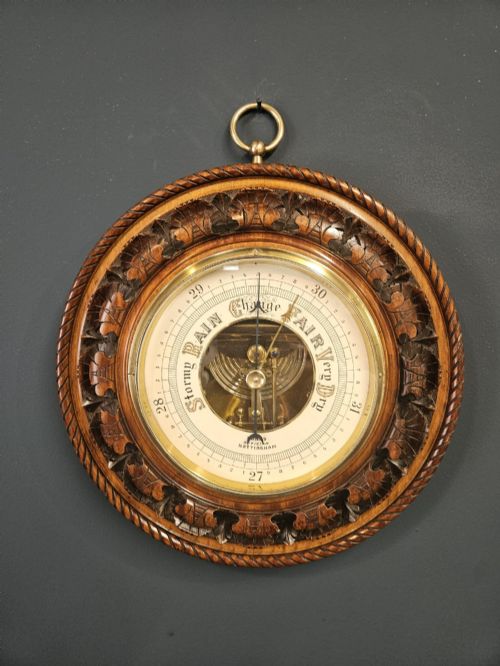
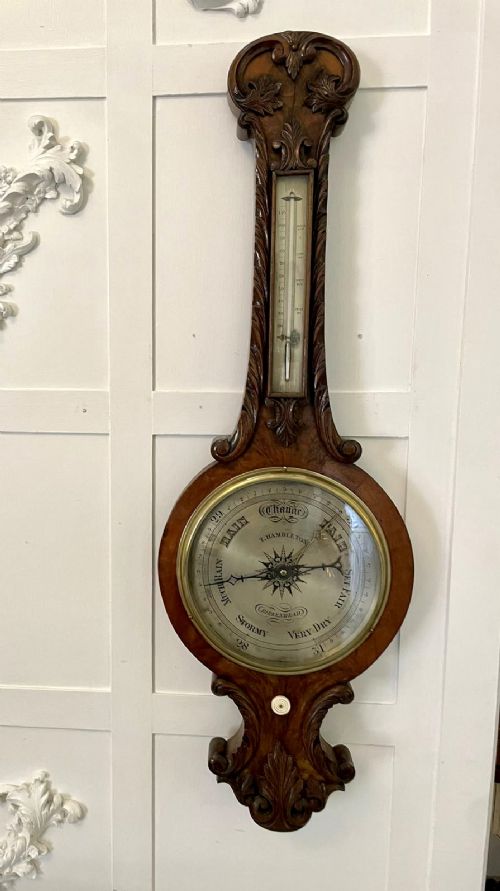
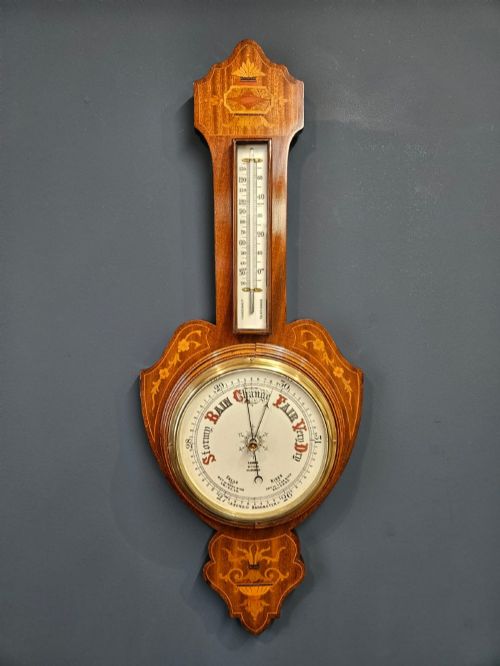
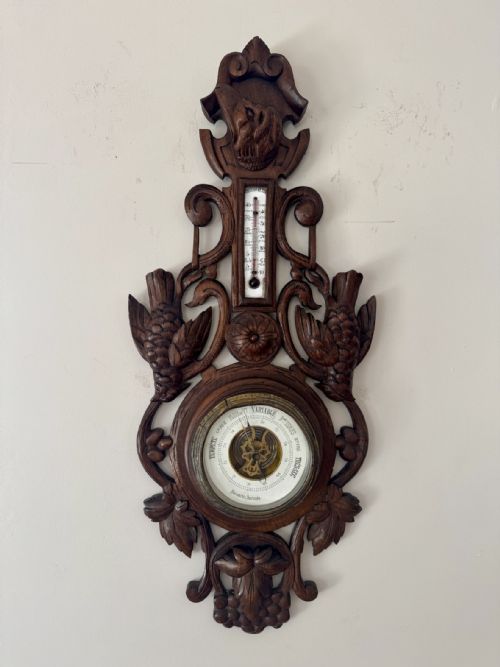
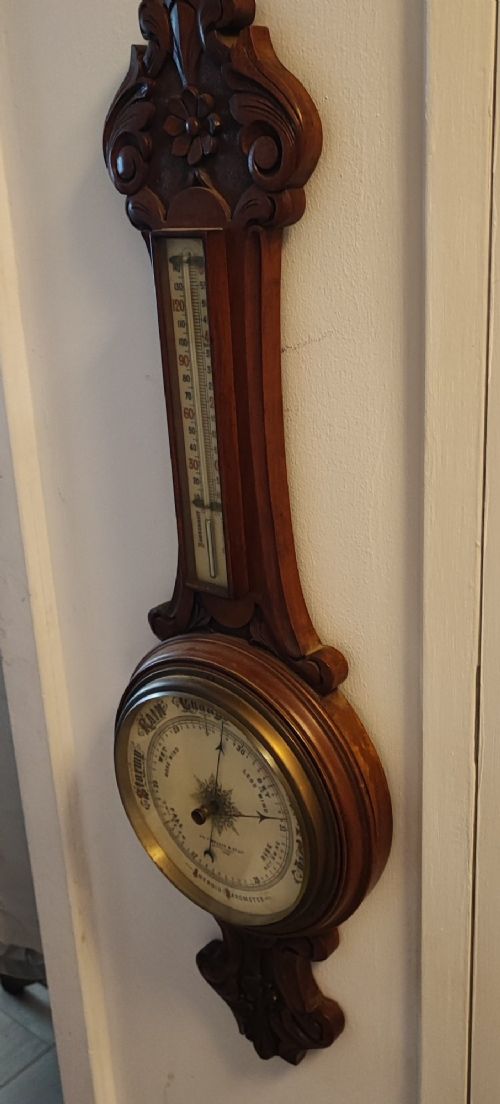
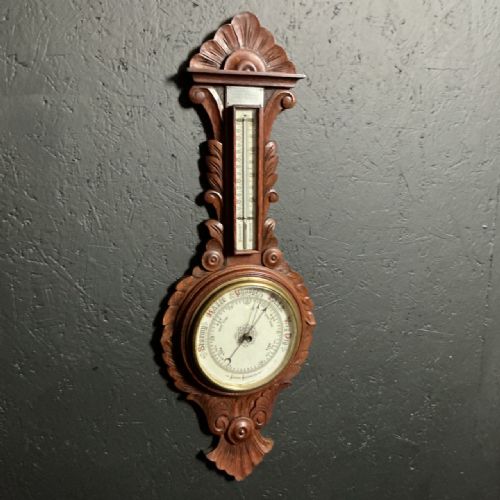
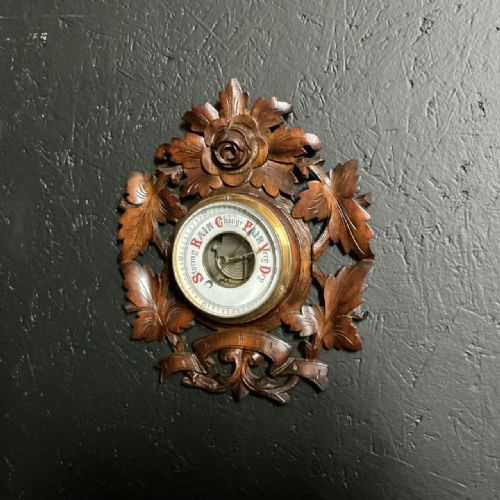
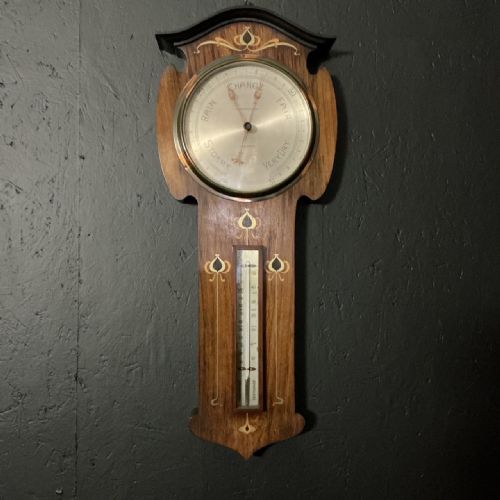
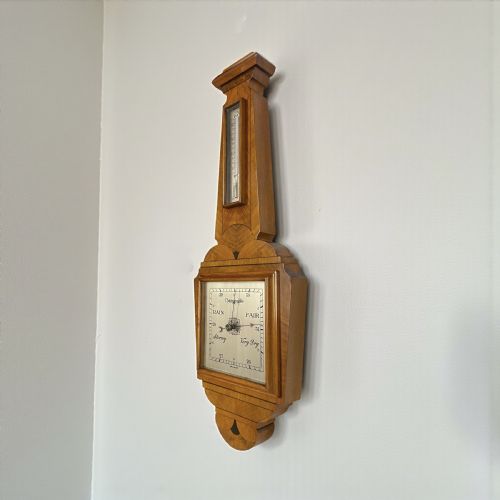
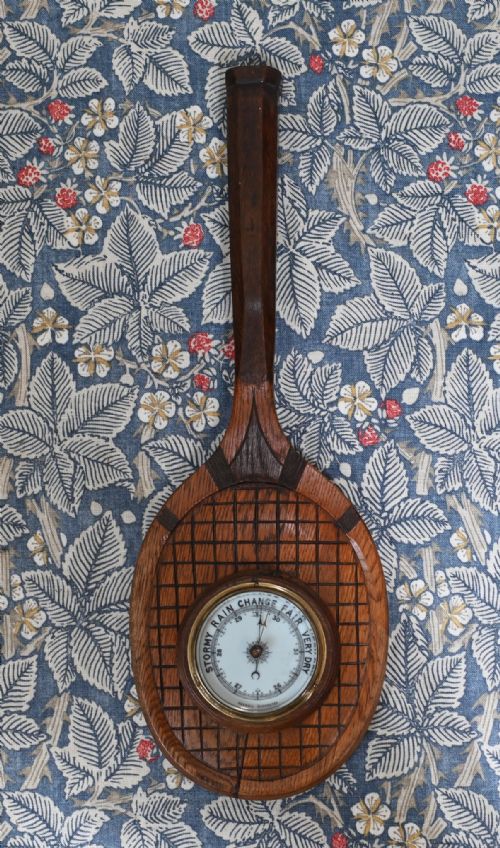
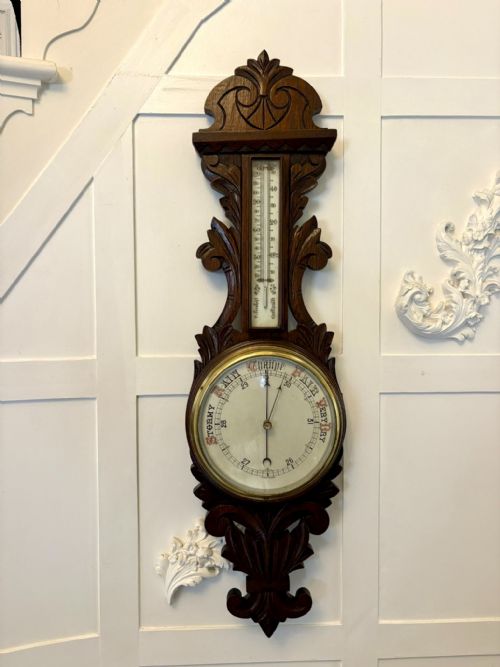
The versions most frequently met on this page span the mid-nineteenth century through to the nineteen-thirties, taking the form of wall-hung banjo barometers, carved oak architectural frames, and Black Forest walnut designs. Many examples incorporate subsidiary instruments such as thermometers, porcelain dials, or clock movements within the same timber chassis.
Makers ranging from local opticians and instrument retailers to specialist carvers signed the silvered metal dials, while the timber cases reflect the prevailing tastes of their decade. Oak, walnut, and mahogany dominate the selection, often enriched with geometric carving, marquetry, or intricate foliage.
How they were made
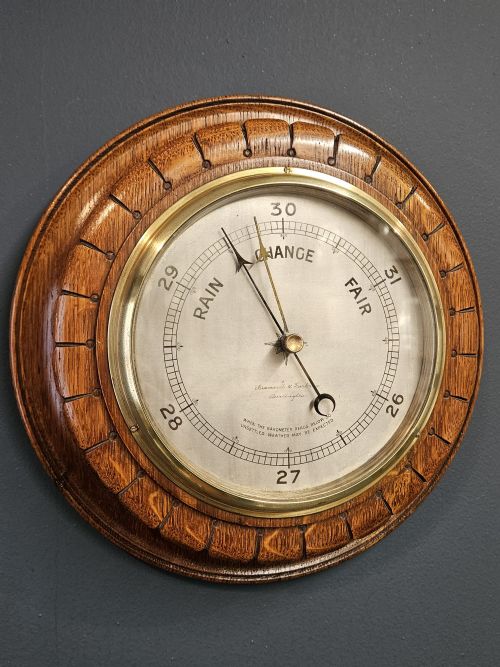
The mechanical heart relies upon an aneroid cell - a flexible vacuum capsule that contracts or expands with atmospheric pressure changes, connected via levers to a visible indicator needle. This mechanism sits protected behind a glass bezel and a graduated brass or silvered dial.
The wooden housings utilise traditional cabinet-making techniques, combining solid timbers such as oak, walnut, and mahogany with turned bezels, applied mouldings, and hand-carved ornamentation. Black Forest pieces display deep relief carving of natural motifs, while Edwardian and Victorian banjo instruments frequently feature delicate wood inlay and marquetry.
Several pieces feature ferocious carved birds keeping a watchful glass eye over changing domestic air pressure.
What varies in quality
Quality rests upon the crispness of the timber carving and the architectural proportion of the case, where deep hand-carving on walnut and oak elevates an example above plain or mechanically stamped alternatives. The integration of subsidiary elements, such as matched thermometers and functioning clock movements, marks out higher-grade output.
The precision and legibility of the engraved silvered dial, alongside the presence of a maker signature rather than a blank face, determine the standing of the piece. Cases retaining their original finish without excessive refinishing preserve the character intended by the original maker.
The Wooden Aneroid Barometer Glossary
- Aneroid barometer
- A meteorological instrument that measures air pressure utilising a flexible metal vacuum capsule rather than fluid mercury. The movement translates expansion and contraction into pointer rotation on a graduated dial.
- Banjo barometer
- A wall-mounted weather instrument shaped broadly like a banjo, featuring a circular dial at the top for pressure and a longer trunk below often housing a thermometer.
- Silvered dial
- A brass or copper face treated with a silver compound to produce a frosted, matte finish upon which scale graduations and maker names are engraved and blackened.
- Black Forest style
- A decorative aesthetic originating from central Europe characterised by deeply carved naturalistic foliage, animals, and rustic motifs executed in rich walnut or lime wood.
- Marquetry
- An art form assembling decorative wood veneers of different colours and grains into geometric or pictorial patterns across the surface of the timber case.
Wooden Aneroid Barometer: Frequently Asked Questions
How do I read an aneroid barometer?
Read the principal pointer against the graduated pressure scale on the dial, noting whether it rests near stormy, rain, change, fair, or very dry. Rotating the manual setting hand over the main needle allows you to track movement over the course of a day.
Rising pressure generally indicates improving weather, while falling pressure suggests approaching unsettled conditions or precipitation.
Were these barometers used outdoors?
These instruments were manufactured exclusively for indoor domestic or commercial interiors. Placing them outside exposes the delicate internal metal mechanism, paper or silvered dials, and timber veneers to moisture and temperature extremes that cause irreversible damage.
They function best in rooms with stable ambient temperatures away from direct heat sources and dampness.
How do I date a wooden barometer?
Dating relies upon the combination of timber choice, decorative style, and dial construction. Victorian examples frequently feature heavy carved oak or burr walnut, whereas Edwardian pieces often display lighter mahogany with delicate inlay.
Art Deco versions from the nineteen-thirties adopt streamlined geometric forms, bolder numerals, and distinctively modern typographical styles on the face.
Do antique barometers still work accurately?
Many surviving aneroid barometers retain functional movements and continue to respond to local atmospheric pressure changes. Because mechanical instruments age over decades, internal linkages can drift or stick through accumulated dust and wear.
Comparison against a modern reference barometer allows you to check calibration, and professional horologists can often adjust the linkage via a screw on the rear if recalibration is required.