
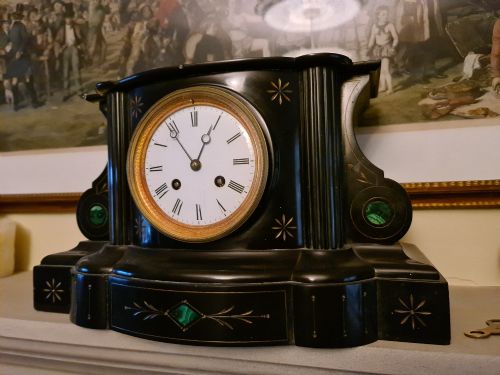
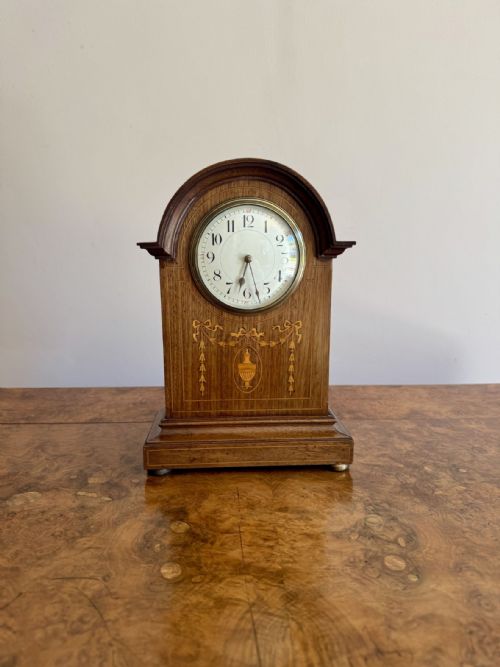


Edwardian Mantle Clock
These edwardian mantle clock pieces range from inlaid mahogany cases to French brass carriage designs, marking time with period elegance.
Edwardian Mantle Clock Styles
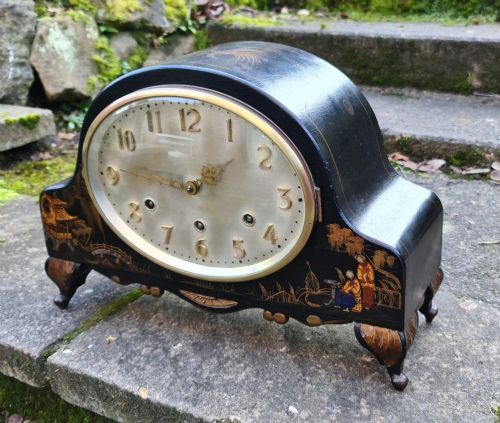
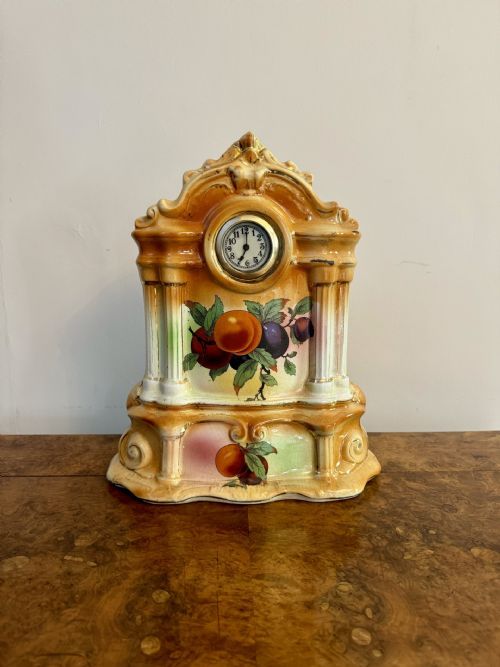
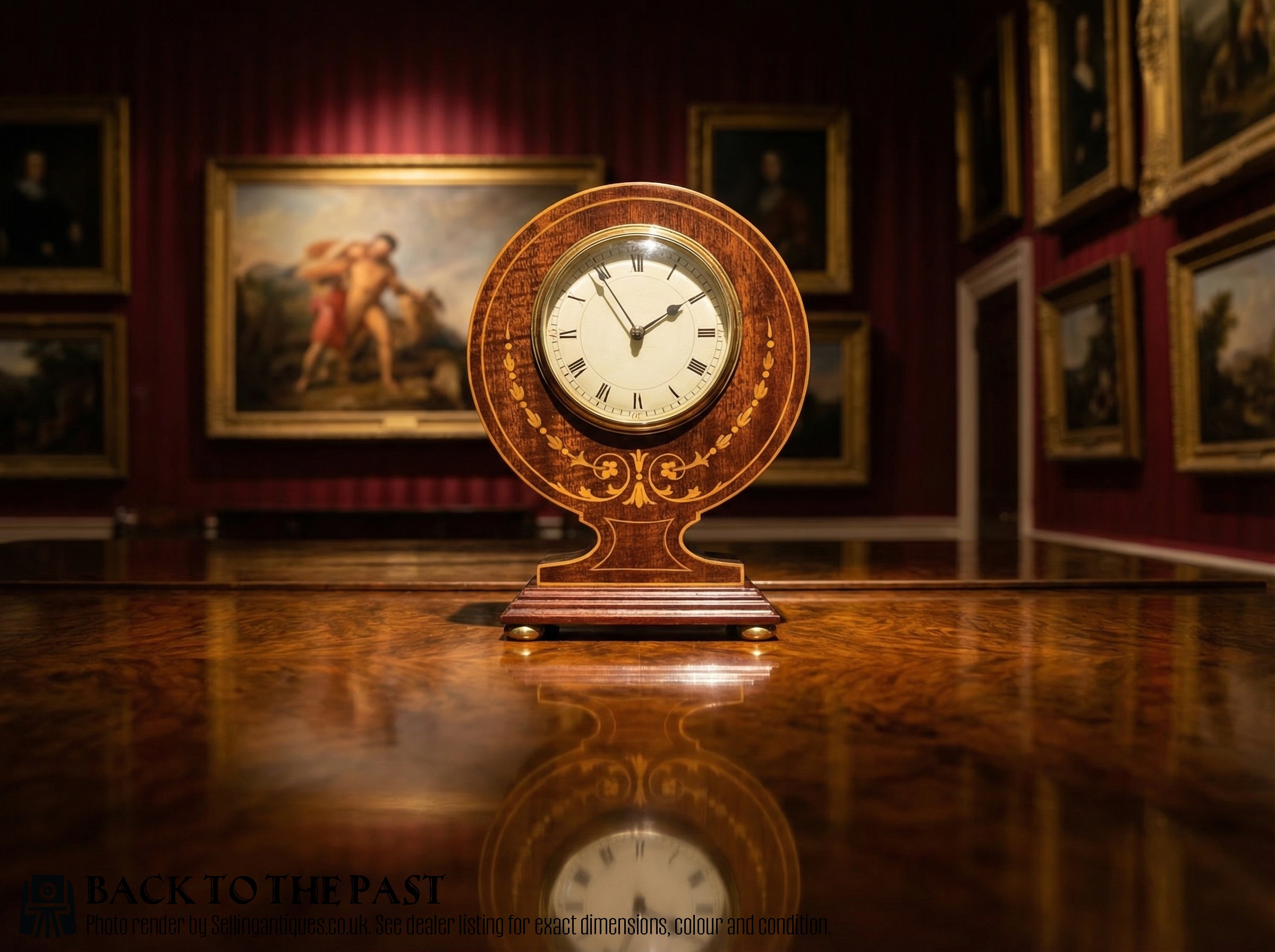
When you search for an edwardian mantle clock, you encounter timepieces spanning the Edwardian period, 1800, and 1900. These clocks take several distinct forms, including balloon shapes, lancet silhouettes, boardroom brackets, and combined barometer units.
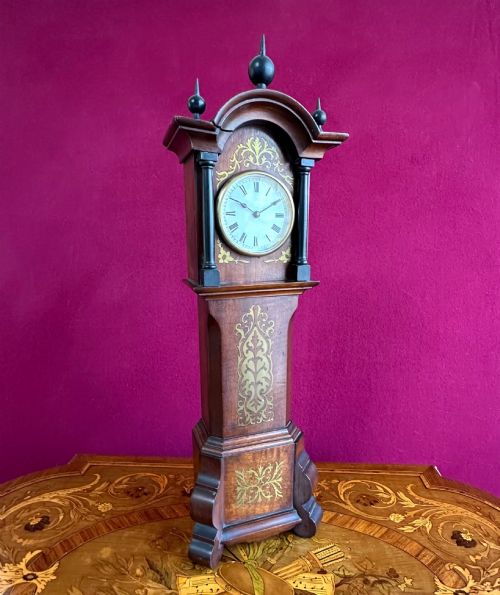
Mahogany cases dominate the selection, frequently enhanced with boxwood inlay, satinwood, and fan marquetry. Alternative examples appear in walnut, oak, ebonised wood, silver, tortoiseshell, and brass, demonstrating varied material choices from the era.
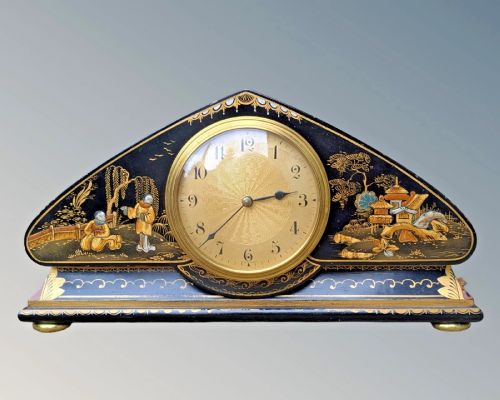
Makers adapted classical revival and art nouveau aesthetics alongside chinoiserie decoration to suit domestic interiors. You meet both simple timepieces and chiming variants designed to sit upon a mantelpiece or shelf.
Materials and Construction
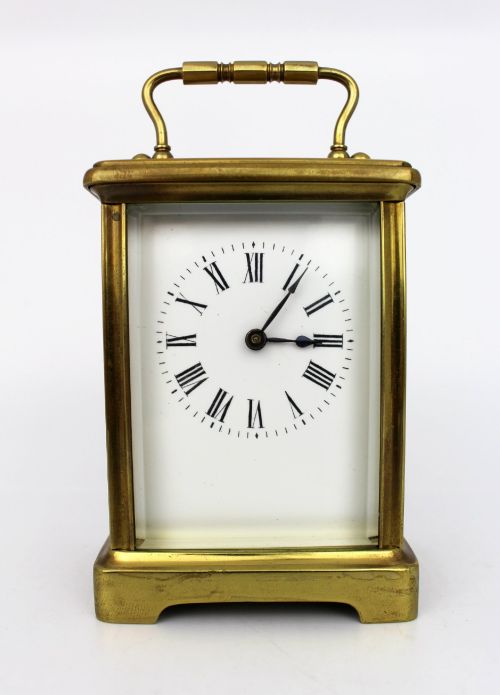
Craftsmen shaped solid timbers like mahogany, walnut, and oak into architectural and curved cases, applying delicate satinwood and boxwood inlay for visual contrast. Dial faces frequently incorporate white enamel with contrasting numerals, protected behind glass panels.
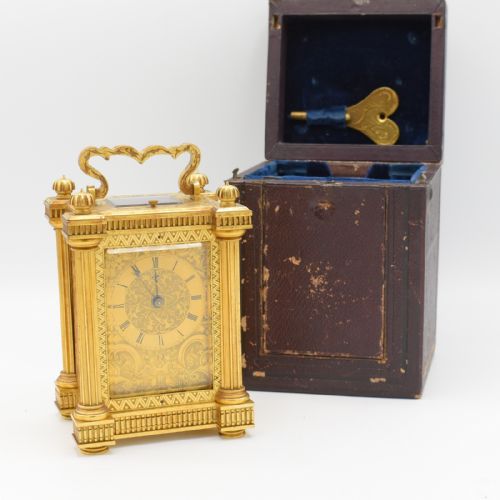
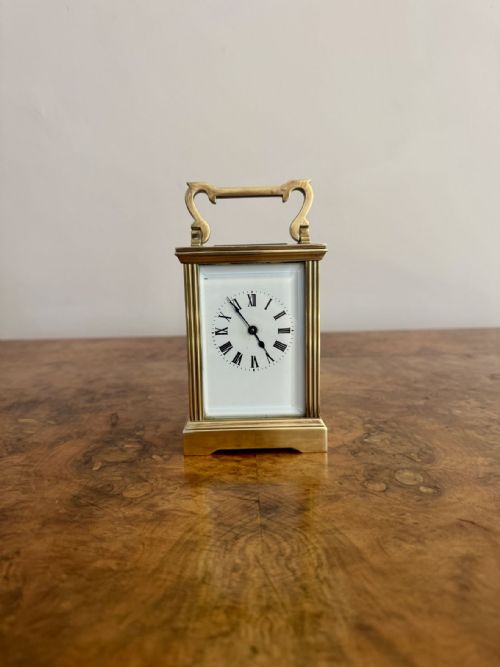
Metal components utilise brass for carriage frames and internal movements, whilst specialised models feature silver cases or tortoiseshell finishes over wooden foundations.
Retail Price Guide 2026
Typical UK retail prices for edwardian mantle clock, calculated from the Sellingantiques database of over a million retail prices indexed since 2003. This retail price guide relies exclusively on Sellingantiques data; no external sources or auction records are used, so the figures do not describe the wider market.
Listings demonstrate that Edwardian mantel clocks utilise mahogany, walnut, oak, silver, and tortoiseshell, frequently embellished with satinwood and boxwood inlay.
Gradations of Quality
The sophistication of the timber work and inlay separates standard production from superior examples. Finely cut fan marquetry, intricate satinwood banding, and substantial solid mahogany cases distinguish the finer items.
Internal complexity also dictates distinction, moving from simple time-only movements to chiming mechanisms and multi-function pieces that incorporate barometers.
Mappin & Webb London
The Edwardian Mantle Clock Glossary
- Mantel clock
- A portable clock designed to sit on the shelf above a fireplace. These domestic timepieces vary widely in height and case shape.
- Inlay
- A decorative technique where contrasting woods such as boxwood and satinwood are inserted into recesses within the primary mahogany or walnut case.
- Balloon clock
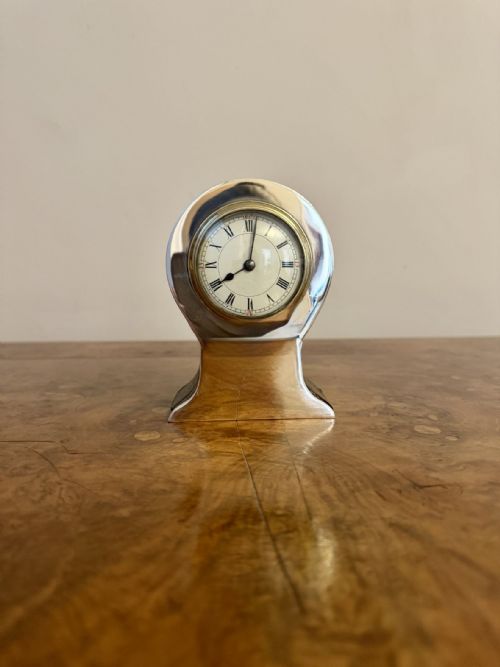
- A mantel clock featuring a rounded, upward-tapering wooden case resembling the silhouette of a hot air balloon.
- Carriage clock
- A small, spring-driven timekeeper with a brass frame and glass panels, originally designed for travel during the nineteenth and early twentieth centuries.
- Marquetry
- Elaborate veneer patterns applied to the wooden case, often utilising fan motifs or floral designs.
Frequently Asked Questions
How do I identify an Edwardian clock?
Edwardian clocks often combine mahogany cases with delicate boxwood inlay, satinwood banding, or fan marquetry. They reflect design influences from the Edwardian era alongside lingering Victorian classical revival styles.
Examining the materials, dial construction, and internal movement helps distinguish these pieces from later mid-century reproductions or earlier Georgian antiques.
Did Edwardian clocks have chimes?
Many Edwardian clocks include chiming mechanisms alongside standard time-keeping functions. Oak, walnut, and mahogany cases frequently house striking movements designed to mark the hours audibly in a boardroom or drawing room.
Simpler timepieces without chiming capabilities also exist, functioning purely as timepieces behind glass-fronted enamel dials.
Where were brass carriage clocks made?
Brass carriage clocks from this era frequently originated in France before being retailed in Britain. These portable pieces utilise visible glass panels and brass frames to house delicate spring-driven movements.
They offer a distinct alternative to wooden mantel clocks, bringing metallic lustre and mechanical visibility to desks and mantelpieces.