




Edwardian Desk Barometer
An edwardian desk barometer sits upon a writing surface to measure atmospheric pressure with precision and style.
Edwardian Desk Barometer
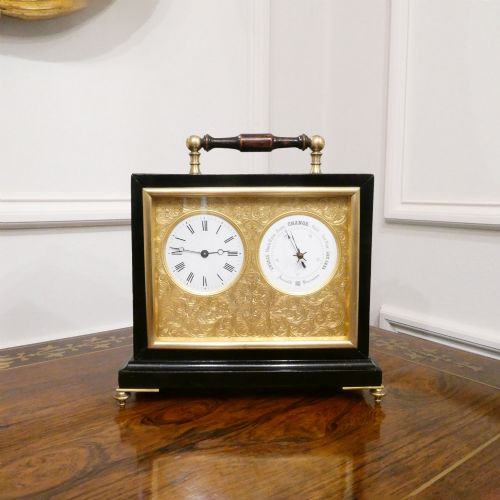
An edwardian desk barometer takes several forms on this page, appearing as standalone instruments or combined with clocks and weather stations. Buyers frequently encounter oak and mahogany cases housing sensitive mechanisms for tracking pressure.
Makers housed these instruments in brass, silver, and ebonised wood during the Edwardian period and late Victorian years. The selection includes barographs, marine barometers, and architectural desk clocks alongside standard weather instruments.
Pieces span the late nineteenth century into the nineteen-twenties, showing variations in inlaid wood and glass dials. These instruments served practical domestic and office functions while displaying the decorative tastes of the era.
How they were made
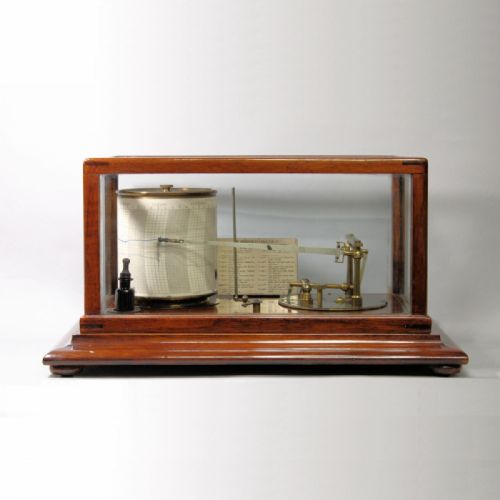
Craftsmen built these weather instruments using solid hardwoods such as oak, mahogany, and walnut for the structural cases. Woodworkers frequently applied Sheraton inlay techniques or ebonised finishes to enhance the visual appeal of the desk pieces.
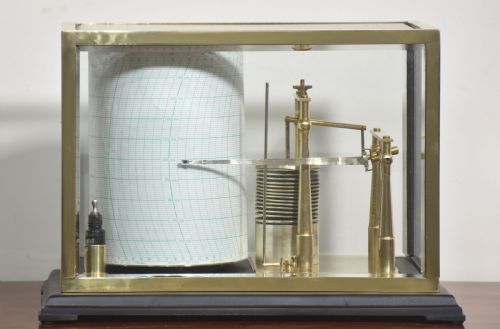
Metal components involved brass and silver for bezels, framing, and mechanical parts, paired with delicate paper scales and glass viewing windows. Barographs utilised drum mechanisms and inked arms to record continuous pressure changes over time.
Some models included tipping bucket rain gauges designed to measure precipitation right on the desk.
What varies in quality
Quality differences appear in the precision of the mechanical movement and the choice of casing materials. Maker attribution to known firms like Short and Mason elevates a piece above standard unsigned examples.
The refinement of the cabinetwork, including detailed Sheraton inlay and multi-glass cases, separates simpler weather instruments from finer decorative desk pieces. Silver framing and combined clock sets represent the higher end of the surviving range.
Short And Mason·R Fuess·Robson Of Newcastle·Callaghan And Co
The Edwardian Desk Barometer Glossary
- Barograph
- A self-recording aneroid barometer that charts atmospheric pressure on a rotating paper drum. These instruments use mechanical arms with ink nibs to maintain a continuous weekly record.
- Aneroid barometer
- An instrument that measures air pressure without liquid by using a flexible metal box. Changes in pressure cause the metal capsule to expand or contract, moving an indicator needle.
- Sheraton inlay
- A style of decorative woodworking involving contrasting veneers set into the surface of the furniture. Edwardian makers utilised this technique to create geometric and floral patterns on instrument cases.
- Ebonised wood
- Timber treated with a dark stain or finish to resemble ebony. This process provided a uniform black appearance popular for Victorian and Edwardian scientific instrument cases.
Edwardian Desk Barometer: Frequently Asked Questions
How do I set my desk barometer?
Adjust the instrument by turning the setting screw on the back to match a known local pressure reading from a reliable meteorological source.
Tap the glass gently before reading to ensure the linkage moves freely and indicates the correct pressure trend.
What is the difference between a barometer and a barograph?
A standard barometer uses a single needle to show current atmospheric pressure at the exact moment you look at it.
A barograph records pressure continuously over a seven-day period using a clockwork drum and an inked arm.
Where should I place a desk barometer?
Position the instrument in a stable room away from direct sunlight, radiators, and draughts that cause artificial temperature fluctuations.
Keep the piece on a level desk or mantelpiece where the glass dial remains clearly visible for daily checks.
How do I identify an Edwardian piece?
Look for specific construction traits, wood types, and dial typography characteristic of the period between nineteen-hundred and nineteen-ten.
Silver-framed examples often carry hallmarks that date the manufacture to exact assay office years.