


Edwardian Clock Barometer
These edwardian clock barometer pieces combine timekeeping and weather forecasting in a single desk or wall instrument, satisfying a practical Victorian and Edwardian domestic need.
Edwardian Clock Barometer
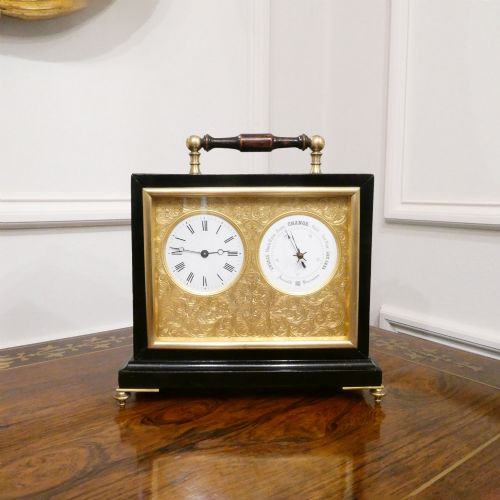
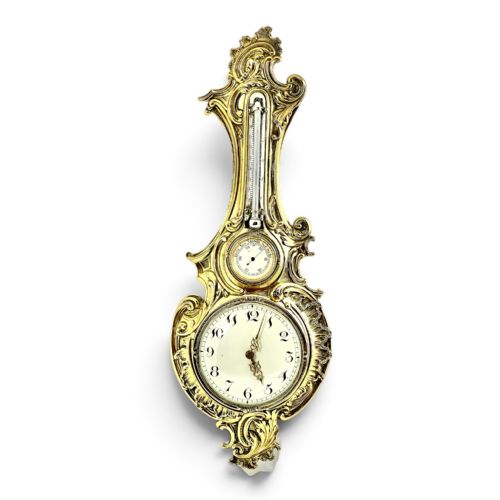
When you search for an edwardian clock barometer, you encounter dual or triple instruments that house a clock alongside a barometer and occasionally a thermometer. These combinations appear across desk clocks, mantel pieces, wall clocks, and banjos.
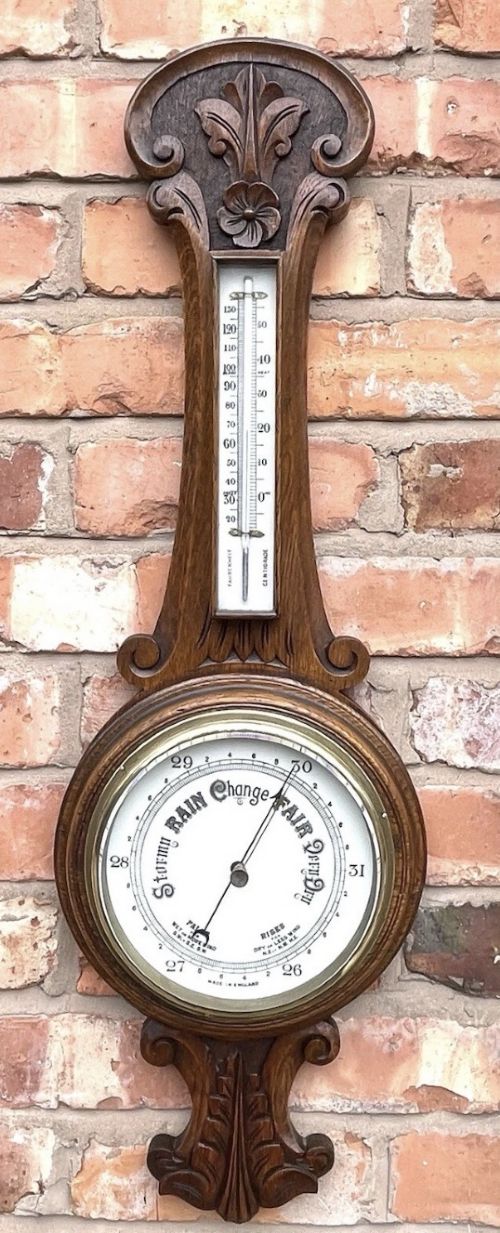
The version you are most likely to meet on this page is the Edwardian carved oak banjo barometer or desk set, though examples span the Victorian period into 1920. Pieces originate from periods including 1900, 1910, and the nineteenth century.
Makers housed these movements in oak, walnut, mahogany, and ebonised wood, sometimes finishing them with silver gilt or brass mounts and glass faces. They served as desk accessories and wall fixtures in homes that valued precision and domestic organisation.
How they were made
Craftsmen shaped these bodies from solid and veneered timbers like oak, walnut, and mahogany, often carving architectural details or banjo outlines into the wood. Ebonised wood and silver gilt provided contrasting finishes for more formal desk sets and weather stations.
Enamel dials with clear numerical markings were fitted behind protective glass, pairing mechanical clockwork with aneroid barometer movements. Brass bezels and hinges secured the dials and instrument faces within their wooden housings.
Weather stations combined time, temperature, and pressure so households could argue about the forecast without leaving the mantelpiece.
What varies in quality
Quality rests in the crispness of the carved woodwork and the integration of the combined dials within a single architectural case. Sharply defined oak carvings and well-balanced proportions separate finer examples from plain utility pieces.
The legibility of the enamel dials and the quality of the brass mounts also distinguish standard items from superior workshop production. Maker attribution, such as signed instrument faces, elevates the standing of a piece within the range.
Hyde & Sons Sleaford
The Edwardian Clock Barometer Glossary
- Aneroid barometer
- An instrument that measures atmospheric pressure using a flexible metal box without liquid. This mechanism allowed barometers to be built into compact wall and desk configurations.
- Banjo barometer
- A weather instrument housed in a distinctive curved wooden case shaped like a stringed musical instrument. This form became popular for domestic wall hanging during the nineteenth and early twentieth centuries.
- Silver gilt
- Silver that has been coated with a thin layer of gold. This finish appears on metal mounts and dial surrounds in more decorative pieces.
- Barograph
- A recording barometer that graphs atmospheric pressure over time onto a rotating drum. These mechanical instruments were housed in protective wooden cases with glass panels.
Edwardian Clock Barometer: Frequently Asked Questions
What is an edwardian clock barometer?
It is a combined domestic instrument that integrates a clock mechanism with a barometer for measuring atmospheric pressure. Many examples also include a thermometer.
These pieces were produced as desk sets, mantel clocks, and wall-hung banjo instruments during the late nineteenth and early twentieth centuries.
How were these instruments used at home?
They served a practical daily purpose by allowing households to check the time and monitor impending weather changes in one place.
Desk versions sat in studies and offices, while wall-hung banjo styles and weather stations were placed in hallways and reception rooms.
How do I tell an Edwardian piece from a Victorian one?
Edwardian examples tend to feature lighter oak or mahogany woodwork and cleaner lines, reflecting the taste of the early 1900s. Victorian pieces often display heavier proportions, darker ebonised wood, or Rococo revival ornamentation.
Comparing the dial typography and the style of the wood carving helps establish the period.
Do all these pieces include thermometers?
No, thermometers appear on specific combined weather stations and banjo barometers rather than every desk clock or mantel piece. Some items pair only a clock and a barometer together.
Check the individual description and visible dials to confirm whether a thermometer is present.