


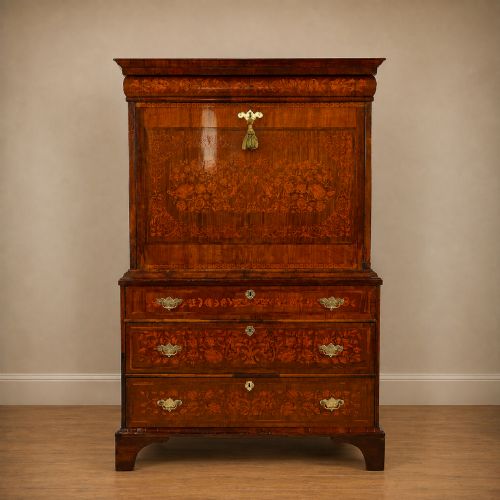
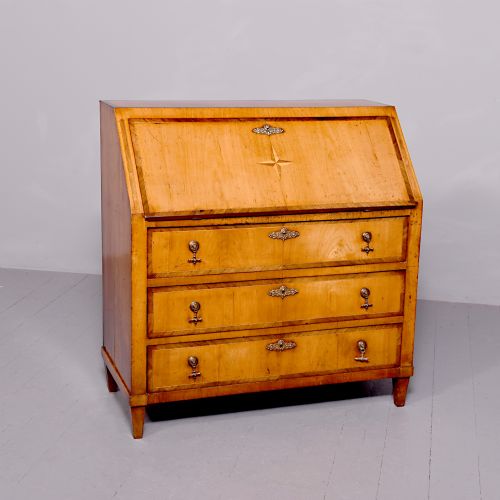
Inlaid Walnut Writing Bureau
An inlaid walnut writing bureau brings domestic workspace from centuries past into a modern room through rich timber figure and precise surface ornament.
Inlaid Walnut Writing Bureau
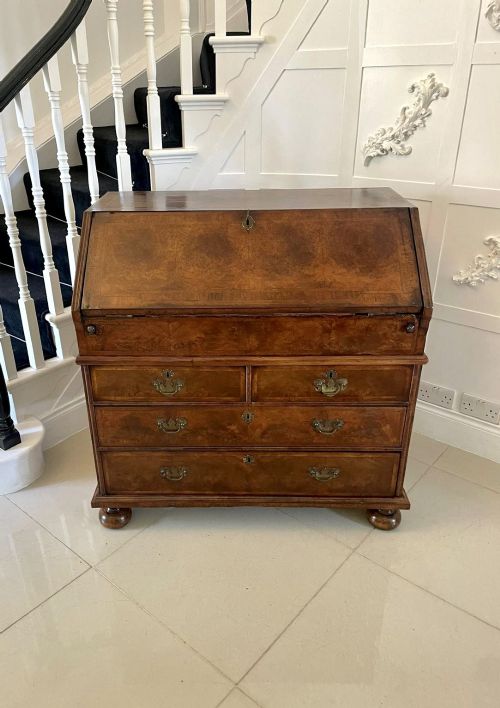
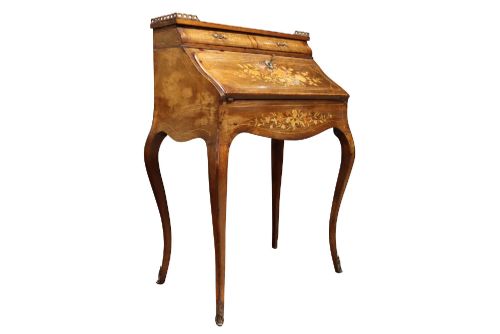
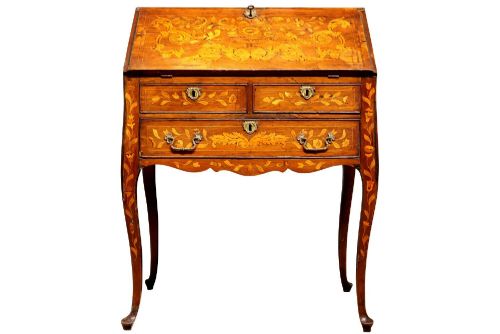
An inlaid walnut writing bureau combines a sloping fall-front or flat writing surface with internal compartments, resting on chests of drawers or slender legs. These pieces emerge across the seventeenth, eighteenth, and nineteenth centuries in English, French, and Dutch workshops.
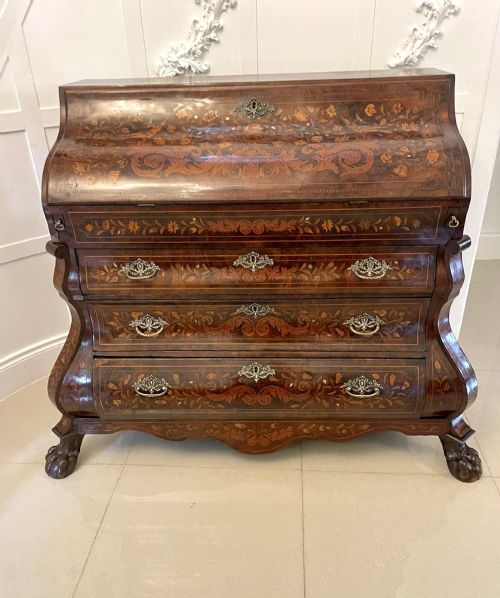
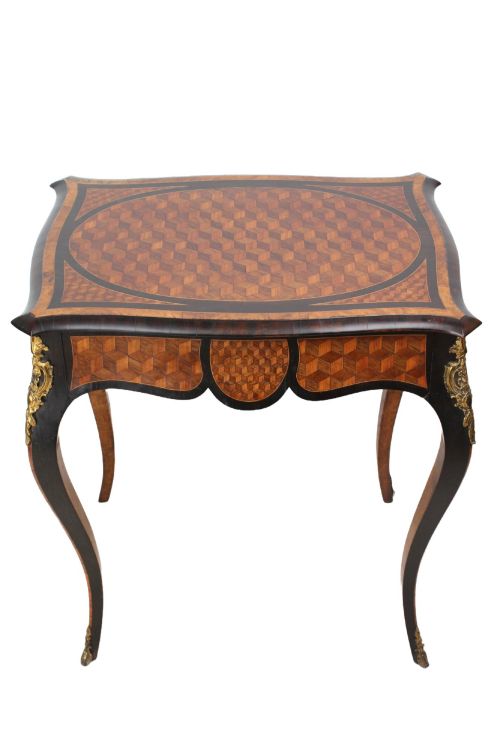
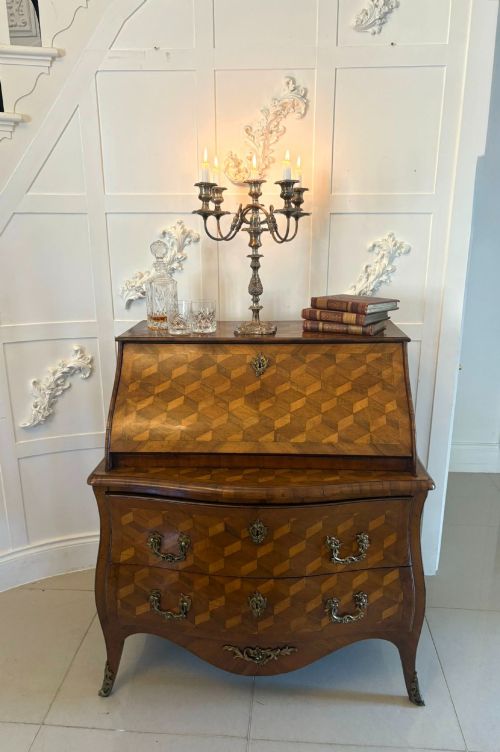
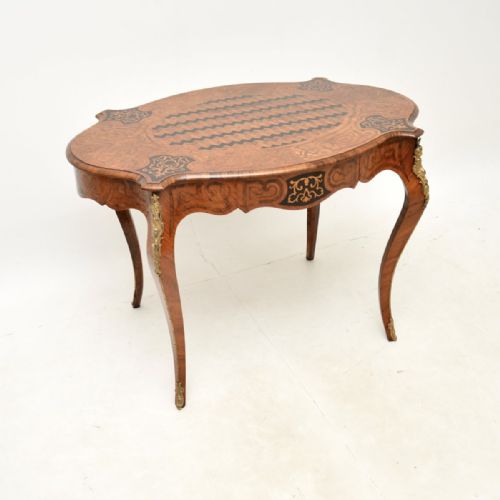
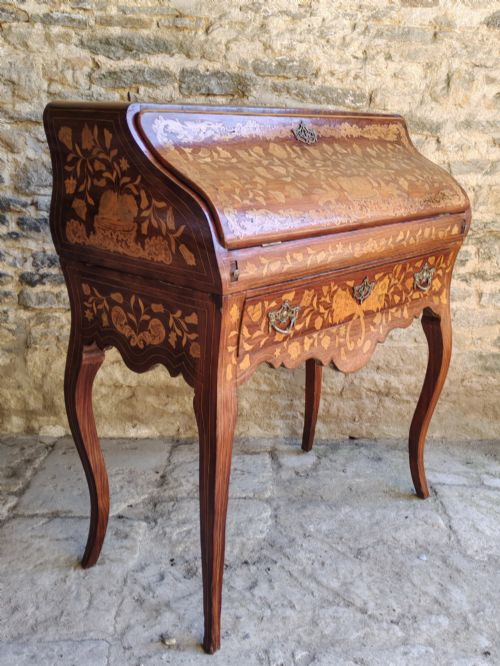
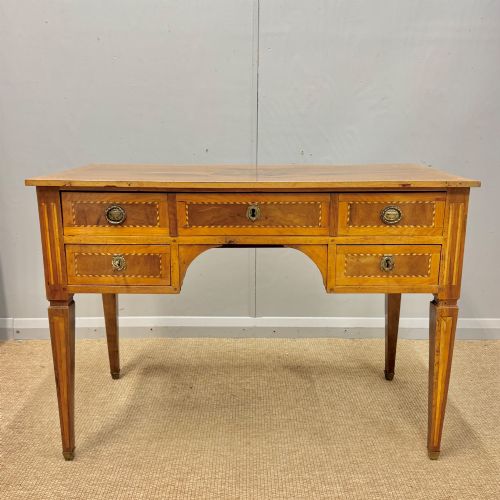
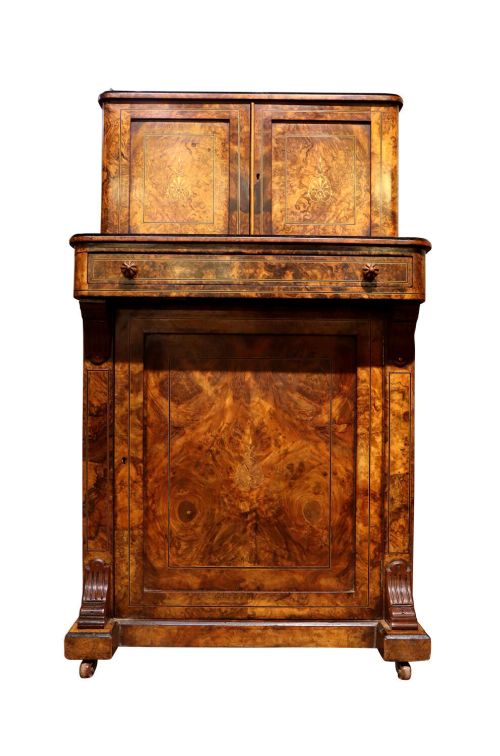
The version most commonly met on this page is the Victorian or eighteenth-century bureau featuring floral marquetry or geometric parquetry. Forms range from compact Davenport desks and bureau bookcases to large freestanding bureau plats and double dome cabinets.
Makers construct these desks to serve private correspondence, house ledgers, and display prized possessions within refined domestic interiors. Walnut surfaces provide a dark, figured ground that sets off lighter fruitwood or brass inlays with distinct contrast.
How they were made
Cabinetmakers select figured walnut, burr walnut, and plain walnut veneers, laying them over secondary carcase timbers in geometric or book-matched patterns. Artisans sink floral marquetry and parquetry panels into the solid or veneered carcase using contrasting woods such as tulipwood, satinwood, and fruitwood.
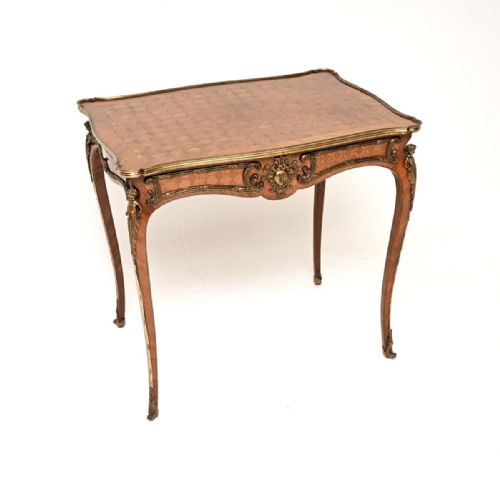
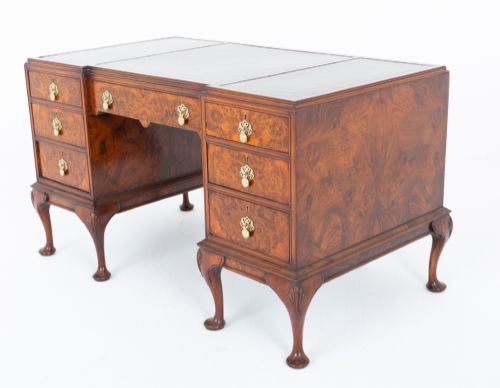
Workshops incorporate brass handles, escutcheons, and ormolu mounts to edge drawers and protect vulnerable corners on French and Victorian models. Leather inserts frequently form the writing surface on bureau plats, whilst internal pigeonholes and secret compartments utilise fine secondary timbers.
Listings feature walnut, burr walnut, kingwood, fruitwood, and satinwood, combined with brass and ormolu mounts across Victorian, Georgian, and seventeenth-century periods.
What varies in quality
The intricacy and execution of the marquetry define the upper tier of these pieces, distinguishing complex floral displays from repetitive geometric borders. Choice of timber grain creates visual depth, with dense burr walnut and master-matched veneer panels commanding greater presence than plain stock.
Structural complexity dictates workshop standard, separating simple fall-front desks from double-dome bureau bookcases with fitted cabinet interiors. Original mounts, intact brass hardware, and well-preserved internal stationery fittings elevate an example far above altered or heavily restored counterparts.
JAS Shoolbred
The Inlaid Walnut Writing Bureau Glossary
- Marquetry
- A decorative technique applying veneer pieces to form pictorial or floral patterns on a wooden surface. Craftsmen cut contrasting timbers together to ensure tight, seamless joints.
- Parquetry
- Geometric wood inlay forming repeating patterns such as cubes or chequers across a desk surface. This method creates structured, architectural decoration.
- Bureau Plat
- A freestanding writing table fitted with drawers beneath the top, lacking a superstructure or sloping fall-front. These tables appear frequently in French eighteenth- and nineteenth-century designs.
- Bonheur-du-Jour
- A light ladies writing desk featuring a small cabinet or set of shelves upon the upper surface. Victorian examples often incorporate delicate marquetry and brass galleries.
- Escritoire
- A tall writing cabinet equipped with a fall-front writing surface concealing inner drawers. This term frequently describes elaborate seventeenth- and eighteenth-century forms.
Inlaid Walnut Writing Bureau: Frequently Asked Questions
What is a bureau bookcase?
A bureau bookcase combines a sloping writing desk base with an enclosed shelving cabinet upper section. These substantial pieces provide both workspace and storage for libraries and studies.
Craftsmen often design the upper doors with glass panes or solid mirrored panels, matching the marquetry inlay of the lower bureau.
How do I use a Davenport desk?
A Davenport desk offers a compact writing surface sloping upwards from front to back, hinged to lift for internal storage. Side drawers and stationery compartments keep writing materials organised within a small footprint.
These pieces suit modern reception rooms or bedrooms where floor space is limited yet a proper writing surface is desired.
How do I distinguish French and Dutch styles?
Dutch examples frequently display exuberant floral marquetry covering the entire exterior, often on bombe-shaped carcases with curving drawer fronts. French bureau plats and bonheur-du-jours lean towards delicate parquetry, ormolu mounts, and slender cabriole legs.
Examining the silhouette and the type of floral or geometric inlay reveals the regional workshop tradition.
What is burr walnut?
Burr walnut is timber harvested from abnormal tree growths where grain patterns swirl into complex, knotty figures. Cabinetmakers prize this wood for its rich visual texture and deep caramel tones.
Surfaces veneered in burr walnut catch the light differently from straight-grained timber, giving desks an ornamental presence.