
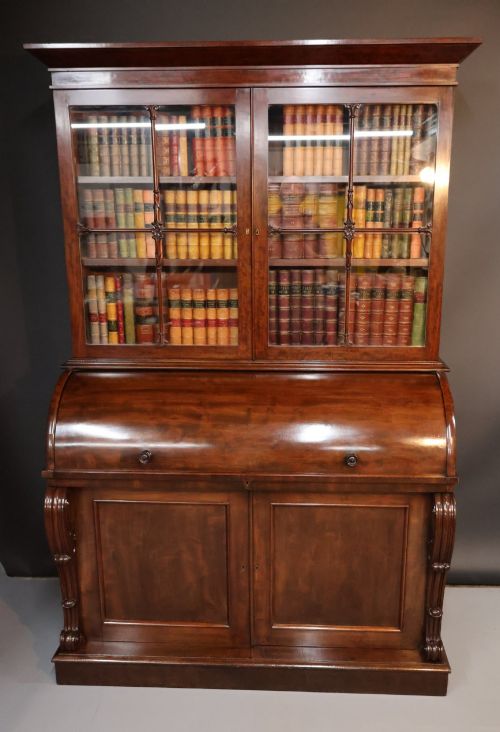
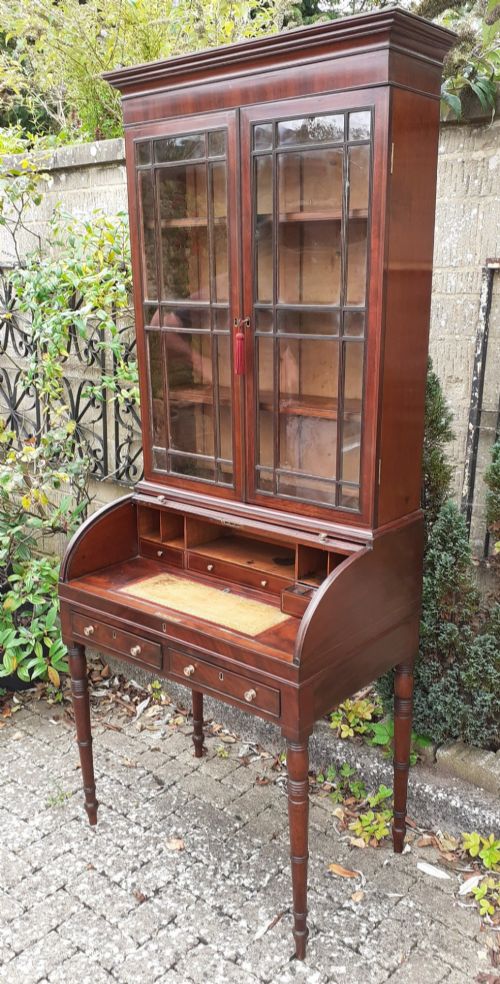
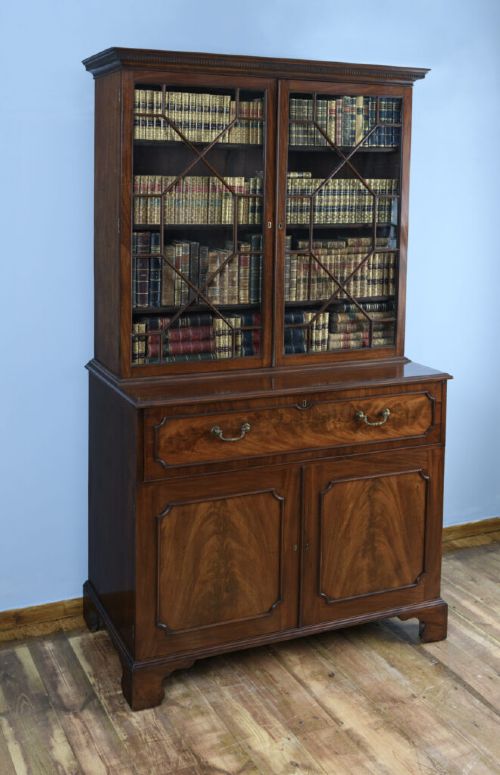
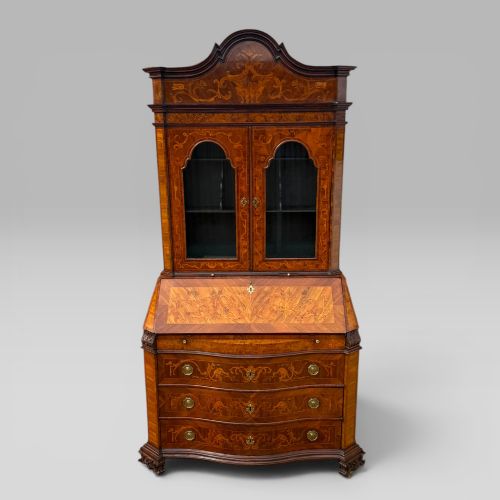

Glazed Door Bureau
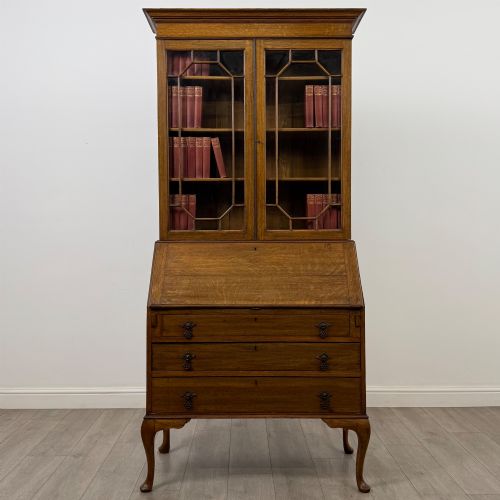
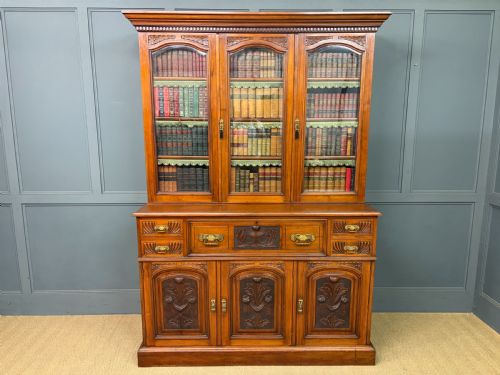
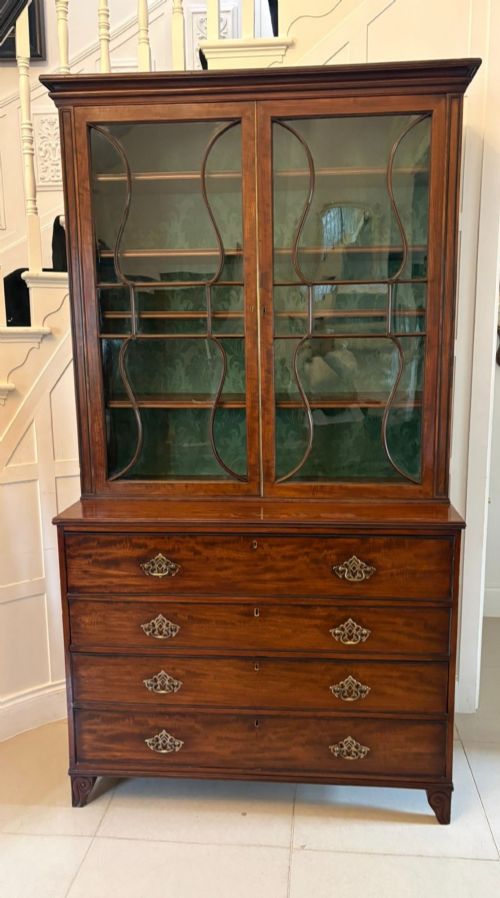
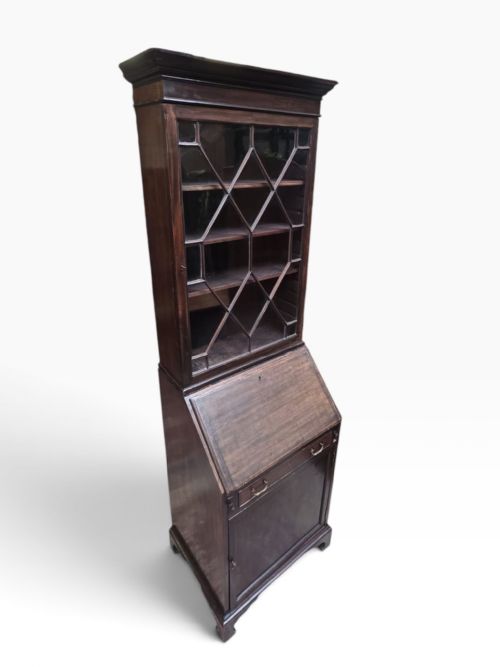
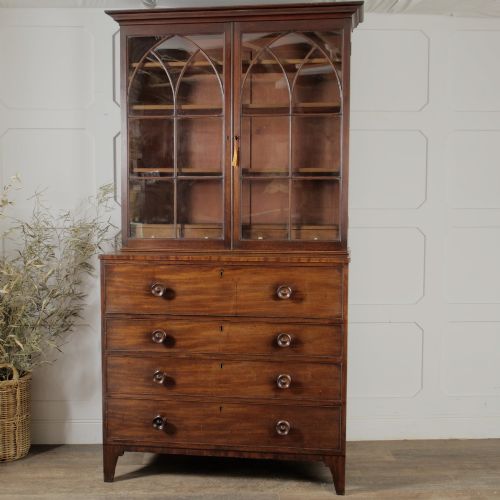
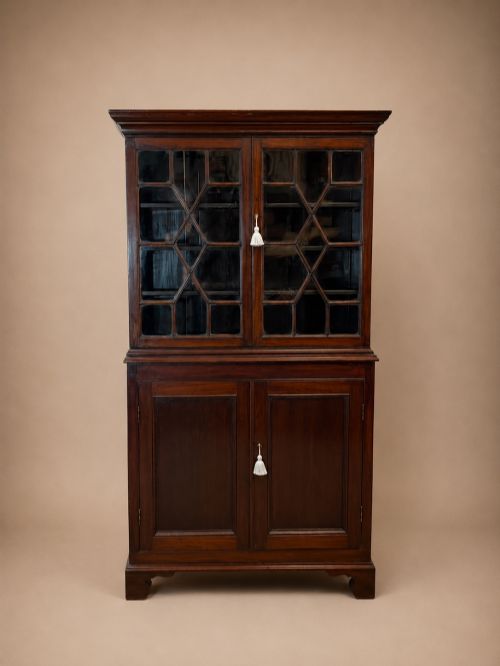
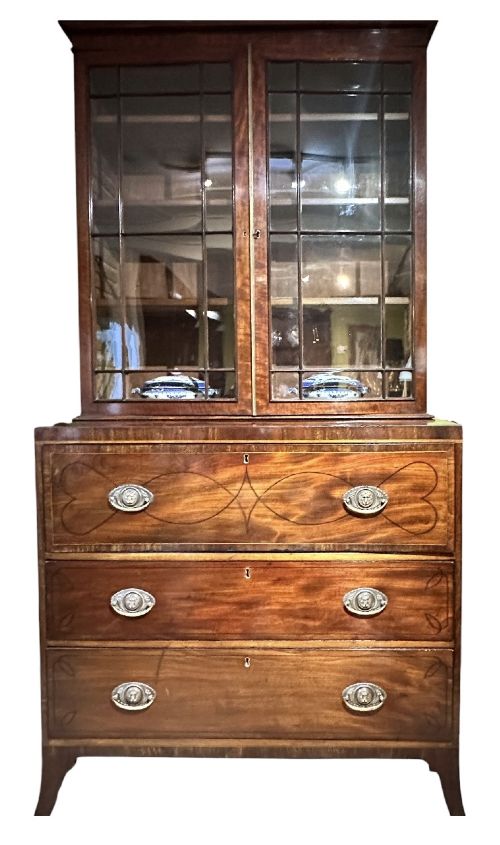
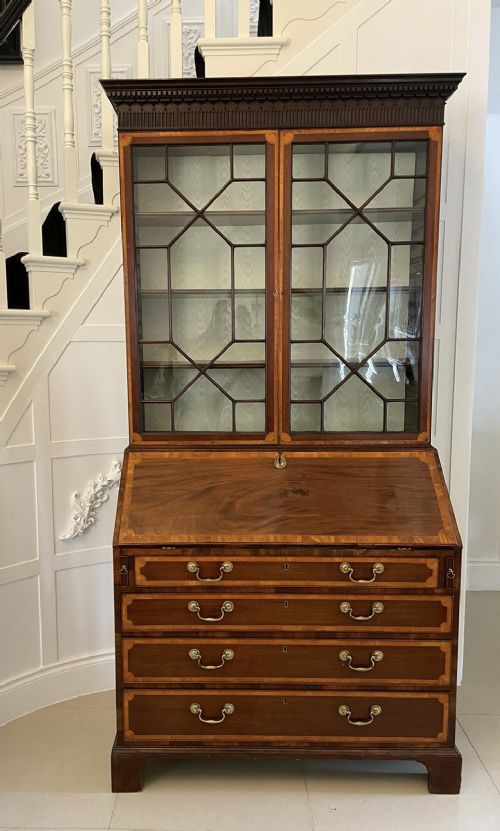
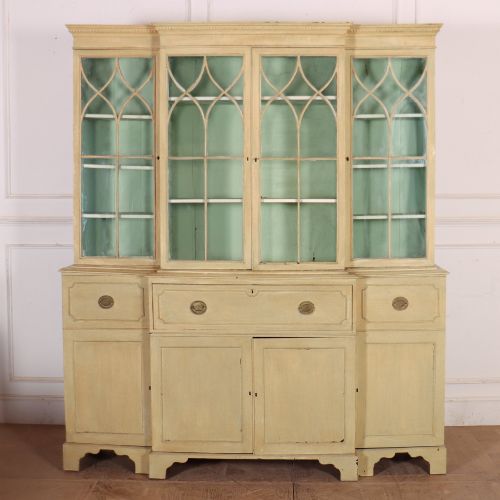
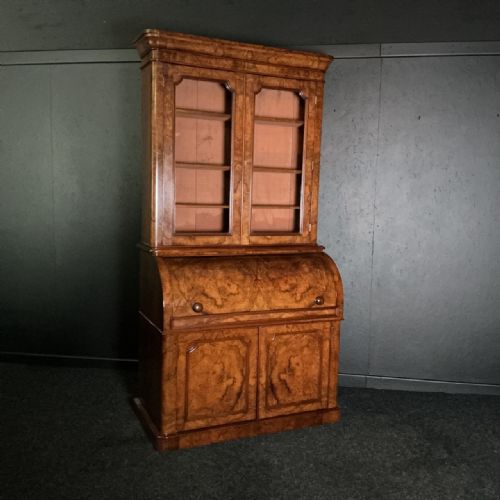
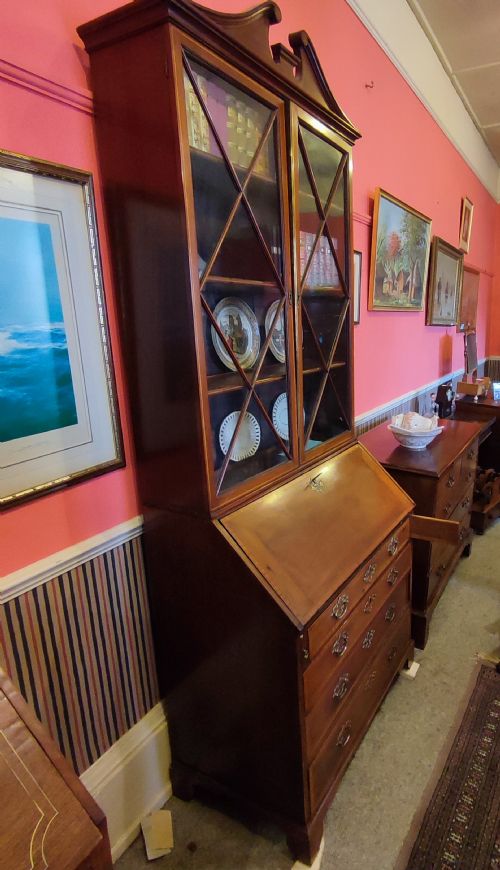
These glazed door bureau pieces combine a writing desk and a display cabinet, giving you functional workspace paired with visible storage.
Glazed Door Bureau
A glazed door bureau merges a writing desk with a bookcase or display cabinet, creating a tall dual-purpose piece for home administration and book storage. When you examine a glazed door bureau on this page, you encounter forms that descend from Georgian, Regency, and Victorian periods.
Mahogany and walnut dominate the offerings, appearing alongside oak, satinwood, and pine in various regional and stylistic interpretations. Pieces range from straightforward Edwardian oak models to elaborate George III mahogany designs with detailed inlay.
Materials and construction
Cabinet makers constructed the carcasses of these pieces using solid timbers and select veneers, employing dense hardwoods like Cuban mahogany and walnut for primary surfaces. Glass panes were individually glazed into upper door frames to protect books while maintaining visibility.
Fitted interiors required precise joinery for small pigeonholes, sliding compartments, and concealed drawers housed behind the drop-front writing surface. Brass hardware, including handles, escutcheons, and hinges, secured the doors and drawers while adding metallic contrast to the timber.
Listings feature pieces spanning the Georgian, Regency, Victorian, and Edwardian periods, constructed primarily in mahogany, walnut, and oak.
Distinctions in craftsmanship
Quality reveals itself in the selection of timber figures, such as the rich grain patterns found on figured mahogany or marquetry panels. Superior examples exhibit finer dovetail joinery in the drawer construction and more complex internal configurations within the secretaire section.
Proportion and decorative restraint separate standard production items from finer cabinet work, particularly in how stringing, inlay, and carved mouldings integrate with the overall architectural form.
Tudor & Burrey
The Glazed Door Bureau Glossary
- Secretaire
- A desk or drawer featuring a drop-front panel that pulls down to reveal a writing surface and fitted interior. It serves as the primary workspace in many tall bookcase combinations.
- Bureau bookcase
- A tall furniture form combining a lower writing desk with an upper glazed bookcase. This dual construction houses both workspace and storage in a single footprint.
- Cylinder top
- A rounded, quarter-circle wooden shutter that rolls back to uncover the writing surface and internal compartments. This mechanism encloses the desk area smoothly.
- Marquetry
- Decorative veneer patterns formed by fitting together small pieces of different coloured woods or other materials. It creates pictorial or geometric designs on cabinet surfaces.
- Escutcheon
- A protective plate surrounding a keyhole, frequently cast in brass. It shields the surrounding wood from wear caused by the key.
Glazed Door Bureau: Frequently Asked Questions
What is a glazed door bureau?
A glazed door bureau is a combination of a writing desk and a glass-fronted bookcase, designed to hold books while providing a fold-down workspace.
These tall pieces serve as both working desks and display cabinets for home use.
How do I use a secretaire drawer?
The secretaire drawer pulls forward while the front folds down to create a flat writing surface with internal compartments.
This mechanism conceals your stationery and small items when closed up after use.
What woods were used for these?
Mahogany and walnut appear most frequently, along with oak, satinwood, and pine.
Cabinet makers selected these timbers for their structural stability and attractive grain patterns.
How do I date a bureau bookcase?
Dating relies on stylistic clues like Georgian proportions, Regency brass details, or Edwardian oak construction.
Changes in timber choice and decorative techniques across different periods help narrow down the decade of manufacture.