
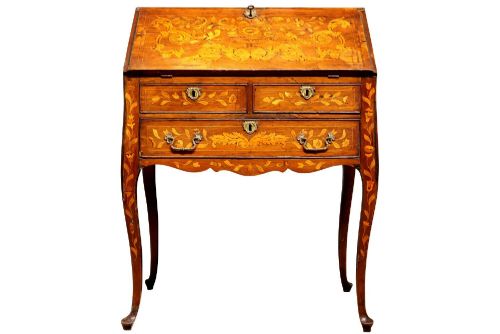
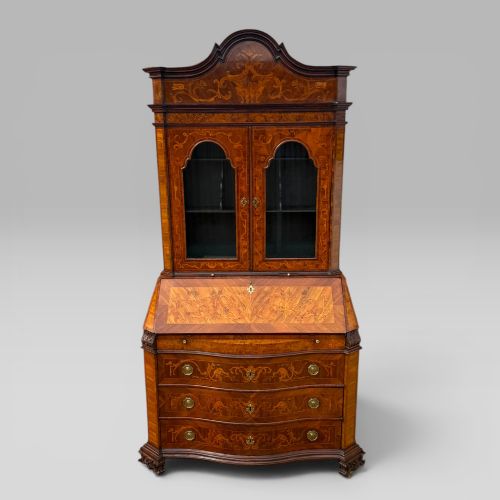


Rococo Secretary Desk
A rococo secretary desk brings dramatic floral marquetry and serpentine curves into a room, offering a functional writing slope beneath enclosed shelving.
Rococo Secretary Desk
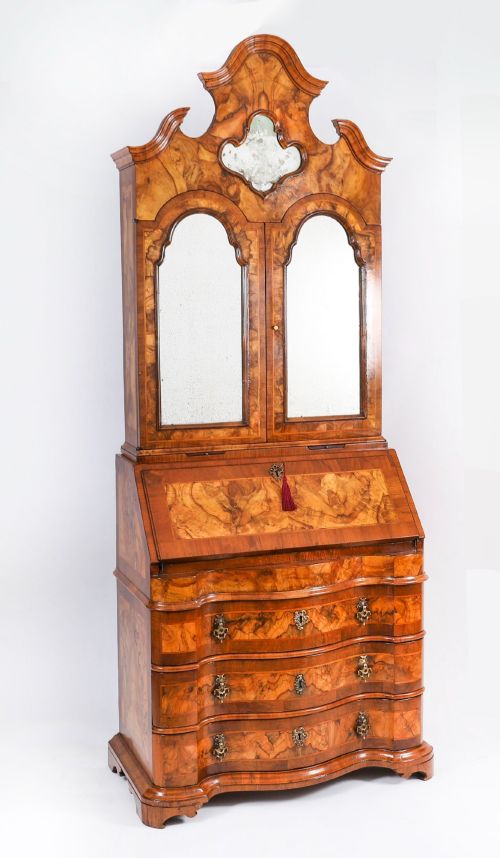
When searching for a rococo secretary desk, you encounter elaborate bureau bookcases and writing cabinets spanning the eighteenth and nineteenth centuries. These pieces combine a slanted writing flap or drop-front secretaire with upper bookcase sections, often framed by double domes or arched cornices.
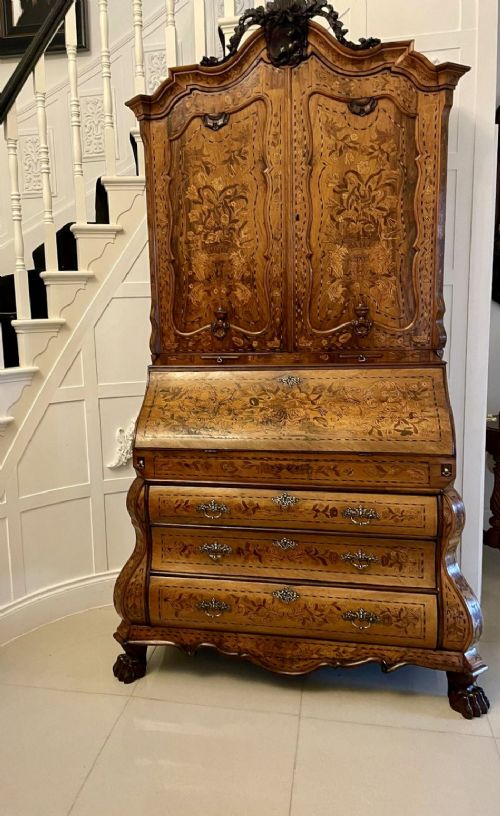
The regional variety on this page is remarkably wide, featuring Dutch floral marquetry, Venetian walnut, Italian craftsmanship, and South German baroque influences alongside later French revival pieces. Bureau bookcases and bureau cabinets dominate the selection, offering substantial storage alongside intricate writing surfaces.
How they were made
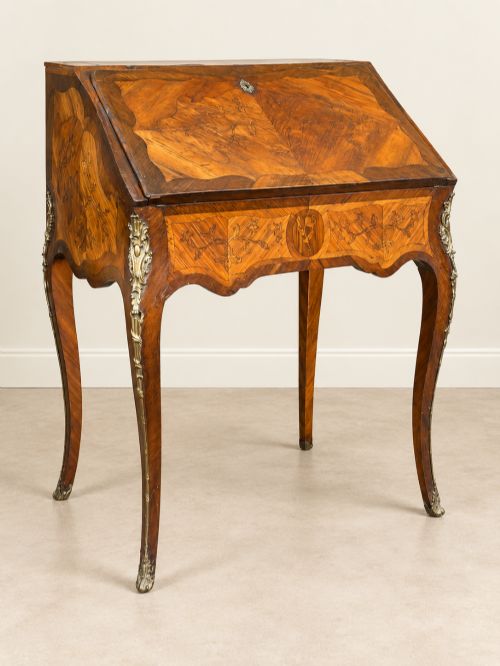
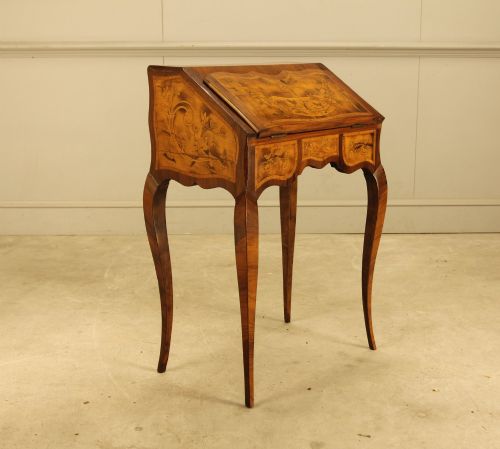
Cabinetmakers built these pieces using solid timbers like walnut, oak, and fruitwood, veneered with burr walnut, kingwood, and tulipwood to create rich grain patterns. Artisans then applied detailed floral marquetry in contrasting woods to decorate the slopes, doors, and drawer fronts.
Metalwork played a structural and decorative role, with brass handles and hinges supporting heavy doors and drawers. Finer pieces incorporated cast or chased ormolu mounts and porcelain plaques to accent the flowing, asymmetrical curves typical of the style.
The listings span the eighteenth and nineteenth centuries, including Dutch marquetry, Venetian walnut, and French revival pieces.
What varies in quality
The ambition and execution of the marquetry set the finer examples apart from simpler regional items. Superior pieces feature dense, multi-wood floral inlay that covers the entire exterior, matched precisely across drawers and panel seams.
The architectural presence of the upper cabinet and the sophistication of the internal fittings define the upper tier of these works. Double dome cresting, shaped pigeonholes, and well-cast ormolu mounts indicate a higher grade of workshop production.
The Rococo Secretary Desk Glossary
- Marquetry
- Decorative veneer work formed by fitting together small pieces of tinted wood, bone, or ivory to create pictorial designs. It appears extensively on eighteenth-century Dutch and Italian examples.
- Secretaire
- A desk or cabinet featuring a pull-down writing flap or drawer that conceals small drawers and pigeonholes. This term often applies interchangeably with bureau in continental pieces.
- Ormolu
- Gilded bronze used for decorative mounts and feet on furniture. It provides a metallic contrast to dark woods like walnut and kingwood.
- Bonheur du Jour
- A light lady's writing desk with a small cabinet or set of shelves on top. These appear in nineteenth-century French revival forms.
- Double Dome
- A curved, double-arched upper cornice found on tall bureau bookcases. This architectural feature elevates the profile of mid-eighteenth-century pieces.
Rococo Secretary Desk: Frequently Asked Questions
What is a rococo secretary desk?
A rococo secretary desk is a combination of a writing bureau and a bookcase, characterised by flowing serpentine lines and ornate floral marquetry.
These pieces typically feature a sloping fall-front desk space that opens to reveal internal compartments, positioned beneath glazed or panelled upper doors.
How do I date a bureau bookcase?
Dating relies on examining the primary timbers, construction methods of the drawer linings, and the style of the marquetry or brass hardware.
Eighteenth-century examples often display rich burr walnut and hand-cut dovetails, while nineteenth-century revivals utilise machine-cut elements and distinct revival proportions.
Where were these desks made?
The pieces shown originate from various European workshops, with a strong representation from Dutch, Italian, German, and French makers.
Regional preferences shaped the decoration, from floral marquetry in the Netherlands to giltwood and ormolu mounts in France and Italy.
How do I care for walnut veneer?
Walnut veneer requires stable indoor humidity and protection from direct sunlight to prevent the timber from drying out or fading.
Applying a traditional beeswax polish helps maintain the lustre of the wood without building up heavy chemical layers.
What is the difference between a bureau and a secretary?
A bureau generally refers to a desk with a slanted flap enclosing compartments, whereas a secretary often includes a vertical drop-front panel.
In historical listings, these terms frequently overlap to describe multi-functional writing furniture with upper storage.