


Inlaid Walnut Vitrine
An inlaid walnut vitrine brings together figured timber and delicate marquetry to display treasured collections behind glass.
Inlaid Walnut Vitrine
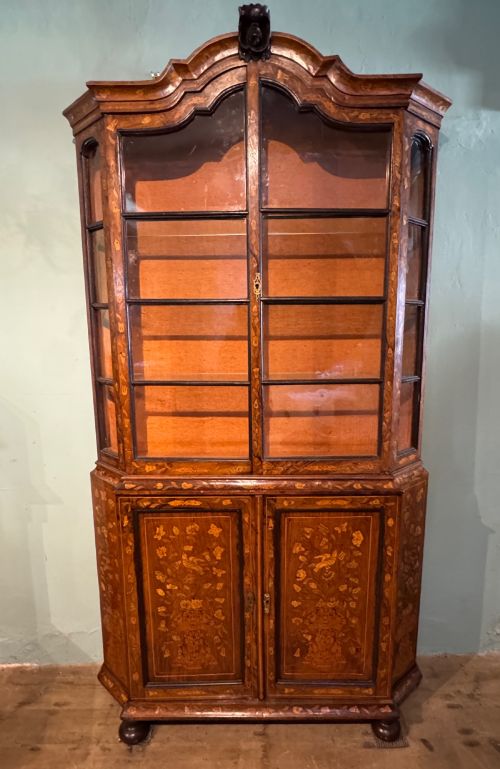
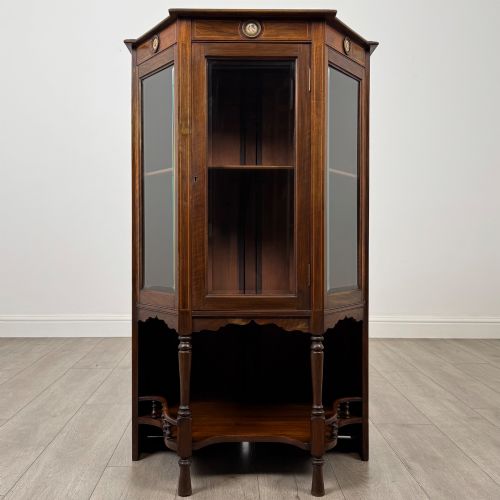
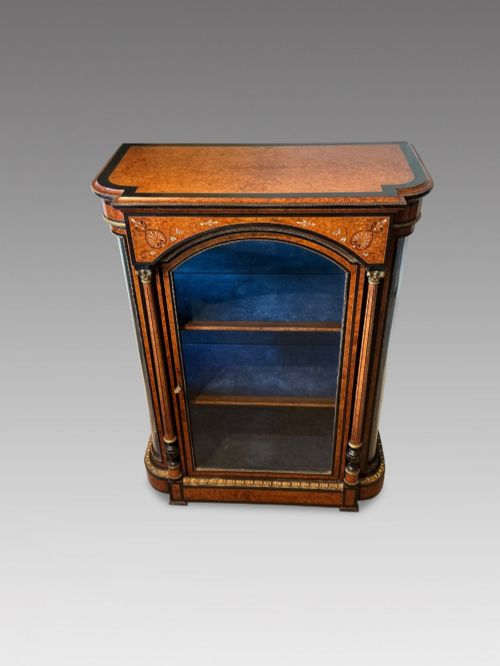
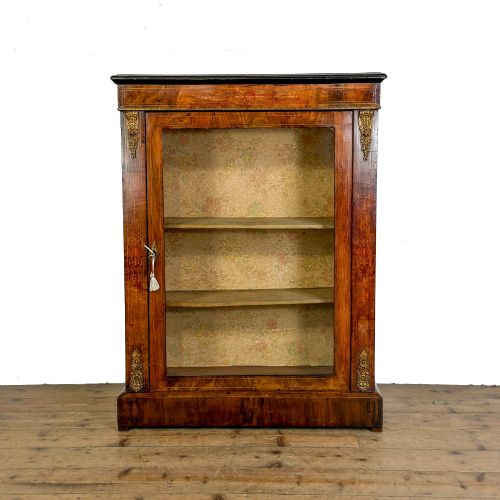
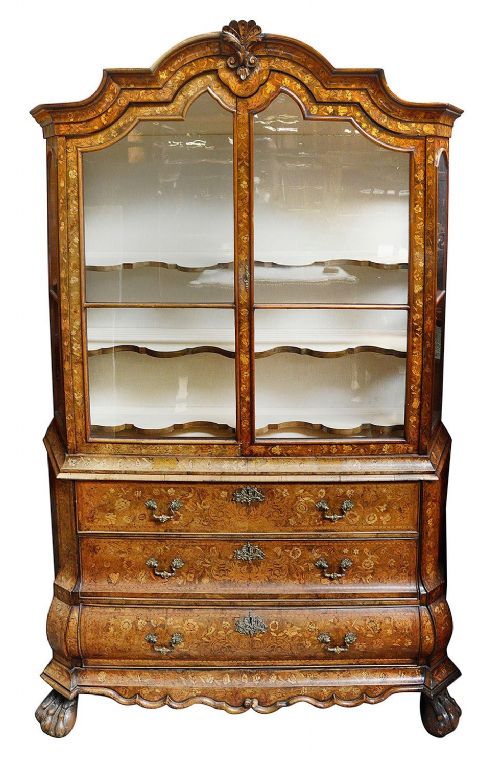
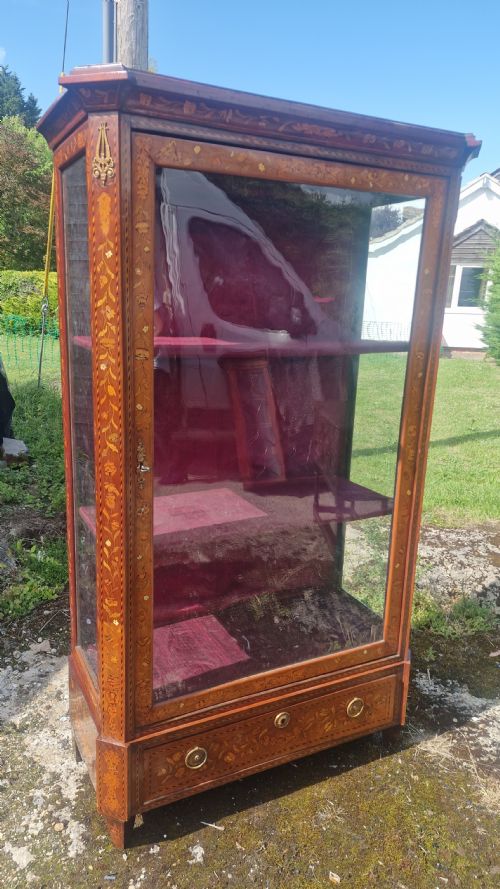
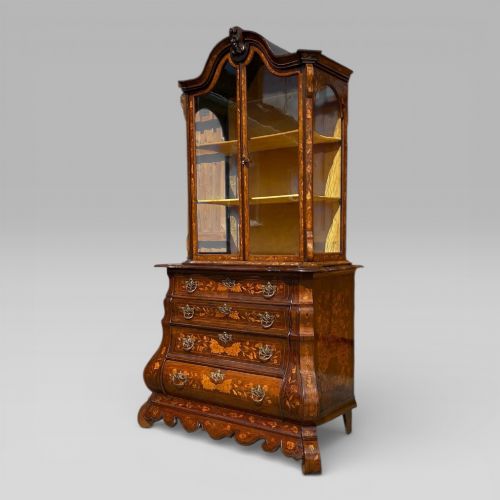
When you search for an inlaid walnut vitrine, you encounter glazed display furniture designed to show off porcelain, curiosities and small objects. The pieces appearing here span centuries of craftsmanship, taking the form of upright pier cabinets, serpentine fronted display cases and elaborate Dutch marquetry cabinets on chests.
Victorian examples in figured or burr walnut appear frequently alongside 18th century Dutch marquetry versions and Edwardian interpretations. These cabinets rely on glass panels and fitted interior shelving to protect and exhibit items while adding decorative presence to a room.
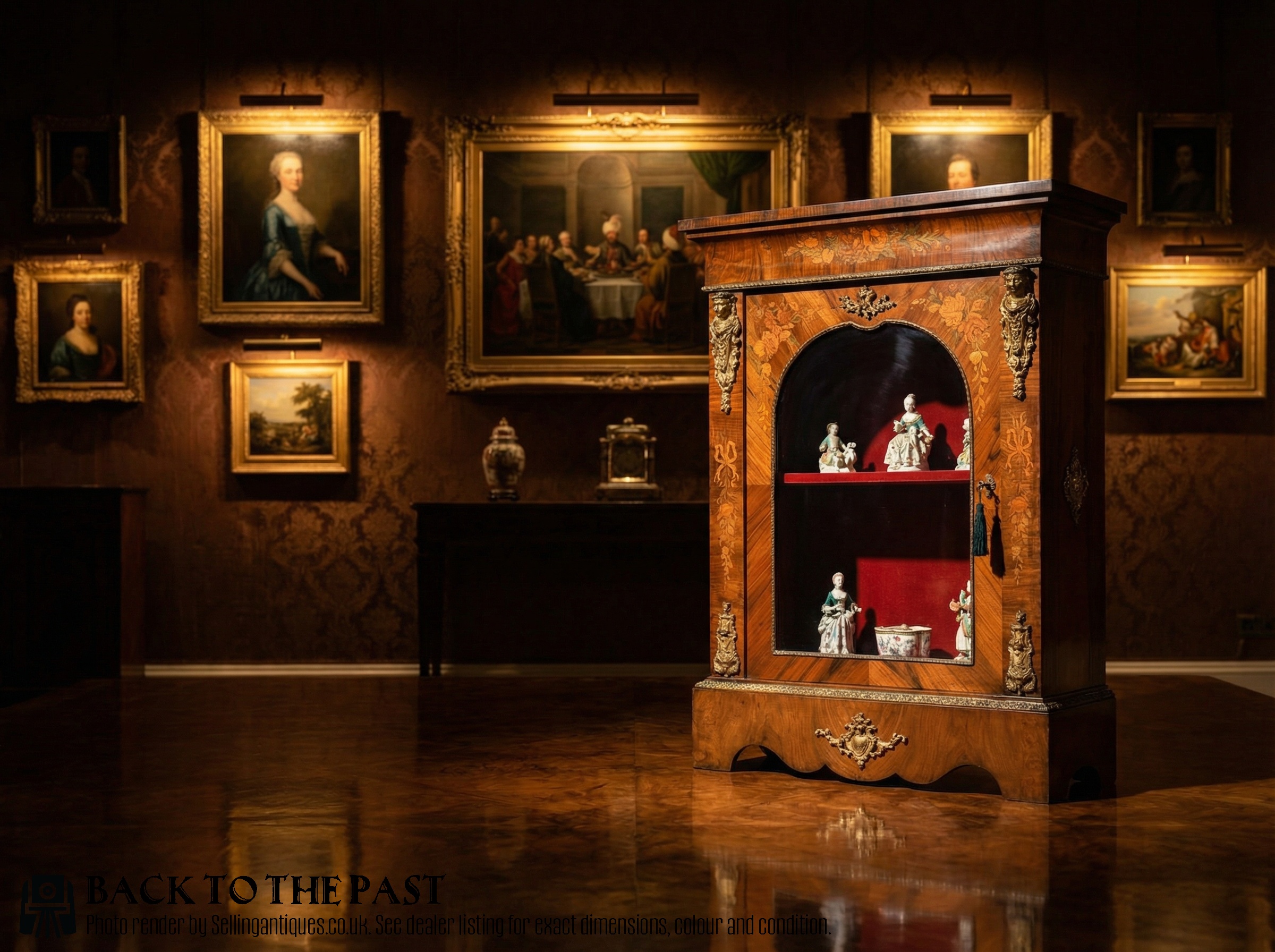
Materials and construction
Cabinet makers utilised walnut timber as the primary structural and visual base, often selecting figured or burr walnut for its rich, swirling grain patterns. Surfaces were then enriched with intricate marquetry and inlay work using contrasting materials like fruitwood, boxwood, satinwood and ebony.
Many examples incorporate glazed doors, glass side panels and velvet lined interiors to frame the displayed objects. Metal mounts in brass or ormolu frequently accent the corners, framing and hardware of 19th century and revival pieces.
Inlaid Walnut Vitrine Retail Price Guide 2026
Typical asking prices for inlaid walnut vitrine among the pieces listed under this phrase on Sellingantiques today, from the lower quarter to the upper quarter. They describe what is for sale here now, not the wider market.
Some floral marquetry panels hide botanical details so intricate that butterflies appear tucked among the wooden stems.
Distinctions in quality
The standard of a piece rests heavily on the ambition and execution of the marquetry and the choice of veneer. Finer cabinets display complex floral or figurative inlay with sharp contrasts between woods, whereas simpler versions rely on plain walnut surfaces or basic banding.
Construction details such as the weight of the bronze or ormolu mounts, the clarity and proportion of the glazed framing, and the preservation of original timber patination separate standard production items from exceptional workshop pieces.

Edwards & Roberts
The Inlaid Walnut Vitrine Glossary
- Vitrine
- A glazed display cabinet used for exhibiting porcelain, curiosities and small collectables. These pieces usually feature glass on the top or sides to let light enter from multiple angles.
- Marquetry
- Decorative veneer work forming pictures or patterns by assembling small pieces of various woods. Artisans applied these intricate designs to the primary walnut surfaces of cabinet doors and panels.
- Pier Cabinet
- A narrow display cabinet designed to stand against the wall between windows or doors. Victorian examples often feature single glazed doors and gilt metal mounts.
- Burr Walnut
- Timber taken from the growth excrescence of a walnut tree, yielding highly figured and swirling grain patterns. Cabinet makers prized this wood for high status front panels and table tops.
- Ormolu
- Gilt bronze mounts used as decorative trim and hardware on furniture. These metallic elements add structural emphasis and ornamentation to the corners and borders of cabinets.
Inlaid Walnut Vitrine: Frequently Asked Questions
What is an inlaid walnut vitrine used for?
These cabinets were originally built to hold valuable porcelain, scientific instruments, and delicate curiosities where they could be seen safely.
Today, they serve the same function in living spaces, offering an enclosed display area that keeps dust away from collections.
How do I tell a Victorian vitrine from an 18th century one?
Victorian examples often employ figured or burr walnut with neat marquetry and brass or ormolu mounts, typical of mid to late 19th century revival tastes.
Earlier 18th century pieces, particularly Dutch examples, frequently feature dense floral marquetry across bombé or serpentine shapes.
Where should I place a vitrine in my home?
Because these cabinets incorporate glass panels and delicate inlay, they suit reception rooms or hallways away from direct, harsh sunlight.
Placing them against a solid wall allows the timber grain and marquetry details to catch ambient indoor light properly.
What is the difference between a pier cabinet and a standard vitrine?
A pier cabinet is typically narrower and designed specifically to fit the flat wall space between architectural openings or windows.
Standard vitrines and display cases can be wider, freestanding, or built as cabinet-on-chest structures with greater storage capacity below.