


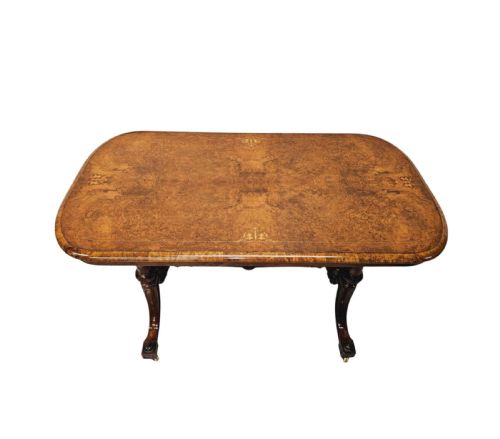


Inlaid Walnut Library Table
An inlaid walnut library table brings warmth and intricate woodwork to a room, offering a sturdy surface designed for reading and writing.

Inlaid Walnut Library Table
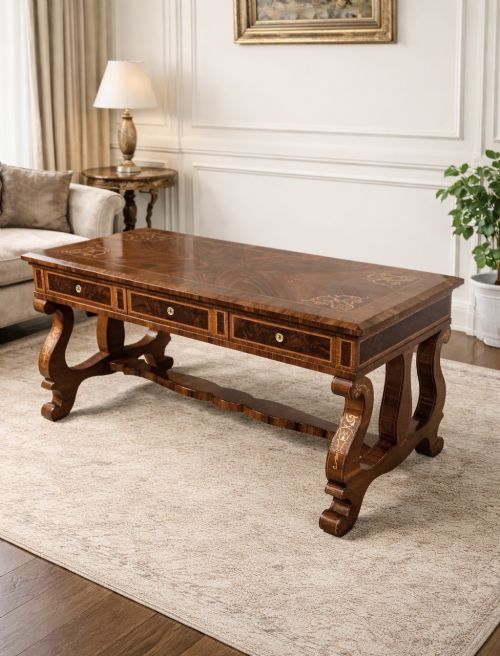
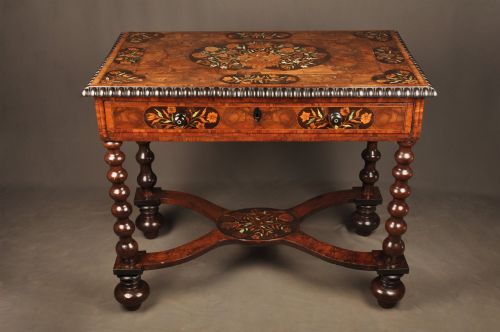
An inlaid walnut library table serves as a substantial writing surface or freestanding centre table, often finished with detailed marquetry or parquetry. These pieces appear predominantly in Victorian styles alongside earlier 17th Century examples and later Edwardian and 20th Century continental variations.
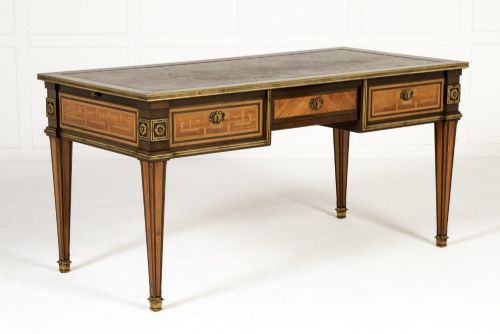
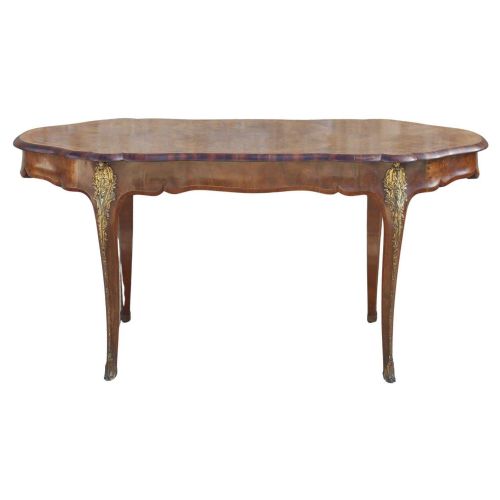
Burr walnut veneer frequently provides the primary decorative surface, complemented by contrasting woods such as fruitwood and satinwood. The forms encompass rectangular bureau plat designs as well as octagonal and serpentine configurations.
Materials and Construction
Craftsmen built these tables using solid walnut and burr walnut veneers applied over secondary carcase timbers, often incorporating intricate marquetry and parquetry floral patterns. Cabinetmakers enhanced the structural detailing with brass, ormolu mounts, and ebonised wood.
Writing surfaces frequently integrate inset leather panels surrounded by elaborate crossbanding in fruitwood or satinwood. Structural support comes from sturdy timber frames, sometimes finished with cabriole legs or twin pedestals.
Listings feature walnut, burr walnut, brass, ormolu, leather, fruitwood, and marquetry across Victorian, Edwardian, and seventeenth-century periods.
Markers of Quality
Quality rests in the precision of the marquetry inlay and the choice of highly figured burr walnut veneer across the top and sides. Superior examples display refined brass or ormolu mounts and careful timber selection without clumsy joints.
The sophistication of the overall design, whether French bureau plat or revolving library table, distinguishes workshop output. Original leather writing inserts and balanced proportions indicate higher craftsmanship.
Gill & Reigate·Gillows·James Winter
The Inlaid Walnut Library Table Glossary
- Burr walnut
- A prized timber veneer obtained from the growth warts of walnut trees, displaying swirling, highly decorative grain patterns.
- Marquetry
- Decorative veneer work forming pictorial or geometric patterns using various coloured woods and organic materials.
- Bureau plat
- A freestanding writing table fitted with drawers, originating in France and popular throughout the nineteenth century.
- Ormolu
- Gilded bronze mounts used decoratively on the corners, legs, and aprons of fine furniture.
- Parquetry
- Geometric wood mosaic work used for floors and tabletops, creating precise repeating patterns.
Inlaid Walnut Library Table: Frequently Asked Questions
Where should I place a library table?
These tables work well positioned in the centre of a room as freestanding focal points, allowing access from multiple sides.
Alternatively, smaller writing variations function effectively against a wall or beside seating areas.
How do I care for walnut veneer?
Protect the wood surfaces by avoiding direct sunlight and maintaining steady indoor humidity levels.
Dust regularly with a soft dry cloth and treat the timber with appropriate wax polish sparingly.
What is the difference between a centre table and a writing table?
Centre tables are finished on all sides for display anywhere in a room, often lacking drawers.
Writing tables and bureau plats include functional drawers and frequently feature leather inset tops.
How can I identify Victorian walnut furniture?
Victorian pieces often showcase dark burr walnut veneers paired with elaborate floral marquetry inlay.
Look for structural details like cabriole legs, brass ormolu mounts, and nineteenth-century construction methods.