




Decorative Wood Hall Table
A decorative wood hall table solves the problem of an empty entrance space with genuine period character and useful surface area.

Decorative Wood Hall Table
A decorative wood hall table encompasses various forms designed to furnish entrance spaces and reception rooms, ranging from compact side tables to grand console tables. Buyers seeking this phrase encounter pieces spanning from the eighteenth century through to the Victorian era, reflecting diverse stylistic influences.
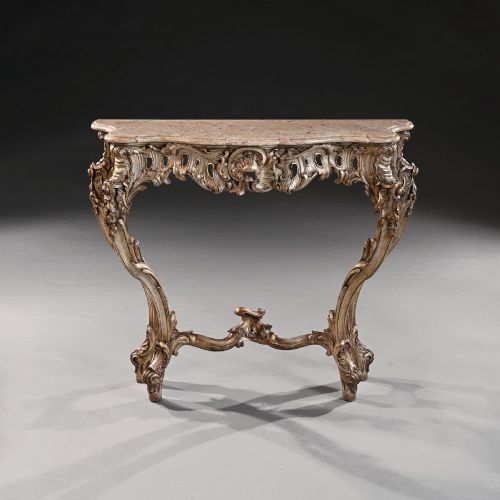
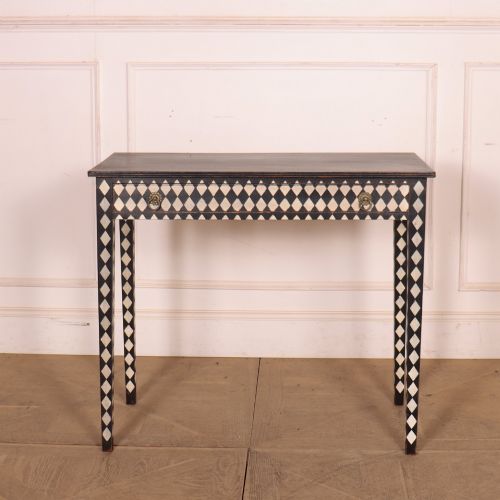
The selection frequently includes console tables featuring shaped marble tops, alongside side tables, occasional tables, and centre tables fashioned from timber. Some examples incorporate practical drawers or seating elements such as window seats and hall benches.
Origins vary across European and British traditions, with French Rococo, Italian Rococo, Victorian Gothic Revival, and Sheraton styles appearing regularly. Timber choices range from walnut and oak to exotic veneers.
How they were made
Cabinet makers utilised solid woods and intricate veneers, employing oyster veneers and boxwood details to create textured surfaces on tables and desks. Hand carving played a central role in shaping the ornate legs and frames seen on French and Italian console tables.
Many surfaces feature applied finishes including paint, silver gilt, and clear polishes that highlight the natural grain of walnut, oak, mahogany, and laburnum. Marble inserts were frequently fitted into stone-topped console tables to provide durable and decorative surfaces.
Decorative Wood Hall Table Retail Price Guide 2026
Typical asking prices for decorative wood hall table among the pieces listed under this phrase on Sellingantiques today, from the lower quarter to the upper quarter. They describe what is for sale here now, not the wider market.
Current listings demonstrate periods from the eighteenth century through the nineteenth century, utilising walnut, oak, mahogany, boxwood, and marble.
What varies in quality
The refinement of the hand carving dictates the visual success of the piece, where crisp floral motifs and deep relief work separate superior examples from simpler production. The selection and matching of veneers, particularly on oyster-veneered surfaces, demonstrate the joiner's skill.
The integration of heavy materials like marble tops with timber frames requires precise engineering to ensure stability and proportion. The choice of secondary timbers and the retention of original gilding or painted surfaces further influence the standing of each piece.
The Decorative Wood Hall Table Glossary
- Console table
- A table designed to be fixed against a wall, frequently supported by ornate brackets or legs. These pieces often feature shaped marble tops and prominent front decoration.
- Oyster veneer
- Slices cut transversely from small branches or roots to create circular patterns resembling oyster shells. This technique gained popularity during the seventeenth and eighteenth centuries.
- Silver gilt
- Silver that has been plated with a thin layer of gold. It provides a bright metallic finish seen on decorative frames and tables.
- Centre table
- A freestanding table designed to be viewed from all sides, placed in the middle of a room rather than against a wall. They often feature finished backs and elaborate carving.
Decorative Wood Hall Table: Frequently Asked Questions
Where should I place a hall table?
These tables fit well against entrance walls or in narrow corridors where surface space is useful without blocking movement. Console tables and side tables anchor the hallway visually.
Freestanding centre tables require more floor space to be appreciated from all angles. They suit larger reception areas rather than tight passageways.
How do I clean marble top tables?
Wipe marble surfaces with a soft, damp cloth using mild, pH-neutral soap. Avoid acidic cleaners that etch the polished stone.
Dry the surface thoroughly afterwards to prevent water marks. Periodic sealing helps protect the porous stone from stains.
Are these tables sturdy enough for daily use?
Period tables constructed from solid hardwoods like oak and walnut offer robust daily utility. Console tables secured to walls provide extra stability.
Tables with delicate gilt finishes or intricate hand-carved legs require gentle treatment. They suit decorative display rather than heavy physical loads.
How do I identify French Rococo style?
French Rococo pieces feature asymmetrical curves, scrolling foliage, and organic motifs derived from nature. The lines are fluid rather than strictly symmetrical.
Carvings often include C-scrolls and shell patterns. This style prioritises lightness and decorative elegance over rigid classical geometry.