
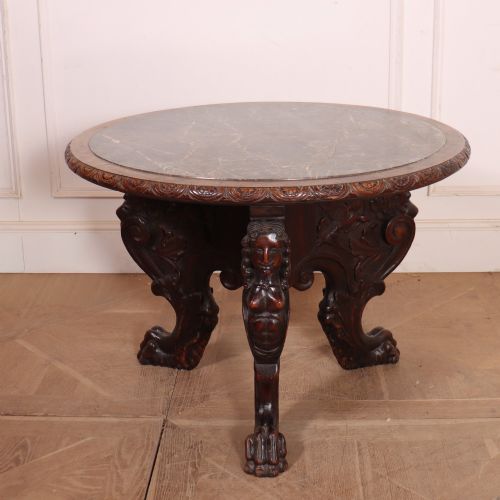
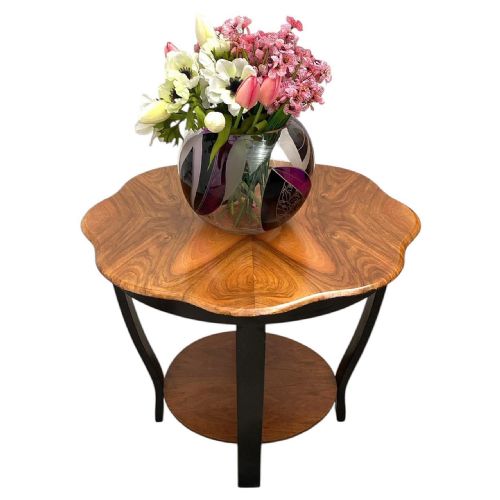
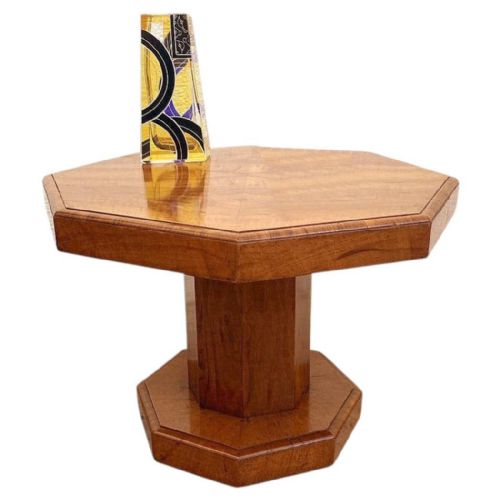


English Walnut Centre Table
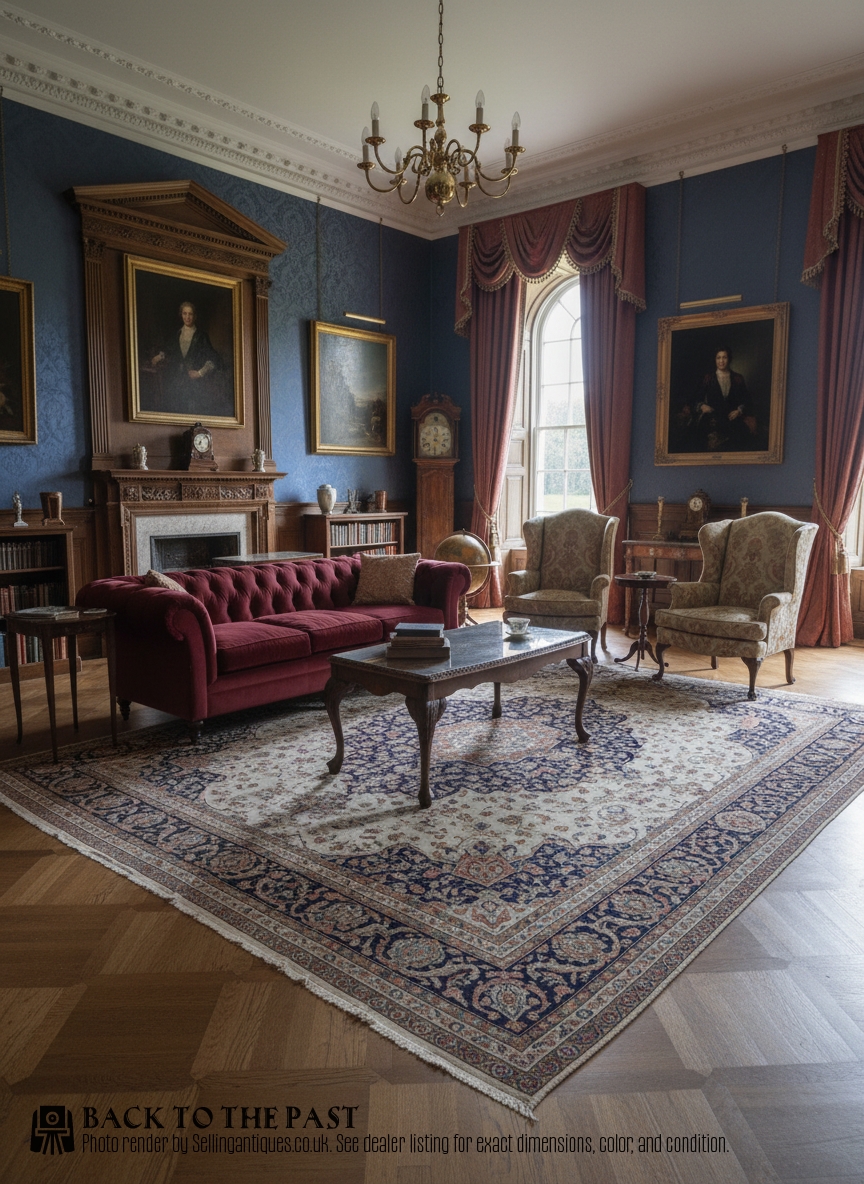
An english walnut centre table brings warmth and rich grain to a room, offering a versatile surface that anchors a space with traditional craftsmanship.
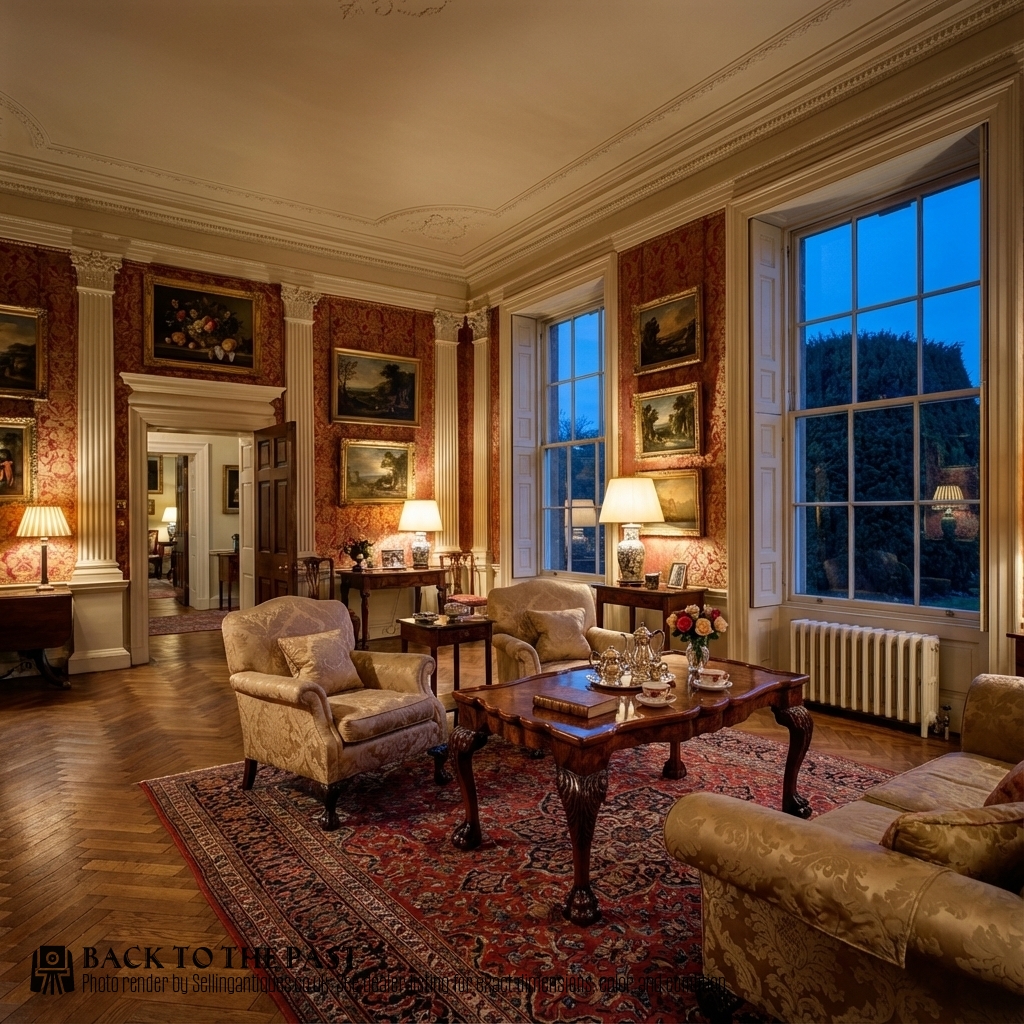
English Walnut Centre Table
When searching for an english walnut centre table, you encounter pieces designed to stand freely within a room rather than against a wall. The selections span several centuries, moving from the rich timber work of the eighteenth century through the robust forms of the Victorian era and into the cleaner lines of the nineteen-thirties.
The most common examples you meet on this page date from the Victorian period, frequently taking the form of oval tilt-top loo tables or inlaid occasional pieces. Alongside these, earlier Georgian examples and later Art Deco coffee tables appear, showing how cabinet makers adapted the timber across different design movements.

Materials and construction methods
Cabinet makers utilised solid walnut and decorative veneers, often selecting burr walnut to create striking patterns across the top surfaces. Oyster veneers and marquetry inlay also feature, requiring precise skill to arrange small sections of timber into geometric or floral designs.
Supporting structures combine walnut with secondary woods, whilst brass fittings and tilt-top mechanisms provide functional movement. Carved details and turned pedestals demonstrate traditional joinery techniques passed down through generations of makers.
English Walnut Centre Table Retail Price Guide 2026
Typical asking prices for english walnut centre table among the pieces listed under this phrase on Sellingantiques today, from the lower quarter to the upper quarter. They describe what is for sale here now, not the wider market.
Materials recorded include solid walnut, laburnam, brass fittings, marble inserts, and intricate marquetry inlay.
Distinguishing factors in quality
Quality rests primarily in the choice and matching of the timber veneer, where symmetrical grain patterns and rich natural colour separate superior examples from plain ones. The depth of the polish and the crispness of any carved or inlaid details further indicate the skill invested by the original maker.
Structural integrity also defines the better pieces, seen in how smoothly tilt-top mechanisms operate and how securely pedestals join to their base feet. Original brass castors and untouched patination reveal a history of careful preservation.
Gillows of Lancaster
The English Walnut Centre Table Glossary
- Burr walnut
- A prized timber harvested from tree growths, producing complex, swirling grain patterns highly valued for decorative table tops.
- Loo table
- A large Victorian card and conversation table, frequently built with a tilting top so it could store flat against a wall.
- Oyster veneer
- Slices cut transversely from small branches to create circular, overlapping patterns resembling oyster shells.
- Marquetry
- The art of applying pieces of veneer to a structure to form decorative pictures or ornamental patterns.
- Tilt-top
- A mechanism allowing the table top to pivot vertically when not in use, saving floor space in principal rooms.
English Walnut Centre Table: Frequently Asked Questions
How do I use a centre table?
These tables sit in the middle of a room to hold lamps, books or decorative objects. They function well as focal points in large reception spaces.
In smaller rooms, tilt-top versions can rest against a perimeter wall until needed for gatherings or tea service.
What is a loo table?
A loo table is a nineteenth-century multi-purpose table named after the popular card game of loo. They typically feature an oval or circular top mounted on a heavy pillar and tripod base.
The tilting mechanism allowed households to clear the floor space easily when the room was needed for other activities.
How do I date an antique walnut table?
Dating relies on observing the leg configuration, framing construction and timber preparation methods. Georgian pieces often display simpler, robust proportions, whereas Victorian examples favour rich burr veneers and elaborate pedestal carvings.
Nineteen-thirties pieces introduce streamlined Art Deco silhouettes while retaining the traditional walnut surface materials.
How do I care for walnut veneer?
Walnut benefits from stable room temperatures away from direct sunlight and heat sources, which can dry out the historic timber. Regular dusting with a soft, dry cloth preserves the finish without requiring heavy polishes.
Applying occasional natural wax helps maintain the lustre of the grain over decades of daily living.